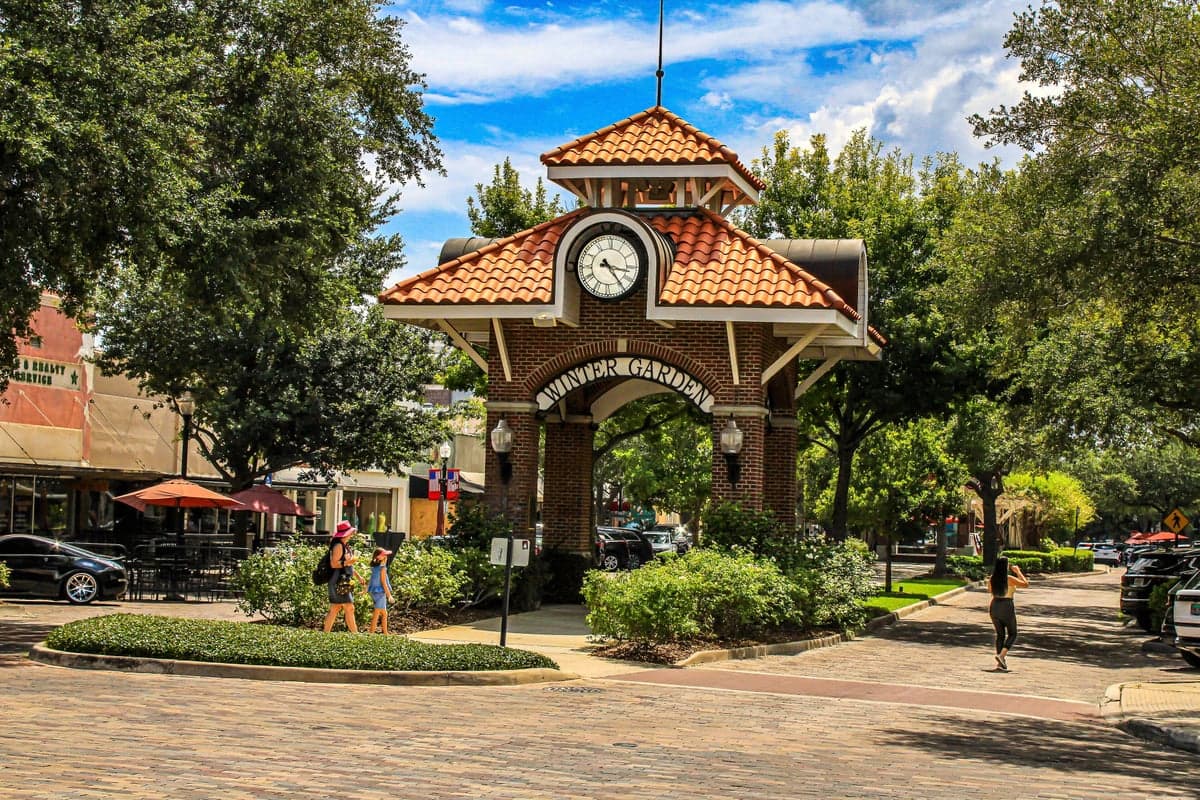
Photo: Wikipedia
Political ClimatePolitical Climate in Winter Garden, FL
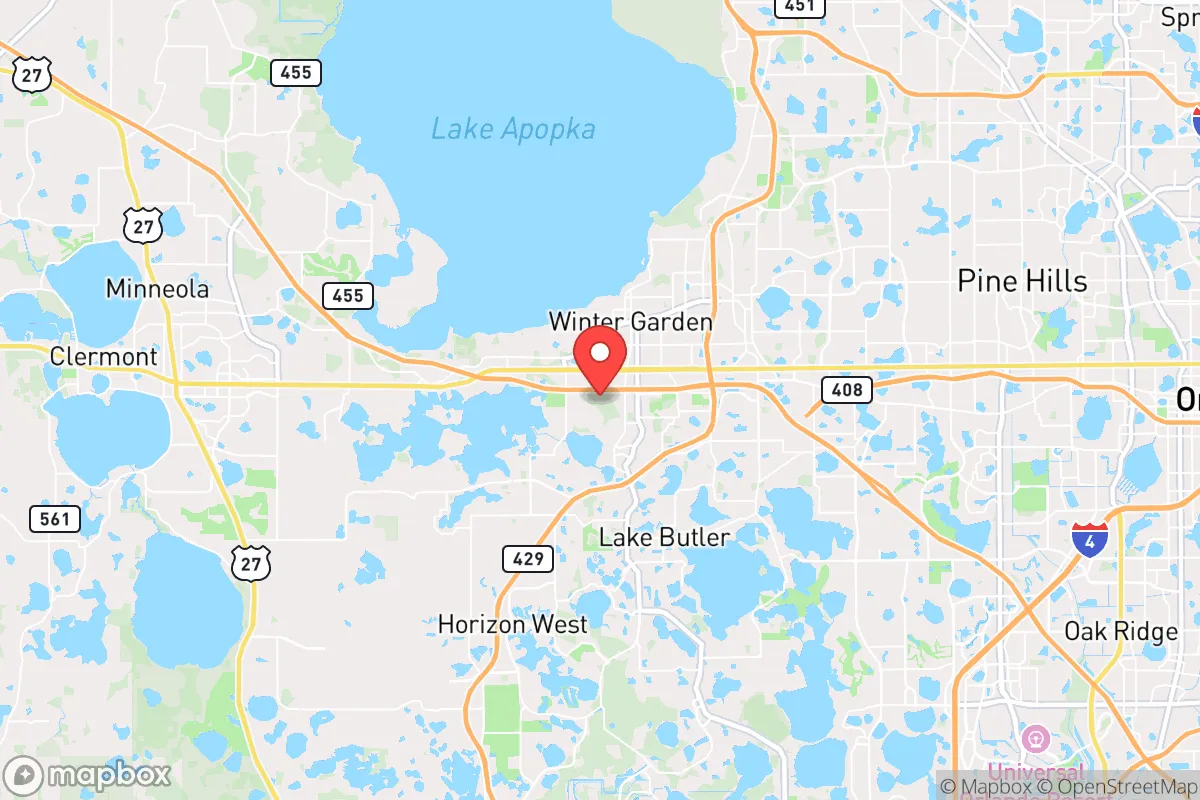
District shown is the primary district for this city’s centroid. Cities may span multiple districts.
Local Political AnalysisPolitical Analysis of Winter Garden, FL
Winter Garden has long been a reliably conservative stronghold, and that hasn't changed much despite the rapid growth. The area sits at a Cook PVI of R+8, which is three points more Republican than the state of Florida as a whole (R+5). That might not sound like a huge gap, but in practical terms, it means local elections here are decided in primaries, not general elections. You don't see the same kind of progressive activism you'd find in, say, downtown Orlando or even parts of nearby Windermere. The local government has historically been very hands-off when it comes to telling people how to run their businesses or raise their kids, and that's a big reason why a lot of families moved here in the first place.
How it compares
Compared to the rest of Florida, Winter Garden is noticeably more resistant to the kind of top-down policy shifts you see in more urbanized counties. While the state as a whole has trended slightly more purple in recent cycles—thanks largely to transplants from blue states flooding into South Florida and the I-4 corridor—Winter Garden has held steady. The surrounding area, including unincorporated west Orange County, votes even more conservatively than the city proper. Drive ten minutes east toward Ocoee or Apopka, and you'll start to feel the political temperature change; those areas have seen more of a mixed bag, with some local races getting uncomfortably close. But here, the school board, city commission, and even the planning board are still dominated by folks who believe in limited government and personal responsibility. That's a big deal when you consider how much influence local officials have over things like zoning, mask mandates, and business regulations.
What this means for residents
For someone living here, the practical effect is pretty straightforward: you're not constantly fighting against government overreach in your daily life. Property taxes are reasonable compared to the rest of Orange County, and there's no appetite for the kind of progressive social engineering you see in places like Portland or even parts of Miami-Dade. The city has managed to grow without losing its character, partly because the leadership has been careful not to impose heavy-handed regulations on homeowners or small businesses. That said, you do need to keep an eye on the newcomers. A lot of people moving in from California and New York bring their political baggage with them, and there's been a slow but noticeable push to make the city more "inclusive" in ways that often translate to more government control. The school board has held the line so far, but it's something worth watching.
One thing that sets Winter Garden apart culturally is its strong sense of local identity. The historic downtown, the farmers market, and the community events all reflect a place that values tradition over trendy ideology. You won't find the kind of divisive street art or activist-led protests you see in Orlando proper. Instead, you get a community that still believes in neighborly self-reliance. The biggest concern among long-time residents is whether the rapid development will dilute that culture. If the city starts adopting the same kind of zoning policies and diversity mandates that have bogged down other parts of Florida, you could see a real shift in the next decade. For now, though, Winter Garden remains one of the few places in Central Florida where you can still feel like the government trusts you to make your own decisions.

State Political ClimatePolitical Climate in Florida
State Political AnalysisPolitical Environment in the State
Florida is a solidly Republican state with a Cook PVI of R+5, but it wasn’t always this way. For decades, it was the ultimate swing state, splitting tickets and deciding presidential elections by a few thousand votes. Over the last 10-20 years, a massive influx of conservative-leaning transplants from the Northeast, Midwest, and California, combined with a growing Hispanic electorate that has shifted right, has pushed the state firmly into the red column. The dominant coalition is a mix of suburban families, retirees, and working-class voters who prioritize low taxes, parental rights, and public safety. The Democratic strongholds are shrinking to a few urban cores, while the rest of the state has become reliably conservative.
Urban vs. rural divide
The political map of Florida is a tale of three regions. The Democratic vote is concentrated in the urban cores of Miami-Dade County, Orlando (Orange County), and Tampa (Hillsborough County). Even there, the margins are shrinking. Miami-Dade, once a Democratic fortress, has been trending red for years; in 2020, Trump lost it by only 7 points, down from Hillary’s 29-point win in 2016. The real engine of Republican power is the sprawling suburban and exurban counties: Pasco County north of Tampa, St. Johns County south of Jacksonville, and Lee County (Fort Myers) on the Gulf Coast. These areas are packed with families fleeing high-tax states and retirees who remember what freedom feels like. Rural North Florida—places like Lake City and Panama City—votes overwhelmingly red, often 70-80% Republican. The I-4 corridor (Tampa to Orlando) is still competitive, but it’s trending right as new housing developments fill up with conservative newcomers.
Policy environment
Florida’s policy environment is a model of limited government. There is no state income tax, a huge draw for high-earners and business owners. Property taxes are capped by the Save Our Homes amendment, keeping costs predictable for long-time residents. The regulatory posture is business-friendly: permitting is fast, zoning is flexible, and there’s no state-level rent control. On education, Governor Ron DeSantis signed the Parental Rights in Education Act (HB 1557) in 2022, which prohibits classroom instruction on sexual orientation and gender identity in grades K-3, and the Stop WOKE Act (HB 7) in 2022, which restricts critical race theory training in schools and workplaces. School choice is robust, with the Family Empowerment Scholarship program giving thousands of students vouchers for private or homeschool options. Healthcare policy is mixed: Florida did not expand Medicaid under Obamacare, keeping costs lower for taxpayers, but the state has a high uninsured rate. Election integrity was strengthened with SB 90 (2021), which requires ID for mail-in ballots, limits drop boxes, and bans ballot harvesting. It’s a state that trusts parents and local communities over bureaucrats in Tallahassee.
Trajectory & freedom
Florida is becoming more free by almost every measure. The Constitutional Carry law (HB 543) took effect in 2023, allowing permitless carry of firearms for anyone 21 or older who can legally possess a gun. This was a major expansion of Second Amendment rights. On medical freedom, the state banned vaccine passports (SB 2006) in 2021 and prohibited mask mandates in schools (HB 1557). Property rights were strengthened with the Live Local Act (2023), which preempts local zoning to allow affordable housing development, though some conservatives worry it goes too far in overriding local control. The Florida Parental Rights Act (2022) codified that parents have the fundamental right to direct their child’s upbringing, education, and healthcare. The only area where freedom has contracted is on abortion: the state passed a 15-week ban (HB 5) in 2022, and a 6-week ban (SB 300) in 2023, which is currently tied up in court. For a conservative, this is a net positive—the state is actively rolling back government overreach in education, health mandates, and gun control.
Civil unrest & political movements
Florida has seen its share of political flashpoints, but they’ve mostly been driven by left-wing activism. In 2020, Miami and Orlando saw Black Lives Matter protests that turned into looting and property damage, leading to a strong backlash. The state responded with the Combating Public Disorder Act (HB 1) in 2021, which enhanced penalties for rioting, blocking roads, and defacing monuments. Immigration politics are a constant issue: Florida passed SB 1718 in 2023, which requires businesses with 25+ employees to use E-Verify, bans local governments from issuing ID cards to undocumented immigrants, and makes it a felony to transport someone here illegally. This has caused some labor shortages in agriculture and construction, but most residents support it. There’s no sanctuary city movement to speak of—every county cooperates with ICE. Election integrity controversies have been minimal since SB 90 passed; the 2022 midterms ran smoothly with high turnout and no major issues. The most visible political movement is the Moms for Liberty chapter network, which has been active in school board races across Brevard County and Volusia County, pushing back on CRT and LGBTQ curriculum. You won’t see daily protests unless you’re in downtown Miami or near the state capitol during session.
Projection
Over the next 5-10 years, Florida will only get redder. The in-migration is overwhelmingly conservative: people are moving from New York, California, and Illinois specifically to escape high taxes, crime, and progressive policies. The Hispanic vote, especially among Cuban-Americans in Miami-Dade and Venezuelans in Kendall, is shifting right at a rapid clip. The Democratic Party in Florida is in disarray, with no clear leader and a shrinking base. The state will likely pass further school choice expansion, maybe a universal voucher program. Expect more preemption of local ordinances—Tallahassee has been aggressive in blocking local rent control, plastic bag bans, and sanctuary policies. The only wildcard is climate change: rising sea levels and hurricane risk could slow growth in coastal areas like Fort Lauderdale and Tampa, but inland cities like Ocala and Gainesville are booming. A new resident moving in now should expect a state that continues to prioritize individual liberty, low taxes, and parental rights, with a government that actively pushes back against federal overreach.
For a conservative single person or parent, Florida is about as good as it gets in 2026. You get no state income tax, a government that trusts you to raise your own kids, and a culture that values hard work and personal responsibility. The trade-offs are real: summers are brutal, insurance costs are high, and the politics can feel like a constant culture war. But if you want to live in a state that’s actually moving in the right direction—more freedom, less government—Florida is the place. Just pick a suburb in St. Johns County or Pasco County, and you’ll find your people.
* Values derived from national, state, county, city and local statistics and may differ in a specific area. Last updated: 2026-05-12T15:49:31.000Z
Narrative content on this page is AI-generated and may contain mistakes. Verify any details that matter before acting on them.
ReloMaps may earn a commission from affiliate links at no extra cost to you.

