Photo: Wikipedia
Strategic Assessment of Winter Garden, FL
Multiple tactical vulnerabilities. Population density, target proximity, or disaster risk are likely compounding. A retreat property and exit planning is required.
What does the Strategic Assessment tell us?
Our Strategic Assessment grades tactical survivability of an area. Major population centers, military targets, fallout zones, natural disasters, and border exposure all drive risk — lower exposure means a more defensible position in a crisis.
This is heavily inspired by Joel Skousen's Strategic Relocation book. Highly recommended you checkout the book ($)What does this tell us?
Our Strategic Assessment grades tactical survivability of an area. Major population centers, military targets, fallout zones, natural disasters, and border exposure all drive risk — lower exposure means a more defensible position in a crisis.
This is heavily inspired by Joel Skousen's Strategic Relocation book. Highly recommended you checkout the book ($)Strategic Pillars

Key Distances
Regional Safe Places
Below is our recommended "safe zones" in Florida and the surrounding area based on our strategic heuristics. For most people, it's unrealistic to live in a “safe zone” full-time due to work, family or other personal reasons. They tend to be more rural. However, many of these areas are perfect for second homes and retreat properties that double as a vacation home or even a short-term rental.

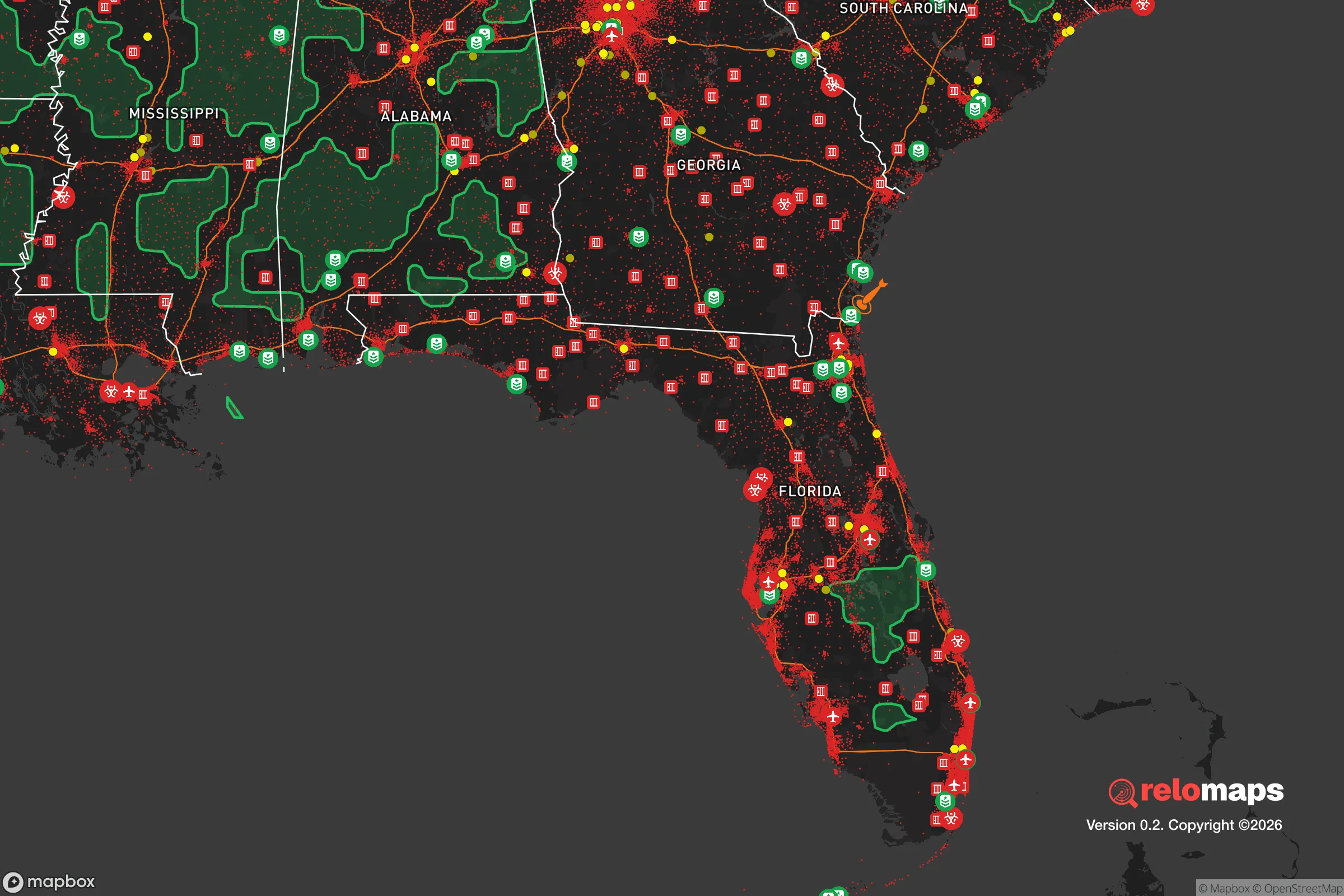


Important Note: For informational purposes only. This does not mean nothing bad ever happens in the green zones. Please use common sense. This is based on public data and modeled with AI. We tried to take a conservative approach but mistakes happen. We update this regularly as new information becomes available.
Solar Generator Recommendations
Backup power matters more here than in safer locations. We've picked three solar generators across budgets and capacity tiers — start with the budget unit if you only need a few essentials, or step up if you want to run a fridge and HVAC for days at a time.

Jackery Portable Power Station Explorer 300
Budget OptionPower on the Go: Weighing only 11 lbs, it's convenient to set up and store with book-sized foldable solar panels

BLUETTI Portable Power Station AC180
Designed for both indoor and outdoor scenarios, AC180 is highly capable as it has a robost capacity and continuous output power.

EF ECOFLOW DELTA Pro Ultra Power Station
Upgraded PickEcoFlow DELTA Pro Ultra is a whole-home energy system designed to grow with your family. Integrated with the Smart Home Panel 2, it scales to meet your evolving energy needs — keeping your home powered, intelligent, and secure through every stage of life.
We earn a commission, at no additional cost to you.
Strategic Assessment Analysis
Winter Garden, Florida, presents a mixed strategic picture for the conservative prepper or survivalist. Its location west of Orlando offers a degree of geographic buffer from the immediate chaos of a major metro collapse, but it is by no means a remote redoubt. The area’s resilience hinges on its position within the broader I-4 corridor, a high-value target zone for both natural disasters and human-caused disruptions. For the relocator seeking a balance between access to resources and a defensible posture, Winter Garden requires a clear-eyed assessment of its strengths and its very real vulnerabilities.
Geographic position and natural advantages for a strategic relocation
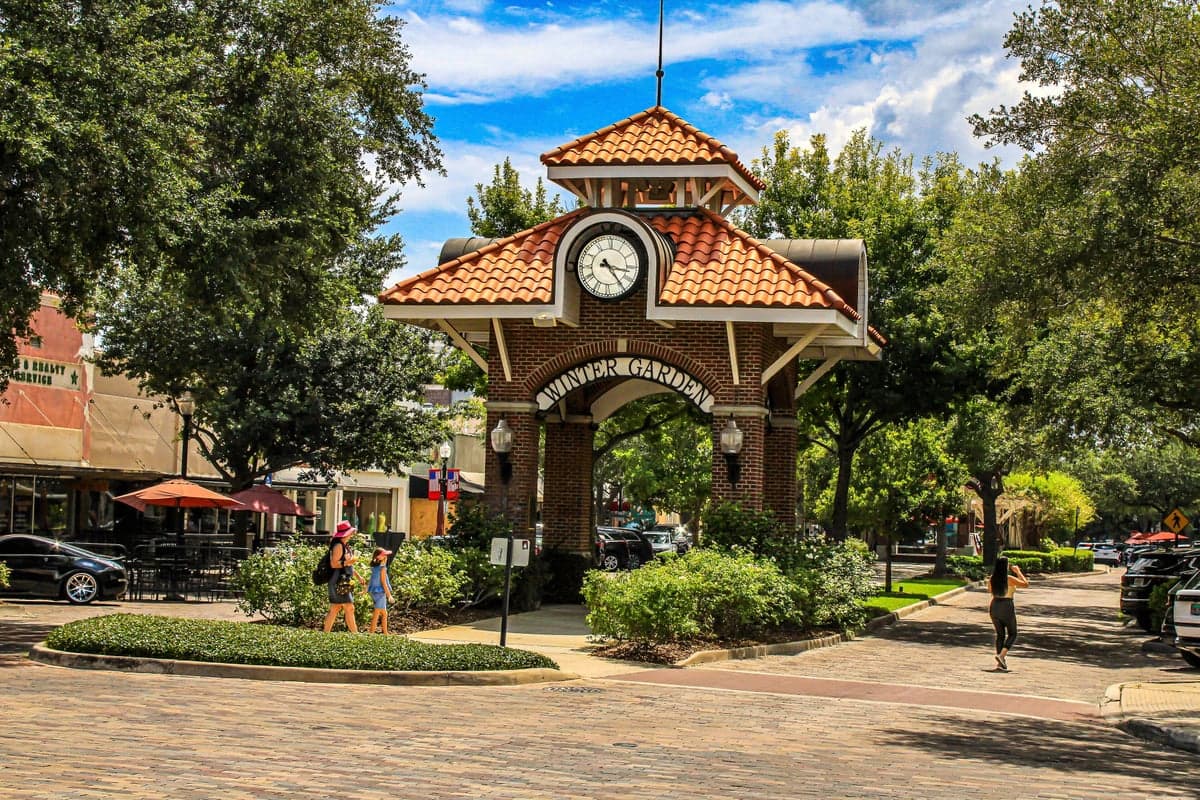
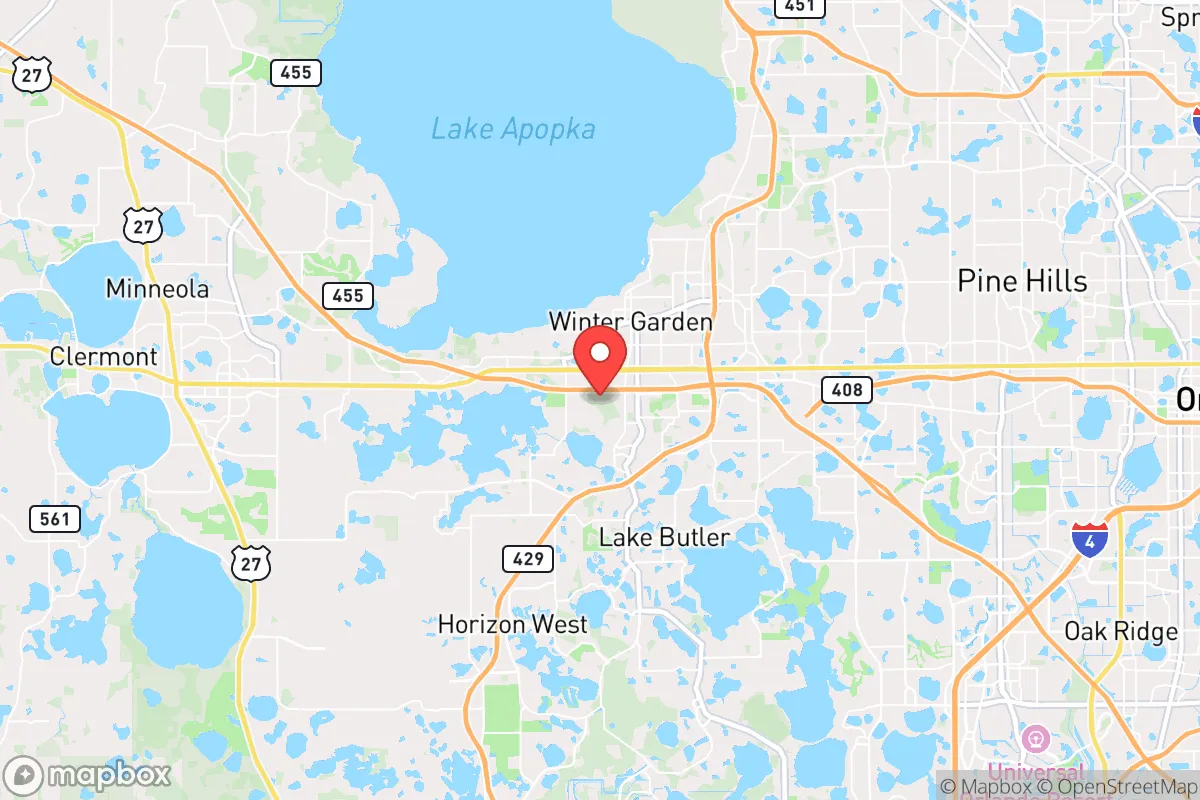
Winter Garden sits in western Orange County, roughly 14 miles from downtown Orlando, placing it at the edge of the metro sprawl rather than in its core. This fringe location provides a critical advantage: it is close enough to Orlando’s economic and medical infrastructure but far enough to avoid the worst of a sudden urban evacuation or civil unrest. The area is part of the Lake Apopka basin, and the town itself is built on relatively high ground for Florida—elevations around 100 feet above sea level. This is a meaningful natural advantage in a state where most land sits near sea level, offering some protection against storm surge and the worst of hurricane flooding. The nearby West Orange Trail and surrounding conservation areas, like the Lake Apopka Wildlife Drive, provide natural corridors for movement and potential off-grid travel if roads become impassable. The climate is subtropical, with a long growing season that supports year-round food production—a key factor for anyone serious about long-term self-sufficiency. However, the region’s flat terrain and dense suburban development limit natural defensibility; there are no hills, ridges, or natural chokepoints to control access.
Risks, exposures, and proximity to fallout-relevant landmarks
The most significant risk for Winter Garden is its proximity to Orlando, a major metropolitan area of over 2.5 million people, which is a prime target for civil unrest, mass casualty events, or a coordinated attack. The I-4 corridor, which runs directly through the region, is a critical transportation artery that would become a chokepoint during an evacuation or crisis. Winter Garden is also within 30 miles of the Orlando International Airport (MCO) and the Orlando Sanford International Airport (SFB), both of which are high-value targets for any adversary. The area is near the Kennedy Space Center (about 50 miles east), a strategic national asset that could be a target for sabotage or attack. On the natural disaster front, Winter Garden is inland enough to avoid direct storm surge, but it sits in a hurricane-prone zone. The 2022 Hurricane Ian event caused widespread power outages and flooding in the region, demonstrating that even inland areas are not immune. The area’s water supply is primarily from the Floridan Aquifer, which is generally resilient but vulnerable to contamination from surface flooding or industrial accidents. The nearby Walt Disney World and Universal Orlando resorts are soft targets for mass casualty events, and their proximity means that any incident there would ripple through the entire region, including Winter Garden.
Practical resilience for a relocator: food, water, energy, and defensibility
For the prepper relocating to Winter Garden, practical resilience requires a deliberate, layered approach. Water security is the first priority: the municipal supply comes from the Orange County Utilities system, which is vulnerable to power loss and contamination. A well is not common in suburban subdivisions, but rainwater catchment is viable given the region’s 50+ inches of annual rainfall. Food production is a genuine strength: the long growing season allows for three-season vegetable gardening, and citrus, avocados, and bananas can be grown in protected microclimates. The local farmers’ markets and the nearby Winter Garden Farm provide sources for seeds and livestock, but suburban HOA restrictions may limit chickens or larger animals. Energy resilience is a weak point: the grid is prone to outages during hurricanes and summer storms. Solar panels with battery storage are a wise investment, but the region’s frequent cloud cover reduces their efficiency compared to the desert Southwest. A backup generator with a 200-gallon propane tank is a more reliable option. Defensibility is the hardest challenge: Winter Garden’s suburban layout—cul-de-sacs, single-entry neighborhoods, and open floor plans—offers little natural cover or chokepoints. A relocator should prioritize a property on a corner lot with a fenced yard, or better yet, a small acreage on the town’s western fringe near the Lake County line, where lots are larger and neighbors are fewer. The local law enforcement presence is solid (Orange County Sheriff’s Office), but during a widespread event, response times will stretch to hours or days.
The community itself is a double-edged sword. Winter Garden has a strong sense of local identity, with active neighborhood watch programs and a conservative-leaning population that values self-reliance. This can be a force multiplier for mutual aid and security. However, the area is also growing rapidly—population has nearly doubled since 2010—bringing in a mix of transient residents and newcomers who may not share the same preparedness mindset. Building a network of like-minded neighbors is essential, but it takes time. For the single individual or family, the best approach is to treat Winter Garden as a base of operations rather than a final redoubt. Stockpile supplies for 90 days, invest in a reliable vehicle with off-road capability, and have a bug-out plan for moving north or west into the more rural areas of Lake or Sumter counties if the Orlando metro area collapses.
The overall strategic picture for a conservative prepper
Winter Garden is a calculated compromise. It offers the advantages of a growing economy, decent schools, and proximity to medical care—all important for a family—while still being close enough to rural escape routes. But it is not a survivalist paradise. The area’s density, reliance on fragile infrastructure, and proximity to high-value targets mean that a relocator must be proactive, not passive. The conservative prepper who moves here should do so with eyes wide open: this is a location for those who want to be near the action but not in it, who are willing to invest in hardening their home and building a local network. For those seeking true isolation and defensibility, the Florida Panhandle or the rural interior of the state would be better choices. But for the individual or family who needs to stay connected to work, schools, or family while maintaining a serious preparedness posture, Winter Garden can work—if you treat it as a strategic outpost, not a fortress. The key is to never become complacent. The I-4 corridor is a powder keg, and Winter Garden sits on its fringe. Prepare accordingly.

* Values derived from national, state, county, city and local statistics and may differ in a specific area. Last updated: 2026-05-12T15:49:31.000Z
Narrative content on this page is AI-generated and may contain mistakes. Verify any details that matter before acting on them.
ReloMaps may earn a commission from affiliate links at no extra cost to you.

