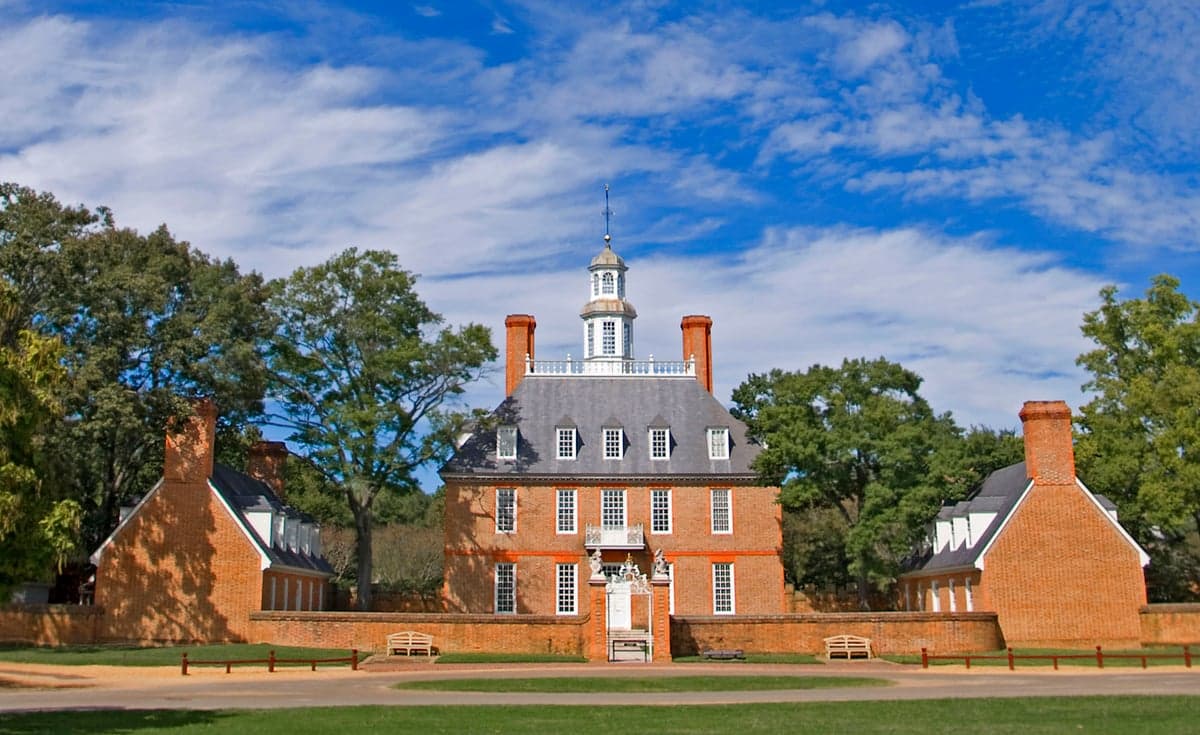
Photo: Wikipedia
Strategic Assessment of Williamsburg, VA
Meaningful friction. Expect exposure to either population pressure, blast zones, or natural disaster risk. Consider buying a retreat property.
What does the Strategic Assessment tell us?
Our Strategic Assessment grades tactical survivability of an area. Major population centers, military targets, fallout zones, natural disasters, and border exposure all drive risk — lower exposure means a more defensible position in a crisis.
This is heavily inspired by Joel Skousen's Strategic Relocation book. Highly recommended you checkout the book ($)What does this tell us?
Our Strategic Assessment grades tactical survivability of an area. Major population centers, military targets, fallout zones, natural disasters, and border exposure all drive risk — lower exposure means a more defensible position in a crisis.
This is heavily inspired by Joel Skousen's Strategic Relocation book. Highly recommended you checkout the book ($)Strategic Pillars

Key Distances
Regional Safe Places
Below is our recommended "safe zones" in Virginia and the surrounding area based on our strategic heuristics. For most people, it's unrealistic to live in a “safe zone” full-time due to work, family or other personal reasons. They tend to be more rural. However, many of these areas are perfect for second homes and retreat properties that double as a vacation home or even a short-term rental.
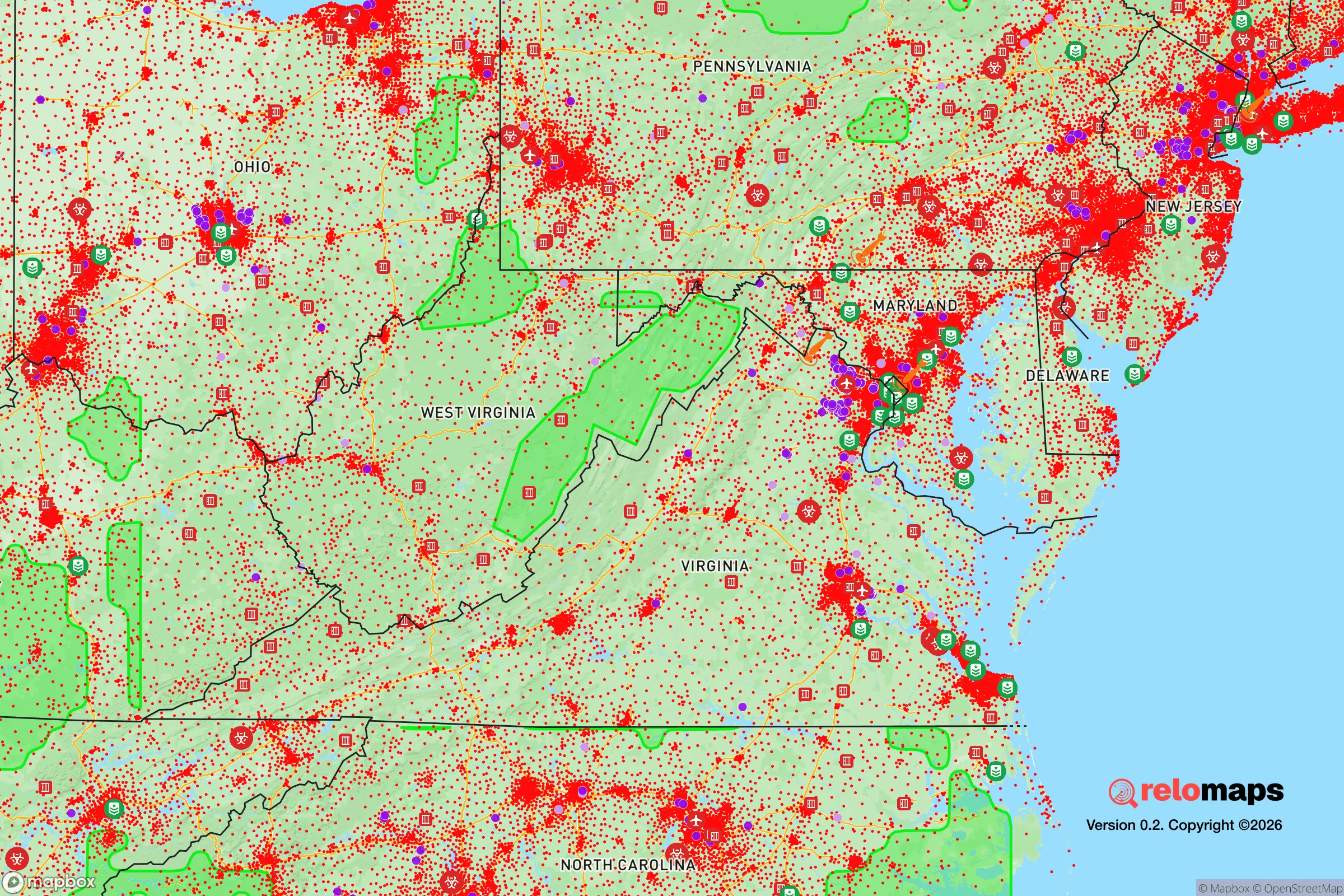
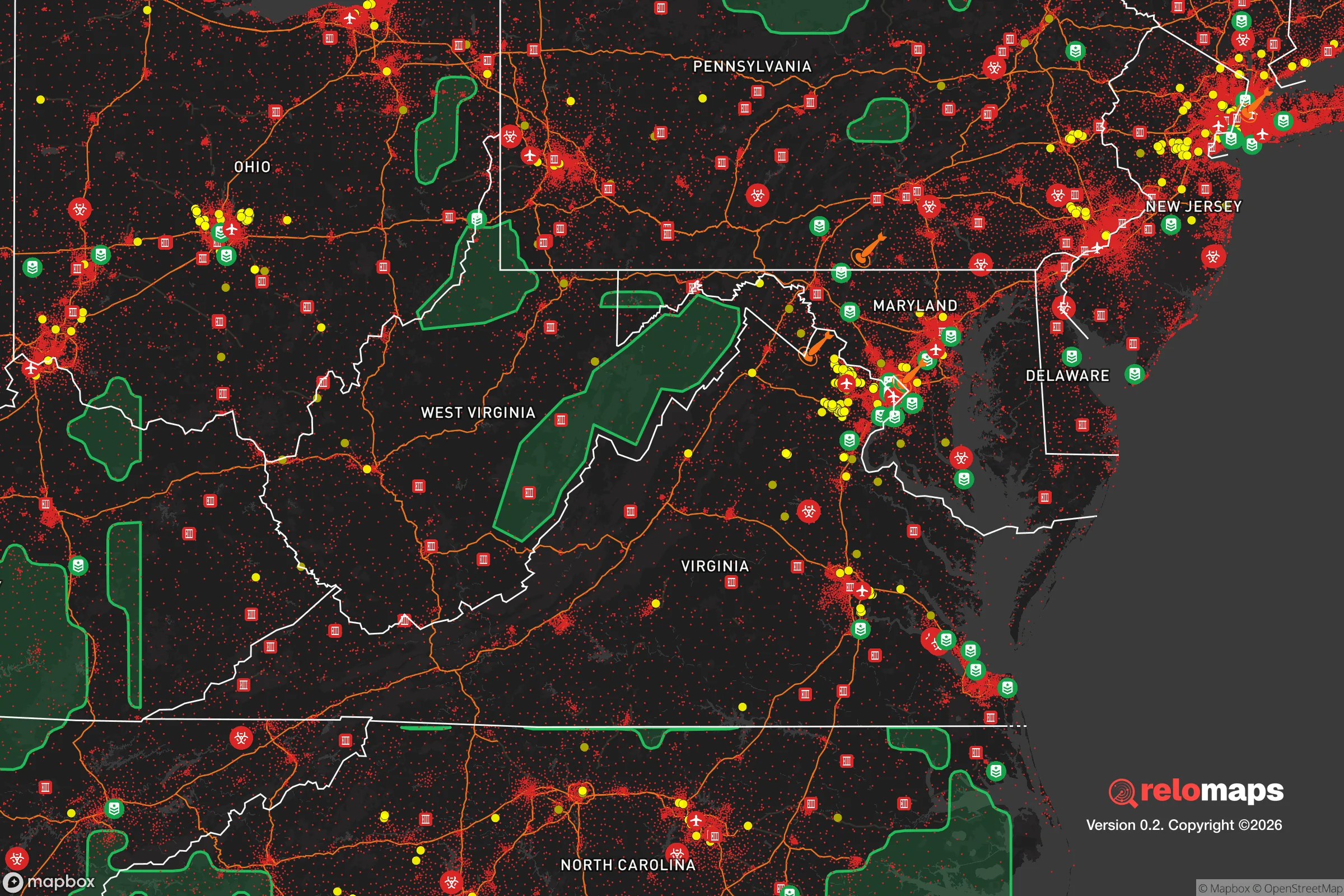


Important Note: For informational purposes only. This does not mean nothing bad ever happens in the green zones. Please use common sense. This is based on public data and modeled with AI. We tried to take a conservative approach but mistakes happen. We update this regularly as new information becomes available.
Solar Generator Recommendations
Backup power matters more here than in safer locations. We've picked three solar generators across budgets and capacity tiers — start with the budget unit if you only need a few essentials, or step up if you want to run a fridge and HVAC for days at a time.

Jackery Portable Power Station Explorer 300
Budget OptionPower on the Go: Weighing only 11 lbs, it's convenient to set up and store with book-sized foldable solar panels

BLUETTI Portable Power Station AC180
Designed for both indoor and outdoor scenarios, AC180 is highly capable as it has a robost capacity and continuous output power.

EF ECOFLOW DELTA Pro Ultra Power Station
Upgraded PickEcoFlow DELTA Pro Ultra is a whole-home energy system designed to grow with your family. Integrated with the Smart Home Panel 2, it scales to meet your evolving energy needs — keeping your home powered, intelligent, and secure through every stage of life.
We earn a commission, at no additional cost to you.
Strategic Assessment Analysis
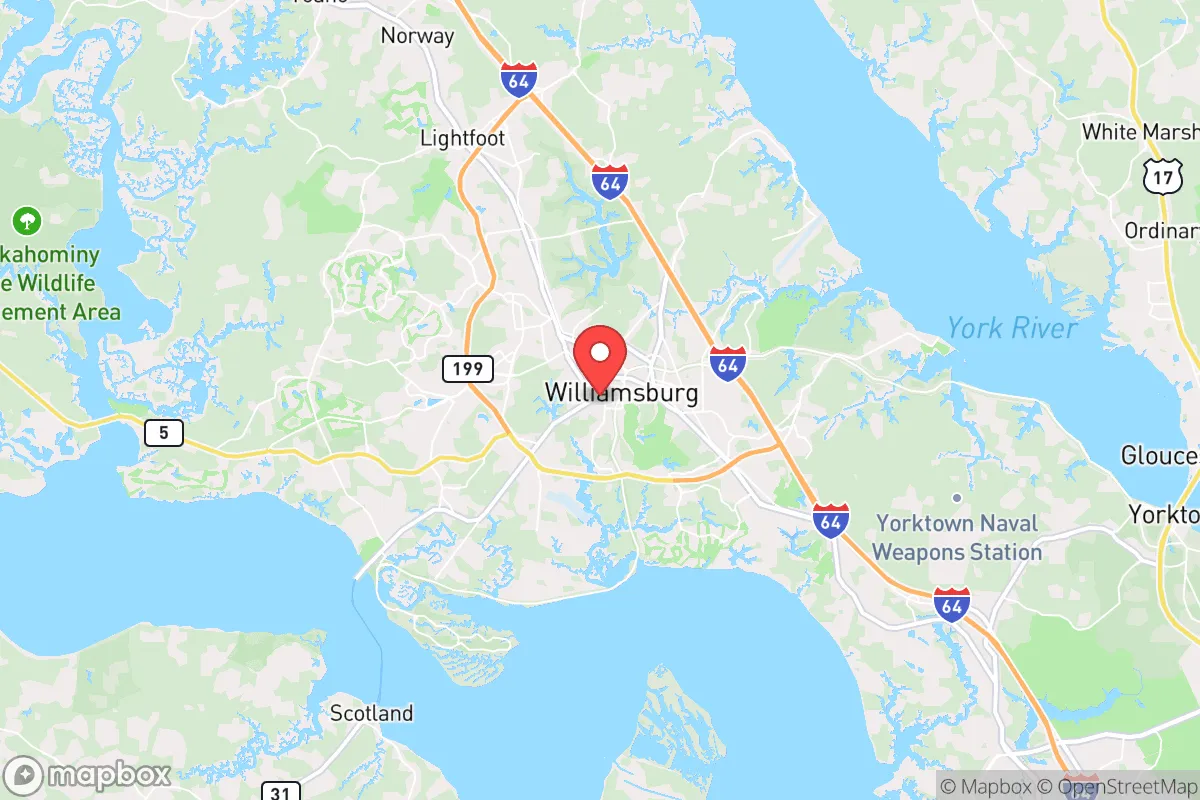
Williamsburg, Virginia offers a surprisingly resilient strategic position for those prioritizing preparedness, balancing proximity to critical infrastructure with enough geographic buffer to avoid the worst of urban collapse scenarios. Located on the Virginia Peninsula between the James and York Rivers, the city sits roughly 45 miles from Richmond and 50 miles from Norfolk, placing it outside the immediate blast and fallout zones of major military and population centers while still accessible for supply runs or evacuation if needed. The area's historical role as a colonial capital and its modern reliance on tourism and education—anchored by Colonial Williamsburg and William & Mary—mean the local economy and population are less dense than nearby Hampton Roads, reducing competition for resources during a crisis. For a relocator thinking in terms of decades, not months, Williamsburg's blend of moderate climate, established infrastructure, and relative isolation from the most volatile urban corridors makes it a candidate worth serious consideration.
Geographic position and natural advantages for long-term stability
Williamsburg's location on the Virginia Peninsula provides a natural defensive posture that preppers should note. The city is bounded by the James River to the south and the York River to the north, with the Chesapeake Bay to the east—water features that create chokepoints for movement and limit approach vectors for any potential threat. The terrain is mostly flat to gently rolling, with mixed hardwood forests and wetlands that offer cover and resources for hunting, foraging, and timber. The region sits in USDA hardiness zone 7b, meaning a growing season of roughly 200 days and the ability to cultivate a wide range of staple crops like corn, beans, squash, and fruit trees without the extreme heat or cold that stresses other areas. Annual rainfall averages 47 inches, well-distributed throughout the year, so surface water and groundwater recharge are reliable—a critical factor for off-grid water security. The area is not prone to earthquakes, tornadoes are rare compared to the Midwest, and hurricane impacts are typically weakened by the time they reach the peninsula, though storm surge along the rivers is a real concern for low-lying properties. For a relocator, the key takeaway is that Williamsburg's geography offers natural barriers, a forgiving climate, and enough water to sustain a small community without heavy reliance on municipal systems.
Risks, exposures, and proximity to fallout-relevant landmarks
No strategic assessment is honest without confronting the downsides, and Williamsburg has several that demand attention. The most immediate risk is its proximity to Naval Station Norfolk, the world's largest naval base, located about 35 miles southeast. In a conflict scenario involving nuclear exchange or large-scale conventional strikes, Norfolk is a high-priority target—and Williamsburg sits within the fallout plume zone for prevailing winds that blow from the east and southeast. The same applies to Joint Base Langley-Eustis in Hampton, roughly 20 miles east, and the Yorktown Naval Weapons Station, just 10 miles southeast, which stores and loads munitions for the fleet. A detonation at any of these facilities could produce radioactive fallout that reaches Williamsburg within hours, depending on wind direction. Additionally, the Surry Nuclear Power Station sits across the James River about 15 miles west; while not a military target, a catastrophic failure there—whether from sabotage, accident, or earthquake—would force evacuation of a 10-mile radius and contaminate the river that supplies much of the region's drinking water. The city itself has a population of about 15,000, but the broader Williamsburg metro area (including James City County and York County) pushes past 150,000, meaning you're not truly remote. During a crisis, the Colonial Parkway and Interstate 64 would become clogged evacuation routes, and the area's reliance on tourism means many residents lack the deep community ties or self-sufficiency skills found in rural farming counties. For the conservative prepper, the calculus is clear: Williamsburg offers advantages, but you must have a plan for fallout sheltering and a secondary bug-out location farther inland, ideally west of Richmond.
Practical resilience for a relocator: food, water, energy, and defensibility
When it comes to daily survival logistics, Williamsburg has a mixed but workable profile. Water is the strongest asset: the James and York Rivers are perennial sources, and the region's high water table means shallow wells are viable in most areas outside the immediate historic district. Rainwater catchment is straightforward given the consistent precipitation, and the city's municipal water system draws from groundwater aquifers that are less vulnerable to surface contamination than reservoirs. Food production is feasible but not automatic: the soil is sandy loam in many parts, requiring amendment for serious agriculture, but the long growing season and access to the Chesapeake Bay for seafood—oysters, crabs, fish—provide a protein buffer. Local farmers' markets and the Williamsburg Farmers Market operate year-round, and there are several u-pick orchards within 20 miles, but a relocator should plan to establish a home garden and possibly a small greenhouse to extend the season. Energy independence is achievable with solar panels, as the region averages 4.5 peak sun hours per day, and the relatively mild winters reduce heating demand compared to northern states. Wood heating is viable given the forest cover, but be aware that firewood permits and local ordinances may restrict harvesting in some subdivisions. Defensibility is moderate: the terrain offers no high ground, and the suburban sprawl of James City County means many neighborhoods have multiple access points. However, the historic core's narrow streets and brick buildings could be fortified, and rural properties along the rivers offer natural barriers. The local law enforcement presence is professional but small—the Williamsburg Police Department has about 50 officers—so in a prolonged breakdown, you cannot rely on them for perimeter security. The best strategy is to join or form a neighborhood watch or community preparedness group, as the area's retiree and academic population includes many with medical, engineering, and logistical skills that are invaluable in a crisis.
The overall strategic picture for Williamsburg is one of cautious optimism for the prepared relocator. It is not a bug-out paradise—you are still within striking distance of multiple high-value military targets, and the population density is higher than ideal for long-term off-grid survival. But for someone who wants to maintain a semblance of normal life while building redundancy into their home and habits, the city offers a rare combination: a moderate climate with reliable water, a community that values history and order, and enough distance from the worst urban chaos to buy you time. The conservative prepper should view Williamsburg as a base of operations, not a final redoubt—a place to stock supplies, cultivate skills, and build relationships, with a pre-planned route to a more remote property in the Shenandoah Valley or Appalachian foothills if the situation deteriorates beyond recovery. If you can afford a home with a well, solar panels, and a root cellar, and you're willing to invest in a fallout shelter or at least a shielded basement, Williamsburg can serve as a defensible, livable anchor for the next decade. Just don't mistake its charm for safety—prepare accordingly, and you'll be ahead of 90% of the population.

* Values derived from national, state, county, city and local statistics and may differ in a specific area. Last updated: 2026-04-23T04:44:28.000Z
Narrative content on this page is AI-generated and may contain mistakes. Verify any details that matter before acting on them.
ReloMaps may earn a commission from affiliate links at no extra cost to you.

