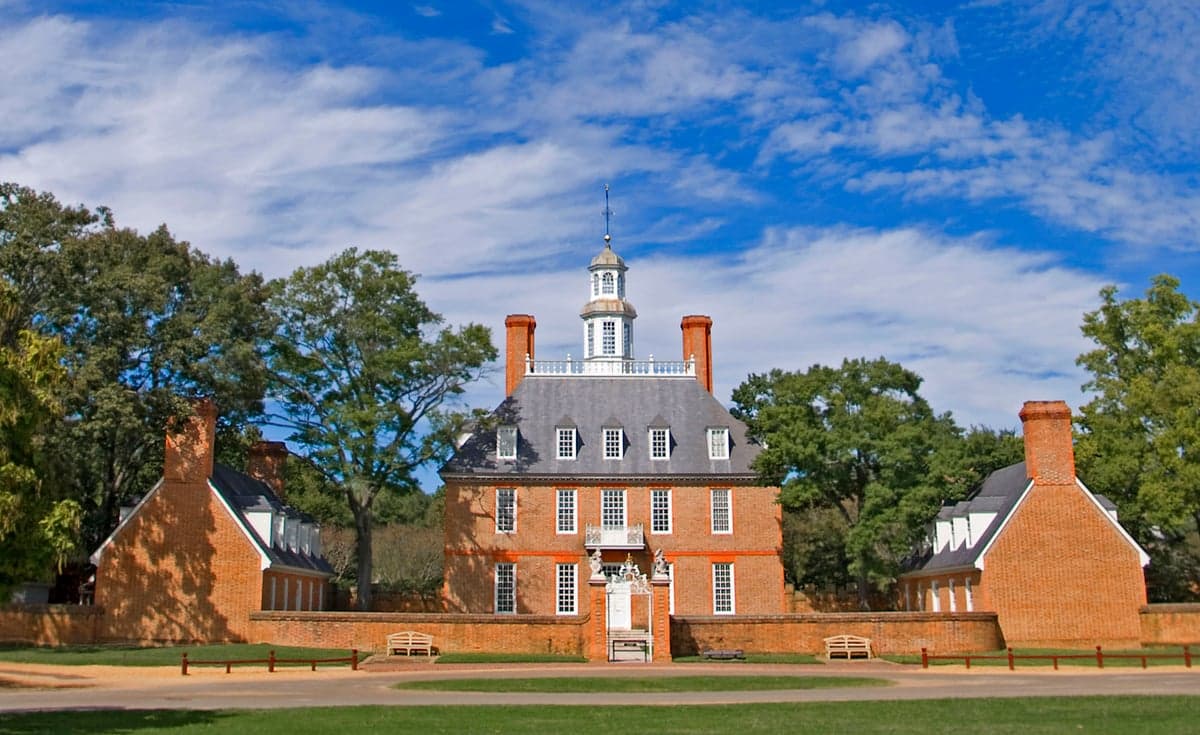
Photo: Wikipedia
Political ClimatePolitical Climate in Williamsburg, VA
District shown is the primary district for this city’s centroid. Cities may span multiple districts.
Local Political AnalysisPolitical Analysis of Williamsburg, VA
Williamsburg, Virginia, sits in a politically interesting spot. The city itself leans more liberal than the surrounding area, but the broader region, including James City County and York County, has a solidly conservative tilt. The Cook PVI for the congressional district is R+3, meaning it votes about three points more Republican than the national average. That’s a decent indicator, but if you’ve lived here as long as I have, you know the real story is in the local elections and the slow, creeping shift in the city’s culture. It’s not the same Williamsburg I grew up in, and honestly, that’s a little concerning.
How it compares
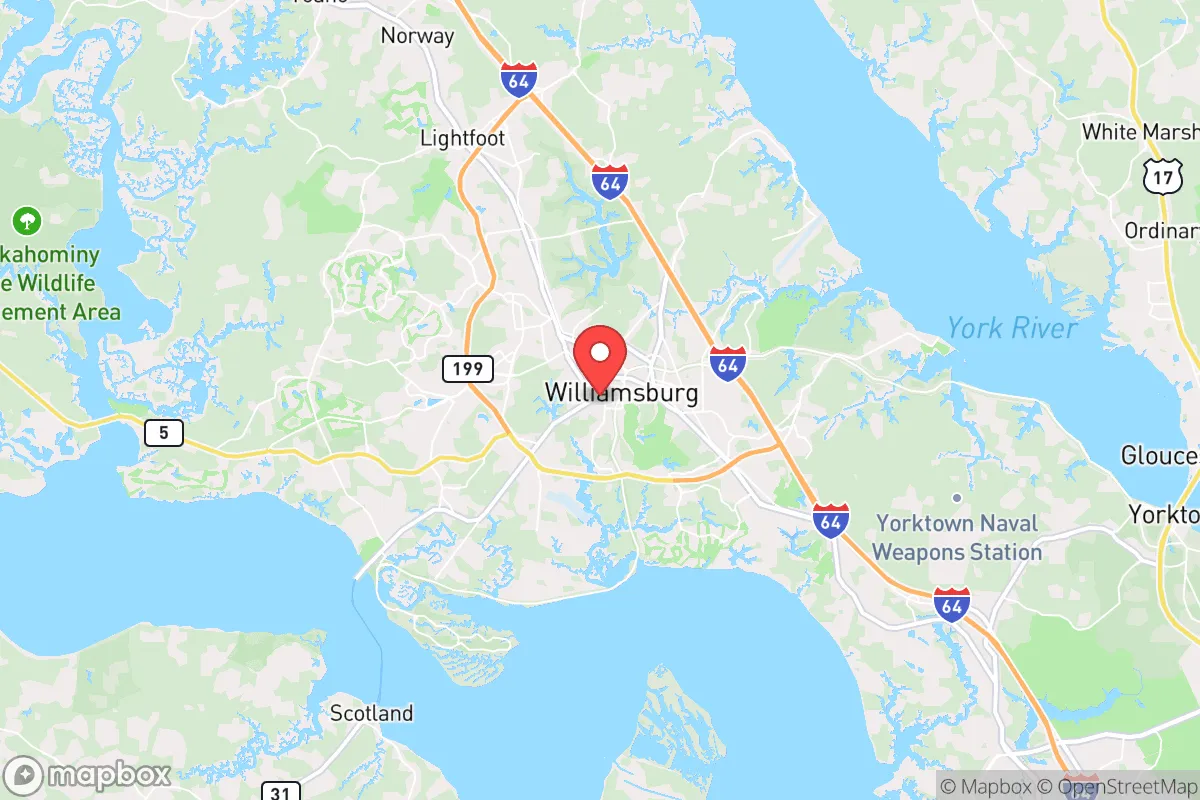
Drive ten minutes west and you’re in James City County, where the politics are reliably conservative. Go east to York County, and it’s the same story. But stay inside the city limits, especially near the College of William & Mary, and you’ll find a pocket of progressive activism that feels out of step with the rest of the region. The contrast is stark. In the county, folks are more likely to be concerned about property taxes, school curriculum, and keeping government out of their daily lives. In the city, you’ll hear more talk about equity initiatives, climate resolutions, and expanding social programs. The nearby towns of Toano and Lightfoot are solidly red, while the historic district and the college area are where the blue votes concentrate. That split means the local government often has to balance competing priorities, but lately, the progressive voices seem to be getting louder, pushing for policies that feel like overreach to a lot of us.
What this means for residents
For a conservative-leaning resident, the biggest concern is the slow erosion of local autonomy. You see it in zoning decisions that prioritize dense, multi-family housing over single-family neighborhoods, or in school board meetings where discussions about parental rights and curriculum transparency get heated. The city council has shown a willingness to adopt state-level progressive goals, like carbon neutrality pledges and diversity mandates, that can feel like unnecessary government intrusion into how we live and run our businesses. The tax burden is also a point of friction. While the county keeps rates relatively low, the city’s spending on social programs and administrative bloat has crept up. If you value personal freedom, limited government, and keeping your own money, the trajectory here is worth watching closely. The long-term trend, driven by an influx of retirees and university-affiliated transplants, suggests the progressive influence will only grow.
One cultural distinction that stands out is the city’s approach to public events and public space. Williamsburg has leaned into a more curated, “inclusive” atmosphere that sometimes feels like it prioritizes messaging over tradition. The old, unapologetically patriotic celebrations have been toned down in favor of more sanitized, politically correct programming. For those of us who remember when the town’s identity was rooted in straightforward American history and local pride, it’s a noticeable shift. The policy distinctions are subtle but real: stricter noise ordinances, more permitting requirements for community gatherings, and a general sense that the city government wants to manage how people enjoy their own town. It’s not a disaster, but it’s a slow drift away from the hands-off, common-sense approach that made this area a great place to raise a family. If you’re thinking of moving here, just know that the political climate is split, and the city’s direction is something you’ll want to keep an eye on.

State Political ClimatePolitical Climate in Virginia
State Political AnalysisPolitical Environment in the State
Virginia has shifted from a reliably red state to a solidly blue one over the past 15 years, driven largely by explosive growth in the Washington, D.C. suburbs. The state hasn't voted for a Republican presidential candidate since 2004, and Democrats now control the governorship, both chambers of the legislature, and both U.S. Senate seats. However, the political landscape is deeply split—Northern Virginia and the Hampton Roads area pull the state left, while the rest of the commonwealth remains conservative, creating a stark urban-rural divide that defines every election cycle.
Urban vs. rural divide
The political map of Virginia is essentially two states. Northern Virginia—specifically the counties of Fairfax, Loudoun, Prince William, and Arlington—now accounts for roughly one-third of the state's total vote and delivers massive Democratic margins. In 2020, Fairfax County alone gave Joe Biden a 300,000-vote advantage, enough to cancel out the entire rest of the state's rural vote. The Hampton Roads region, anchored by Virginia Beach and Norfolk, has also trended blue, though it remains more competitive. Meanwhile, Richmond and Charlottesville are deep-blue urban islands surrounded by conservative suburbs and farmland. The rural Southside and Southwest Virginia—places like Roanoke, Lynchburg, and Danville—vote overwhelmingly Republican, but their populations are shrinking. The key battleground counties are the exurban "crescent" around Richmond and the Fredericksburg area, where voters are more moderate and often decide statewide races.
Policy environment
Virginia's policy environment has shifted hard left since Democrats took full control in 2019. The state has a progressive income tax (top rate 5.75%) and relatively high property taxes, though no sales tax on groceries. In 2020, Democrats passed the Virginia Clean Economy Act, mandating a 100% carbon-free electric grid by 2050, which has driven up energy costs. The state also adopted automatic voter registration and no-excuse absentee voting, making it one of the easiest states to vote in—but also raising concerns about election integrity among conservatives. On education, Virginia has seen a major battle over parental rights: in 2022, Governor Glenn Youngkin campaigned on and signed a law requiring school districts to notify parents of "sexually explicit content" in curricula, but Democrats have since tried to roll back those protections. The state also legalized marijuana in 2021, but retail sales remain stalled due to regulatory infighting. Gun laws have tightened significantly: Virginia now has universal background checks, a "red flag" law, and a one-handgun-per-month limit, passed in 2020.
Trajectory & freedom
Virginia is becoming less free by most conservative measures. The 2020 "red flag" law (SB 70) allows courts to temporarily seize firearms from individuals deemed a threat, with no criminal conviction required. The state also banned the sale of assault weapons to anyone under 21 and closed the "gun show loophole." On medical freedom, Virginia was one of the first states to impose strict COVID-19 vaccine mandates for state employees and healthcare workers, though those have since been relaxed. Parental rights took a hit in 2020 when Democrats passed the Virginia Values Act, which expanded anti-discrimination protections for sexual orientation and gender identity in schools and workplaces—critics argue it undermines religious liberty and parental authority. Property rights are under pressure from the Virginia Housing Commission's push for upzoning and density mandates in suburban areas, particularly in Northern Virginia. The state also eliminated the death penalty in 2021, a move that split conservatives.
Civil unrest & political movements
Virginia has been a flashpoint for political violence and activism. The 2017 Unite the Right rally in Charlottesville, which turned deadly, put the state on the national map for extremist clashes. Since then, left-wing activist groups like Indivisible and Virginia Organizing have been highly active, particularly in Northern Virginia and Richmond. On the right, the Virginia Citizens Defense League (VCDL) has organized massive pro-gun rallies at the state capitol, including the 2020 event that drew over 20,000 people. Immigration politics are tense: several Northern Virginia counties, including Fairfax and Arlington, have declared themselves "sanctuary" jurisdictions, limiting cooperation with ICE. Election integrity remains a hot-button issue: in 2020, Virginia's use of drop boxes and mail-in ballots without signature verification sparked lawsuits, though courts upheld the process. The 2021 gubernatorial race between Youngkin and Terry McAuliffe saw intense debate over critical race theory and school mask mandates, with Youngkin winning by tapping into suburban parent anger.
Projection
Over the next 5-10 years, Virginia will likely continue its leftward drift, driven by demographic trends. Northern Virginia is adding population faster than any other region, and those new residents are overwhelmingly young, diverse, and progressive. The rural areas will continue to lose population and political clout. However, there are countercurrents: the 2021 election of Glenn Youngkin showed that a Republican can win statewide by focusing on education and parental rights, and the state's gerrymandered legislative maps were replaced with a bipartisan commission in 2020, making future elections more competitive. The key wildcard is whether the exurban "crescent" counties—places like Chesterfield and Hanover outside Richmond—continue trending blue or hold as red. If they flip, Virginia becomes a solidly blue state for a generation. If they hold, it remains a purple swing state. For now, the trajectory is clear: Virginia is moving left, but not as fast as Maryland or New Jersey.
For a conservative moving to Virginia, the bottom line is this: you can find a welcoming community in the rural and exurban areas, but you will be living under a state government that is increasingly hostile to gun rights, parental authority, and tax relief. The best bets for a conservative-friendly lifestyle are Lynchburg, Roanoke, or the Fredericksburg exurbs, where you can still find affordable land and like-minded neighbors. But expect to fight for your values at the ballot box every two years—and expect the fight to get harder as Northern Virginia's population keeps growing.
* Values derived from national, state, county, city and local statistics and may differ in a specific area. Last updated: 2026-04-23T04:44:28.000Z
Narrative content on this page is AI-generated and may contain mistakes. Verify any details that matter before acting on them.
ReloMaps may earn a commission from affiliate links at no extra cost to you.

