Photo: Wikipedia
Quality of Life in Westwego, LA
A high quality of life with strong walkability, manageable living costs, healthy neighborhood signals, and solid amenity access.
What does Quality of Life tell us?
Quality of Life blends cost of living, nearby amenities, socioeconomic signals, and neighborhood character. City-level scores represent the whole municipality; individual neighborhoods can differ.
What does this tell us?
Quality of Life blends cost of living, nearby amenities, socioeconomic signals, and neighborhood character. City-level scores represent the whole municipality; individual neighborhoods can differ.
Cost of Living
24% below national average
The Real Cost of Living in Westwego, LA for 2026
| Tier | Individual | Family (4) |
|---|---|---|
| Survival | $16k | $30k |
| Comfortable | $33k | $48k |
| Luxury | $86k+ | $133k+ |
| Elite (Top 5%) | $101k+ | $157k+ |
102%
The Area Signal
A metric tracking the socioeconomic signals of the area.
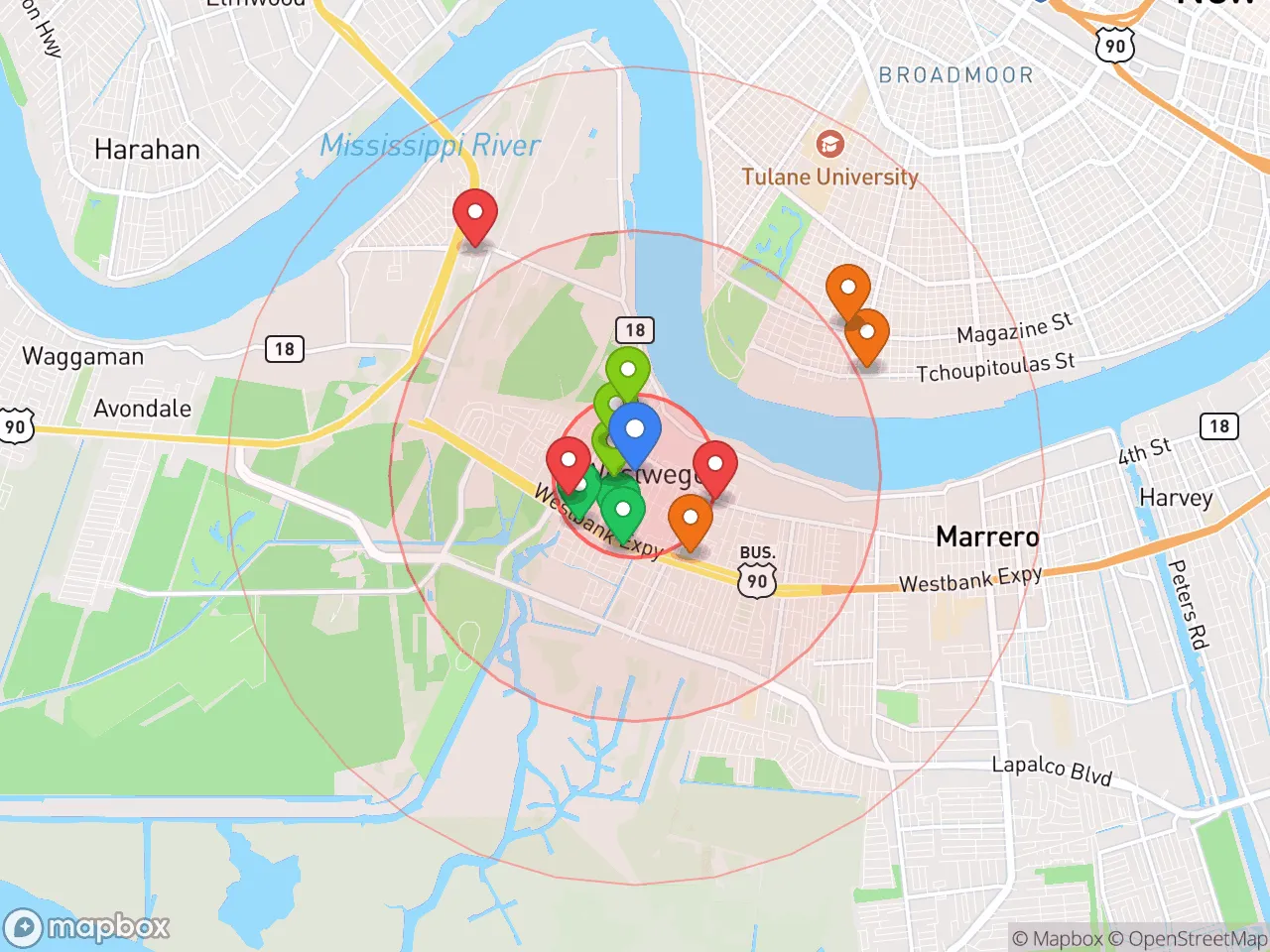
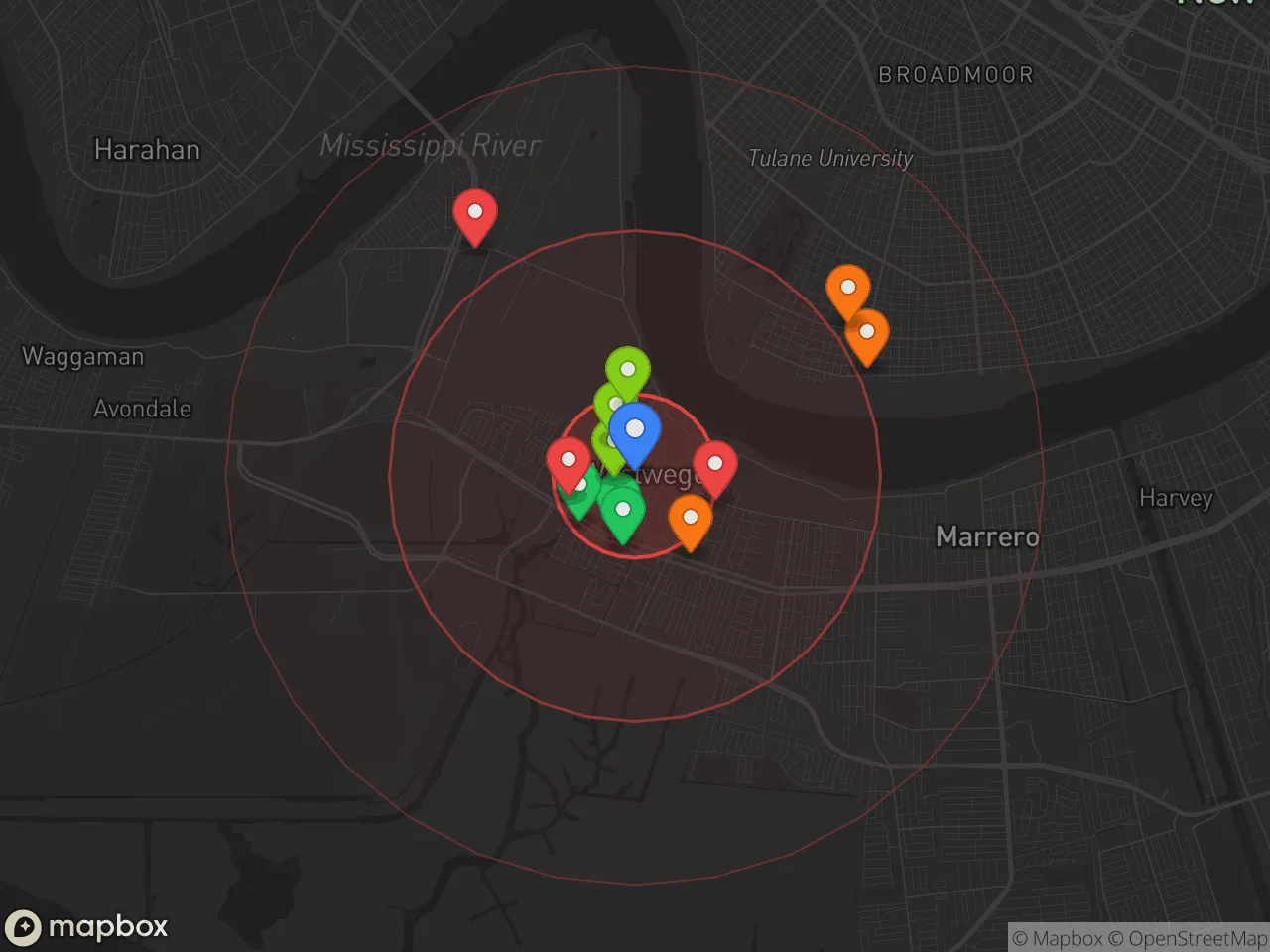
Hobbies
Explore the areaGroceries
0 within 10 miles
Gas
0 within 10 miles
Hospital
0 within 20 miles
Airport
IAH — George Bush Intercontinental
Post Office
Critical Amenities
Quality-of-Life Analysis
Westwego, Louisiana, offers a distinctly affordable quality of life that appeals primarily to working-class families, long-term locals, and commuters who work in New Orleans but prefer a quieter, lower-cost home base. With a cost of living index of 76 — well below the national average of 100 — the city provides a financial cushion that is increasingly rare in the greater metro area. The population skews toward middle-income households, many of whom have lived in Jefferson Parish for generations, giving the community a stable, blue-collar character rather than the transient or affluent profile seen in some nearby suburbs.
Cost of living, housing, and affordability compared to New Orleans and Metairie
Westwego’s cost of living is one of its strongest draws, especially when compared to neighboring cities. The median home value sits at $168,600, which is significantly lower than the New Orleans metro median of roughly $250,000 and well below Metairie’s typical price range of $300,000 or more. For renters, the median monthly rent of $1,013 offers a rare affordable entry point in a region where average rents often exceed $1,300. These figures make Westwego one of the most budget-friendly options within a 15-minute drive of downtown New Orleans. The average commute time of 22.2 minutes is slightly shorter than the national average of 26 minutes, meaning residents can access higher-paying jobs in the city without enduring a long drive. However, property taxes in Jefferson Parish are moderate, and homeowners should factor in flood insurance costs, which can be substantial given the area’s proximity to the Mississippi River and Lake Salvador.
What daily life is like for families: schools, amenities, and local rhythm
Daily life in Westwego centers on a small-town pace within a suburban setting. The Jefferson Parish Public School System serves the area, with schools like Westwego Elementary and L.W. Higgins High School providing local education options; families seeking higher-rated schools often look to nearby Metairie or private institutions. The city’s amenities are modest but functional: the Westwego Farmers and Fisheries Market offers fresh seafood and produce, and the nearby Jean Lafitte National Historical Park and Preserve provides outdoor recreation like hiking and swamp tours. The local rhythm is quiet and residential, with most commercial activity concentrated along the Westbank Expressway corridor. Dining leans toward classic Louisiana fare — po’boys, boiled seafood, and plate lunches — rather than upscale or trendy options. For entertainment, residents typically drive 10 to 15 minutes into New Orleans for nightlife, concerts, or professional sports, which keeps Westwego’s streets calm on weeknights and weekends alike.
Westwego is best suited for budget-conscious buyers and renters who prioritize affordability and a short commute over urban amenities or high-end schools. It works well for tradespeople, service workers, and remote employees who want a lower housing payment without leaving the New Orleans metro entirely. Retirees on fixed incomes may also find the low cost of living appealing, though those seeking walkable neighborhoods or extensive healthcare access may prefer Metairie or the Uptown area. Families should weigh the school options carefully, as the local public schools perform below the state average. Overall, Westwego offers a practical, no-frills quality of life for those who value financial breathing room and a tight-knit community over prestige or polish.

Crime in Westwego, LA
Crime rates similar to the national median for U.S. locations.
Violent CrimeViolent Crime Analysis
Property CrimeProperty Crime Analysis
Crime Analysis
Westwego, Louisiana, reports a violent crime rate of 343.3 incidents per 100,000 residents and a property crime rate of 1,201.6 per 100,000, placing it in a moderate-risk tier compared to national averages. While these figures are not the highest in the New Orleans metropolitan area, the city's proximity to a large urban center with a progressive criminal justice system introduces specific safety concerns for residents and prospective movers. The overall safety picture is one where property crime is the more pressing day-to-day issue, while violent crime, though less frequent, is elevated relative to the safest U.S. suburbs.
Crime in context
Westwego's violent crime rate of 343.3 per 100,000 is roughly 10% higher than the national average of 310 per 100,000, but significantly lower than New Orleans' rate of approximately 1,200 per 100,000. Property crime in Westwego, at 1,201.6 per 100,000, is about 25% higher than the national average of 960 per 100,000. These numbers place Westwego in a middle ground: safer than the core city but riskier than many outlying Jefferson Parish suburbs. A key factor for readers to weigh is the influence of the broader metro area's justice policies. The New Orleans region has seen progressive district attorneys and judges implement policies such as reduced cash bail, diversion programs for repeat offenders, and lighter sentencing guidelines. While intended to reduce incarceration, these policies have been correlated with higher recidivism rates and a perception of diminished consequences for property and violent offenders, directly impacting communities like Westwego that are within the metro's commuting and crime-shed zone.
What residents experience
Residents most frequently report concerns about property crimes—vehicle break-ins, theft from porches, and burglary—rather than random violent attacks. The city's layout, with a mix of older residential streets and commercial corridors along the Westbank Expressway, creates opportunities for transient crime. Westwego's own police department maintains a visible presence, but the city's small size means it cannot fully insulate itself from spillover crime from neighboring unincorporated areas or New Orleans. The presence of a progressive judicial philosophy in the region means that even when arrests are made, offenders—particularly those charged with non-violent property crimes—may face minimal detention, returning to the area quickly. This cycle is a primary driver of resident frustration and a key reason why some families look to more conservative jurisdictions further upriver or across the lake.
Neighborhood-level variation
Safety in Westwego is not uniform. The area near the levee and the historic district along Fourth Street tends to have lower reported crime due to tighter-knit community watch efforts and less through-traffic. Conversely, the commercial strips and apartment complexes near the intersection of Highway 90 and Barataria Boulevard see higher concentrations of property crime and occasional drug-related incidents. Prospective residents should prioritize blocks with active neighborhood associations and consider that homes closer to the New Orleans city line face a higher risk of spillover crime. Overall, Westwego offers a more affordable alternative to the Northshore suburbs, but the trade-off includes exposure to the metro area's progressive justice system and its downstream effects on public safety.
* Values derived from national, state, county, city and local statistics and may differ in a specific area. Last updated: 2026-10-25T03:14:01.000Z
Narrative content on this page is AI-generated and may contain mistakes. Verify any details that matter before acting on them.
ReloMaps may earn a commission from affiliate links at no extra cost to you.

