Photo: Wikipedia
Demographics of Westwego, LA
Affluence Level in Westwego, LA
A below-average socioeconomic profile. Incomes, home values, and educational attainment trail the U.S., with higher poverty and unemployment.
People of Westwego, LA
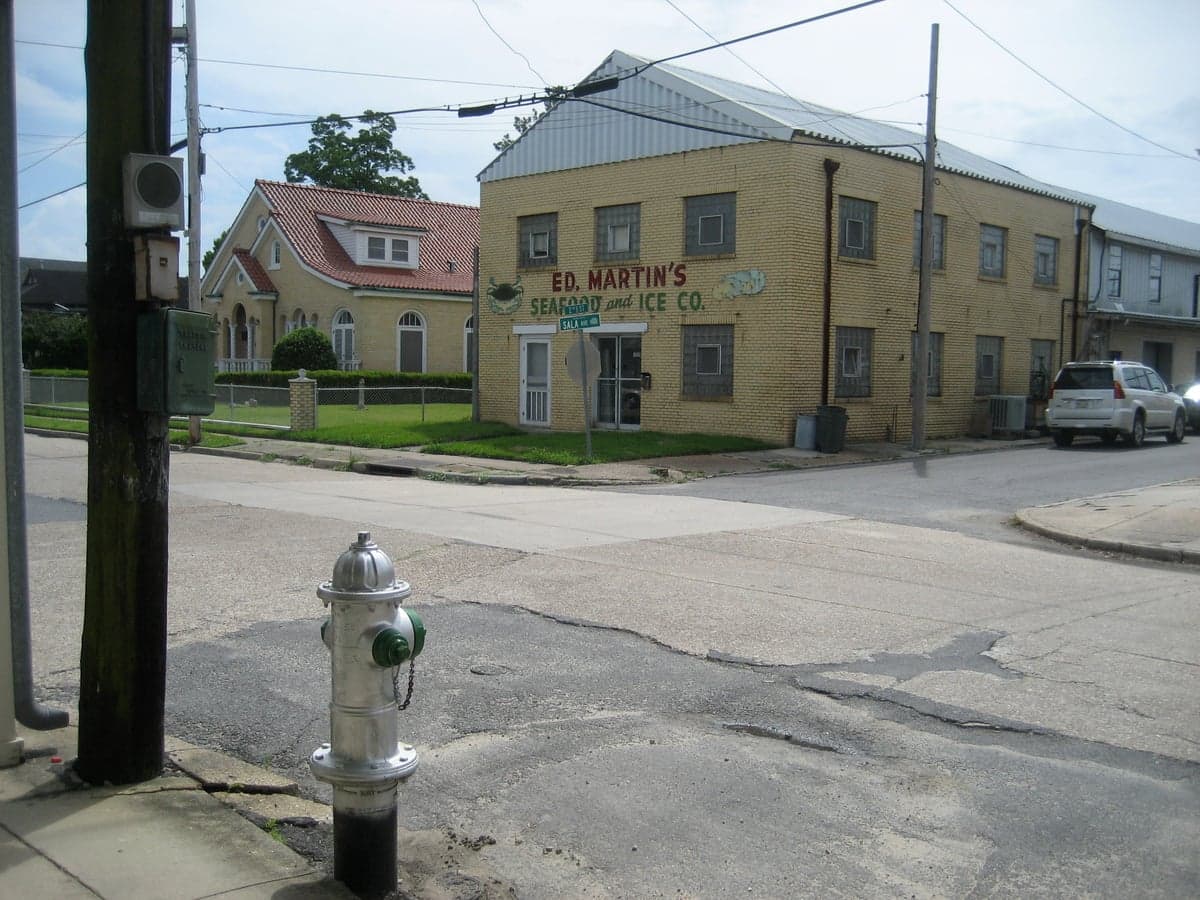
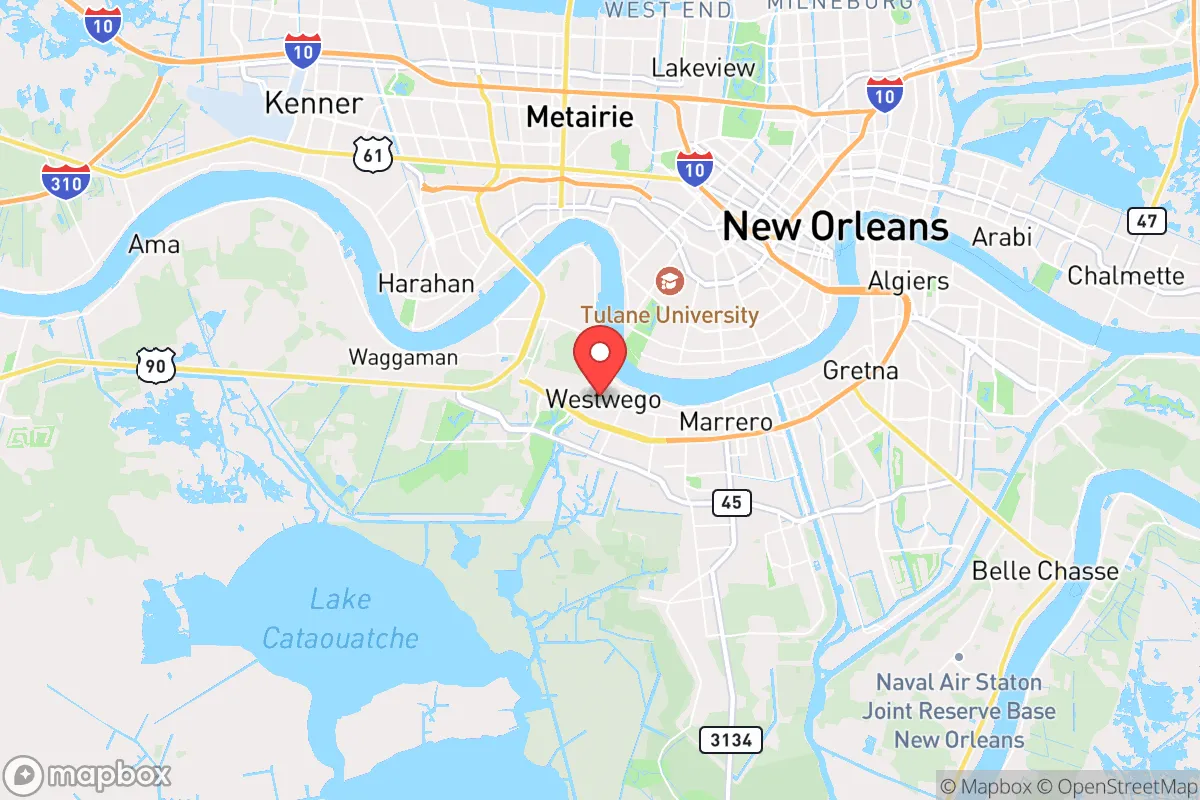
The people of Westwego, Louisiana, today number 8,382, forming a compact, historically rooted community on the west bank of the Mississippi River. The city is predominantly White (63.0%) with a significant Black population (24.8%), a small Hispanic presence (4.4%), and a notable East/Southeast Asian community (2.4%), while the foreign-born share is negligible at 0.2%. With only 16.9% of adults holding a college degree, Westwego retains a strong blue-collar, family-oriented character, distinct from the more transient and professional suburbs east of the river. Its identity is shaped by a deep Catholic, Cajun, and Creole heritage, with a population density that feels tight-knit and insular.
How the city was settled and grew
Westwego’s human history begins not with colonial grants but with the railroad and the river. Founded in 1870 as a stop on the Texas and Pacific Railway, the city’s name is a portmanteau of “West” and “Chicago” (via the railroad’s “We Go” slogan). The original population was drawn by the railroad yards, the Westwego Shrimp Lot (a major seafood processing hub), and the nearby sugar plantations that lined the river. The first major wave of settlers were German and Irish immigrants who built the railroad and worked the docks, settling in what is now the River Road corridor and the historic First Street neighborhood. By the early 1900s, Cajun families displaced from rural Acadiana arrived, establishing the Laroussini and Segnette areas, where French was still spoken on front porches into the 1960s. A smaller but distinct Italian community clustered around the Fourth Street district, running grocery stores and shrimping operations. These groups formed a white, Catholic, working-class base that defined Westwego through the mid-20th century.
Modern era (post-1965)
The post-1965 era brought significant demographic change, though Westwego remained more stable than many New Orleans suburbs. The Hart-Cellar Act of 1965 had a muted direct effect here—the foreign-born population today is just 0.2%—but the domestic shifts were substantial. Black families, many displaced by the construction of the Interstate 10 corridor and the expansion of the Port of New Orleans, began moving into Westwego in the 1970s and 1980s. They settled primarily in the Willowdale and Bonnabel Place neighborhoods, areas that had previously been white-only in practice if not by law. By 2020, the Black share had risen to roughly a quarter of the population, concentrated in these southern and eastern sections of the city. Meanwhile, the East/Southeast Asian community (2.4%)—largely Vietnamese and Filipino families—arrived after the Vietnam War and the 1970s oil boom, settling near the Westwego Shrimp Lot and along Fourth Street, where they revived the seafood industry. The Hispanic population (4.4%) grew slowly, mostly Mexican and Central American laborers drawn to construction and landscaping work, dispersing across the Segnette area without forming a single ethnic enclave. The white population, while still the majority, has aged and shrunk as younger families moved to newer subdivisions in nearby Avondale or Waggaman.
The future
Westwego’s population is slowly declining—down from roughly 10,000 in 2000—and is projected to continue shrinking over the next decade. The city is becoming slightly more diverse, but at a glacial pace: the White share is expected to edge down toward 58-60%, while the Black and Hispanic shares will each rise a few points. The East/Southeast Asian community is stable but not growing, as younger generations move to Jefferson Parish’s more affluent east bank. New residential development is almost nonexistent; most growth will occur through infill in existing neighborhoods like Willowdale and River Road, where older homes are being renovated by younger, cost-conscious families priced out of Metairie. The cultural identity is evolving from a purely Cajun-Catholic fishing town to a more multiethnic, but still deeply local, working-class suburb. The city’s low college attainment rate (16.9%) and negligible foreign-born population suggest it will remain insular, with limited in-migration from outside the region.
For someone moving in now, Westwego offers an affordable, stable, and historically grounded community—but one that is slowly contracting and aging. It is not a place of rapid change or new opportunity, but rather a quiet, family-oriented enclave where roots run deep and newcomers are expected to stay. The city’s future is one of modest diversification within a shrinking footprint, making it best suited for those seeking low costs and a strong sense of place over growth and dynamism.

* Values derived from national, state, county, city and local statistics and may differ in a specific area. Last updated: 2026-10-25T03:14:01.000Z
Narrative content on this page is AI-generated and may contain mistakes. Verify any details that matter before acting on them.
ReloMaps may earn a commission from affiliate links at no extra cost to you.

