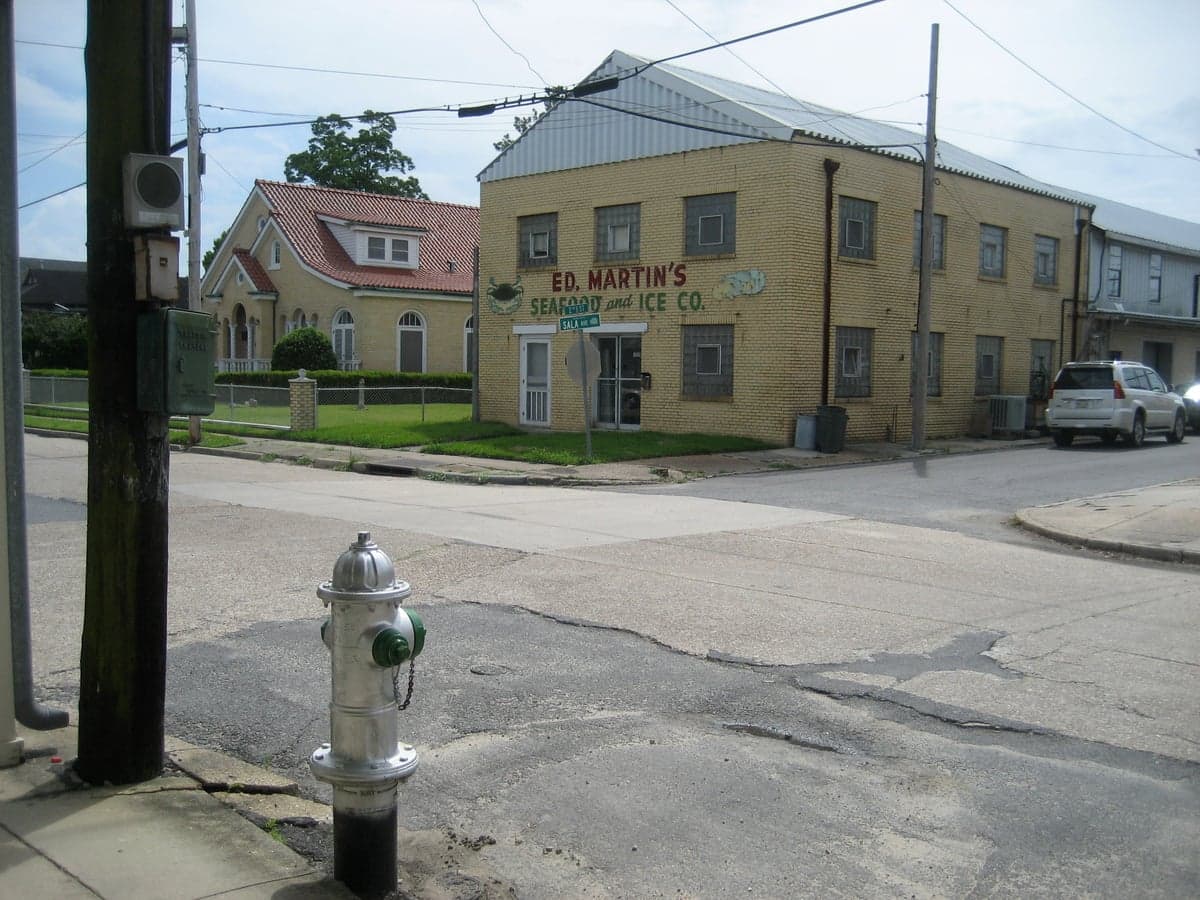
Photo: Wikipedia
Political ClimatePolitical Climate in Westwego, LA
District shown is the primary district for this city’s centroid. Cities may span multiple districts.
Local Political AnalysisPolitical Analysis of Westwego, LA
Westwego is a solidly Democratic stronghold in a state that leans Republican, with a Cook PVI of D+17 that reflects generations of working-class, union-aligned voting patterns. The city has stayed reliably blue even as surrounding Jefferson Parish has shifted rightward in recent cycles, though turnout here is lower than in wealthier suburbs, which mutes its overall influence. You can feel the political identity in the local union halls and the conversations at neighborhood bars — this is still a place where the old-school Louisiana Democratic machine has deep roots, even as the national party has moved away from some of those cultural touchstones.
How it compares
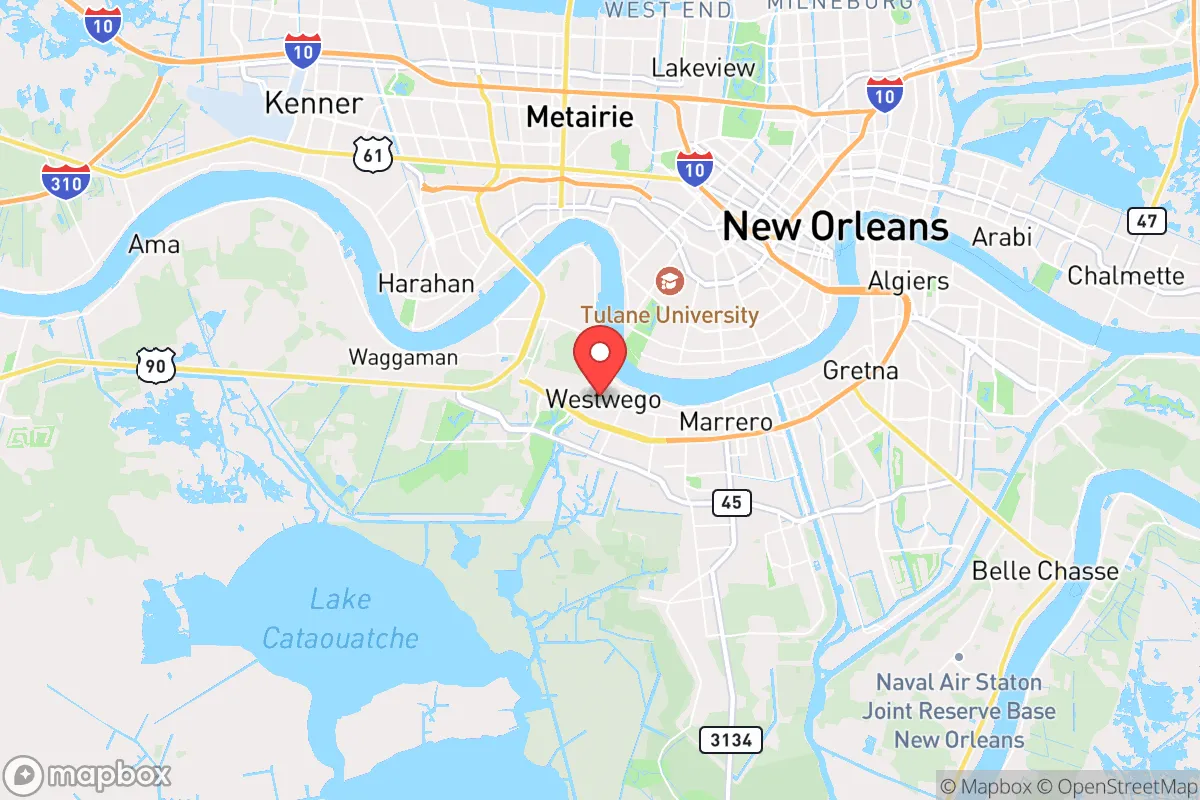
Westwego stands out sharply against nearby conservative suburbs like Kenner and Metairie, both of which have trended Republican in presidential races since the 1990s. Across the Mississippi River, Algiers and parts of Gretna show more mixed voting patterns, but Westwego remains the most consistently Democratic municipality in the western bank of Jefferson Parish. The contrast is starkest in state-level races: Westwego routinely backs Democratic candidates for governor and legislature by double digits, while precincts just a few miles east in Metairie often go 60% or more Republican. The city's D+17 rating places it in the same league as New Orleans East and parts of Baton Rouge's north side, though Westwego's electorate is whiter and older than those areas, giving it a distinct flavor of blue-collar Democratic loyalty rather than the progressive activism seen in urban cores.
What this means for residents
For conservative residents, Westwego can feel politically isolating — local elected officials are nearly all Democrats, and Republican candidates rarely campaign seriously here. Socially, though, the city is not particularly polarized; neighbors tend to get along regardless of party, and the local culture around fishing, hunting, and Mardi Gras traditions cuts across political lines. Liberal residents find a comfortable baseline in local governance, but should not expect the kind of progressive policy push seen in New Orleans proper — Westwego's Democrats are generally moderate on fiscal issues and culturally conservative on things like gun rights and religion. Practical effects include a local government that prioritizes flood protection, infrastructure, and port-related jobs over social policy debates, which suits most residents fine regardless of their presidential vote.
The biggest cultural distinction between Westwego and the rest of Louisiana is its stubborn resistance to the statewide Republican realignment — while the state has moved right in every election since 2008, Westwego's Democratic lean has actually held steady or slightly deepened. That stability comes from a combination of union density, a strong municipal employee base, and family voting traditions that pass down party loyalty more than ideology. Looking ahead, the city's political future depends on whether younger generations stay or move to the suburbs; if the population continues to age and shrink, the D+17 rating could soften, but for now Westwego remains one of the most reliably Democratic small cities in a red state.

State Political ClimatePolitical Climate in Louisiana
State Political AnalysisPolitical Environment in the State
Louisiana has been a reliably Republican state in federal elections since 2000, but its political identity is far more complex than a simple red-state label suggests. The state’s electorate is shaped by a unique blend of culturally conservative Cajun and Protestant traditions, a historically powerful Democratic machine in New Orleans, and a growing suburban Republican base around Baton Rouge and the North Shore. Over the last 20 years, the shift has been dramatic: in 2000, Louisiana voted for George W. Bush by about 8 points; by 2024, the margin had widened to roughly 18 points for Donald Trump. Yet down-ballot races remain competitive, with Democrats still holding statewide offices like Governor (Jeff Landry, a Republican, took office in 2024, but the seat had been held by Democrat John Bel Edwards for two terms) and key local positions, reflecting a state that votes red nationally but often splits tickets locally.
Urban vs. rural divide
The political map of Louisiana is a textbook case of the urban-rural split. New Orleans and its immediate suburbs (Orleans, Jefferson, and St. Bernard parishes) are the state’s Democratic stronghold, driven by a large African American population and a progressive-leaning white professional class. In 2024, Orleans Parish voted about 75% for Joe Biden, while neighboring St. Tammany Parish, the heart of the North Shore suburban boom, went 70% for Trump. Baton Rouge (East Baton Rouge Parish) is a swing area, tilting slightly Democratic due to the city’s Black majority and university influence, but the surrounding rural parishes like Livingston and Ascension are deeply red. The Acadiana region, centered on Lafayette, is culturally conservative and reliably Republican, though with a libertarian streak on issues like gun rights and energy policy. The state’s rural northwest, around Shreveport and Bossier City, is a mix: Bossier is solidly red, while Shreveport itself remains a Democratic-leaning city with a significant Black population. The Mississippi River parishes, like St. James and St. John the Baptist, are predominantly Black and vote heavily Democratic, but they are shrinking in population relative to the growing suburban parishes.
Policy environment
Louisiana’s policy environment is defined by a low-tax, low-service model that appeals to conservatives but creates trade-offs. The state has no personal property tax on vehicles or boats, and homestead exemptions keep property taxes among the lowest in the South. The state income tax is a flat 3% for most earners, and sales taxes are high (averaging around 9.5% statewide) to compensate. The regulatory posture is generally business-friendly, especially for oil and gas, but the state’s legal climate is notoriously plaintiff-friendly, which keeps insurance costs high. Education policy is a battleground: Louisiana has a robust school choice program (the Louisiana Scholarship Program) and a growing charter school sector, but public school performance remains near the bottom nationally. Healthcare is a mixed bag: the state expanded Medicaid under the Affordable Care Act in 2016, a move that was controversial among conservatives but has been maintained. Election laws are moderately restrictive: voter ID is required, early voting is available for 7 days, and no-excuse absentee voting was expanded during COVID but has since been rolled back. The state does not have a “stand your ground” law, but it does have a “castle doctrine” and a strong preemption law that prevents local governments from enacting stricter gun ordinances.
Recent policy direction
Under Governor Jeff Landry, who took office in January 2024, Louisiana has moved decisively to the right on a range of issues. In 2024, the legislature passed a near-total abortion ban with no exceptions for rape or incest, triggering a legal challenge. Gun laws were loosened: permitless carry (constitutional carry) was signed into law in 2024, and the state has resisted red flag laws. On education, the legislature passed a universal school voucher program in 2024, expanding eligibility to all families regardless of income. Parental rights were strengthened with a “Parents’ Bill of Rights” that requires schools to notify parents of curriculum changes and medical services. On speech and privacy, the state passed a law in 2023 requiring age verification for adult websites, and it has considered bills to restrict social media access for minors. Property rights were bolstered with a new law limiting the use of eminent domain for private economic development. Tax policy is trending toward elimination: the state’s corporate franchise tax is being phased out, and there is serious discussion of abolishing the state income tax entirely, though that would require a constitutional amendment. Voting access has been tightened: the state ended no-excuse absentee voting in 2023, and a new law requires a photo ID to vote, with a free ID available at the DMV. The overall direction is toward a more libertarian-leaning conservative model, with lower taxes, fewer regulations, and a strong emphasis on individual rights, particularly around guns and education.
Civil unrest & political movements
Louisiana has a history of political activism that is both left- and right-wing, but it rarely reaches the level of sustained civil unrest seen in other states. The most visible flashpoint in recent years was the 2016 Baton Rouge protests following the shooting of Alton Sterling, which drew national attention and led to clashes with police. More recently, the state has seen organized opposition to abortion bans, with activists from groups like Louisiana Abortion Fund and Women’s Health & Justice Initiative staging protests at the state capitol. On the right, the Louisiana Republican Party has been energized by the Landry administration’s agenda, and groups like the Louisiana Family Forum (a conservative Christian lobbying group) have significant influence. Immigration politics are less heated than in border states, but there have been local controversies over sanctuary policies: in 2019, New Orleans passed a “sanctuary city” ordinance limiting cooperation with ICE, which led to a legal battle with the state. Secession and nullification rhetoric is minimal, though there is a strong strain of Cajun cultural nationalism that sometimes expresses itself in calls for greater local autonomy. Election integrity was a major issue after 2020, with the state GOP pushing for stricter voting laws, but there have been no major fraud cases or recounts that changed outcomes. A new resident would notice that political signs and bumper stickers are common, especially in rural areas, but the state’s political culture is generally more polite and personal than in the Northeast or West Coast.
Projection
Over the next 5-10 years, Louisiana is likely to become more solidly Republican, but with important caveats. The state’s population is growing slowly and aging, with the fastest growth in the conservative-leaning North Shore (St. Tammany and Tangipahoa parishes) and the Acadiana region. New Orleans is losing population, which will reduce the Democratic base. In-migration is primarily from other Southern states, reinforcing the conservative trend. However, the state’s high poverty rate and low educational attainment mean that economic issues could create openings for Democrats if they can find a message that resonates with working-class voters. The biggest wild card is climate change: as sea levels rise and hurricanes become more intense, the state’s coastal parishes (which are heavily Democratic) will continue to shrink, while inland areas grow. The state’s tax structure is likely to shift further toward consumption taxes and away from income taxes, which will benefit higher-income residents but could increase the burden on the poor. The political culture will remain distinct: Louisiana is not Texas or Mississippi; it has a more libertarian, live-and-let-live attitude on many social issues, even as it moves right on abortion and guns. A person moving in now should expect a state that is increasingly conservative but still retains a quirky, independent streak that resists easy categorization.
For a new resident, the bottom line is that Louisiana offers a low-tax, high-autonomy environment for those who value limited government and individual rights, particularly around gun ownership and school choice. Conservative families will find a welcoming culture, especially in the suburbs and rural areas, with strong churches and community networks. Liberal residents will find a more challenging environment, particularly in state politics, but will still have a strong community in New Orleans and Baton Rouge, and the state’s hands-off approach to local governance means that cities can set their own tone on many issues. The key practical takeaway is that Louisiana is a state where your experience will vary dramatically depending on where you live: the North Shore suburbs are a different world from the Mississippi Delta parishes, and both are different from the bayou country. If you value low taxes, gun rights, and a slower pace of life, Louisiana is a strong fit. If you prioritize progressive social policies or robust public services, you will need to look carefully at the local level to find your niche.
* Values derived from national, state, county, city and local statistics and may differ in a specific area. Last updated: 2026-10-25T03:14:01.000Z
Narrative content on this page is AI-generated and may contain mistakes. Verify any details that matter before acting on them.
ReloMaps may earn a commission from affiliate links at no extra cost to you.

