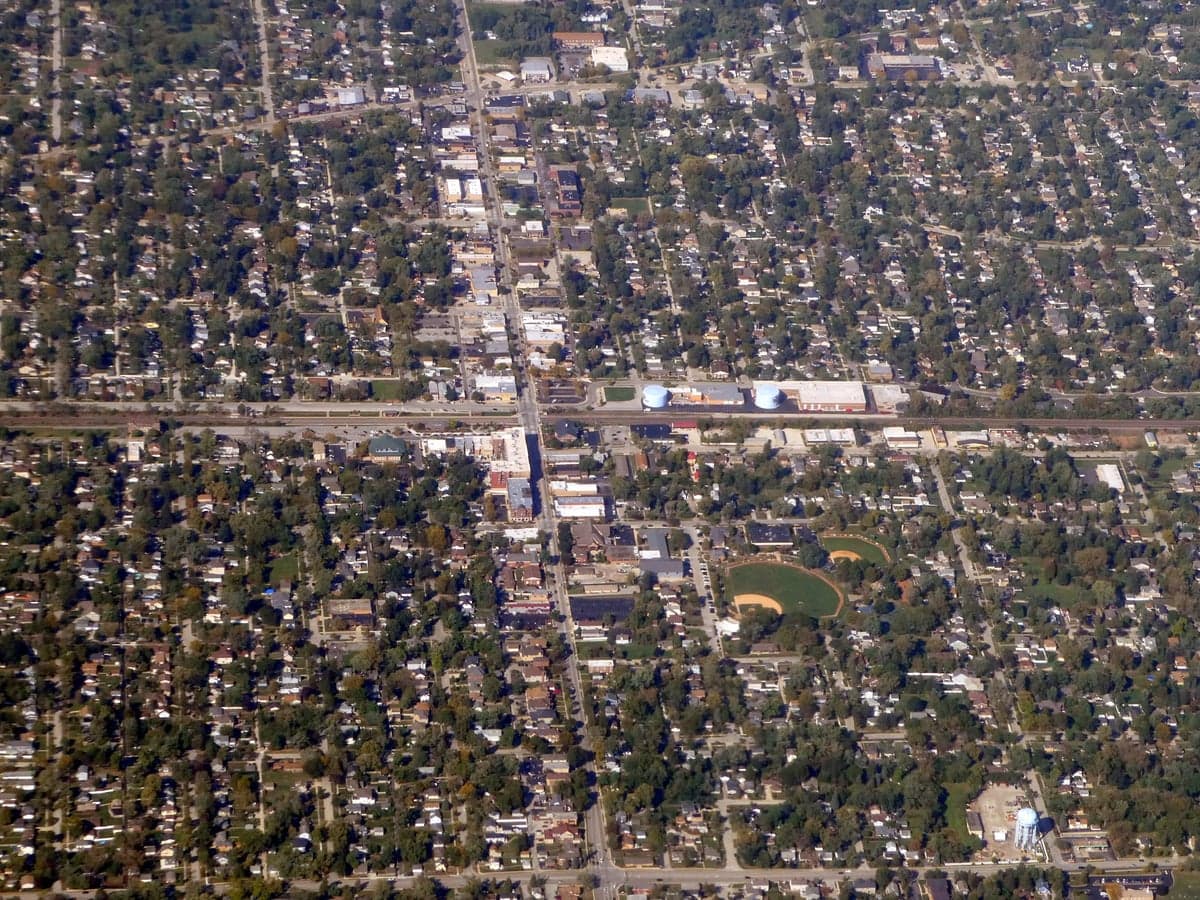
Photo: Wikipedia
Political ClimatePolitical Climate in Westmont, IL
District shown is the primary district for this city’s centroid. Cities may span multiple districts.
* Lean and PVI are calculated from Westmont, IL’s own 2020 presidential results (precinct returns summed to the city), with 2024 estimated from the surrounding county’s 2020–2024 shift, Cook-style. Sources: state election offices; VEST 2020 precinct results (CC BY 4.0).
Political rankings in Illinois
- Most Conservative Cities in Illinois
- Most Liberal Cities in Illinois
- Best Liberal-Leaning Towns in the Midwest
- Safest Liberal-Leaning Towns in the Midwest
- Safest Conservative-Leaning Towns in the Midwest
- Affordable Small Towns for Conservatives
- Most Affordable Liberal-Leaning Small Towns in the U.S.
- Safest Conservative-Leaning Cities in the U.S.
- Most Conservative Counties in Illinois
- Most Liberal Counties in Illinois
Local Political AnalysisPolitical Analysis of Westmont, IL
Westmont, Illinois, sits in a political sweet spot that’s a bit more moderate than the rest of Cook County. With a Cook PVI of D+3, the village leans Democratic, but it’s noticeably less blue than the surrounding state of Illinois, which carries a D+7 rating. That four-point gap might not sound huge, but it’s the difference between a reliably liberal suburb and one where Republicans can still win local races and feel comfortable at a village board meeting. Over the last decade, Westmont has drifted leftward, mirroring national trends in the Chicago suburbs, but it hasn’t flipped as hard as places like Oak Park or Evanston. It’s a place where a Democratic candidate can expect to win, but usually by a single-digit margin, not a landslide.
How it compares
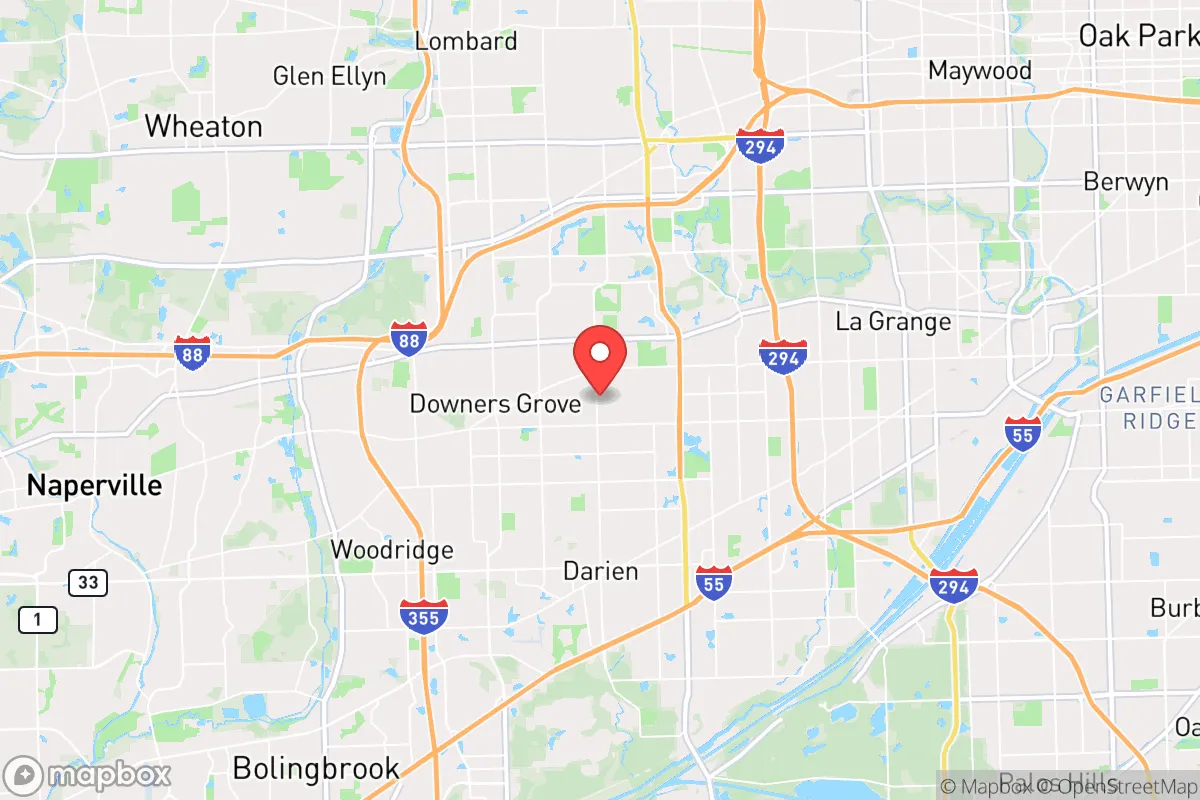
Westmont’s D+3 rating puts it in a distinct category compared to its neighbors. Head west a few miles into DuPage County, and you hit towns like Downers Grove and Lisle, which lean more Republican—typically D+1 or even R+1 in some precincts. Go east toward Hinsdale or Clarendon Hills, and the tilt shifts further right, with some areas voting R+5 or more. Meanwhile, drive north to Elmhurst or Lombard, and you’ll find a similar moderate-to-lean-Democratic vibe, but with a stronger Republican base. The real contrast is with Chicago proper and inner-ring suburbs like Berwyn or Cicero, which are D+15 or higher. Westmont’s political identity is shaped by its mix of older, established families who remember when the village was reliably red, and newer residents—many drawn by the BNSF Metra line and relatively affordable housing—who lean blue. That blend keeps the local political scene competitive, with both parties fielding credible candidates for mayor and village trustee races.
What this means for residents
For liberal residents, Westmont offers a comfortable environment where Democratic candidates are favored, but not to the point of complacency. You’ll find active Democratic clubs and progressive advocacy groups, but they share space with a visible Republican presence, especially in the older neighborhoods south of Ogden Avenue. Conservative residents aren’t marginalized here; they can still win school board seats and have a real voice in zoning and tax debates. The practical effect is that policy tends to be pragmatic rather than ideological. Westmont’s village government focuses on infrastructure, public safety, and economic development—issues that don’t split neatly along party lines. The biggest political fights in recent years have been over downtown redevelopment and property tax rates, not social issues. That’s a direct result of the community’s balanced lean: neither side can push an extreme agenda without losing the next election.
Culturally, Westmont reflects its moderate politics. You won’t see the overt political signage or activist energy you’d find in more polarized suburbs. The annual Westmont Fest and the downtown farmers market are community events where politics takes a back seat. The village’s diversity is growing—the Asian American population has increased notably—and that demographic shift is slowly nudging the political needle leftward. But the change is gradual. Longtime residents will tell you that Westmont was a Republican stronghold in the 1980s and 1990s, and while it’s now solidly Democratic, it hasn’t lost its independent streak. For anyone moving here, the takeaway is simple: you’ll find neighbors who share your views, but you’ll also find plenty who don’t, and that’s generally seen as a good thing.

State Political ClimatePolitical Climate in Illinois
State Political AnalysisPolitical Environment in the State
Illinois is a solidly Democratic state with a Cook PVI of D+7, meaning it votes about seven points more Democratic than the national average in presidential elections. The state has been trending blue for decades, but that shift is almost entirely driven by the Chicago metropolitan area, which accounts for roughly two-thirds of the state’s population. Outside of Cook County and the collar counties, much of downstate Illinois is deeply Republican, creating one of the sharpest urban-rural political divides in the country. For a conservative-leaning relocator, the practical reality is that state-level policy is dominated by Democrats, but local life in many counties and towns can feel very different depending on where you land.
Urban vs. rural divide
The political map of Illinois is a tale of two states. Chicago and its inner suburbs in Cook County are the engine of Democratic power, delivering massive vote margins that swamp the rest of the state. The collar counties—DuPage, Lake, Kane, Will, and McHenry—have been trending purple to blue in recent cycles, especially in suburban areas like Naperville and Schaumburg, where college-educated voters have shifted left. Meanwhile, downstate Illinois is overwhelmingly Republican. Counties like Williamson, Effingham, and Macoupin routinely vote 70-80% Republican. The divide is stark: drive 90 minutes southwest of Chicago to a town like Pontiac, and you’ll find a political culture that feels more like rural Indiana than the state capital. The metro-east area around St. Louis, including Belleville and Collinsville, is a mixed bag—historically blue-collar Democratic but trending Republican in recent years. The result is a state where your experience of politics depends almost entirely on which zip code you choose.
Policy environment
Illinois has a progressive policy footprint that is among the most pronounced in the Midwest. The state has a flat income tax rate of 4.95%, but a 2020 constitutional amendment (the Fair Tax) was rejected by voters, so the state remains a flat-tax state for now. Property taxes are among the highest in the nation, averaging around 2.1% of home value, which is a major consideration for homeowners. The state has a strong regulatory posture on environmental and labor issues, including a $15 minimum wage that was phased in by 2025. Education policy is centralized: the state funds schools through a formula that heavily weights property wealth, meaning wealthy suburbs like Hinsdale and Lake Forest have well-funded schools while rural districts struggle. Healthcare policy includes expanded Medicaid under the Affordable Care Act and a state-based health insurance exchange. Election laws are among the most accessible in the country: Illinois has no-excuse mail-in voting, automatic voter registration, and same-day registration. For conservatives, the policy environment can feel restrictive, especially on taxes and regulation, but local control in downstate counties often mitigates the impact.
Recent policy direction
Recent legislation in Illinois has pushed the state further left on several fronts. In 2023, the state enacted a ban on assault weapons and high-capacity magazines (the Protect Illinois Communities Act), which is currently being challenged in court but remains in effect. Gun rights advocates have responded by moving to counties like Randolph or Jefferson, where local sheriffs have declared themselves “Second Amendment sanctuaries.” On education, Illinois passed a law in 2021 requiring all public schools to teach LGBTQ+ inclusive history, and in 2023, the state expanded parental leave but also limited parental opt-out rights for certain curriculum materials. On privacy and surveillance, Illinois has one of the strongest biometric privacy laws in the country (BIPA), which has led to a wave of class-action lawsuits against employers. Medical and bodily autonomy: Illinois has codified abortion rights into state law (the Reproductive Health Act of 2019) and has become a destination for out-of-state patients. Property rights are relatively weak—eminent domain is used frequently for economic development, and the state has a strong landlord-friendly eviction process. On voting, Illinois has expanded ballot access significantly, including permanent mail-in voting lists. For a conservative relocator, the net effect is a state where personal liberties on guns and education are constrained, but privacy and medical autonomy are broadly protected.
Civil unrest & political movements
Illinois has a history of political activism that ranges from organized labor to grassroots conservative movements. The 2020 George Floyd protests in Chicago were among the largest in the country, leading to property damage and a sustained debate over policing and public safety. The state has a strong sanctuary policy: the TRUST Act (2017) and the Keep Illinois Families Together Act (2021) limit local law enforcement cooperation with federal immigration authorities. This has made Illinois a destination for undocumented immigrants, particularly in Chicago and suburban areas like Aurora and Elgin. On the right, the “Illinois Separation” movement has gained some traction in downstate counties, with several counties passing non-binding resolutions to explore secession from the state—though these are largely symbolic. Election integrity has been a flashpoint: the 2020 election saw widespread use of mail-in ballots, and conservative groups have raised concerns about ballot harvesting and voter roll maintenance, though no major fraud has been proven. In practice, a new resident in a downstate county like Effingham will see little visible political unrest, while someone in Chicago’s Logan Square neighborhood will encounter regular protests and activist presence. The divide is real and visible.
Projection
Over the next 5-10 years, Illinois is likely to remain a Democratic stronghold at the state level, but the margins may narrow slightly. Chicago’s population has been declining for years, while the collar counties and downstate areas are growing or stable. The 2020 census cost Illinois one congressional seat, and the trend of out-migration to states like Texas, Florida, and Indiana is likely to continue, especially among higher-income households who are sensitive to property taxes. However, the state’s economy is diversifying—the Chicago area remains a hub for finance, tech, and logistics, and the downstate region is seeing growth in renewable energy and manufacturing. The political trajectory suggests that the urban-rural divide will deepen, with Chicago and its suburbs becoming more progressive while downstate counties become more conservative. For a relocator, this means that if you choose a downstate county like Madison or St. Clair, you’ll likely see local governance that is more aligned with conservative values, but you’ll still be subject to state-level policies on taxes, guns, and education that you may disagree with. The state is not going to flip red anytime soon, but the political landscape is becoming more fragmented.
For a new resident, the bottom line is that Illinois offers a stark choice: live in or near Chicago and you’ll experience a progressive, high-tax, high-regulation environment with strong protections for civil liberties and a vibrant economy. Live in a downstate county and you’ll find lower costs, more conservative local governance, and a slower pace of life, but you’ll still pay high property taxes and be subject to state laws you may oppose. The state’s political climate is not monolithic, and your experience will depend heavily on where you land. If you’re a conservative looking for a place where your vote matters locally, downstate Illinois can work. If you want a state where your vote consistently influences statewide policy, you’ll be frustrated. The key is to match your location to your tolerance for state-level policy you may not agree with.
* Values derived from national, state, county, city and local statistics and may differ in a specific area. Last updated: 2026-11-13T05:33:46.000Z
Narrative content on this page is AI-generated and may contain mistakes. Verify any details that matter before acting on them.
ReloMaps may earn a commission from affiliate links at no extra cost to you.

