
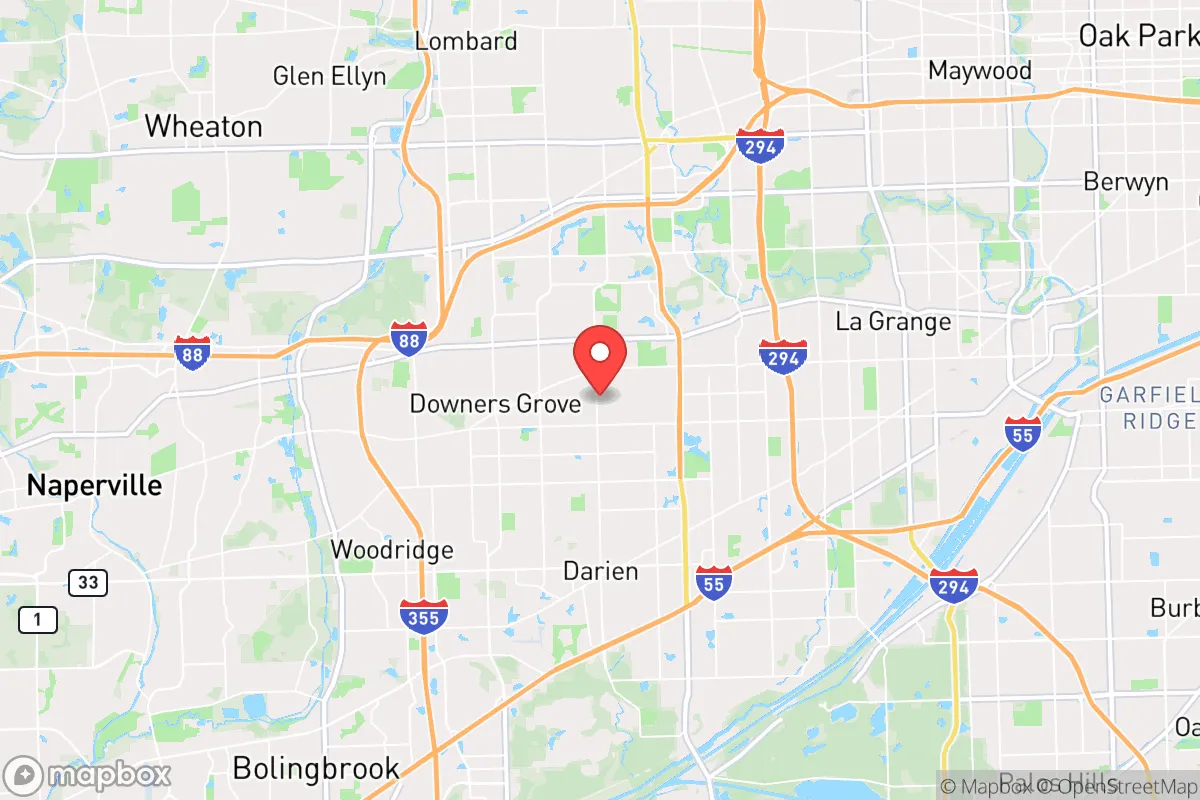
Photo: Wikipedia
Personal Sovereignty in Westmont, IL
Viable for self-reliance. Generally workable, though some barriers may limit total independence.
What does Personal Sovereignty tell us?
Personal Sovereignty measures your capacity for self-reliance and independence with minimal government friction. Higher scores mean fewer barriers between you and the way you want to live... but it assumes you have the space you need and good neighbors.
What does this tell us?
Personal Sovereignty measures your capacity for self-reliance and independence with minimal government friction. Higher scores mean fewer barriers between you and the way you want to live... but it assumes you have the space you need and good neighbors.
State Policy
Energy independence: Importer (63% of energy produced in-state)
Personal Liberty
Homesteading

Personal Liberty Analysis
Westmont, Illinois, presents a mixed picture for personal sovereignty, where a relatively permissive local environment for property use and self-reliance is counterbalanced by a state-level framework of high taxes, strict gun regulations, and expansive government authority. For the individual or family prioritizing autonomy, the key tension lies between the village's practical, hands-off approach to daily life and the binding constraints imposed by Cook County and Springfield. Understanding this layered dynamic is essential for anyone evaluating Westmont as a place to exercise maximum personal freedom.
Tax burden and regulatory posture: what residents actually pay and deal with
The most immediate constraint on personal sovereignty in Westmont is the tax burden. Illinois has the second-highest property tax rate in the nation, and Westmont sits within DuPage County, where effective rates typically range from 2.0% to 2.5% of assessed home value. For a median-priced home around $300,000, that translates to roughly $6,000 to $7,500 annually in property taxes alone. State income tax is a flat 4.95%, and the state sales tax rate is 6.25%, with local options pushing the combined rate in Westmont to 8.75%. This creates a high baseline cost of living that directly reduces disposable income and the financial freedom to save, invest, or self-fund projects.
On the regulatory side, Westmont itself is not an overbearing municipality. Zoning is conventional but not hostile to small-scale enterprise. Home-based businesses are permitted with a simple license, provided they don't generate excessive traffic, noise, or signage. The village does not impose the kind of hyper-specific aesthetic or operational codes found in some nearby suburbs. However, state-level regulations add friction. Environmental permitting, contractor licensing, and building codes are all state-mandated, meaning any significant construction or renovation project will involve multiple layers of bureaucracy and fees. The overall regulatory posture is moderate at the local level but heavy when state requirements are factored in.
Self-defense and gun law specifics: what Illinois allows and restricts
For the self-reliant individual, Illinois gun laws are among the most restrictive in the Midwest, and Westmont residents must comply fully. The state requires a Firearm Owner's Identification (FOID) card to possess any firearm or ammunition, a process that includes a background check and can take weeks or months due to processing delays. Concealed carry is legal only with a state-issued Concealed Carry License (CCL), which requires 16 hours of training, a separate application, and a $150 fee. Illinois is a "may-issue" state in practice, though the law is structured as "shall-issue" for those who meet all criteria. There is no constitutional carry, and open carry is prohibited entirely.
Westmont itself does not add local restrictions beyond state law, but Cook County's influence is felt indirectly. The county has a history of aggressive gun control advocacy, and while Westmont is in DuPage County, proximity to Chicago means that regional political pressure often shapes state policy. Magazine capacity is limited to 10 rounds for long guns and 15 for handguns under state law, and the state maintains a registry of firearm purchases through the FOID system. For the resident who views self-defense as a fundamental right, these restrictions represent a significant limitation on personal sovereignty compared to states like Indiana or Missouri, where permitless carry and fewer purchase controls are the norm.
Self-reliance and homesteading viability: lot sizes, zoning, and off-grid feasibility
Westmont's suburban character limits the scope of serious homesteading, but there are pockets of possibility. Typical residential lot sizes range from 0.15 to 0.25 acres in older subdivisions, with some larger parcels (0.5 to 1 acre) in the western parts of the village near the Downers Grove border. Zoning is primarily R-1 and R-2 single-family residential, which permits vegetable gardens, small fruit trees, and limited livestock. Chickens are allowed in Westmont with a permit, but roosters are prohibited, and coop placement must meet setback requirements. Larger livestock such as goats, sheep, or pigs are not permitted on standard residential lots.
Off-grid living is effectively impossible within village limits. Westmont requires connection to municipal water and sewer for all habitable structures, and the electrical grid is universally available. Solar panels are permitted but must comply with building codes and utility interconnection agreements, and battery storage for full off-grid operation would require variances that are rarely granted. Rainwater collection is not explicitly prohibited but is limited by state water rights laws. For the serious homesteader, the nearby unincorporated areas of DuPage County or rural Will County offer more latitude, but within Westmont itself, self-reliance is limited to gardening, small-scale food preservation, and energy efficiency upgrades rather than true independence from infrastructure.
Personal liberties: parental rights, medical autonomy, speech, and property
Parental rights in Illinois are legally recognized but subject to significant state oversight. The Illinois Department of Children and Family Services (DCFS) has broad authority to investigate reports of neglect or abuse, and the standard for intervention is lower than in many states. Homeschooling is legal but requires registration with the local school district and submission of a plan of instruction covering core subjects. There is no mandatory standardized testing, but the state can request evidence of educational progress. Medical autonomy is constrained by state vaccine mandates for school attendance, though philosophical exemptions were eliminated in 2021; only medical exemptions are now accepted. This represents a direct limitation on parental decision-making in healthcare.
Free speech and assembly are protected under the First Amendment and Illinois law, but local ordinances in Westmont regulate noise, signage, and public gatherings. Political signs are permitted during election periods with size and placement restrictions. Property rights are generally respected, but the village exercises eminent domain authority for public projects, and the state's strong environmental regulations can limit what owners can do with their land, particularly near wetlands or floodplains. The overall environment for personal liberties is one of moderate local tolerance constrained by aggressive state-level regulation, particularly in healthcare and education.
Compared to other areas in the Chicago metropolitan region, Westmont offers a relatively balanced sovereignty profile for the conservative-leaning individual. It is less restrictive than Cook County suburbs like Oak Park or Evanston, where local gun bans and progressive social policies are more entrenched, but it is far more regulated than rural counties like DeKalb or Ogle, where property taxes are lower, gun laws are still state-limited but local enforcement is laxer, and homesteading is genuinely feasible. For the family that values a stable suburban environment with decent schools and reasonable local governance, Westmont is a workable compromise. For the individual seeking maximum personal sovereignty with minimal government intrusion, the state of Illinois itself remains the primary obstacle, and relocation to a neighboring state may be the more congruent choice.

* Values derived from national, state, county, city and local statistics and may differ in a specific area. Last updated: 2026-11-13T05:33:46.000Z
Narrative content on this page is AI-generated and may contain mistakes. Verify any details that matter before acting on them.
ReloMaps may earn a commission from affiliate links at no extra cost to you.

