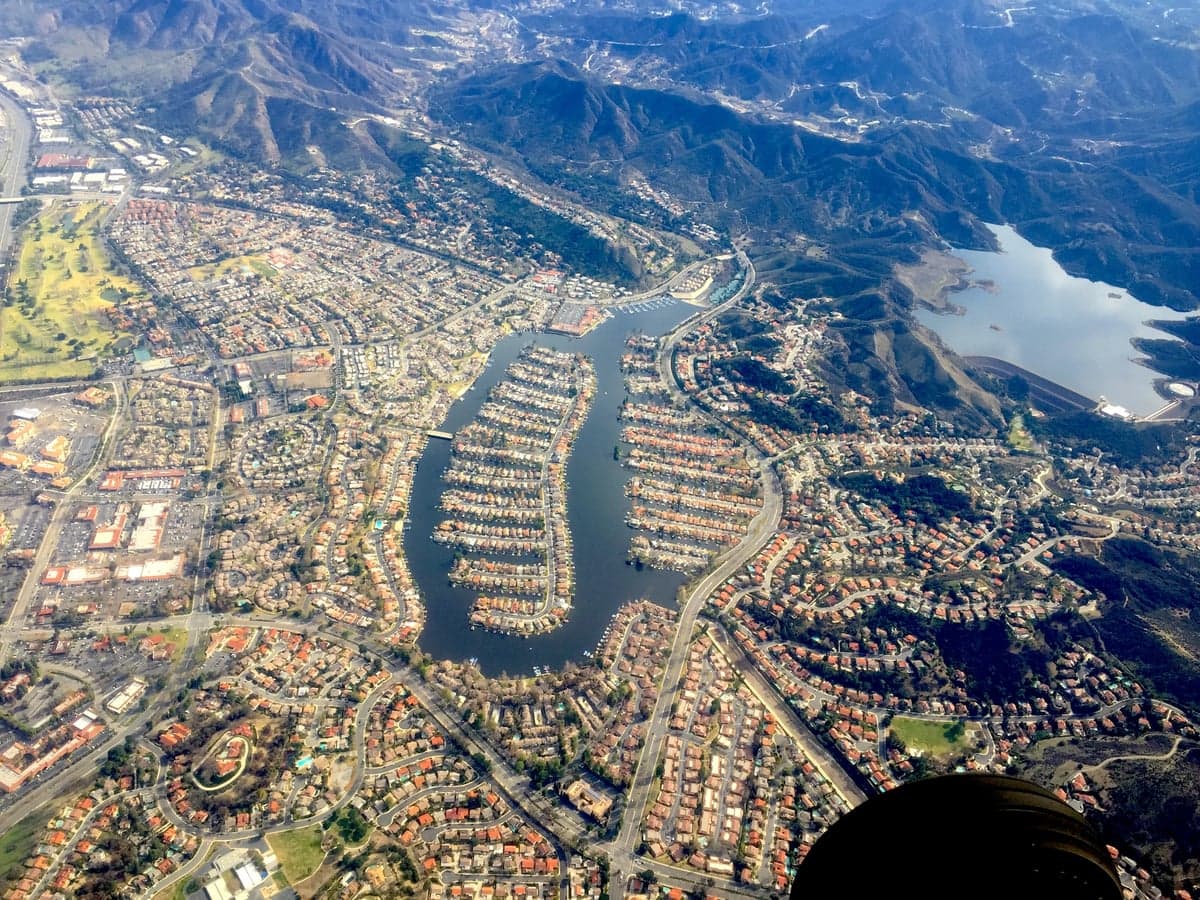
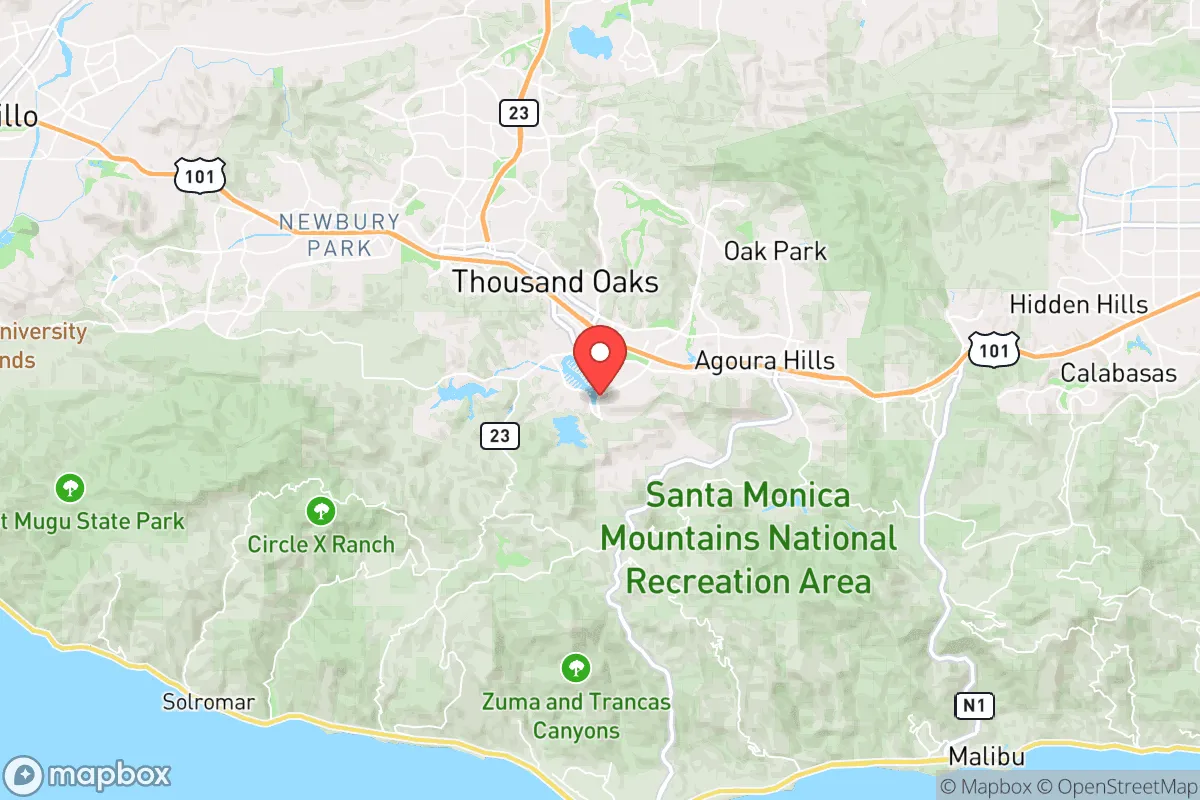
Photo: Wikipedia
Demographics of Westlake Village, CA
Affluence Level in Westlake Village, CA
A wealthy area with high-earning, well-educated households. Incomes, home values, and educational attainment meaningfully outpace national averages.
People of Westlake Village, CA
Westlake Village, California, is a master-planned community of 7,829 residents that stands out as one of the most affluent and highly educated enclaves in the Greater Los Angeles area. With a population that is 76.4% White, 10.5% Hispanic, and 5.5% East/Southeast Asian, the city is defined by executive-level professionals, entrepreneurs, and families drawn to its gated neighborhoods and top-ranked schools. The city's identity is rooted in deliberate planning rather than organic growth, with a foreign-born share of just 2.5% — a figure roughly four times lower than the national average — making it a distinctly native-born, English-dominant community.
How the city was settled and grew
Unlike most California cities, Westlake Village has no pioneer or Gold Rush history. The land was originally part of the Rancho Las Virgenes Mexican land grant, but the area remained largely undeveloped cattle country until the mid-20th century. The modern population story begins in 1963, when the Danielson family and American-Hawaiian Steamship Company acquired roughly 12,000 acres of the Conejo Valley and commissioned the architectural firm A.C. Martin to design a complete "city in the country." The first residents moved into the First Neighborhood (near the lake's north shore) in 1967, and these original homes — mid-century moderns on large lots — still anchor the community's oldest housing stock. The early population was overwhelmingly White, upper-middle-class professionals from the San Fernando Valley and Westside Los Angeles who sought larger homes and safer streets while commuting to aerospace and entertainment jobs. The city incorporated in 1981, and by that point the Lakeview Canyon and Foxmoor neighborhoods had filled in with custom estates, cementing the area's reputation as a haven for corporate executives and medical professionals.
Modern era (post-1965)
The post-1965 immigration wave that transformed much of Southern California largely bypassed Westlake Village. While nearby Thousand Oaks and Simi Valley absorbed significant Hispanic and Asian populations, Westlake Village's planned-community structure — with its high home prices and lack of multi-family zoning — filtered who could settle here. The Westlake Trails neighborhood, developed in the 1980s and 1990s, attracted a mix of White corporate transferees and a growing contingent of East/Southeast Asian professionals, particularly Chinese and Korean families who valued the Westlake Village School District's academic performance. The North Ranch area (technically unincorporated but culturally part of the city) became the preferred destination for wealthy Iranian-American and Jewish families in the 1990s, though census data shows the city's overall Hispanic share has held steady at around 10.5% — largely service workers and second-generation families in the Three Springs neighborhood's older, smaller homes. The Indian-subcontinent population remains minimal at 0.2%, reflecting the city's lack of the tech-corridor employment base that draws South Asian professionals to nearby Calabasas and Agoura Hills.
The future
Westlake Village's population is aging and slowly diversifying, but the pace is glacial compared to the rest of Ventura County. The city's 66.4% college-educated rate and median home prices above $1.5 million continue to attract a specific demographic: White and East/Southeast Asian professionals in their 40s and 50s, often empty-nesters downsizing from larger estates or younger families priced out of the Westside. The Westlake Village Civic Center area and the new mixed-use developments near The Promenade at Westlake are drawing a slightly younger, more diverse cohort of renters, though the city's zoning restrictions limit significant density increases. Projections suggest the Hispanic share will grow modestly to 12-13% by 2040 as second-generation families age into homeownership, while the East/Southeast Asian share may edge toward 7-8% as biotech and healthcare employers in the nearby Thousand Oaks/Amgen corridor recruit internationally. The Indian-subcontinent population is expected to remain negligible unless major tech employers locate in the Conejo Valley.
For someone moving to Westlake Village today, the bottom line is this: you are joining one of the most stable, demographically consistent communities in Southern California. The city is not becoming dramatically more diverse, nor is it aging into decline — it is a curated, high-income enclave that will likely look very similar in 2040 to how it looks now, with slightly more Hispanic and East/Southeast Asian families in the newer, smaller-lot neighborhoods. If you value predictability, top-tier schools, and a population that shares your professional and cultural background, Westlake Village delivers exactly that.

* Values derived from national, state, county, city and local statistics and may differ in a specific area. Last updated: 2026-10-12T01:46:01.000Z
Narrative content on this page is AI-generated and may contain mistakes. Verify any details that matter before acting on them.
ReloMaps may earn a commission from affiliate links at no extra cost to you.

