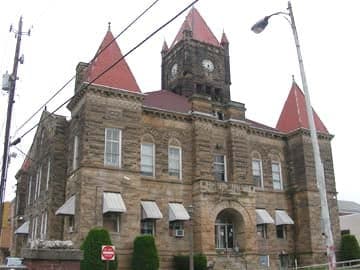
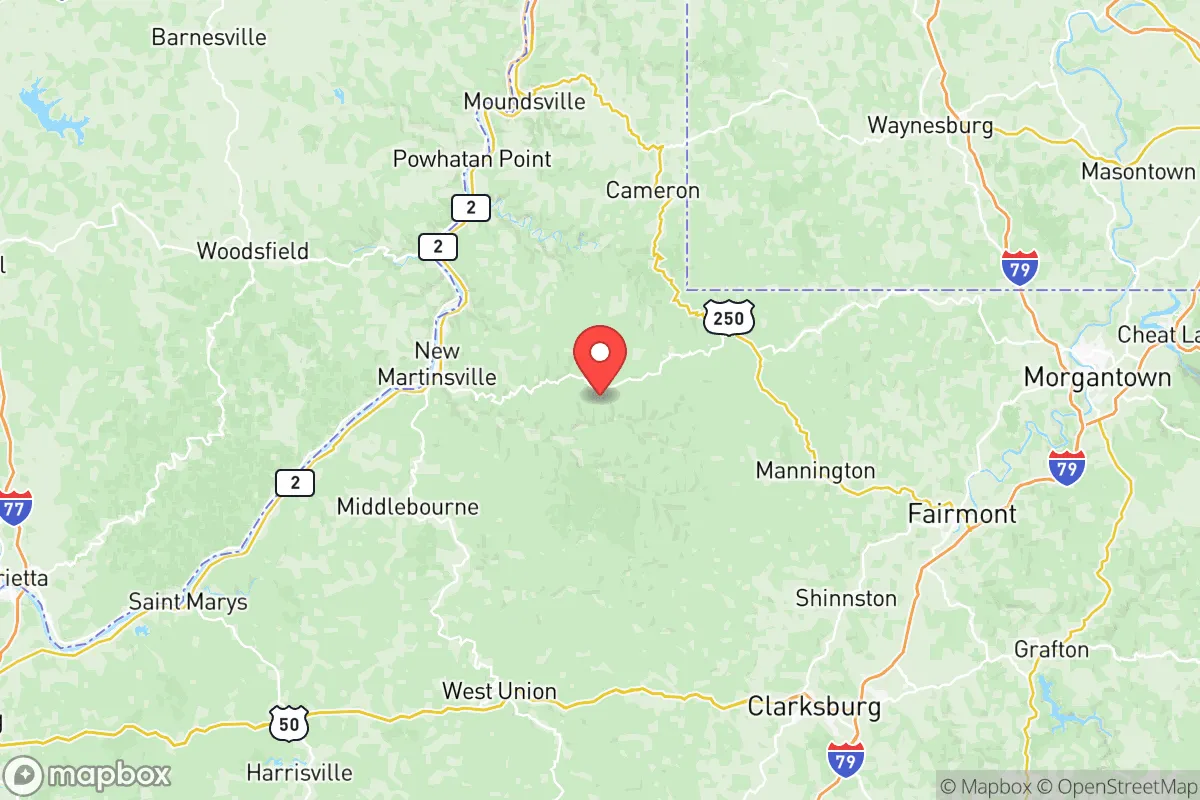
Photo: Wikipedia
Political ClimatePolitical Climate in Wetzel County
Showing district-level results — no local-only data available.
Local Political AnalysisPolitical Analysis of Wetzel County
Wetzel County has long been a rock-solid Republican stronghold, and honestly, it’s one of the last places in West Virginia where you can still feel like common sense hasn’t completely left the building. With a Cook PVI of R+20, it’s just a hair to the right of the state’s R+21 rating, but don’t let that small difference fool you—this county has a grittier, more independent streak than the state average. The real story is how the old-school, blue-collar conservatism here is holding the line against the progressive creep you see creeping into places like Morgantown or Charleston. It’s not just about party labels; it’s about a way of life that values personal freedom, local control, and not having the government breathing down your neck.
How it compares
When you stack Wetzel County up against the rest of West Virginia, the numbers tell a tale of two different kinds of red. The state as a whole is deep red, sure, but it’s got pockets—like Monongalia County (home to WVU) or the eastern panhandle—where the leftward drift is real and worrying. Wetzel doesn’t have that problem. Towns like New Martinsville and Paden City are the heart of the county’s conservative base, where folks still believe in the Second Amendment without apology and see taxes as a necessary evil, not a tool for social engineering. Meanwhile, Hundred and Littleton lean even harder red, with precincts that routinely vote 75-80% Republican. The only real variation is in Hannibal, where a few union-heavy precincts around the power plant can swing a bit more moderate, but even there, it’s not a blue wave—it’s more of a “don’t mess with my pension” kind of pragmatism. Compared to the state, Wetzel is less swayed by the coastal transplants or university influence that’s diluting conservative values elsewhere. It’s a place where the old coal-and-gas culture still defines the politics, and that’s a good thing for anyone tired of the nanny-state nonsense.
What this means for residents
For folks living here, the political climate means you can still live your life without a bureaucrat in Charleston telling you how to run it. The county commission and local school board are reliably conservative, which keeps things like mask mandates, critical race theory, and other progressive experiments out of your kids’ classrooms. Property taxes stay low because the county isn’t chasing every federal grant that comes with strings attached. And when it comes to personal freedoms—whether it’s carrying a firearm, choosing your own healthcare, or running a small business without endless red tape—Wetzel County is a breath of fresh air compared to the overreach you see in blue states or even in parts of West Virginia that are starting to cave. The downside? You’re not going to find much in the way of progressive amenities or diversity of thought, but for most residents, that’s a feature, not a bug. The trade-off is a community where your neighbor’s business is their own, and the government stays out of your garage.
One cultural distinction that sets Wetzel apart is its fierce resistance to the kind of top-down environmental regulations that have gutted the coal industry in other parts of the state. The county’s economy still leans heavily on natural gas and manufacturing, and there’s a deep skepticism of the “green energy” push that’s really just a backdoor way to centralize control. You’ll hear folks in New Martinsville talk about the Ohio River as a working river, not a scenic postcard, and they’re proud of that. The local politics reflect a belief that the best government is the one closest to the people—and that’s a perspective that’s getting harder to find as the state’s urban centers drift left. If you’re looking for a place where the old-school values of self-reliance and limited government are still the norm, Wetzel County is holding the line, and it’s not budging anytime soon.

State Political ClimatePolitical Climate in West Virginia
State Political AnalysisPolitical Environment in the State
West Virginia is about as solidly Republican as a state can get, with a Cook PVI of R+21, meaning it votes roughly 21 points more Republican than the national average. That wasn't always the case—as recently as 2000, the state was a reliable Democratic stronghold in presidential races, but a seismic shift began in the early 2000s, driven by cultural and economic realignment. Today, the dominant coalition is a mix of rural conservatives, union members who've abandoned the national Democratic Party, and a growing number of out-of-state transplants seeking lower taxes and fewer regulations. Over the last 20 years, the state has moved from a purple-blue swing state to a deep red one, with every statewide office now held by Republicans and a supermajority in the legislature.
Urban vs. rural divide
The political map of West Virginia is starkly divided between a handful of small urban centers and the vast, deeply conservative rural landscape. The only real population center is the Charleston-Huntington corridor, which includes Kanawha and Cabell counties. These areas lean more moderate—Kanawha County voted for Trump by about 20 points in 2020, while rural counties like Mingo and McDowell went for him by 50-plus points. Morgantown, home to West Virginia University, is the state's most liberal pocket, with Monongalia County often voting closer to the national average, thanks to the student and faculty population. Berkeley County, in the Eastern Panhandle, has become a Republican stronghold as it absorbs commuters from the D.C. metro area who want lower taxes and more land. Meanwhile, Wheeling and Parkersburg in the north are reliably red, with a strong blue-collar, pro-energy base. The rural-urban divide here isn't about big cities vs. farmland—it's about small towns vs. even smaller towns, with the most conservative areas being the coal counties in the south and southwest.
Policy environment
West Virginia's policy environment is aggressively conservative, especially compared to its neighbors. The state has no personal income tax on most wages—a flat 4.12% rate that was cut from a progressive structure in recent years, and there's serious talk of eliminating it entirely. Property taxes are among the lowest in the nation, capped by the state constitution. The regulatory posture is business-friendly, with a right-to-work law on the books and a strong push to attract manufacturing and energy extraction. On education, the state passed a robust school choice law in 2021, creating the Hope Scholarship, which allows parents to use state education funds for private school, homeschooling, or other alternatives. Healthcare is a mixed bag—Medicaid expansion was accepted under the ACA, but the state has resisted further federal overreach. Election laws are secure: voter ID is required, and early voting is available but limited. The legislature has also passed laws restricting ballot harvesting and requiring strict chain-of-custody for absentee ballots. For a conservative, the policy environment is a clear win—low taxes, school choice, and election integrity are all locked in.
Trajectory & freedom
West Virginia is moving in a decidedly more free direction, especially on personal liberties. In 2021, the legislature passed constitutional carry, allowing any law-abiding adult to carry a concealed firearm without a permit—a major expansion of Second Amendment rights. The state also passed a Parental Bill of Rights in 2022, requiring schools to notify parents about curriculum changes and medical decisions, and to get consent before teaching about sexuality or gender identity. On medical autonomy, the state banned nearly all abortions after 15 weeks in 2022, with no exceptions for rape or incest, and has resisted any COVID-19 vaccine mandates or mask requirements. Property rights are strong, with no state-level inheritance tax and a homestead exemption that protects a portion of home value from creditors. The only area where freedom has contracted is on the energy front—the state has aggressively subsidized coal and natural gas extraction, which some argue limits market freedom, but for most residents, that's a feature, not a bug. The trajectory is clear: West Virginia is becoming a laboratory for conservative governance, with each legislative session adding more layers of personal and economic liberty.
Civil unrest & political movements
West Virginia has a history of labor unrest, but modern political movements are mostly peaceful and organized. The 2021 teachers' strike was a notable flashpoint—thousands of educators walked out over pay and benefits, but it was a bipartisan effort, not a left-wing protest. The state has seen a rise in Second Amendment sanctuary resolutions, with dozens of counties declaring themselves sanctuaries from any future federal gun control. Immigration politics are minimal—the state has one of the lowest foreign-born populations in the country, so there's little visible activism on either side. There's been some election integrity activism, particularly after 2020, with groups like the West Virginia Election Integrity Coalition pushing for audits and tighter laws. No major sanctuary city policies exist—in fact, the legislature passed a law in 2020 requiring local law enforcement to cooperate with federal immigration authorities. The most visible political movement is the Mountain State Libertarian Party, which has gained traction in some rural counties, advocating for even lower taxes and fewer regulations. A new resident won't see protests or unrest—just a quiet, determined conservative culture that values self-reliance and local control.
Projection
Over the next 5-10 years, West Virginia is likely to become even more conservative, driven by two trends: out-migration of younger, more liberal residents and in-migration of conservatives from high-tax states like New York and California. The Eastern Panhandle (Berkeley, Jefferson, Morgan counties) is growing fast, attracting families who want lower taxes and more space—these newcomers tend to be even more Republican than native West Virginians. The state's population is aging and shrinking overall, but the political effect is a hardening of the red hue. Expect further tax cuts, possibly a full elimination of the income tax, and more school choice expansion. The only wild card is the energy transition—if coal continues to decline, the southern coalfields could become economically depressed, which might shift some voters toward populist Democrats, but that's unlikely given the cultural alignment with the GOP. For someone moving in now, expect a state that will be even more free, more conservative, and more resistant to federal overreach in a decade.
For a conservative individual or family, West Virginia offers a rare combination: low taxes, strong gun rights, school choice, and a culture that values independence. The political climate is stable and trending in your favor, with no risk of a blue wave anytime soon. If you're looking for a place where your values are the norm and the government stays out of your way, this is it. Just be prepared for a slower pace of life and a population that's older and more rural than what you might be used to—but that's part of the charm.
* Values derived from national, state, county, city and local statistics and may differ in a specific area. Last updated: 2026-05-19T17:34:38.000Z
Narrative content on this page is AI-generated and may contain mistakes. Verify any details that matter before acting on them.
ReloMaps may earn a commission from affiliate links at no extra cost to you.

