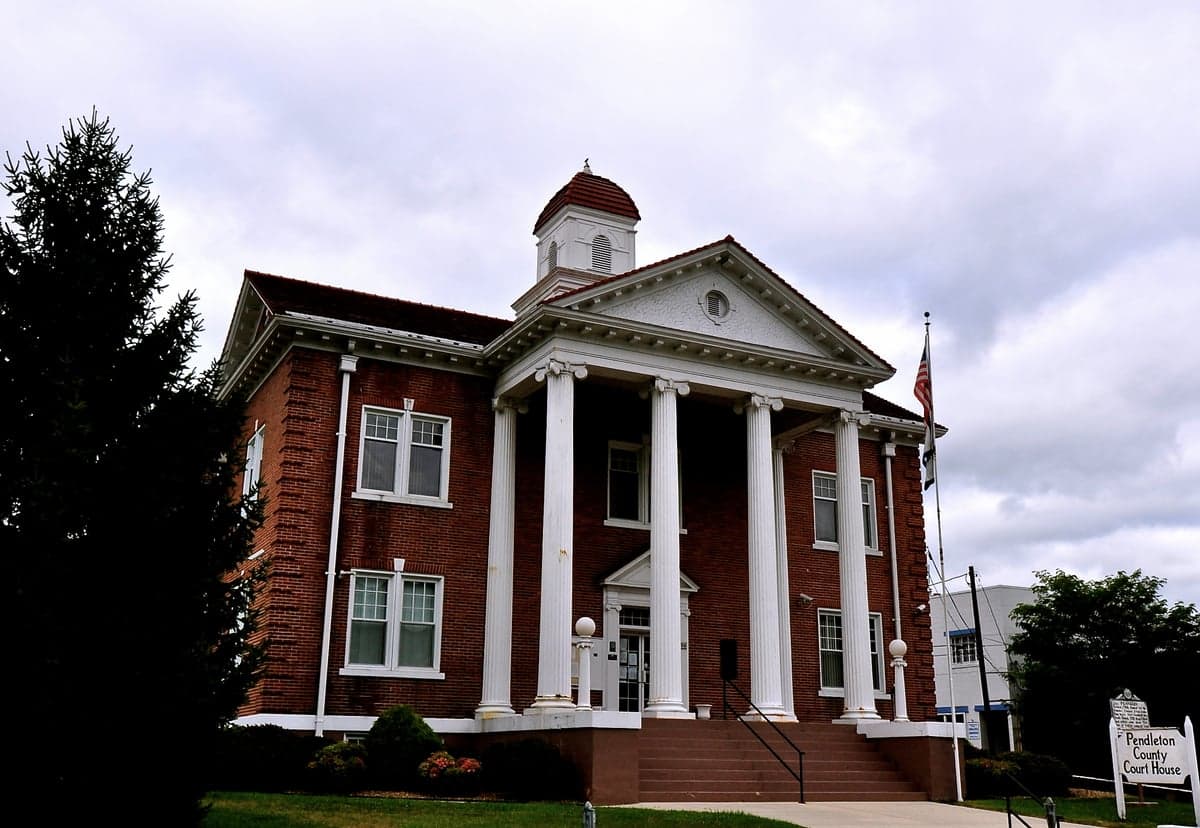
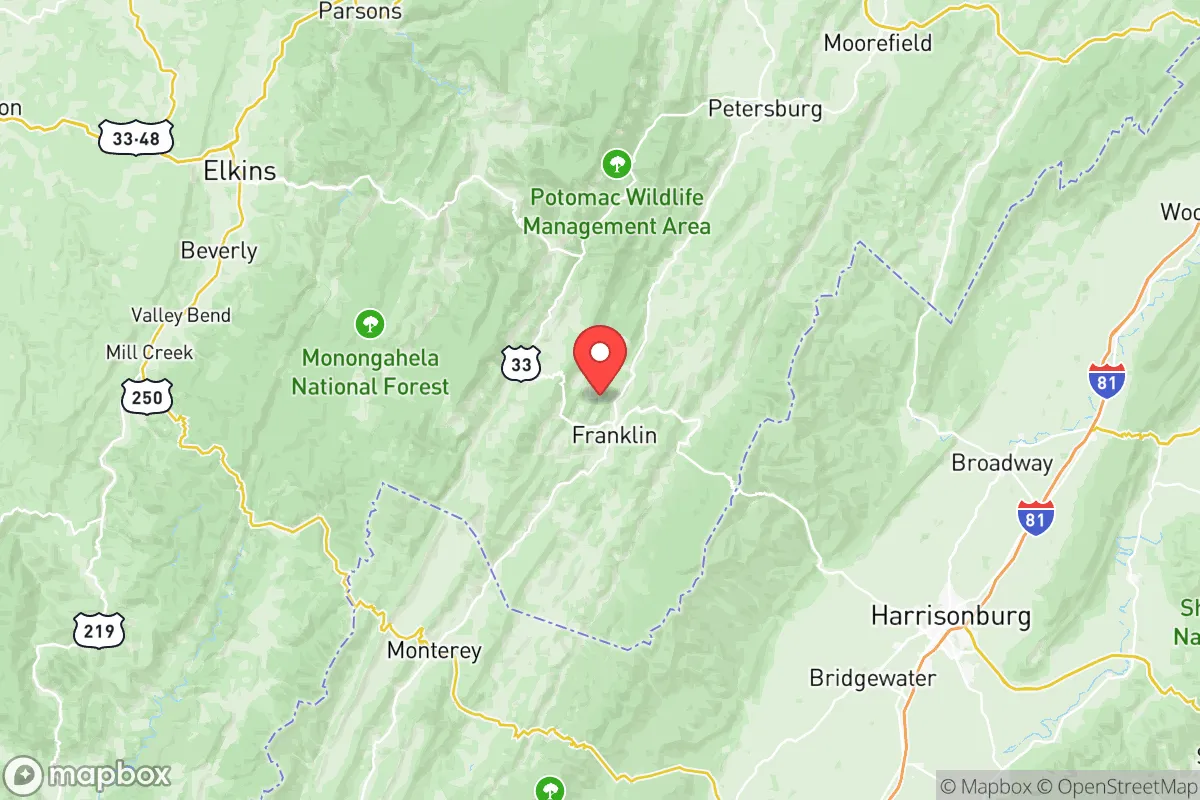
Photo: Wikipedia
Quality of Life in Pendleton County
A livable area that tracks near national norms for affordability, walkability, and neighborhood health.
What does Quality of Life tell us?
Quality of Life measures an area by evaluating factors like cost of living, nearby amenities, country club access, airport proximity, socioeconomic signals and neighborhood character. For large states, this is a general average — quality of life can vary dramatically between metro areas, suburbs, and rural communities within the same state.
What does this tell us?
Quality of Life measures an area by evaluating factors like cost of living, nearby amenities, country club access, airport proximity, socioeconomic signals and neighborhood character. For large states, this is a general average — quality of life can vary dramatically between metro areas, suburbs, and rural communities within the same state.
Cost of Living
36% below national average
121%
The Real Cost of Living in Pendleton County for 2026
| Tier | Individual | Family (4) |
|---|---|---|
| Survival | $12k | $23k |
| Comfortable | $35k | $51k |
| Luxury | $79k+ | $122k+ |
| Elite (Top 5%) | $93k+ | $143k+ |
Quality-of-Life Analysis
Pendleton County, West Virginia, offers a quality-of-life spectrum that ranges from the walkable, historic county seat of Franklin to deeply remote hollows and mountain communities where solitude is the primary amenity. With a cost of living index of 64 — 36% below the national average — the county attracts a mix of retirees seeking affordable acreage, remote workers looking for low overhead, and outdoor enthusiasts drawn to the Monongahela National Forest and the North Fork of the South Branch Potomac River. The trade-off for this affordability is a limited job market and a 30-minute average commute, which for many residents means driving to jobs in Harrisonburg, VA, or Petersburg, WV.
Largest town(s) & population centers
Franklin, the county seat and only incorporated town, is the clear population center with roughly 700 residents. Daily life here revolves around the compact downtown along U.S. Route 220, which includes a grocery store, a pharmacy, the Pendleton County Public Library, and a handful of locally owned restaurants and shops. The Pendleton County School system — one elementary, one middle, and one high school — is centered here, making Franklin the default choice for families who want a short walk to school and a neighborly small-town atmosphere. The town also hosts the annual Pendleton County Fair and the Franklin Street Festival, providing community anchors that smaller hamlets lack. For basic services like a hardware store or a medical clinic, Franklin is the only game for miles; residents of outlying areas typically combine errands here with a weekly trip to Harrisonburg (about 40 minutes south) for big-box retail and healthcare.
Smaller towns & rural pockets
Beyond Franklin, the county's character shifts dramatically. Upper Tract (population ~200) sits along the South Branch River and offers a quieter, more rural version of Franklin's lifestyle, with a post office, a volunteer fire department, and direct access to river fishing and kayaking. Circleville, near the Virginia line, is a true crossroads community with a general store and a handful of homes clustered around the intersection of WV-28 and WV-4; it serves as a gateway to the Spruce Knob–Seneca Rocks National Recreation Area. Brandywine and Onego are unincorporated hamlets where homes sit on multi-acre lots along winding hollow roads, often with no cell service and gravel driveways. These areas draw buyers who prioritize privacy and land over convenience — many properties here are off-grid or rely on well water and septic systems. The Seneca Rocks area, while technically in Pendleton County, is a tourism-driven pocket with climbing outfitters, cabins, and vacation rentals; it feels more like a resort zone than a residential community, though a small year-round population lives there.
Cost & lifestyle range
The cost spread across Pendleton County is narrow by national standards but meaningful locally. At the low end, a fixer-upper home in a remote hollow near Moyers or Riverton can sell for under $100,000, with median rents of just $754 per month — among the lowest in West Virginia. These properties often come with acreage but require a 40- to 50-minute commute to Franklin or Harrisonburg for work and shopping. At the upper end, newer or renovated homes in Franklin or along the South Branch near Upper Tract command the county's median home value of $178,600, with some riverfront properties reaching $250,000–$300,000. The lifestyle trade-off is clear: Franklin offers sidewalks, a library, and a school bus stop; the hollows offer total quiet, dark skies, and the ability to own 10+ acres for the price of a suburban townhouse in Northern Virginia. Utility costs are a notable factor — electric heat is common, and propane delivery is a recurring expense for homes outside town limits.
Pendleton County best suits people who value land, low cost, and outdoor recreation over employment density, dining variety, or urban amenities. Remote workers, retirees on fixed incomes, and families willing to commute 30–45 minutes for higher-paying jobs are the typical residents who thrive here. The county's appeal is not in its convenience but in its space — and for those who prioritize that, the trade-offs are well worth it.

Crime in Pendleton County
Generally safer than 68% of comparable U.S. locations.
Violent CrimeViolent Crime Analysis
Property CrimeProperty Crime Analysis
Crime Analysis
Pendleton County, West Virginia, is one of the safest rural counties in the state, with violent and property crime rates that fall well below national averages. The county recorded a violent crime rate of 232.1 per 100,000 residents and a property crime rate of 954.4 per 100,000, figures that reflect the area’s low population density, strong community ties, and limited exposure to the systemic crime drivers found in larger jurisdictions. While no community is crime-free, Pendleton County’s overall safety profile is a clear positive for families and retirees seeking a quiet, low-crime environment in the Potomac Highlands.
Crime in context
Pendleton County’s violent crime rate of 232.1 per 100,000 is roughly 40% lower than the national average of 380 per 100,000, and its property crime rate of 954.4 per 100,000 is about 45% below the U.S. average of 1,954 per 100,000. Compared to West Virginia as a whole, the county is also safer: the state’s violent crime rate hovers near 330 per 100,000, and its property crime rate exceeds 1,500 per 100,000. The county’s remote geography—bordered by the George Washington National Forest and the Monongahela National Forest—naturally limits the transient criminal activity that plagues more accessible areas. Most reported incidents involve theft from vehicles or minor vandalism, with violent offenses being rare and typically isolated to domestic disputes rather than stranger-on-stranger crime.
What residents experience
Daily life in Pendleton County is marked by a strong sense of security. The county seat, Franklin, is the largest town and the primary hub for services, including the Pendleton County Sheriff’s Office and the Franklin Police Department. Residents in Franklin and the surrounding communities of Brandywine, Circleville, and Upper Tract report feeling safe walking at night and leaving doors unlocked—a rarity in most of the country. The county’s judicial system, overseen by the 22nd Judicial Circuit Court based in Franklin, operates with a conservative, victim-centered approach. Unlike progressive prosecutor offices in larger metro areas such as Charleston or Morgantown, Pendleton County’s district attorney prioritizes accountability and public safety, which directly contributes to lower recidivism and fewer repeat offenders on the streets. This philosophy is critical: jurisdictions with liberal, offender-first policies often see crime rates climb as criminals cycle through the system without meaningful consequences. In Pendleton County, the focus remains on justice for victims and community protection.
Neighborhood-level variation
While Pendleton County is uniformly safe, some variation exists between its small towns and unincorporated areas. Franklin sees slightly higher property crime due to its concentration of businesses and tourist traffic along U.S. Route 33, but violent crime remains negligible. The more remote communities of Onego and Moyers report virtually no crime, as their isolation and low population—often fewer than 100 residents—discourage opportunistic theft. The county’s lack of a major interstate highway or large commercial corridor further reduces crime risk. For those considering relocation, the safest choice is any of the county’s rural hamlets, where neighbors know each other and the sheriff’s response times remain under 15 minutes. Overall, Pendleton County offers a rare combination of low crime, conservative justice, and genuine community safety that is increasingly hard to find in the United States.
* Values derived from national, state, county, city and local statistics and may differ in a specific area. Last updated: 2026-10-05T19:22:27.000Z
Narrative content on this page is AI-generated and may contain mistakes. Verify any details that matter before acting on them.
ReloMaps may earn a commission from affiliate links at no extra cost to you.

