Photo: Wikipedia
Quality of Life in Harrison County
A livable area that tracks near national norms for affordability, walkability, and neighborhood health.
What does Quality of Life tell us?
Quality of Life measures an area by evaluating factors like cost of living, nearby amenities, country club access, airport proximity, socioeconomic signals and neighborhood character. For large states, this is a general average — quality of life can vary dramatically between metro areas, suburbs, and rural communities within the same state.
What does this tell us?
Quality of Life measures an area by evaluating factors like cost of living, nearby amenities, country club access, airport proximity, socioeconomic signals and neighborhood character. For large states, this is a general average — quality of life can vary dramatically between metro areas, suburbs, and rural communities within the same state.
Cost of Living
34% below national average
129%
The Real Cost of Living in Harrison County for 2026
| Tier | Individual | Family (4) |
|---|---|---|
| Survival | $14k | $25k |
| Comfortable | $31k | $45k |
| Luxury | $105k+ | $163k+ |
| Elite (Top 5%) | $128k+ | $199k+ |
Quality-of-Life Analysis
Harrison County, West Virginia, offers a broad quality-of-life spectrum that ranges from the walkable, amenity-rich city of Clarksburg to quiet, unincorporated rural communities like Wolf Summit and Sardis. This diversity attracts a mix of residents: young professionals and students drawn to the county’s largest town for its employment and education options, families seeking affordable suburban-style living in communities like Nutter Fort, and retirees or remote workers looking for low-cost, low-density rural homesteads. The county’s overall cost of living index sits at 66 (100 = U.S. average), with a median home value of $158,500 and median rent of $848, making it one of the more affordable regions in the state for a range of lifestyles.
Largest town(s) & population centers
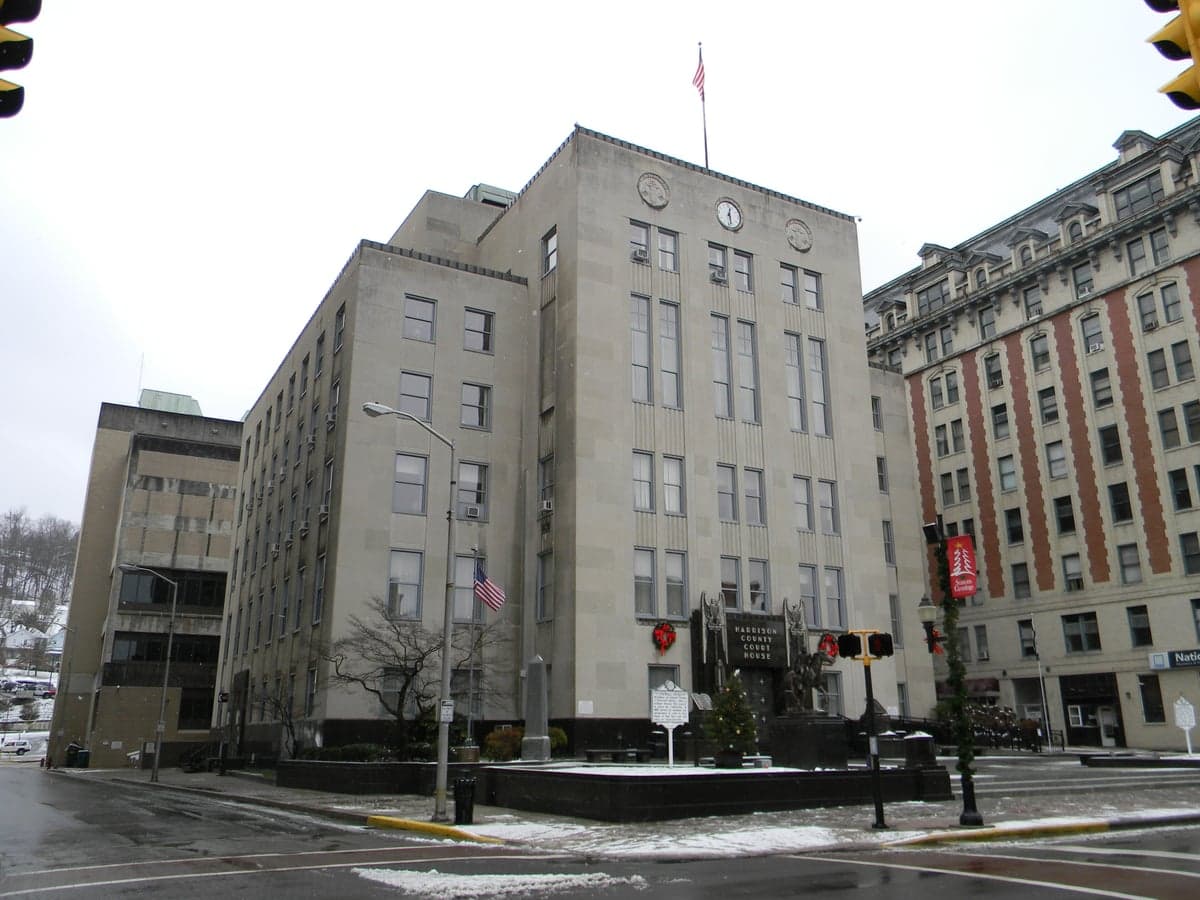
Clarksburg is the county seat and the primary population center, home to roughly 15,000 residents. Daily life here centers on a compact downtown with historic architecture, local restaurants, and the Harrison County Courthouse. The city hosts the annual West Virginia Italian Heritage Festival and provides access to the Clarksburg-Harrison County Recreation Complex. Bridgeport, the county’s second-largest town with about 9,000 residents, offers a more suburban feel with newer housing developments, the Meadowbrook Mall, and the Bridgeport Conference Center. Bridgeport is also home to the FBI’s Criminal Justice Information Services (CJIS) Division, a major employer that draws a professional workforce. Both towns have walkable cores, but Bridgeport’s growth has been more car-dependent, with strip malls and chain retailers along U.S. Route 50. The average commute across the county is 22.4 minutes, which is manageable for workers commuting between these two hubs or to nearby Morgantown (about 30 minutes east).
Smaller towns & rural pockets
Beyond the two main towns, Harrison County contains several smaller communities that offer a quieter pace. Nutter Fort, a small town just south of Clarksburg, is a residential enclave with a strong sense of community and easy access to Clarksburg’s amenities. Shinnston, located along the West Fork River, is a historic coal-mining town with a population under 2,000, featuring a small downtown with a few local shops and the Shinnston Historical Museum. Lumberport and Lost Creek are unincorporated villages that serve as bedroom communities, with limited commercial services but very low housing costs. Wolf Summit and Sardis are rural pockets where homes sit on larger lots, often with acreage, and residents rely on private wells and septic systems. These areas are popular among those seeking privacy and a connection to outdoor recreation, such as hunting and fishing along the West Fork River or in the Monongahela National Forest’s nearby edges.
Cost & lifestyle range
The cost of living varies noticeably across the county. At the higher end, Bridgeport has a median home value around $220,000, reflecting its newer housing stock and proximity to the FBI facility. Rentals in Bridgeport average $950–$1,100 per month, above the county median. Clarksburg sits in the middle, with median home values near $140,000 and rents around $750–$850. At the lower end, Shinnston and Lumberport offer median home values under $100,000, with some fixer-uppers available for $60,000–$80,000. Rent in these smaller towns can dip below $600 per month. Lifestyle differences are equally pronounced: Bridgeport residents have access to a full-service hospital (United Hospital Center), multiple grocery chains, and a public library, while residents of Wolf Summit or Sardis may drive 20–30 minutes for groceries or medical care. The county’s overall COL index of 66 means that even the priciest areas are well below national averages, but the trade-off is fewer entertainment and dining options compared to larger metros.
Harrison County is best suited for those who value affordability and a slower pace but still want access to a regional hub. Remote workers and retirees thrive in the rural pockets, while families and professionals gravitate toward Bridgeport and Clarksburg for schools and jobs. The county’s mix of historic towns, suburban developments, and open countryside means that nearly any budget or lifestyle preference can find a fit here, provided the trade-offs in commute distance and amenity density are acceptable.

Crime in Harrison County
Generally safer than 68% of comparable U.S. locations.
Violent CrimeViolent Crime Analysis
Property CrimeProperty Crime Analysis
Crime Analysis
Harrison County, West Virginia, presents a mixed safety picture: its violent crime rate of 229.7 incidents per 100,000 residents sits below the national average, but the property crime rate of 944.7 per 100,000 is a more pressing concern for residents in the county seat of Clarksburg and the surrounding communities of Bridgeport, Shinnston, and Salem. While no community in the county approaches the violent crime levels of larger metros, the property crime numbers indicate a persistent challenge that varies noticeably by municipality.
Crime in context
To understand Harrison County's standing, it helps to compare its figures against broader benchmarks. The county's violent crime rate of 229.7 per 100,000 is roughly 35% lower than the national average of approximately 380 per 100,000, and it also trails the West Virginia state average, which typically hovers around 320 per 100,000. This means that for violent offenses like homicide, rape, robbery, and aggravated assault, Harrison County is a relatively safe place by both state and national standards.
The property crime picture is less reassuring. At 944.7 per 100,000, the county's rate is slightly above the national average of roughly 900 per 100,000 and significantly higher than the West Virginia state average, which often sits near 700 per 100,000. Larceny-theft is the dominant category, followed by burglary and motor vehicle theft. These are largely crimes of opportunity, and they tend to cluster in areas with higher population density and foot traffic.
What residents experience
Daily life in Harrison County is shaped more by property crime than by violent encounters. Residents in Clarksburg, the county's largest city, report the highest incidence of both property and violent crime, with the downtown corridor and areas near the Harrison County Courthouse seeing the most activity. The city's older housing stock and rental properties along West Pike Street and around the former FBI fingerprint complex have been recurring focal points for burglary and theft reports.
By contrast, Bridgeport — the county's economic engine, anchored by the FBI's Criminal Justice Information Services Division and United Hospital Center — consistently posts the lowest crime rates in the county. Its violent crime rate is a fraction of Clarksburg's, and property crime is similarly subdued, making it the clear choice for families prioritizing safety. Shinnston and Salem fall in between: both are small, tight-knit communities with modest crime numbers, though Salem's position along U.S. Route 50 brings occasional drug-related arrests and associated thefts. Nutter Fort and Stonewood, adjacent to Clarksburg, tend to mirror the county seat's trends rather than Bridgeport's.
One factor residents should weigh is the local justice system's approach. Harrison County's elected prosecutor and circuit judges operate within West Virginia's traditional, non-reform framework — there is no progressive district attorney pushing bail reform or diversion-heavy policies here, unlike in larger metros. This means offenders convicted of property crimes are more likely to serve jail time, which keeps repeat offenders off the streets and provides a measure of accountability for victims. For readers concerned about soft-on-crime judicial philosophies, Harrison County's conventional prosecutorial stance is a stabilizing element.
Neighborhood-level variation is real but predictable. The safest residential pockets are in Bridgeport's newer subdivisions near Meadowbrook Mall and in the rural eastern stretches of the county toward Anmoore and Lost Creek. The most vulnerable areas are Clarksburg's central wards and the apartment complexes along the I-79 corridor near exit 119, where transient populations and rental turnover create more opportunities for theft. Overall, Harrison County offers a safe, family-oriented environment for those who choose their specific street wisely.
* Values derived from national, state, county, city and local statistics and may differ in a specific area. Last updated: 2026-08-04T02:30:23.000Z
Narrative content on this page is AI-generated and may contain mistakes. Verify any details that matter before acting on them.
ReloMaps may earn a commission from affiliate links at no extra cost to you.

