Photo: Wikipedia
Political ClimatePolitical Climate in Wernersville, PA
District shown is the primary district for this city’s centroid. Cities may span multiple districts.
Local Political AnalysisPolitical Analysis of Wernersville, PA
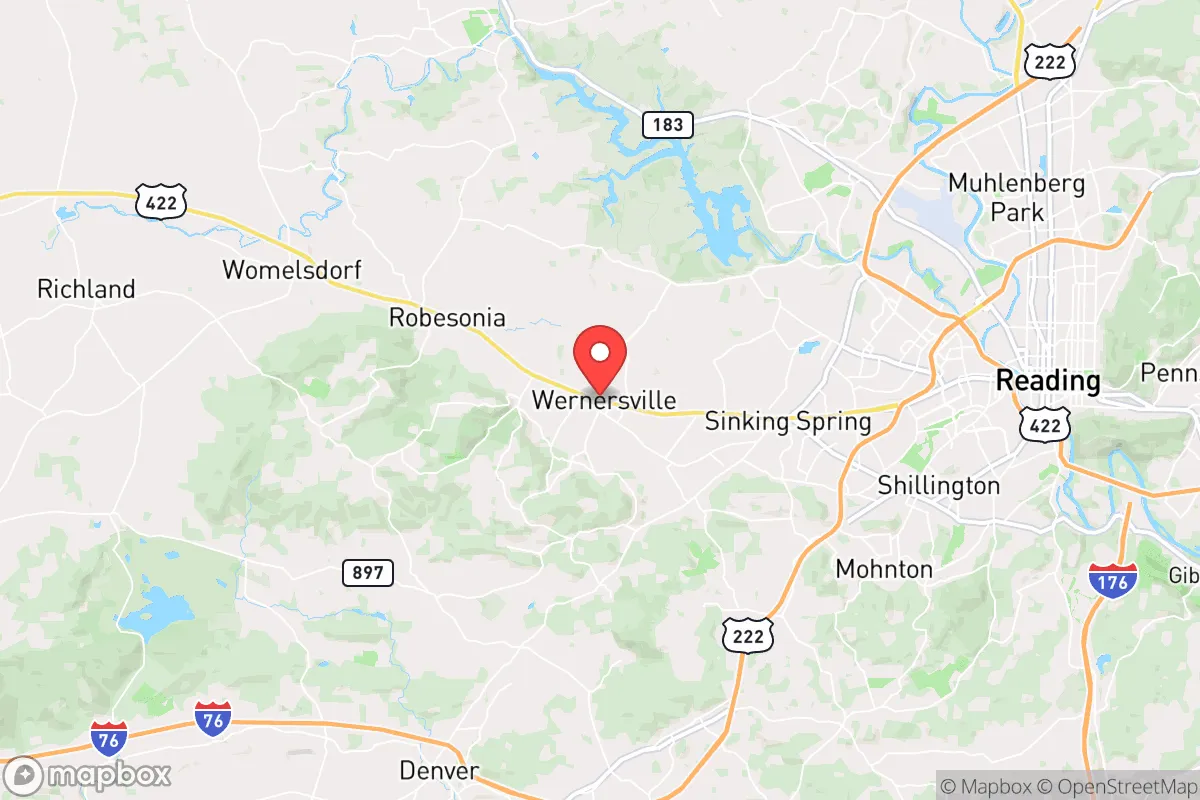
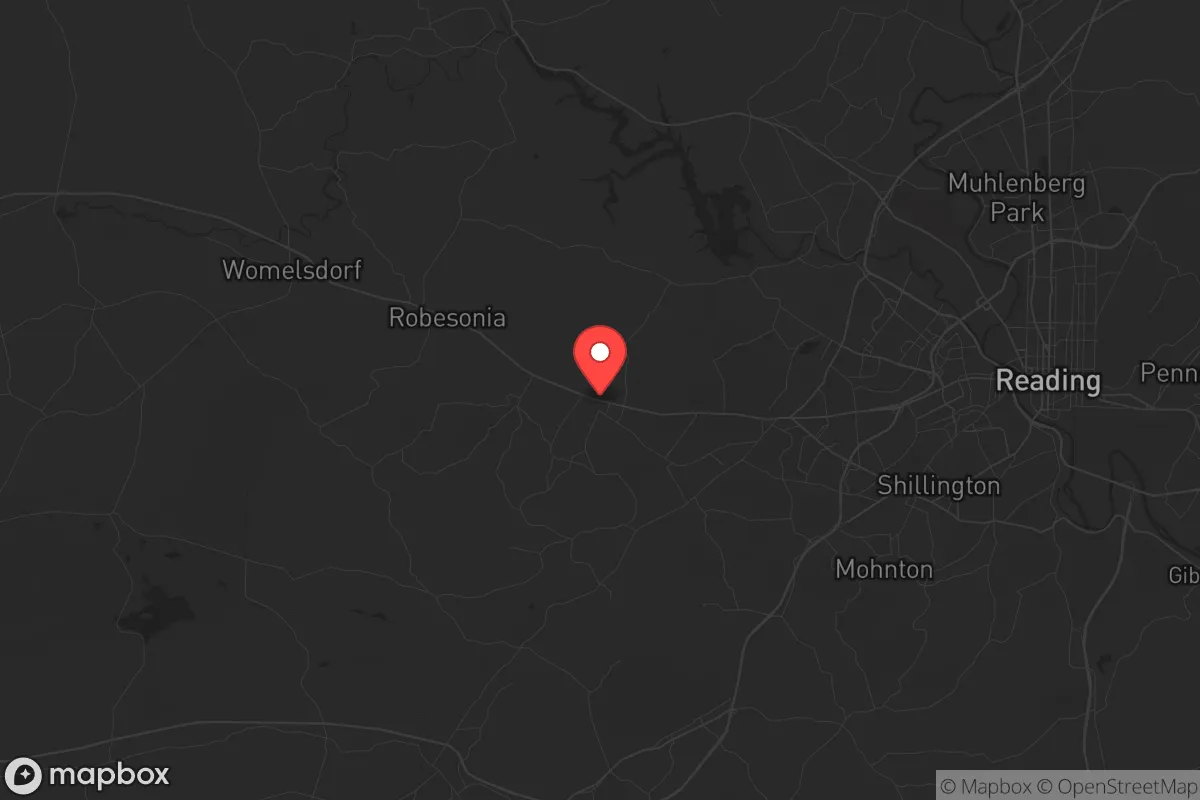
Wernersville is a solidly conservative pocket in southeastern Pennsylvania, with a Cook PVI of R+19 that places it well to the right of the state as a whole, which sits at EVEN. This isn't a recent shift—the area has been reliably Republican for decades, though the margin has tightened slightly as Berks County's growing Hispanic population and suburban sprawl from Reading have nudged the county overall toward purple. If you're looking at a map, Wernersville sits in a deep-red island surrounded by lighter red and blue: drive 10 miles east to Reading and you're in a Democratic stronghold, while heading west toward Lebanon County keeps you in conservative territory.
How it compares
The R+19 rating means Wernersville votes about 19 points more Republican than the national average, while Pennsylvania as a whole is a pure swing state. In practice, that translates to local elections where Republicans rarely face serious Democratic opposition—township supervisor races and school board seats are often decided in the GOP primary. The contrast with nearby Reading (D+18) is stark: you can drive 15 minutes and go from a town where Trump signs outnumber Harris signs 5-to-1 to a city where the ratio flips completely. Surrounding towns like Robesonia and Bernville lean similarly conservative, while Wyomissing and West Reading are more moderate, reflecting their wealthier, more educated populations.
What this means for residents
For conservative residents, Wernersville's lean means their values are reflected in local governance—lower taxes, fewer zoning restrictions, and a general skepticism of state mandates. The school board here has been a flashpoint in recent years, with debates over curriculum transparency and library books mirroring national culture-war battles, but the outcomes consistently favor conservative positions. For liberal residents, it can feel isolating. There's no active Democratic committee in Wernersville itself; the nearest one is in Reading. That said, the area is not hostile—most folks keep politics out of neighborly conversation, and you'll find plenty of people who vote blue but keep their yard signs in the garage to avoid friction. The practical effect is that if you're progressive, you'll need to drive to Reading or West Reading for like-minded social circles or political events.
One thing that's changed in the last decade is the influx of remote workers from Philadelphia and New York, who've bought up the old farmhouses and Victorians. These newcomers tend to be more moderate or even left-leaning, and they've started showing up at planning commission meetings to push for sidewalks, bike lanes, and preservation of open space. The old guard—lifelong residents, many of them farmers or tradespeople—see this as a threat to the town's character. So far, the newcomers haven't flipped any elections, but they've made races closer. In the 2024 primary, a moderate Republican challenger came within 200 votes of unseating a conservative incumbent on the borough council, which would have been unthinkable a decade ago.
Culturally, Wernersville remains a place where the VFW hall is the social hub and the annual fire company carnival is the biggest event of the year. Gun rights are taken seriously—open carry is common, and the local gun shop does brisk business. There's no local sales tax beyond the state's 6%, and property taxes are among the lowest in Berks County. The biggest policy distinction from the state at large is the town's approach to development: while Pennsylvania has been pushing for denser, transit-oriented growth, Wernersville's zoning still favors large lots and single-family homes, with no plans for apartment buildings or mixed-use projects. That's likely to remain the case as long as the current political makeup holds, but the trajectory suggests a slow, generational shift toward a more purple shade of red.

State Political ClimatePolitical Climate in Pennsylvania
State Political AnalysisPolitical Environment in the State
Pennsylvania is the ultimate swing state, with a Cook PVI of EVEN that perfectly captures its 50/50 split. Over the last 20 years, the state has shifted from a reliably blue-leaning Rust Belt stronghold to a true battleground, driven by the collapse of union-dominated Democratic coalitions in the west and the explosive growth of the Philadelphia suburbs. The result is a state that voted for Obama twice, flipped to Trump in 2016, then flipped back to Biden in 2020, and remains the most closely watched prize in presidential elections.
Urban vs. rural divide
The political map of Pennsylvania is a tale of three distinct regions. Philadelphia and its collar counties — particularly Montgomery, Delaware, and Chester — have become the engine of Democratic power, with the city itself delivering margins of 80%+ for Democrats. These suburbs have shifted hard left since 2016, driven by college-educated professionals repelled by Trumpism. At the opposite pole, the vast rural expanse from the Poconos west through the Susquehanna Valley and into the Allegheny Plateau is deeply Republican, with counties like Tioga, Potter, and Fulton routinely voting 75-80% Republican. The critical battleground is the "T" — the industrial corridor stretching from Erie through Pittsburgh and down the Ohio River. Places like Beaver County and Washington County were once union Democratic strongholds; they flipped hard to Trump in 2016 and have stayed Republican since. Luzerne County (Wilkes-Barre) is the poster child for this shift, going from Obama +5 in 2012 to Trump +14 in 2020. The Lehigh Valley (Allentown, Bethlehem, Easton) remains a true swing region, with Northampton and Lehigh counties flipping between parties every cycle.
Policy environment
Pennsylvania's policy landscape reflects its divided government. The state has a flat income tax of 3.07%, one of the lowest in the nation, and a sales tax of 6% (8% in Philadelphia). Property taxes are high, averaging about 1.5% of home value, and are a perennial source of frustration. The state has no right-to-work law, and union influence remains strong in the public sector and building trades. Education is a flashpoint: Pennsylvania has one of the most inequitable school funding systems in the country, with wealthy suburban districts spending double what poor rural districts spend per pupil. The state has a Republican-controlled legislature and a Democratic governor (Josh Shapiro as of 2025), which produces a stalemate on most major issues. Gun laws are relatively permissive: the state is "shall issue" for concealed carry, has no permit requirement for open carry (except in Philadelphia), and preempts local gun ordinances. However, Philadelphia has its own strict local laws that are frequently challenged in court. Election laws are moderately restrictive: no-excuse mail voting was enacted in 2019 but remains controversial, with Republicans pushing for voter ID requirements and Democrats defending mail access.
Recent policy direction
The last five years have seen Pennsylvania lurch in contradictory directions. On gun rights, the legislature passed a "Second Amendment Sanctuary" resolution in 2021, though it's symbolic; over 30 counties have declared themselves sanctuaries. On education, the state expanded school choice with the creation of the Educational Improvement Tax Credit (EITC) program, but a 2023 court ruling found the school funding system unconstitutional, setting up a major reform battle. On abortion, the state remains a relative haven in the Midwest: abortion is legal up to 24 weeks, and Governor Shapiro has vetoed multiple Republican bills to restrict it. On election integrity, the 2020 election produced intense controversy: Trump's campaign challenged the results in court, and the state Supreme Court made several rulings on mail ballot deadlines that became national flashpoints. The legislature has since passed a voter ID requirement for first-time voters and tightened mail ballot procedures. On energy and property rights, Pennsylvania is the second-largest natural gas producer in the US, and the debate over fracking is intense: the industry is largely unregulated at the state level, but local communities have fought zoning battles. On privacy and surveillance, the state has no comprehensive data privacy law, and police use of automated license plate readers is widespread.
Civil unrest & political movements
Pennsylvania has been a focal point for political activism on both sides. The 2020 election aftermath saw massive protests in Philadelphia and Harrisburg, with Trump supporters gathering at the state capitol and Democratic counter-protests. The January 6th investigation had deep Pennsylvania roots, with several state Republican figures subpoenaed. On the left, the Black Lives Matter protests in Philadelphia in 2020 were among the largest in the country, leading to debates over police reform that continue today. On the right, the Pennsylvania Freedom Caucus has become a powerful force in the legislature, pushing for election audits, school choice, and anti-vaccine mandates. Immigration politics are less heated than in border states, but Philadelphia is a sanctuary city, and the state has seen a surge in migrants bused from Texas, creating friction in suburban communities. The Amish and Mennonite communities in Lancaster County are a unique political force, voting heavily Republican but also advocating for religious exemptions from state mandates.
Projection
Over the next 5-10 years, Pennsylvania is likely to remain a toss-up, but the demographic trends favor Democrats in the long run. The Philadelphia suburbs are growing and getting bluer, while rural areas are shrinking and getting redder. The wild card is the Pittsburgh region: Allegheny County is becoming more Democratic as the city gentrifies, but the surrounding exurbs are solidifying as Republican. In-migration is modest compared to Sun Belt states, but the people moving in tend to be younger and more diverse, settling in the Philadelphia and Pittsburgh metros. The state's electoral votes (19) will remain critical, and the fight over election laws will intensify. A new resident should expect a state that is perpetually contested, where every election is close and every policy debate is a knife fight. The practical reality is that your vote will matter more here than almost anywhere else in the country.
For a new resident, the bottom line is that Pennsylvania offers a unique blend of low taxes, strong property rights, and a relatively permissive regulatory environment, but with the constant tension of a divided government. If you're conservative, you'll find your values reflected in the legislature and in most rural and suburban communities, but you'll be frustrated by the governor's veto pen. If you're liberal, you'll find safe harbor in the cities and inner suburbs, but you'll be fighting an uphill battle on education funding and gun policy. The state is a mirror of America's divisions, and living here means accepting that political conflict is a permanent feature of daily life. The upside is that you get to live in a place that actually decides the direction of the country — and that's a rare and valuable thing.
* Values derived from national, state, county, city and local statistics and may differ in a specific area. Last updated: 2026-09-01T14:25:49.000Z
Narrative content on this page is AI-generated and may contain mistakes. Verify any details that matter before acting on them.
ReloMaps may earn a commission from affiliate links at no extra cost to you.

