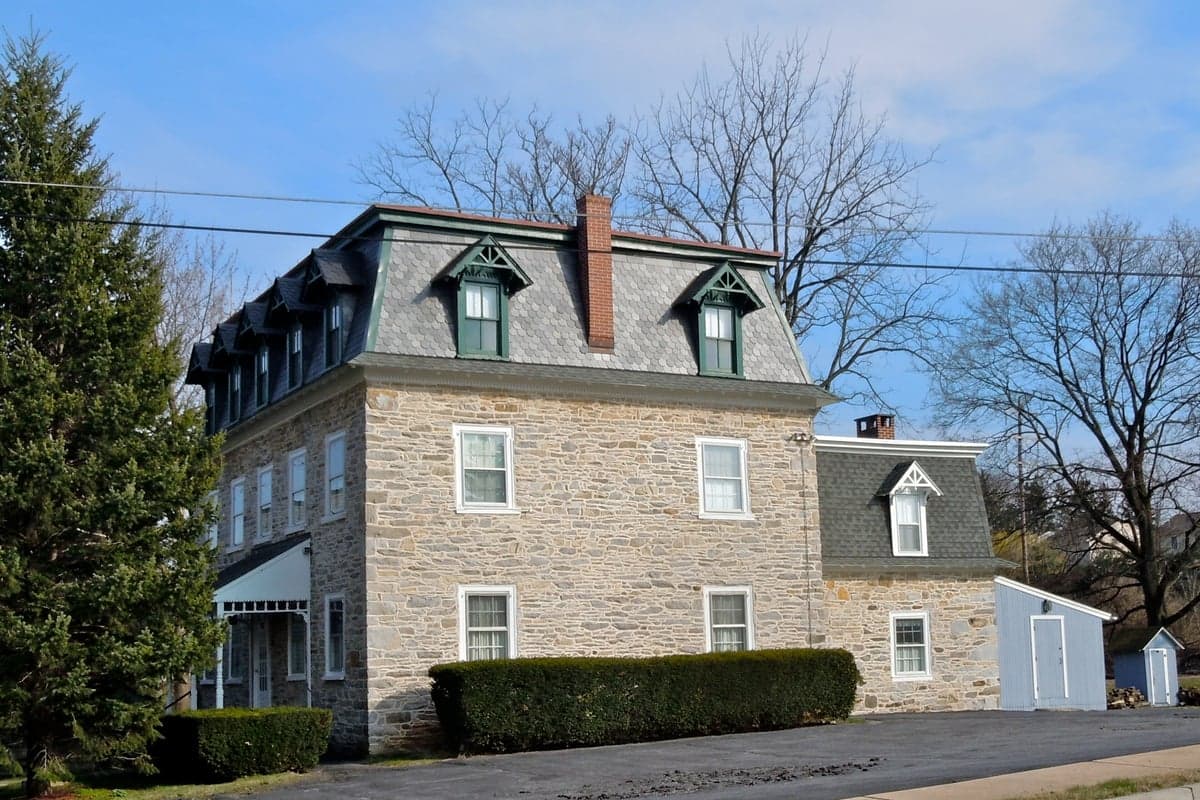
Photo: Wikipedia
Strategic Assessment of Wernersville, PA
Multiple tactical vulnerabilities. Population density, target proximity, or disaster risk are likely compounding. A retreat property and exit planning is required.
What does the Strategic Assessment tell us?
Our Strategic Assessment grades tactical survivability of an area. Major population centers, military targets, fallout zones, natural disasters, and border exposure all drive risk — lower exposure means a more defensible position in a crisis.
This is heavily inspired by Joel Skousen's Strategic Relocation book. Highly recommended you checkout the book ($)What does this tell us?
Our Strategic Assessment grades tactical survivability of an area. Major population centers, military targets, fallout zones, natural disasters, and border exposure all drive risk — lower exposure means a more defensible position in a crisis.
This is heavily inspired by Joel Skousen's Strategic Relocation book. Highly recommended you checkout the book ($)Strategic Pillars

Key Distances
Regional Safe Places
Below is our recommended "safe zones" in Pennsylvania and the surrounding area based on our strategic heuristics. For most people, it's unrealistic to live in a “safe zone” full-time due to work, family or other personal reasons. They tend to be more rural. However, many of these areas are perfect for second homes and retreat properties that double as a vacation home or even a short-term rental.
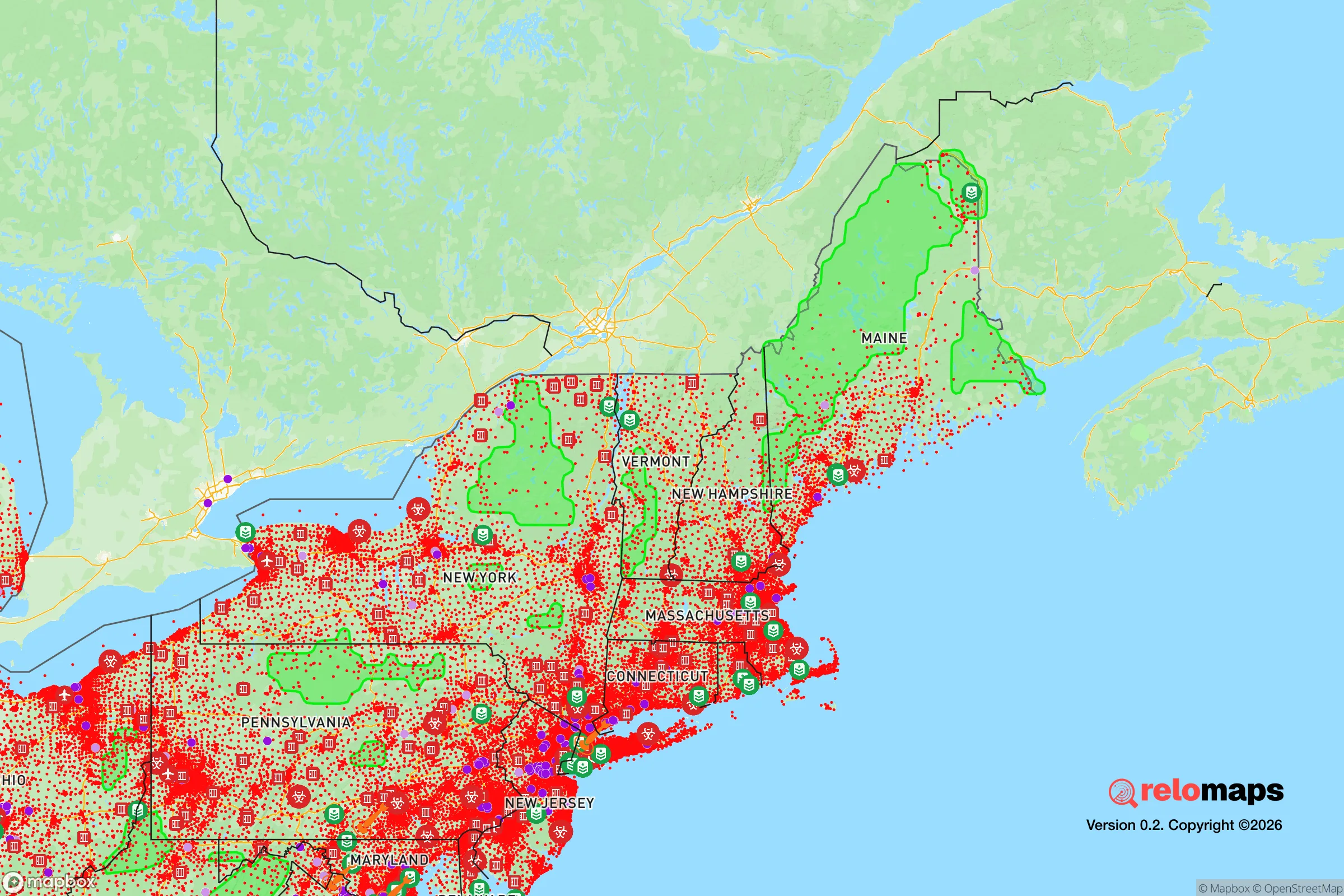
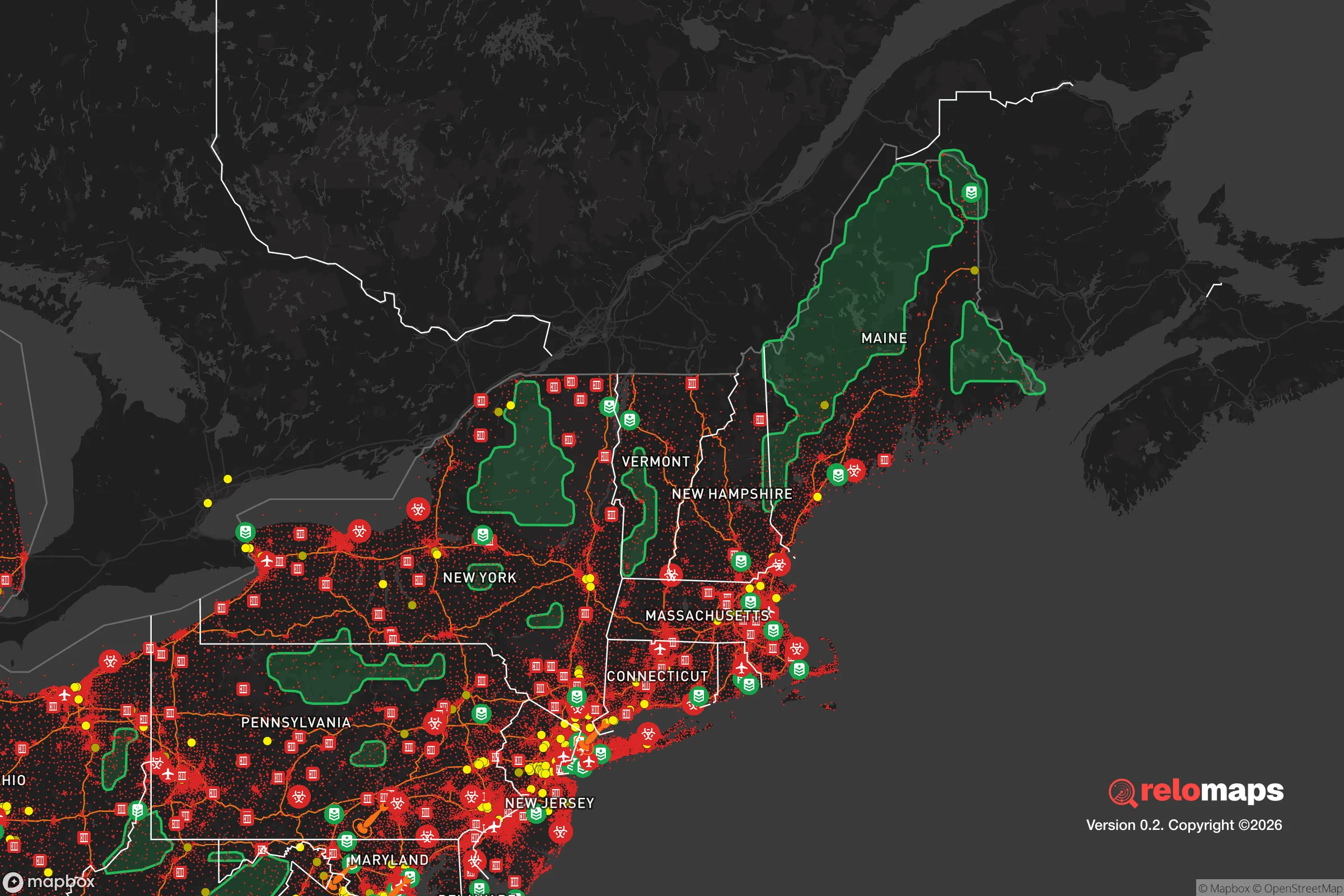


Important Note: For informational purposes only. This does not mean nothing bad ever happens in the green zones. Please use common sense. This is based on public data and modeled with AI. We tried to take a conservative approach but mistakes happen. We update this regularly as new information becomes available.
Solar Generator Recommendations
Backup power matters more here than in safer locations. We've picked three solar generators across budgets and capacity tiers — start with the budget unit if you only need a few essentials, or step up if you want to run a fridge and HVAC for days at a time.

Jackery Portable Power Station Explorer 300
Budget OptionPower on the Go: Weighing only 11 lbs, it's convenient to set up and store with book-sized foldable solar panels

BLUETTI Portable Power Station AC180
Designed for both indoor and outdoor scenarios, AC180 is highly capable as it has a robost capacity and continuous output power.

EF ECOFLOW DELTA Pro Ultra Power Station
Upgraded PickEcoFlow DELTA Pro Ultra is a whole-home energy system designed to grow with your family. Integrated with the Smart Home Panel 2, it scales to meet your evolving energy needs — keeping your home powered, intelligent, and secure through every stage of life.
We earn a commission, at no additional cost to you.
Strategic Assessment Analysis
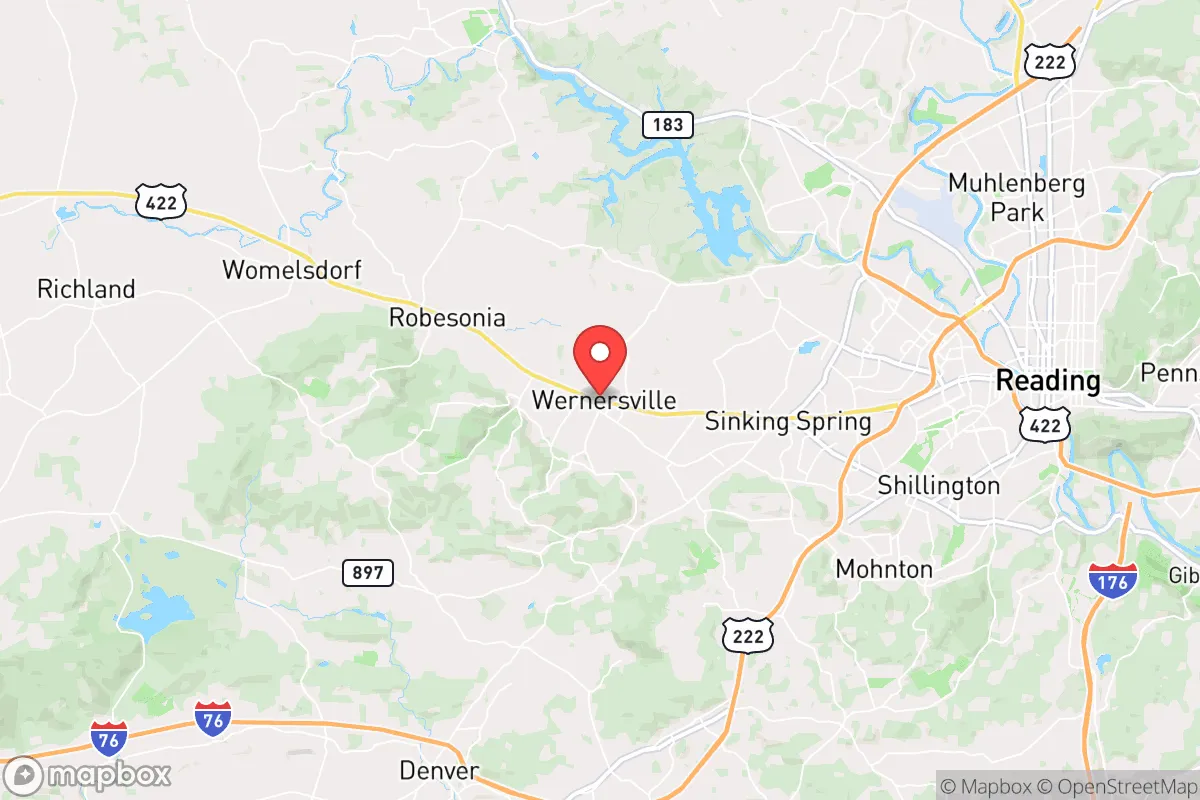
Wernersville, Pennsylvania, occupies a strategic position in the rolling hills of Berks County that offers a meaningful blend of proximity to major East Coast infrastructure and genuine geographic insulation. For a relocator prioritizing disaster readiness and self-sufficiency, this small borough of roughly 2,700 people sits about 15 miles west of Reading and 60 miles northwest of Philadelphia, placing it far enough from dense urban centers to avoid the worst of a metropolitan collapse scenario while remaining close enough to access critical supplies and medical care during normal times. The area’s resilience stems from its location in the Blue Mountain foothills, where elevation, water access, and a relatively low population density create a defensible pocket that has historically been overlooked by major threat vectors.
Geographic position and natural advantages for long-term stability
Wernersville’s primary strategic asset is its position within the Lebanon Valley, a fertile corridor flanked by the Blue Mountain ridge to the north and the South Mountain range to the south. This topography provides natural barriers against both weather extremes and human movement. The borough sits at an elevation of approximately 500 feet, with surrounding ridges rising to over 1,200 feet, offering vantage points and natural drainage that reduce flood risk compared to low-lying areas along the Schuylkill River. The region’s underlying geology—primarily limestone and shale—supports reliable groundwater aquifers, a critical factor for long-term water security. The area is also within a 30-minute drive of the Appalachian Trail corridor, which provides both recreational access and potential escape routes if evacuation becomes necessary. For a relocator, the key takeaway is that Wernersville is not in a hurricane-prone coastal zone, not in a major earthquake fault region, and not in a wildfire-prone forest—its primary natural risks are winter storms and occasional flash flooding from heavy rains, both of which are manageable with basic preparedness.
Risk exposure and proximity to fallout-relevant landmarks
The most significant vulnerability for Wernersville is its proximity to several high-value targets that could become problematic in a major conflict or grid-down scenario. The borough lies roughly 40 miles from the Limerick Generating Station nuclear plant near Pottstown, which is within the 50-mile emergency planning zone. While the prevailing winds in this region typically blow from the west, a release event could still affect the area depending on weather patterns. Additionally, the borough is 15 miles from Reading, a city of 95,000 that would likely experience severe civil unrest during a prolonged emergency, and 60 miles from Philadelphia, a primary target for any strategic strike scenario. The nearby Interstate 78 corridor, running 10 miles north, is a major logistics route that could become a chokepoint or target. On the positive side, Wernersville is not near any major military installations, chemical plants, or rail hubs that would make it a primary target. The area’s risk profile is moderate: it is far enough from major cities to avoid direct blast effects but close enough to experience secondary effects like refugee flow, supply chain disruption, and potential radiation drift. A relocator should plan for at least two weeks of self-sufficiency to ride out initial chaos, with a longer-term plan for water filtration and food storage.
Practical resilience for a relocator: food, water, energy, and defensibility
Wernersville’s practical resilience is above average for a Pennsylvania borough of its size, largely due to its agricultural surroundings and existing infrastructure. The borough is surrounded by working farms—dairy, corn, soybeans, and livestock operations—within a 10-mile radius, meaning local food production is a realistic option for those willing to barter or establish relationships with farmers. The area’s growing season runs from April to October, supporting home gardens and small-scale agriculture. Water access is strong: the borough draws from the Reading Area Water Authority system, but private wells are common in the surrounding townships, and the nearby Tulpehocken Creek provides a surface water source that can be filtered. For energy, the region has seen a steady increase in residential solar installations, and the rolling terrain offers multiple micro-hydro opportunities on smaller streams. Wood heating is practical, with abundant hardwood forests within a 20-minute drive. Defensibility is a mixed picture: Wernersville itself is a compact borough with a traditional street grid, making it hard to secure against a determined group. However, the surrounding rural townships—Heidelberg, Lower Heidelberg, and South Heidelberg—offer properties with long driveways, wooded buffers, and natural chokepoints that are far more defensible. The local community is tight-knit, with a strong volunteer fire company and an active municipal government that maintains a police department. For a relocator, the smartest move is to buy land in the surrounding townships rather than in the borough itself, using Wernersville as a supply hub rather than a primary residence.
The overall strategic picture for Wernersville is one of moderate resilience with clear trade-offs. It offers genuine advantages in water availability, agricultural access, and topographic protection that many suburban areas lack. Its distance from major cities—close enough for normal commuting and supply runs, far enough to avoid the worst of a collapse—strikes a practical balance for someone who wants to maintain a normal life while preparing for contingencies. The primary downsides are the proximity to nuclear infrastructure and the potential for refugee pressure from Reading and Philadelphia during a crisis. A relocator who invests in a well, solar panels, a wood stove, and a deep pantry will find Wernersville a solid base for long-term self-sufficiency, provided they also build relationships with the local farming community and secure a property with natural defensibility. It is not a bug-out location for a doomsday purist, but for a serious, pragmatic relocator, it is a strong candidate in the Mid-Atlantic region.

* Values derived from national, state, county, city and local statistics and may differ in a specific area. Last updated: 2026-09-01T14:25:49.000Z
Narrative content on this page is AI-generated and may contain mistakes. Verify any details that matter before acting on them.
ReloMaps may earn a commission from affiliate links at no extra cost to you.

