Photo: Wikipedia
Demographics of Wernersville, PA
Affluence Level in Wernersville, PA
An upper-middle-class area. Household wealth, education levels, and homeownership run ahead of national benchmarks.
People of Wernersville, PA
Wernersville, Pennsylvania, is a small, tight-knit borough of 2,767 residents that remains predominantly white (87.3%) with a notably low foreign-born population of 0.0%. The community’s character is shaped by its historic Pennsylvania German roots, a modest college-educated rate of 31.7%, and a growing Hispanic (5.0%) and Black (4.8%) presence that signals gradual diversification. For families and individuals seeking a quiet, historically rooted town with a strong sense of place, Wernersville offers a stable population base with subtle demographic shifts underway.
How the city was settled and grew
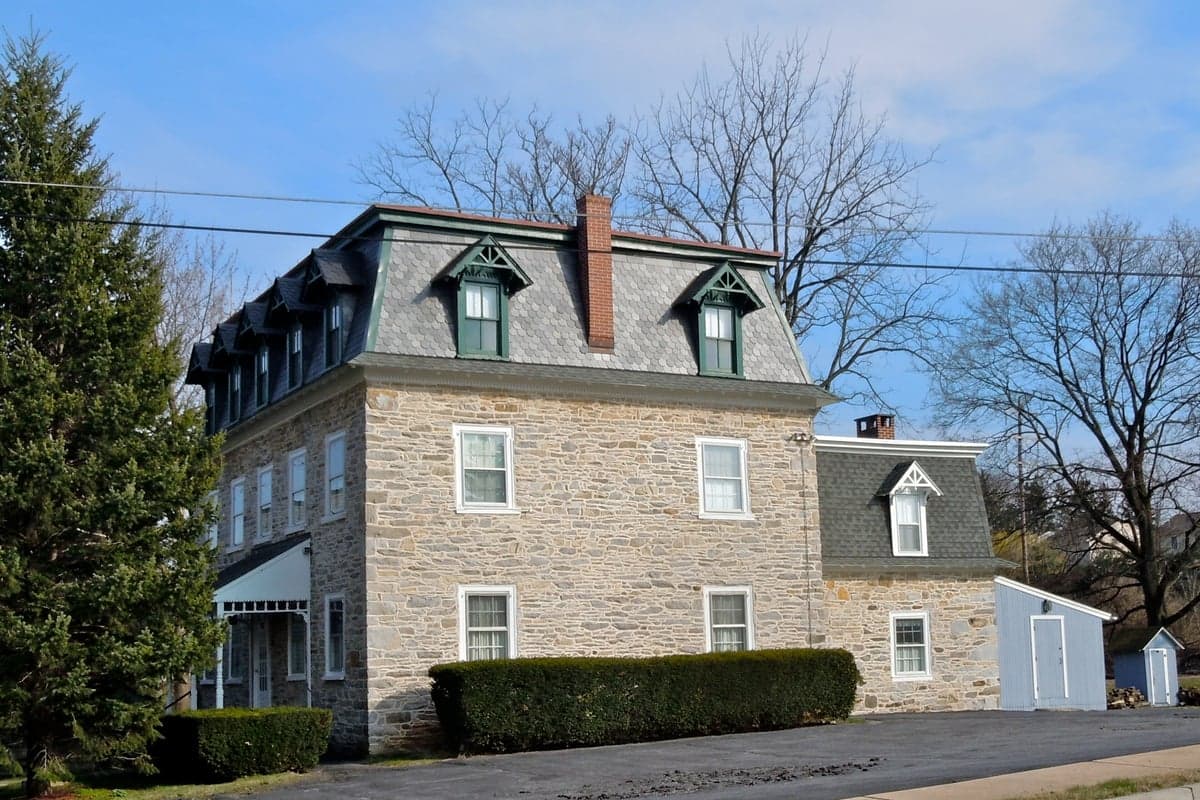
Wernersville’s original population was drawn by the fertile farmland and the strategic location along the Tulpehocken Path, a Native American trail later used by European settlers. The borough was officially incorporated in 1833, but its founding families—primarily of Pennsylvania German (Deitsch) stock—arrived in the mid-1700s. These early settlers were farmers and tradesmen who built the core of what is now Main Street, the historic commercial spine where many original stone and brick homes still stand. The arrival of the Philadelphia and Reading Railroad in the 1850s spurred a second wave: Irish and German laborers who built and serviced the rail line. They settled in the Railroad District, a cluster of modest row homes and worker cottages along the tracks south of Main Street. By the early 1900s, Wernersville had become a summer retreat for wealthy Reading families, who built Victorian homes in the Heights neighborhood, a hilltop area east of the borough with larger lots and panoramic views. The town’s population peaked near 2,800 in the 1950s, supported by local manufacturing and the nearby Wernersville State Hospital (opened 1893), which employed many residents as attendants and administrators.
Modern era (post-1965)
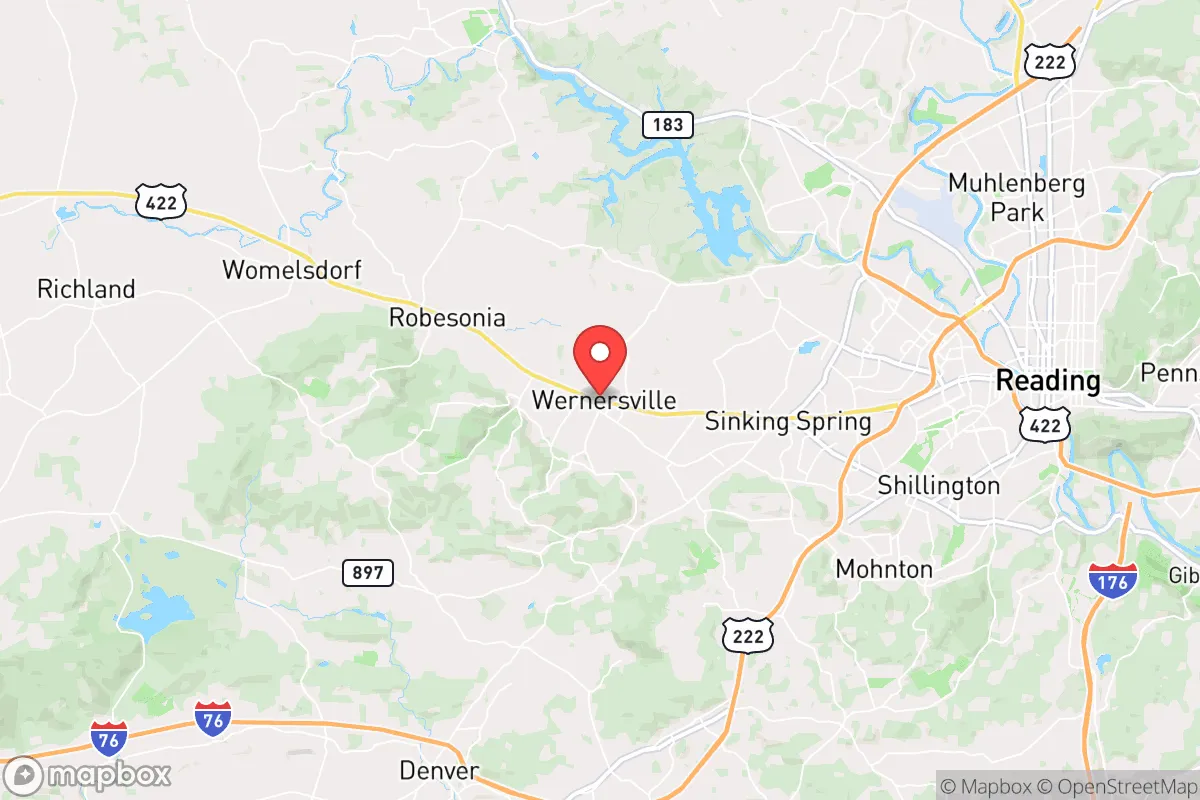
After the 1965 Hart-Cellar Act, Wernersville saw almost no new foreign-born immigration—the foreign-born share remains 0.0% today. Instead, the modern era has been defined by domestic in-migration from Berks County’s rural townships and from the broader Reading metropolitan area. The West End neighborhood, a post-1970s subdivision of single-family homes on quarter-acre lots, absorbed many of these new residents—primarily white families seeking affordable housing within commuting distance of Reading (12 miles east) and Lebanon (15 miles west). The Hispanic population grew from negligible levels in 1990 to 5.0% today, concentrated in the South Side area near Penn Avenue, where older duplexes and rental properties offer lower entry costs. The Black population, now 4.8%, is dispersed across the borough but has a small cluster in the Brookside neighborhood, a mid-century development of ranch homes near the hospital grounds. East/Southeast Asian residents (0.3%) and Indian subcontinent residents (0.0%) remain virtually absent, reflecting the town’s limited draw for immigrant communities compared to larger cities. The college-educated share (31.7%) is slightly below the Pennsylvania average (33.1%), indicating a workforce tilted toward trades, healthcare, and retail rather than professional services.
The future
Wernersville’s population is projected to remain stable or decline slightly over the next decade, as the borough lacks developable land and new housing construction is minimal. The Hispanic and Black shares are likely to continue rising slowly, driven by natural increase and spillover from Reading’s more diverse housing market, but the town will remain overwhelmingly white and non-Hispanic. The Heights and Main Street historic districts are seeing modest reinvestment from younger families attracted to the area’s low crime rates and good school system (Conrad Weiser Area School District), while the Railroad District and South Side may see gradual turnover as older residents age out. No new ethnic enclaves are forming; instead, new minority residents are dispersing across existing neighborhoods. The cultural identity is slowly shifting from a purely Pennsylvania German heritage to a broader, still predominantly white, small-town American character, with local events like the Wernersville Community Fair reflecting this blend.
For a prospective resident, Wernersville is becoming a stable, slowly diversifying small town where the past remains visible in its architecture and traditions, but the future points toward a more typical American suburb. It offers affordability, safety, and a strong sense of community, but little ethnic or cultural variety—a trade-off that suits families and retirees seeking predictability over cosmopolitan energy.

* Values derived from national, state, county, city and local statistics and may differ in a specific area. Last updated: 2026-09-01T14:25:49.000Z
Narrative content on this page is AI-generated and may contain mistakes. Verify any details that matter before acting on them.
ReloMaps may earn a commission from affiliate links at no extra cost to you.

