Photo: Wikipedia
Quality of Life in Wayne, MI
Above-average quality of iife. The area offers a reasonable cost of living, decent mobility, and a mix of neighborhood amenities.
What does Quality of Life tell us?
Quality of Life blends cost of living, nearby amenities, socioeconomic signals, and neighborhood character. City-level scores represent the whole municipality; individual neighborhoods can differ.
What does this tell us?
Quality of Life blends cost of living, nearby amenities, socioeconomic signals, and neighborhood character. City-level scores represent the whole municipality; individual neighborhoods can differ.
Cost of Living
32% below national average
The Real Cost of Living in Wayne, MI for 2026
| Tier | Individual | Family (4) |
|---|---|---|
| Survival | $15k | $28k |
| Comfortable | $28k | $41k |
| Luxury | $82k+ | $127k+ |
| Elite (Top 5%) | $96k+ | $149k+ |
134%
The Area Signal
A metric tracking the socioeconomic signals of the area.
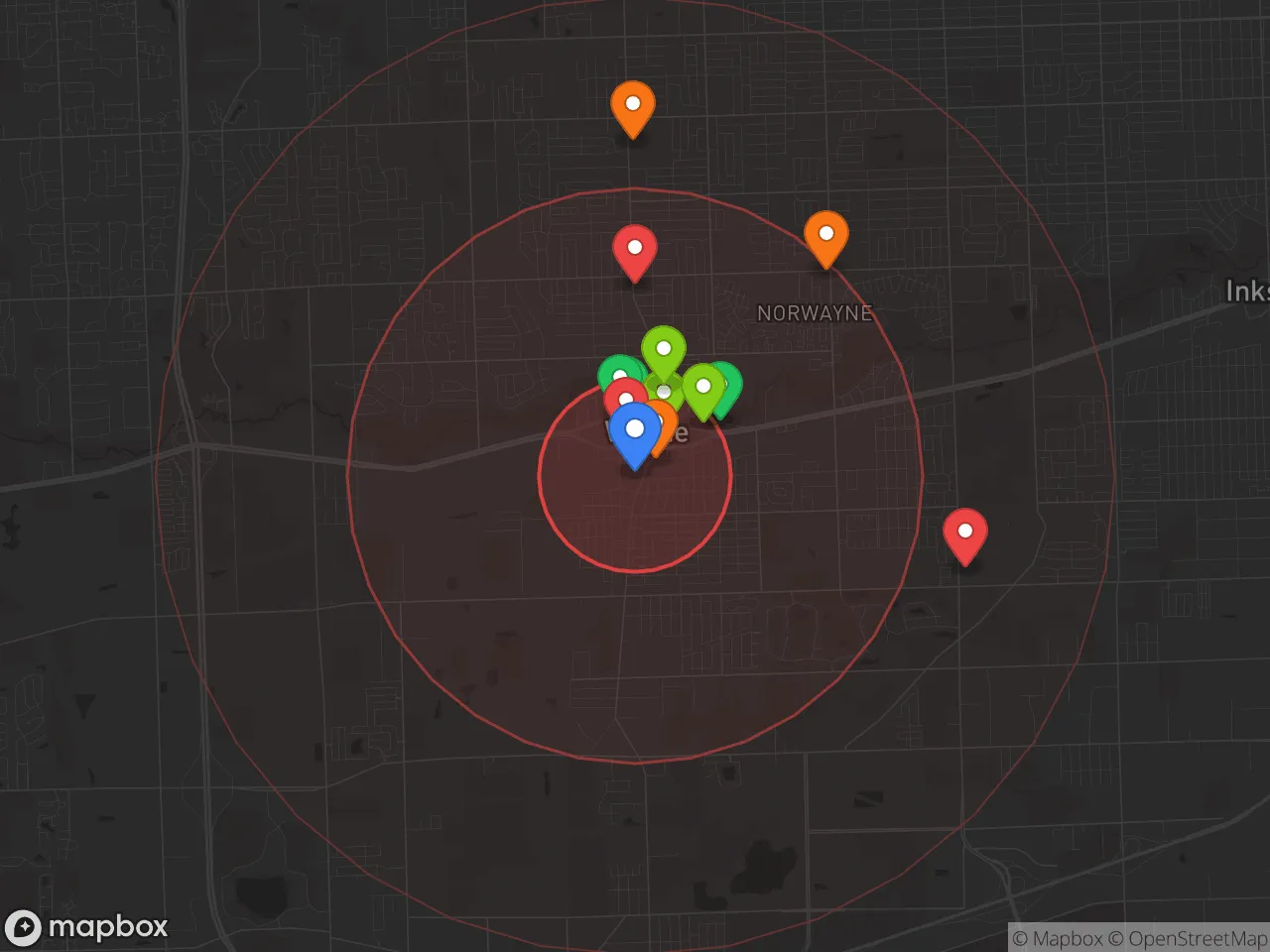
Hobbies
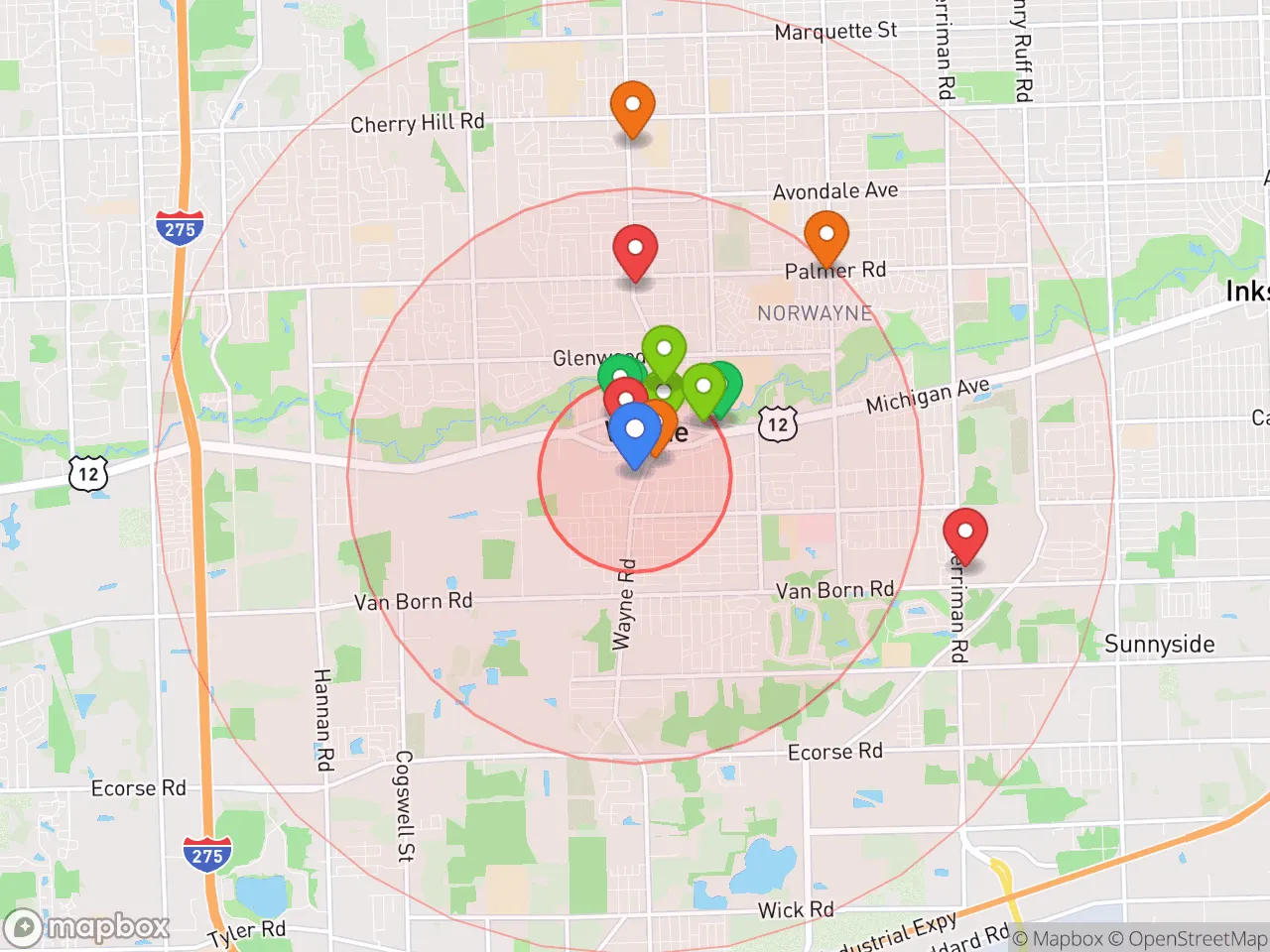
Explore the areaGroceries
0 within 10 miles
Gas
0 within 10 miles
Hospital
0 within 20 miles
Airport
DTW — Detroit Metropolitan Wayne County
Post Office
Critical Amenities
Quality-of-Life Analysis
Wayne, Michigan, offers a distinctly affordable quality of life relative to the broader Detroit metro area, attracting a mix of long-term working-class families, first-time homebuyers, and commuters who prioritize budget-friendly housing over urban amenities. With a cost-of-living index of 68 (well below the U.S. average of 100), the city provides a financial cushion that is increasingly rare in southeast Michigan. The population skews middle-income and older, with a notable share of residents who have lived in Wayne for decades, creating a stable, community-oriented atmosphere rather than a transient or rapidly gentrifying one.
How housing costs and affordability compare to nearby suburbs
Wayne’s housing market is a standout for affordability in western Wayne County. The median home value sits at $142,200, which is roughly half the median for the Detroit metro area as a whole. Median rent is similarly low at $924, making the city accessible for renters who might be priced out of nearby communities like Plymouth or Canton. For context, a comparable home in Plymouth would likely cost over $300,000, while Canton’s median exceeds $250,000. This price gap means Wayne residents can often own a single-family home on a modest income, though the trade-off is an older housing stock—many homes were built in the 1940s through 1960s—and fewer new construction options. The average commute of 26.8 minutes is slightly above the national average but reasonable for the region, with most workers driving to manufacturing, logistics, or healthcare jobs in Dearborn, Livonia, or Detroit via I-94 or M-39.
What daily life is like for families: schools, parks, and local amenities
Daily life in Wayne centers on its compact downtown, the Wayne Memorial High School district, and a network of small parks like Goudy Park and the Wayne Community Center. The Wayne-Westland Community Schools district serves most of the city, with Wayne Memorial High School offering a range of vocational and college-prep programs. For younger children, the district’s elementary schools like Taft-Galloway and Hoover have solid state ratings but face challenges common to older suburban districts, including aging facilities and limited advanced placement options. Local amenities include a public library, a historic theater (the Wayne Theatre), and a handful of family-owned restaurants and pizzerias along Michigan Avenue. Grocery shopping is served by a Kroger and a Walmart, while larger retail and dining options require a 10-15 minute drive to Westland or Livonia. The city lacks a major hospital, but Beaumont Hospital, Wayne is a short drive away in nearby Westland. For outdoor recreation, the 2.5-mile Wayne Riverwalk along the Rouge River provides a paved trail for walking and biking, though it is modest compared to larger regional parks like Hines Drive.
Wayne is best suited for budget-conscious families, retirees on fixed incomes, and workers in the trades or manufacturing who value a short commute to industrial jobs in the Downriver area or Dearborn. The city’s low cost of living and stable, blue-collar character make it a practical choice for those who do not need high-end retail, nightlife, or top-tier school rankings. However, professionals seeking newer housing, strong school ratings, or walkable urban amenities will likely find nearby Plymouth or Ann Arbor more appealing despite the higher cost. For the right resident, Wayne offers a straightforward, affordable, and community-rooted lifestyle that is increasingly hard to find in metro Detroit.

Crime in Wayne, MI
Generally safer than 57% of comparable U.S. locations.
Violent CrimeViolent Crime Analysis
Property CrimeProperty Crime Analysis
Crime Analysis
Wayne, Michigan, reports a violent crime rate of 588.1 incidents per 100,000 residents and a property crime rate of 1,293.9 per 100,000, placing it above both state and national averages for public safety risk. As a small city within the Detroit metropolitan area, Wayne's crime statistics reflect broader regional challenges, including the influence of a progressive justice system in Wayne County that prioritizes offender rehabilitation over strict enforcement. This combination of elevated crime rates and lenient judicial policies creates a safety environment that requires careful consideration for potential residents.
Crime in context
Wayne's violent crime rate of 588.1 per 100,000 is roughly 60% higher than the national average of about 370 per 100,000 and significantly exceeds the Michigan state average of approximately 450 per 100,000. Property crime in Wayne, at 1,293.9 per 100,000, also outpaces the national benchmark of roughly 1,950 per 100,000 but is notably lower than the Detroit city rate. These figures place Wayne in a middle tier of safety among western Wayne County suburbs, with communities like Plymouth and Northville reporting substantially lower crime rates. The county's elected prosecutors and judges, operating under progressive criminal justice reforms that emphasize diversion programs and reduced sentencing, contribute to a legal environment where repeat offenders face limited consequences, directly impacting public safety outcomes.
What residents experience
Residents of Wayne commonly report property crimes such as vehicle break-ins, theft from porches, and residential burglaries as daily concerns, with the property crime rate of 1,293.9 per 100,000 translating to roughly 3.5 incidents per day across the city's population. Violent crime, while less frequent, includes aggravated assault and robbery, with the 588.1 rate meaning about 1.6 violent incidents daily. The Wayne Police Department maintains a visible presence, but staffing levels and response times are stretched by the volume of calls. Many long-term residents describe a pattern of "catch and release" for property offenders, as county-level progressive policies often result in low bail amounts or pre-trial release for non-violent criminals, frustrating community efforts to reduce crime.
Neighborhood-level variation is notable within Wayne's roughly 6 square miles. Areas west of Michigan Avenue near the city's border with Westland and Inkster experience higher concentrations of both violent and property crime, while neighborhoods east of Wayne Road toward the historic downtown core report comparatively lower incident rates. The area around Wayne Memorial High School and the commercial corridors along Michigan Avenue see elevated foot traffic that correlates with increased theft and disorder. Prospective residents should examine block-level crime maps and consider properties in the eastern and southern sections of the city, where single-family home density and stronger neighborhood watch programs provide a modest safety buffer against the broader county-level trends.
* Values derived from national, state, county, city and local statistics and may differ in a specific area. Last updated: 2026-11-10T16:30:59.000Z
Narrative content on this page is AI-generated and may contain mistakes. Verify any details that matter before acting on them.
ReloMaps may earn a commission from affiliate links at no extra cost to you.

