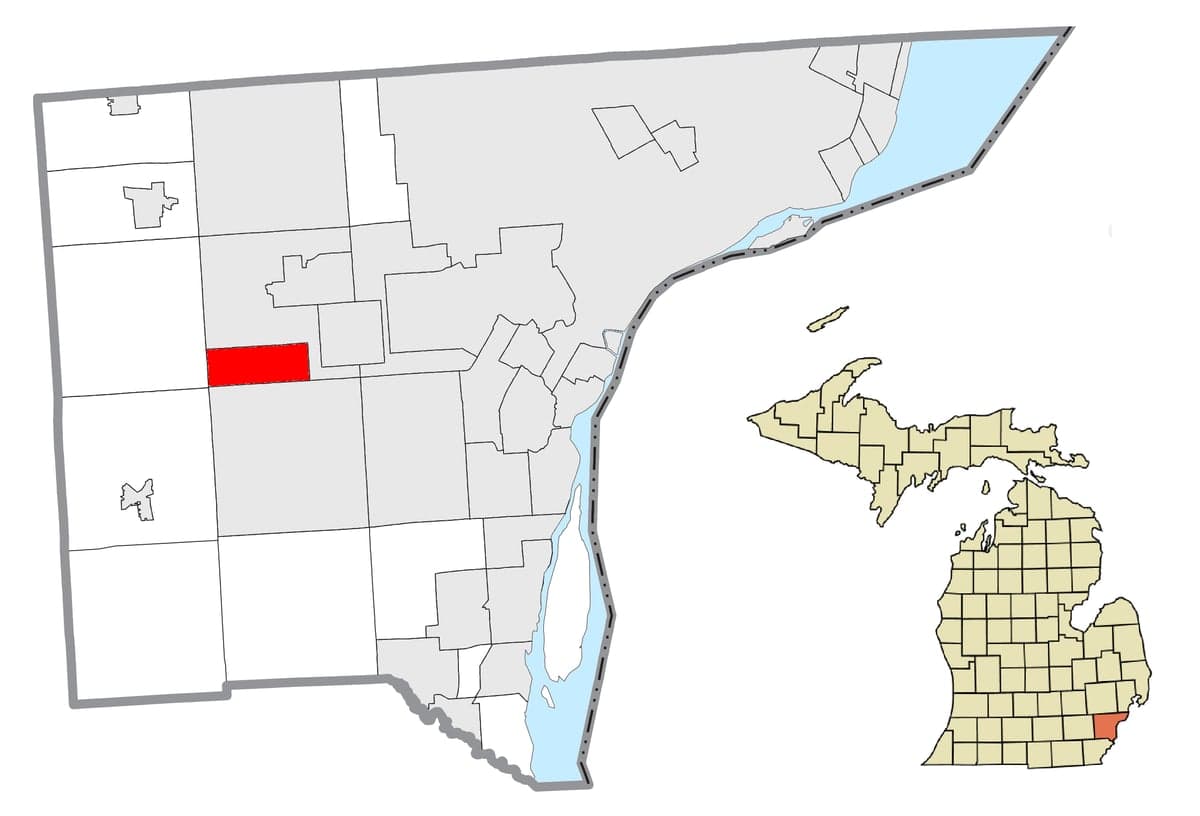
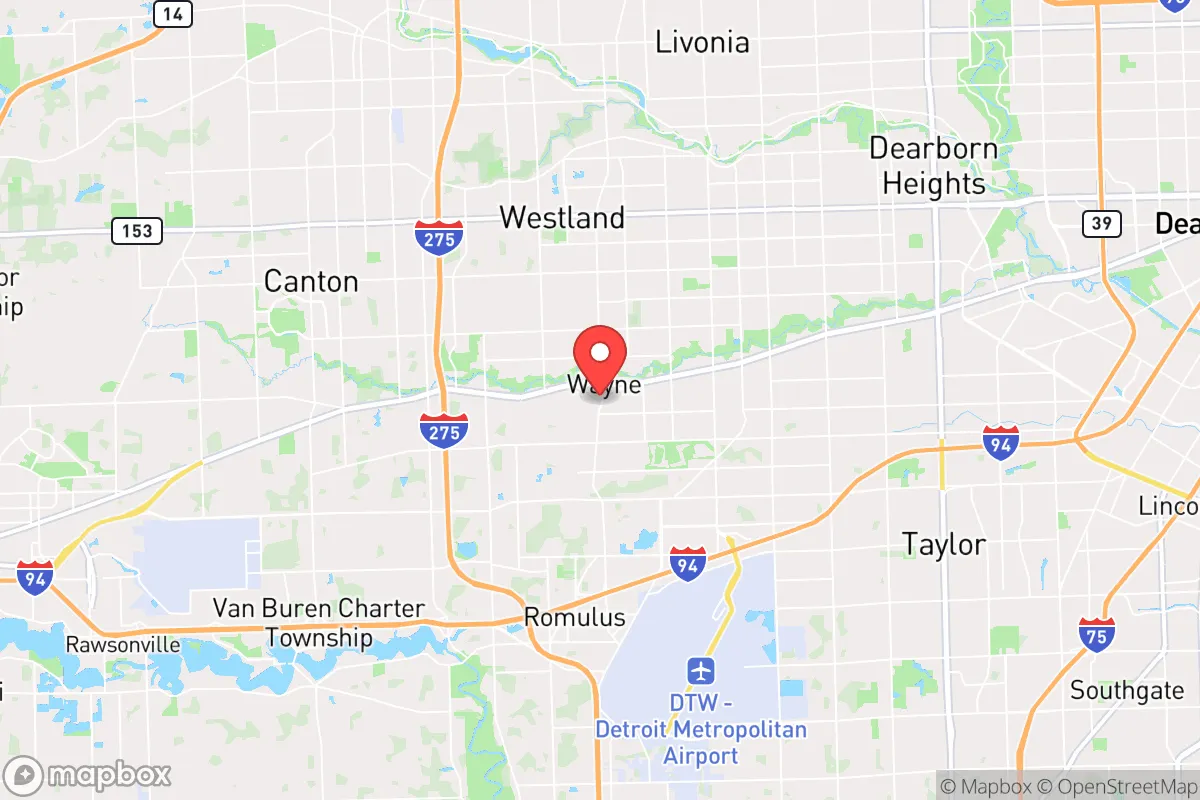
Photo: Wikipedia
Personal Sovereignty in Wayne, MI
Strong independent fundamentals that actively favor personal liberty and low regulation.
What does Personal Sovereignty tell us?
Personal Sovereignty measures your capacity for self-reliance and independence with minimal government friction. Higher scores mean fewer barriers between you and the way you want to live... but it assumes you have the space you need and good neighbors.
What does this tell us?
Personal Sovereignty measures your capacity for self-reliance and independence with minimal government friction. Higher scores mean fewer barriers between you and the way you want to live... but it assumes you have the space you need and good neighbors.
State Policy
Energy independence: Importer (22% of energy produced in-state)
Personal Liberty
Homesteading

Personal Liberty Analysis
Wayne, Michigan, offers a mixed personal sovereignty environment shaped by its location within a heavily unionized, historically Democratic state that nonetheless preserves significant local autonomy and constitutional protections. While Michigan’s overall tax burden and regulatory density are moderate to high compared to national averages, Wayne’s status as a small city in Wayne County means residents navigate both state-level mandates and local ordinances that can either constrain or enable self-reliant living. For a relocation researcher focused on freedom and independence, the key trade-offs involve higher property taxes and state income tax against strong Second Amendment protections, relatively permissive zoning for small-scale homesteading, and robust parental rights in education.
Tax burden and regulatory posture in Wayne and Michigan
Michigan’s tax structure places a measurable but not crushing burden on residents. The state levies a flat 4.25% individual income tax on all earned income, with no local income tax in Wayne itself (though some neighboring cities like Detroit impose their own). Property taxes are the heavier lift: Wayne’s millage rate typically falls between 50 and 60 mills for the total levy (city, county, school, and special assessments), meaning a home assessed at $150,000 could carry annual property taxes of $7,500–$9,000. That’s above the national median but typical for southeast Michigan. The state’s 6% sales tax applies to most goods but exempts groceries and prescription drugs. On the regulatory side, Michigan is not a right-to-work state as of 2024 (the law was repealed), which means private-sector workplaces can require union membership or dues as a condition of employment. This affects autonomy for workers in manufacturing and trades, which dominate Wayne’s local economy. Business licensing and occupational regulations are moderate: starting a small home-based business requires a city permit and compliance with zoning, but the process is straightforward and fees are under $200 annually. Michigan’s environmental regulations, particularly around water and waste, are stricter than in many Sun Belt states, which can complicate off-grid or independent land use. Overall, the tax and regulatory environment in Wayne is moderately heavy—not oppressive, but a clear step above low-tax states like Texas or Florida.
Self-defense and gun law specifics in Wayne and Michigan
Michigan is a shall-issue state for concealed pistol licenses (CPL), meaning the county gun board must issue a permit if the applicant meets statutory requirements (age 21+, no disqualifying criminal record, completion of a state-approved safety course). Wayne County processes CPL applications within the 45-day statutory window, and renewal is every 4–5 years depending on issuance date. Open carry of handguns is legal without a permit for anyone 18+ who can legally possess a firearm, though local ordinances in Wayne may restrict open carry in city parks or municipal buildings. The state does not require registration of firearms, and there is no waiting period for long gun purchases (handguns have a mandatory 3-day wait). Michigan law provides a stand-your-ground defense with no duty to retreat in any place where the individual is lawfully present, codified in MCL 780.972. Castle doctrine protections extend to occupied vehicles and dwellings. However, Wayne is in Wayne County, where the sheriff’s office and prosecutor have historically taken a more restrictive stance on self-defense claims than rural counties; a defensive shooting will face close scrutiny. Magazine capacity is not restricted by state law, and suppressors are legal with a federal tax stamp. For a freedom-oriented resident, Michigan’s gun laws are among the most permissive in the Midwest, though not as expansive as states like Arizona or Texas. The key practical limitation is the CPL requirement for concealed carry and the county-level variability in enforcement attitudes.
Self-reliance and homesteading viability in Wayne
Wayne’s residential zoning allows for a meaningful degree of self-reliance, though not full off-grid independence. Most single-family lots in the city are 0.15 to 0.25 acres, typical of older inner-ring suburbs. Keeping chickens is permitted with a city permit (limit of 4 hens, no roosters), and beekeeping is allowed with registration. Vegetable gardens are unrestricted on residential property. However, rainwater collection is limited by Michigan law to 2,500 gallons per property without a permit, and any system must comply with local plumbing codes. Composting is allowed but must be contained and not create odors. Raising larger livestock (goats, pigs, cattle) is prohibited within city limits. For those seeking more land, the rural townships immediately west of Wayne (like Canton and Van Buren Township) offer 1–5 acre parcels with more permissive agricultural zoning, though property taxes rise proportionally. Off-grid living is effectively impossible within city limits due to mandatory connection to municipal water and sewer systems, and building codes require electrical service. Solar panels are allowed but must meet city aesthetic guidelines and cannot exceed 110% of the property’s historical energy use. Wood-burning stoves are permitted as supplemental heat but must pass inspection. For a homesteader, Wayne offers a viable suburban homesteading niche—enough space for a large garden, chickens, and some energy independence—but not the full autonomy of a rural property. The trade-off is proximity to Detroit’s job market and infrastructure.
Personal liberties in Wayne: parental rights, medical autonomy, speech, and property
Michigan law provides strong protections for parental rights in education. The state’s Parental Rights in Education Act (2023) requires school districts to notify parents of any changes in a student’s mental, emotional, or physical health and to obtain parental consent before administering any health-related survey or instruction. Wayne-Westland Community Schools, which serves Wayne, has a standard opt-out policy for sex education and allows parents to review all instructional materials. Homeschooling is legal with minimal regulation: parents need only file a notice of intent annually and provide instruction in required subjects, with no standardized testing mandate. Medical autonomy is more constrained: Michigan has a broad vaccine mandate for school attendance (with medical and religious exemptions), and the state’s emergency powers during COVID-19 were used to impose business closures and gathering limits that some residents viewed as overreach. The Michigan Freedom of Information Act applies to all local government records, and public meetings must allow citizen comment. Property rights are protected by the state’s takings clause, which requires just compensation for any regulatory taking, though local zoning boards have significant discretion. Free speech is fully protected under the Michigan Constitution, which has its own free speech clause that courts have interpreted as at least as protective as the First Amendment. There are no local hate speech ordinances that restrict speech beyond the state’s existing harassment laws. For a conservative-leaning resident, Wayne’s personal liberties environment is solid but not exceptional: parental rights are well-protected, property rights are standard, but medical autonomy and emergency powers remain areas of concern.
Compared to other areas in the Midwest, Wayne offers a balanced but not libertarian sovereignty profile. The tax burden is higher than in Indiana or Ohio, but gun laws are more permissive than in Illinois or Minnesota. Homesteading viability is better than in dense urban cores but worse than in rural Michigan counties like Lapeer or Hillsdale. Parental rights are stronger than in blue states like California or New York, but weaker than in states like Idaho or Montana that have no compulsory attendance laws. For a single individual or family who values personal freedom and independence, Wayne represents a pragmatic middle ground—a place where you can exercise significant autonomy in daily life while accepting the trade-offs of living in a state with a more active regulatory and tax structure. The city’s affordability relative to nearby Ann Arbor or Royal Oak makes it a viable option for those who want to maximize personal sovereignty without sacrificing access to urban employment and services.

* Values derived from national, state, county, city and local statistics and may differ in a specific area. Last updated: 2026-11-10T16:30:59.000Z
Narrative content on this page is AI-generated and may contain mistakes. Verify any details that matter before acting on them.
ReloMaps may earn a commission from affiliate links at no extra cost to you.

