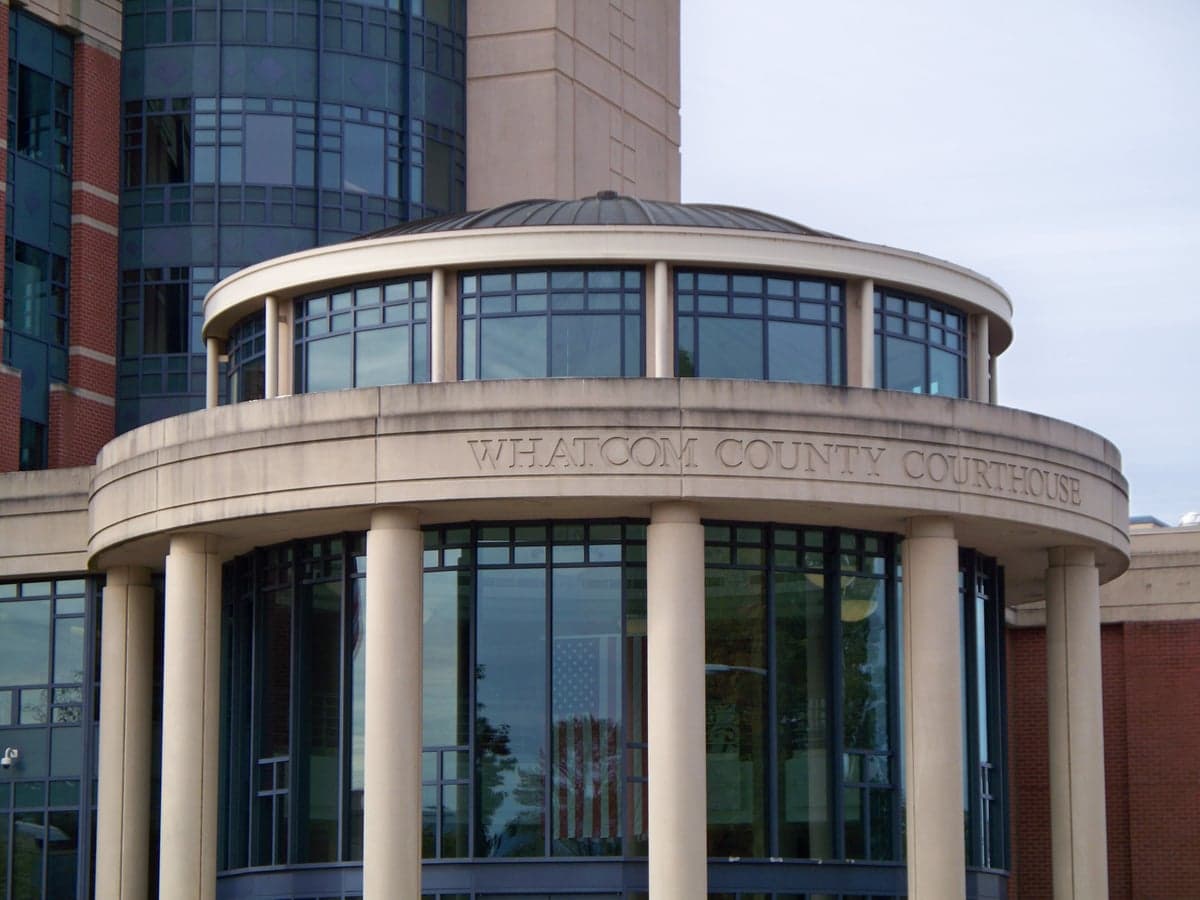
Photo: Wikipedia
Demographics of Whatcom County
Affluence Level in Whatcom County
A middle-class area roughly in line with national averages across income, home values, education, and employment.
People of Whatcom County
The people of Whatcom County, Washington, today number 228,432 and form a predominantly white (76.1%) population with a notably low foreign-born share of just 4.4%, a figure that marks the county as significantly less diverse than the national average. The county's character is shaped by its position as a northern border community anchored by Bellingham, a college town and regional hub, alongside a scattering of smaller cities and rural settlements that retain a distinctly Pacific Northwest identity. A relatively high college-educated rate of 38.1% reflects the influence of Western Washington University, while the Hispanic population at 10.4% represents the largest and fastest-growing minority group, concentrated in the agricultural and service sectors.
Settlement & growth (pre-1960)
The original inhabitants of Whatcom County were the Coast Salish peoples, including the Lummi, Nooksack, and Semiahmoo tribes, who lived in permanent winter villages along the coast and rivers for thousands of years before European contact. The first non-Native presence came with Spanish and British maritime exploration in the late 18th century, but sustained American settlement did not begin until the 1850s, following the Oregon Treaty of 1846 that fixed the international border. The discovery of coal near Bellingham Bay in the 1850s and the subsequent establishment of the Bellingham Bay Coal Company drew the first wave of American and European settlers, with the town of Whatcom (now part of Bellingham) serving as the initial hub.
The completion of the Northern Pacific Railway through the county in the 1880s triggered a second wave of settlement, bringing Scandinavian immigrants—Norwegians, Swedes, and Finns—who were drawn by the region's dense forests and the promise of work in the booming timber industry. These Scandinavian communities established deep roots in Bellingham and the surrounding rural areas, with the town of Lynden becoming a particular stronghold for Dutch immigrants who arrived in the early 1900s to farm the fertile Nooksack River valley. The coal mining industry also attracted a smaller but significant population of Welsh and Irish miners, who settled in the mining camps around Kendall and Maple Falls in the eastern part of the county.
The early 20th century saw the expansion of the salmon canning and fishing industries, which drew a transient but notable population of Chinese and Japanese laborers to the coastal communities of Blaine and Point Roberts. However, anti-Asian sentiment and exclusionary laws, including the Chinese Exclusion Act of 1882 and the internment of Japanese Americans during World War II, prevented the formation of lasting Asian enclaves in the county. The Dust Bowl and Great Depression era brought a modest number of migrants from the Great Plains, but Whatcom County's economy remained dominated by timber, fishing, and agriculture through the mid-20th century, with population growth steady but slow compared to the booming cities of Puget Sound to the south.
Modern era (post-1965)
The post-1965 period in Whatcom County has been defined less by international immigration and more by domestic migration from other parts of the United States, particularly from California and the urban centers of the Pacific Northwest. The 1965 Hart-Cellar Act, which transformed immigration patterns nationally, had a relatively muted effect here: the county's foreign-born population remains at just 4.4%, far below the national average of roughly 14%, and the immigrant communities that have arrived are small and dispersed rather than concentrated in ethnic enclaves. The largest immigrant group in recent decades has been from Mexico and Central America, drawn by year-round agricultural work in the berry, dairy, and nursery industries that dominate the Nooksack Valley. These Hispanic communities have concentrated in Everson, Nooksack, and the rural areas around Sumas, where they now make up a significant share of the local workforce and school populations.
The East/Southeast Asian population, at 2.9%, is modest and largely composed of families who arrived in the 1980s and 1990s, many of them Vietnamese and Filipino immigrants who settled in Bellingham for its affordable housing and the presence of Western Washington University. The Indian-subcontinent population, at 1.3%, is even smaller and more recent, consisting primarily of professionals and graduate students connected to the university and the county's growing healthcare sector. The most significant demographic shift of the modern era, however, has been the influx of domestic migrants from California and the Seattle metropolitan area, who have driven rapid population growth since the 1990s. These newcomers, often more affluent and educated than the existing population, have concentrated in Bellingham and the waterfront communities of Fairhaven and Edgemoor, reshaping the county's political and cultural character toward a more progressive, environmentally conscious orientation.
The future
Whatcom County is projected to become moderately more diverse over the next 10-20 years, driven primarily by the natural growth of the Hispanic population and continued domestic migration from more diverse regions. The Hispanic share, currently 10.4%, is expected to rise toward 15-18% by 2040, with the community remaining concentrated in the agricultural towns of the Nooksack Valley but also expanding into Bellingham's lower-cost neighborhoods. The East/Southeast Asian and Indian-subcontinent populations will likely grow slowly, reaching perhaps 4-5% combined, as the university and healthcare sectors continue to attract skilled immigrants and their families. The white population, while still the overwhelming majority, will continue its gradual decline in relative share as the county's overall population grows and diversifies.
The most consequential trend for the county's future, however, is the ongoing displacement of working-class and middle-class residents by rising housing costs, driven by demand from remote workers and retirees from Seattle and California. This economic pressure is pushing younger families and service workers into the more affordable towns of Ferndale and Lynden, which are experiencing their own growth booms and cultural shifts. The county's cultural identity is evolving from a resource-extraction economy rooted in timber and fishing toward a more diversified economy of education, healthcare, and tourism, with a growing tension between the progressive, college-town ethos of Bellingham and the more conservative, agricultural values of the northern and eastern parts of the county.
For someone moving to Whatcom County now, the region offers a relatively homogeneous but diversifying population, a strong educational anchor in Western Washington University, and a quality of life defined by natural beauty and outdoor recreation. The county is becoming more expensive, more politically polarized between its urban and rural communities, and slowly more diverse, but it remains a predominantly white, native-born population with a distinct Pacific Northwest character that newcomers are reshaping in real time.

* Values derived from national, state, county, city and local statistics and may differ in a specific area. Last updated: 2026-06-21T02:04:14.000Z
Narrative content on this page is AI-generated and may contain mistakes. Verify any details that matter before acting on them.
ReloMaps may earn a commission from affiliate links at no extra cost to you.

