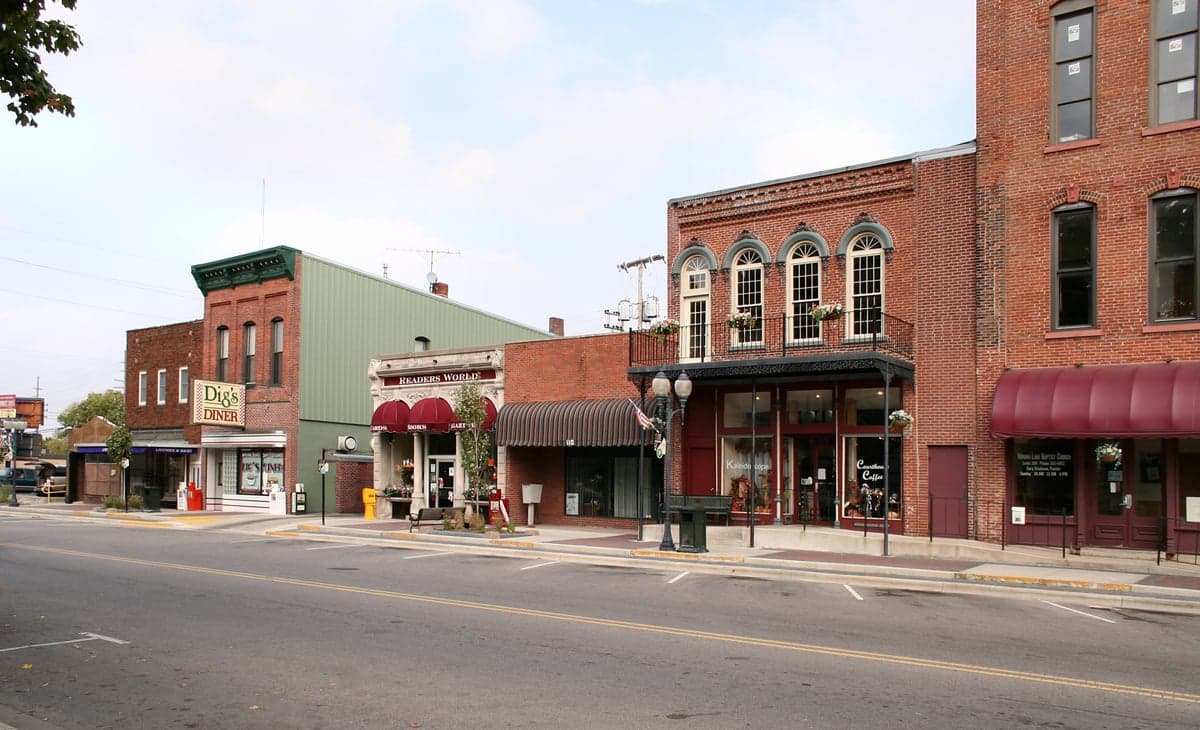
Photo: Wikipedia
Strategic Assessment of Warsaw, IN
Meaningful friction. Expect exposure to either population pressure, blast zones, or natural disaster risk. Consider buying a retreat property.
What does the Strategic Assessment tell us?
Our Strategic Assessment grades tactical survivability of an area. Major population centers, military targets, fallout zones, natural disasters, and border exposure all drive risk — lower exposure means a more defensible position in a crisis.
This is heavily inspired by Joel Skousen's Strategic Relocation book. Highly recommended you checkout the book ($)What does this tell us?
Our Strategic Assessment grades tactical survivability of an area. Major population centers, military targets, fallout zones, natural disasters, and border exposure all drive risk — lower exposure means a more defensible position in a crisis.
This is heavily inspired by Joel Skousen's Strategic Relocation book. Highly recommended you checkout the book ($)Strategic Pillars

Key Distances
Regional Safe Places
Below is our recommended "safe zones" in Indiana and the surrounding area based on our strategic heuristics. For most people, it's unrealistic to live in a “safe zone” full-time due to work, family or other personal reasons. They tend to be more rural. However, many of these areas are perfect for second homes and retreat properties that double as a vacation home or even a short-term rental.

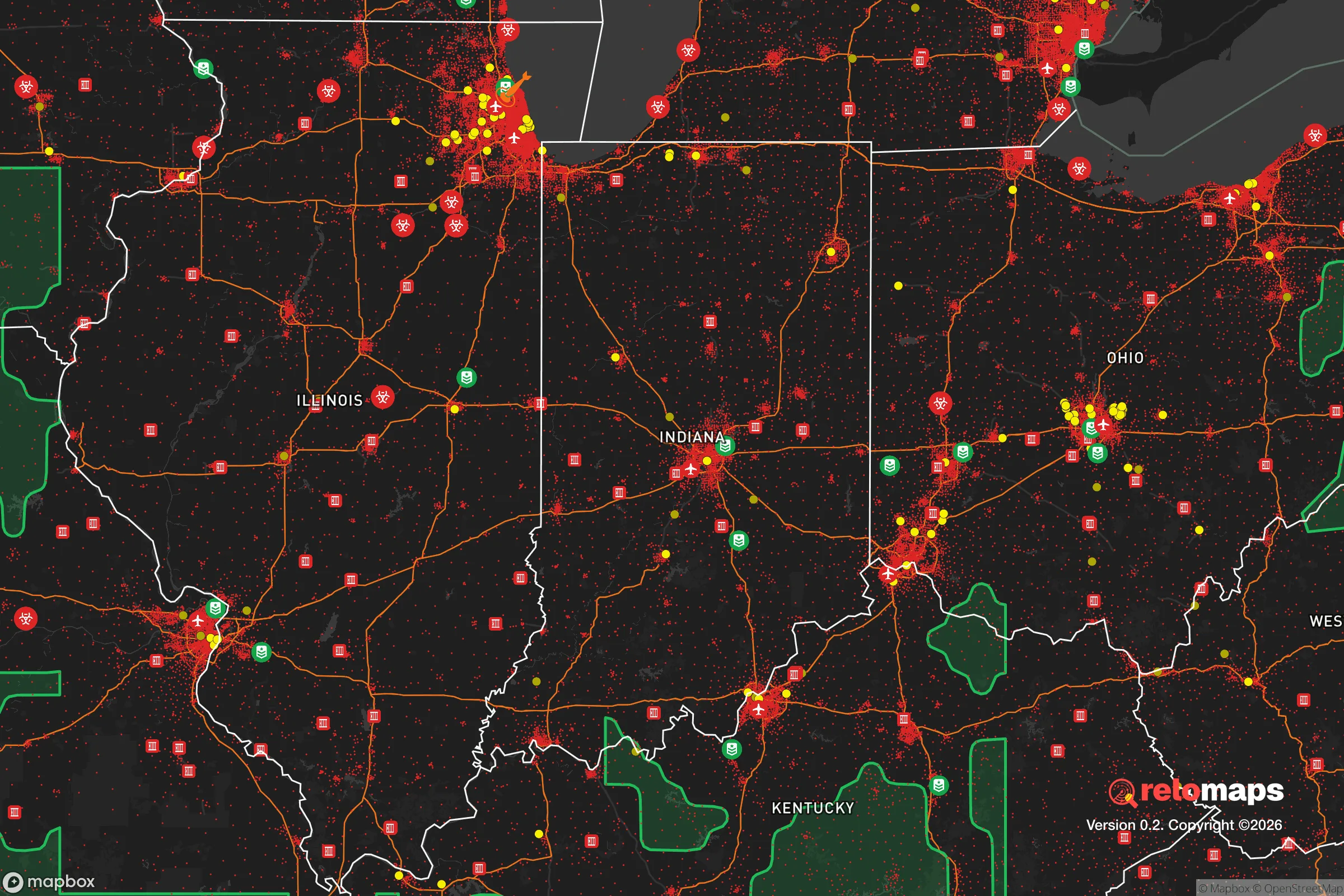


Important Note: For informational purposes only. This does not mean nothing bad ever happens in the green zones. Please use common sense. This is based on public data and modeled with AI. We tried to take a conservative approach but mistakes happen. We update this regularly as new information becomes available.
Solar Generator Recommendations
Backup power matters more here than in safer locations. We've picked three solar generators across budgets and capacity tiers — start with the budget unit if you only need a few essentials, or step up if you want to run a fridge and HVAC for days at a time.

Jackery Portable Power Station Explorer 300
Budget OptionPower on the Go: Weighing only 11 lbs, it's convenient to set up and store with book-sized foldable solar panels

BLUETTI Portable Power Station AC180
Designed for both indoor and outdoor scenarios, AC180 is highly capable as it has a robost capacity and continuous output power.

EF ECOFLOW DELTA Pro Ultra Power Station
Upgraded PickEcoFlow DELTA Pro Ultra is a whole-home energy system designed to grow with your family. Integrated with the Smart Home Panel 2, it scales to meet your evolving energy needs — keeping your home powered, intelligent, and secure through every stage of life.
We earn a commission, at no additional cost to you.
Strategic Assessment Analysis
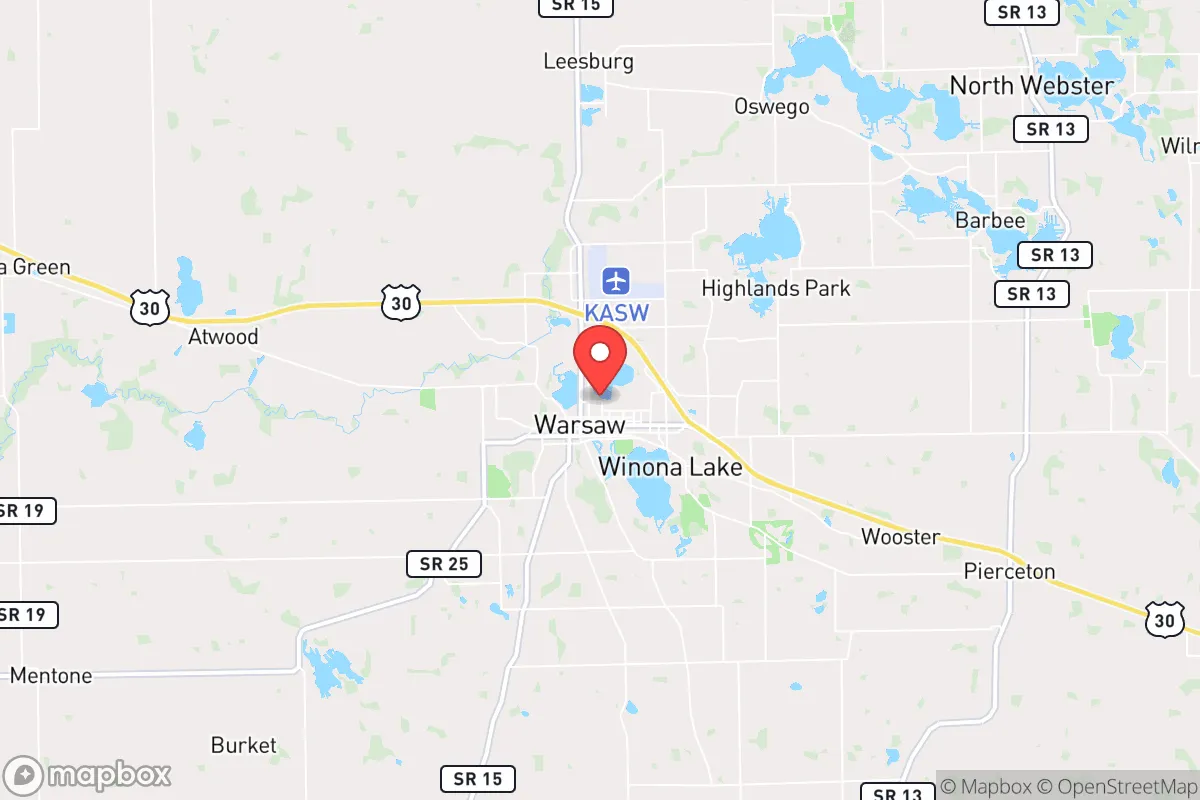
Warsaw, Indiana, offers a compelling mix of Midwestern stability and strategic positioning for those prioritizing disaster readiness and long-term self-sufficiency. Located in Kosciusko County, roughly 40 miles west of Fort Wayne and 50 miles southeast of South Bend, the area benefits from being far enough from major metropolitan centers to avoid the worst of urban collapse scenarios, yet close enough to access critical supply chains and medical infrastructure when conditions are stable. The town’s nickname, “Lake City,” hints at its most significant natural advantage: an abundance of freshwater resources that few inland communities can match.
Geographic position and natural advantages for self-sufficiency
Warsaw sits in the heart of Indiana’s lake country, with over 100 natural and man-made lakes within Kosciusko County, including the large Winona Lake, Pike Lake, and Center Lake. This dense concentration of surface water provides a critical buffer against drought and offers multiple options for off-grid water collection, filtration, and small-scale aquaculture. The terrain is gently rolling, with elevations around 800–900 feet, which reduces flood risk compared to river-bottom communities while still allowing for good drainage and productive gardening. The area’s agricultural heritage means that much of the surrounding land is fertile, well-drained, and suitable for small-scale farming or permaculture. The region sits outside the primary tornado alley of the Great Plains, though severe thunderstorms and occasional EF-2 or EF-3 tornadoes do occur—typically less frequent and less intense than in areas further west. Winters bring moderate snow (averaging 30–40 inches annually) and cold temperatures, which can be managed with proper wood heat and insulation, but the climate is generally temperate enough for year-round food production in hoop houses or cold frames.
Risks, exposures, and proximity to fallout-relevant landmarks
Warsaw’s primary risk profile is moderate, with no single catastrophic natural threat dominating. The area is not in a hurricane zone, has low seismic activity, and is far from active fault lines. However, the region is not immune to man-made risks. The most significant concern is the proximity to the Palisades Nuclear Plant on Lake Michigan, roughly 80 miles northwest. While 80 miles provides a substantial buffer against a direct radiation release, prevailing westerly winds could carry fallout across the region in a worst-case scenario. Additionally, the Grissom Air Reserve Base (about 30 miles west) and the Fort Wayne Air National Guard Base (40 miles east) are potential targets in a conflict, though their strategic value is lower than major command centers. The Chicago metropolitan area lies 120 miles west-northwest, placing Warsaw outside the immediate blast and fallout zones of a major urban strike, but within the range of secondary effects like refugee flow, supply chain disruption, and electromagnetic pulse (EMP) impacts on the grid. The I-80/I-90 corridor runs 30 miles north, a major east-west logistics route that could become a chokepoint or target. On the positive side, Warsaw is not near any major chemical or refining facilities, and the local industrial base—dominated by orthopedic device manufacturing (Zimmer Biomet, DePuy Synthes, Medtronic)—poses minimal catastrophic risk.
Practical resilience for a relocator: food, water, energy, and defensibility
For a relocator focused on practical self-sufficiency, Warsaw scores well on several key metrics. Water access is the standout advantage: the abundance of lakes, ponds, and groundwater means that a property with a well or lake access can secure a reliable, off-grid water supply. The water table is generally high, and shallow wells (30–80 feet) are common and affordable. Food production is viable, with a growing season of roughly 150–170 days (April to October). Local soil is primarily loam and clay-loam, which benefits from organic amendment but is workable. The county has a strong network of farmers’ markets, seed exchanges, and a cooperative extension office that offers workshops on canning, livestock, and soil management. For energy resilience, the region has decent solar potential (about 4.2 peak sun hours per day), though winter cloud cover reduces output. Wood heating is practical, with abundant hardwood forests in the area—oak, hickory, and maple are common. The local power grid is served by NIPSCO (Northern Indiana Public Service Company), which has a mixed reliability record; rural outages during ice storms can last 24–48 hours, making backup generation or solar-plus-battery a wise investment. Defensibility is moderate: the terrain is open enough to provide good lines of sight, but the lack of natural barriers (mountains, rivers, dense forests) means that a determined group could approach from multiple directions. The community is relatively tight-knit, with a strong culture of volunteer fire departments, church networks, and local mutual aid—factors that enhance social resilience. The county’s population density is low (about 110 people per square mile), which reduces competition for resources in a crisis compared to suburban or urban areas.
The overall strategic picture for Warsaw is one of balanced, moderate resilience. It is not a hardened bunker location, nor is it a high-risk urban zone. Its greatest strengths are water abundance, agricultural potential, and distance from major targets. Its weaknesses include moderate tornado risk, proximity to a nuclear plant (though at a safe distance), and dependence on regional supply chains for manufactured goods and specialized medical care. For a relocator who values a quiet, self-sufficient lifestyle with access to freshwater and fertile land, Warsaw represents a solid, defensible choice—provided they invest in backup power, water filtration, and a well-stocked pantry. The area’s orthopedic manufacturing base also means a pool of skilled machinists and engineers, which could be valuable for post-disaster rebuilding or repair work. In short, Warsaw offers a realistic, non-glamorous foundation for long-term preparedness, without the hype or inflated costs of more famous “retreat” locations out West.

* Values derived from national, state, county, city and local statistics and may differ in a specific area. Last updated: 2026-09-21T01:28:47.000Z
Narrative content on this page is AI-generated and may contain mistakes. Verify any details that matter before acting on them.
ReloMaps may earn a commission from affiliate links at no extra cost to you.

