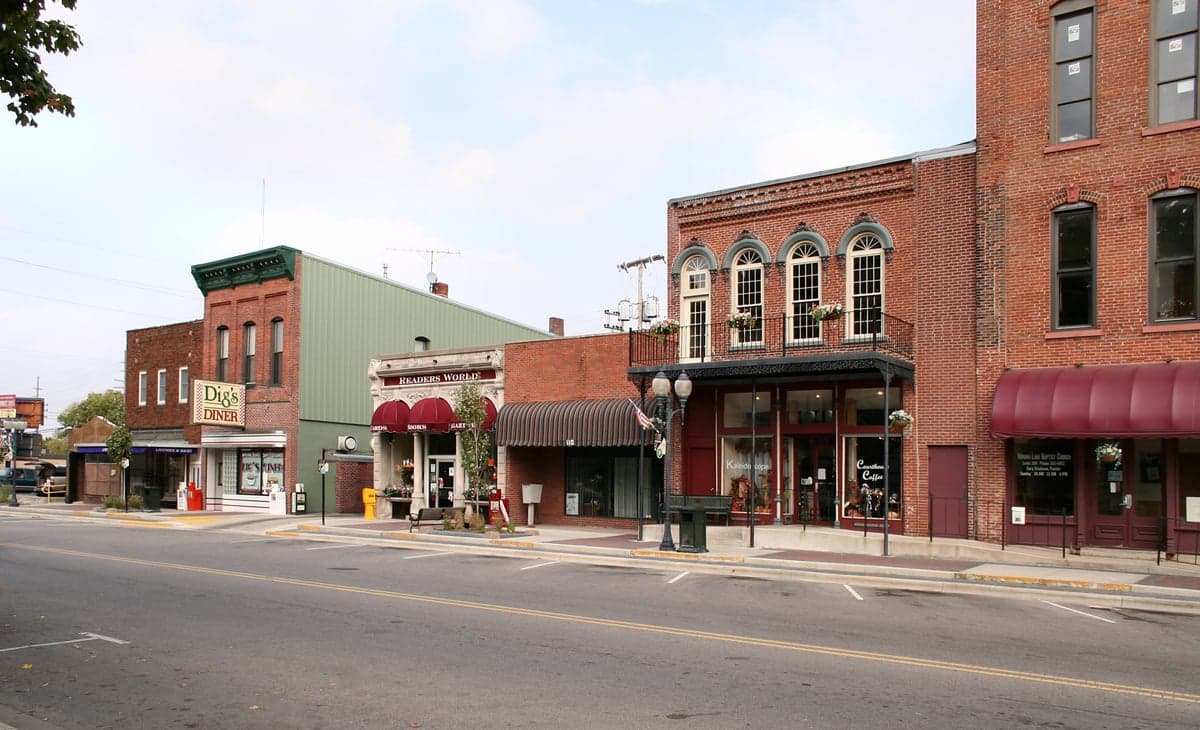
Photo: Wikipedia
Political ClimatePolitical Climate in Warsaw, IN
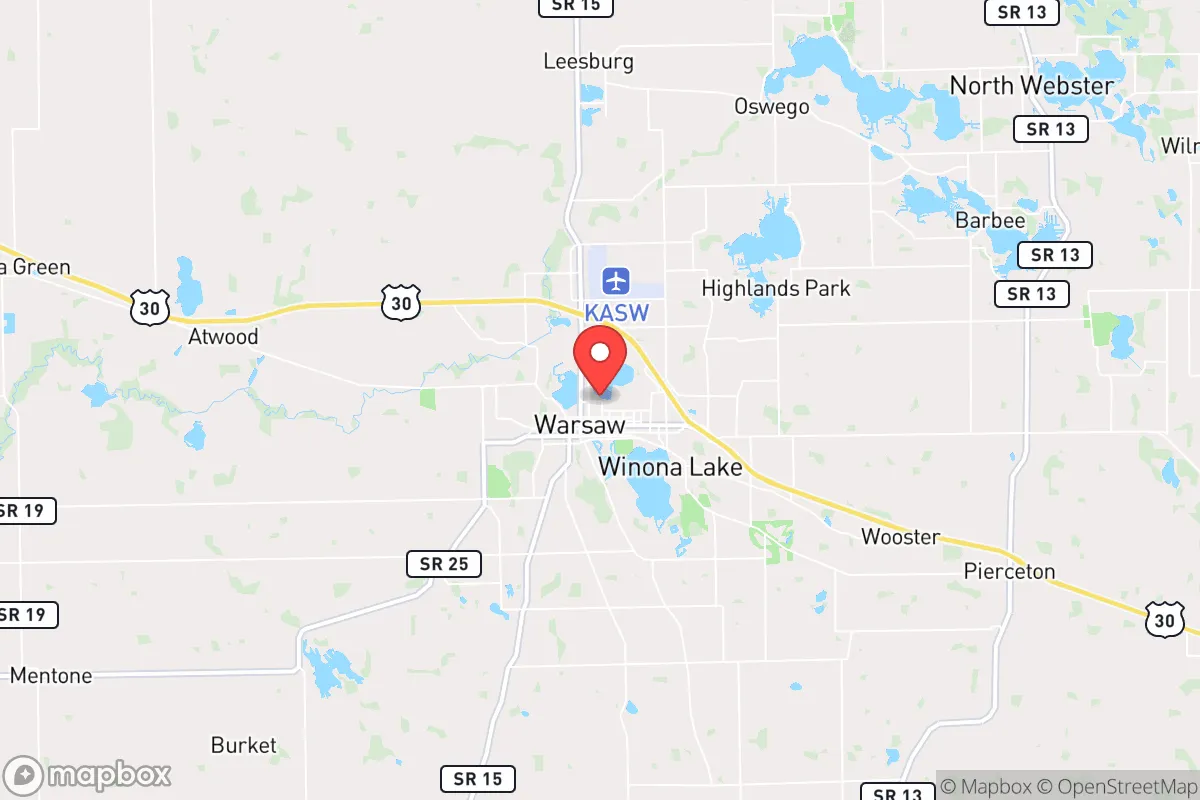
District shown is the primary district for this city’s centroid. Cities may span multiple districts.
Local Political AnalysisPolitical Analysis of Warsaw, IN
Warsaw, Indiana, is a reliably conservative community, with a Cook Partisan Voting Index (PVI) of R+13, making it significantly more Republican than the state of Indiana as a whole, which sits at R+9. This isn’t a recent shift; the area has been a Republican stronghold for decades, driven by a mix of manufacturing, agriculture, and a strong evangelical Christian presence. The political lean here is deep-rooted, and while you’ll find a few Democratic households, they’re the exception, not the rule. The trajectory is steady—if anything, the area has become slightly more conservative over the last decade, mirroring the broader rural-urban divide seen across the Midwest.
How it compares
Compared to Indiana’s overall R+9 rating, Warsaw’s R+13 is a meaningful gap. To put it in perspective, while Indiana as a state is already reliably red, Warsaw is about 4 points more conservative than the state average. This difference becomes clearer when you look at nearby cities. For example, Fort Wayne (R+11) is also conservative but has a more moderate suburban feel, while South Bend (D+8) is a Democratic-leaning city just an hour north. Even within Kosciusko County, Warsaw is the most conservative hub; smaller towns like Winona Lake (home to Grace College) are similarly conservative, but Syracuse or Leesburg can feel slightly more mixed due to lake communities attracting retirees from more diverse political backgrounds. The contrast with South Bend is stark—Warsaw’s politics are shaped by local manufacturing (think Zimmer Biomet and other medical device firms) and a tight-knit community, whereas South Bend’s are influenced by a larger university presence and a more diverse economy.
What this means for residents
For conservative residents, Warsaw is a comfortable fit. Local government, school boards, and county commissions are overwhelmingly Republican, so policies around taxes, development, and social issues tend to align with conservative values. You’ll see low property taxes relative to the state average, and there’s little pushback on things like Second Amendment rights or religious expression in public life. For liberal residents, the reality is more about finding your niche. There’s no active Democratic Party infrastructure to speak of, and social circles can feel insular if you’re not part of a church or a local civic group. That said, the community is generally polite—people don’t argue politics at the grocery store. The practical impact is that progressive policies on issues like renewable energy or public transit are non-starters, and national political debates often feel distant. If you’re a liberal, you’ll likely drive to Fort Wayne or South Bend for more diverse cultural events or political discussions.
Culturally, Warsaw is distinct from the rest of Indiana in a few ways. The heavy presence of the medical device industry gives it a slightly more professional, white-collar feel than many other rural Indiana towns. You won’t see as many Trump flags as you might in, say, Kendallville or Plymouth, but the underlying politics are the same. The local paper, the Times-Union, leans conservative in its editorial stance, and the biggest annual events—like the Warsaw City Fest or the Kosciusko County Fair—are apolitical but heavily attended by church groups and civic clubs. One notable policy distinction: Warsaw has been slower than some Indiana cities to adopt mask mandates or COVID-era restrictions, reflecting a general skepticism of government overreach. For both conservatives and liberals, the bottom line is that Warsaw is a place where politics is less about daily conflict and more about a shared, if narrow, consensus. If you’re looking for a politically diverse environment, you won’t find it here—but if you value stability and predictability, that’s exactly what you get.

State Political ClimatePolitical Climate in Indiana
State Political AnalysisPolitical Environment in the State
Indiana has been a reliably Republican state for decades, with a Cook Partisan Voting Index of R+9, meaning it votes about nine points more Republican than the national average. The dominant coalition is a mix of socially conservative rural and small-town voters, fiscal conservatives in the suburbs, and a growing libertarian-leaning contingent, particularly in the northern and central parts of the state. Over the last 10-20 years, the state has shifted rightward, driven by the exurban growth around Indianapolis and the continued decline of union influence in the industrial northwest, though the Indianapolis metro itself has become more competitive, with Marion County (Indianapolis) now a Democratic stronghold.
Urban vs. rural divide
The political map of Indiana is a classic urban-rural split. The Indianapolis metro area, including Marion County and its inner-ring suburbs like Carmel and Fishers, has become a Democratic-leaning bloc, with Carmel and Fishers now reliably blue in presidential elections. The other major urban centers—Fort Wayne, Evansville, and South Bend—are more competitive but still lean Democratic at the local level, while the surrounding counties in each region are deeply red. The rural and small-town areas, particularly in the southern part of the state (think Bloomington’s surrounding counties, though Bloomington itself is a liberal college town) and the agricultural north, are overwhelmingly Republican. The industrial northwest, including Gary and Hammond, remains a Democratic holdout due to union legacy and minority populations, but its population decline has reduced its statewide influence. The key battlegrounds are the suburban ring around Indianapolis—counties like Hamilton, Hendricks, and Johnson—which have trended rightward as they’ve grown, offsetting the urban Democratic gains.
Policy environment
Indiana’s policy environment is broadly conservative. The state has a flat income tax rate of 3.15% (as of 2025, with a scheduled phase-down to 2.9% by 2027), and property taxes are capped at 1% of assessed value for owner-occupied homes. There is no state-level rent control, and zoning is largely local, with minimal state interference. Education policy is a mix: the state has a robust school choice program, including vouchers and charter schools, but also mandates the “Science of Reading” curriculum and has banned critical race theory and “divisive concepts” in K-12 classrooms. Healthcare is a mixed bag—Medicaid expansion was adopted under then-Governor Mike Pence, but the state has some of the strictest abortion laws in the country (a near-total ban with narrow exceptions). Election laws are restrictive: voter ID is required, early voting is limited to 28 days before an election, and same-day registration is not allowed. The state also has a “right to work” law, which has weakened union power, particularly in the northwest.
Recent policy direction
In the last few years, Indiana has moved decisively to the right on several fronts. On gun and self-defense law, the state adopted permitless carry in 2022, allowing any adult who can legally possess a firearm to carry it without a license. On parental and education rights, the state passed a “Parents’ Bill of Rights” in 2023, requiring schools to notify parents of any changes to a student’s health or well-being, and banned instruction on sexual orientation and gender identity in K-3. On speech and privacy, the state has not passed a broad social media censorship law, but it has restricted the use of TikTok on government devices. On medical and bodily autonomy, the near-total abortion ban (Senate Enrolled Act 1, 2022) is the most significant change, with exceptions only for rape, incest, and lethal fetal anomalies up to 20 weeks, and to save the mother’s life. On property rights, the state has strengthened eminent domain protections for landowners and passed a law limiting local governments’ ability to regulate short-term rentals. On taxation, the flat income tax is being phased down, and the state has eliminated the business personal property tax for many small businesses. On voting and ballot access, the state tightened its voter ID law in 2023, requiring a photo ID for absentee ballots, and purged inactive voters from rolls more aggressively.
Civil unrest & political movements
Indiana has seen its share of political flashpoints, though large-scale civil unrest is rare. The 2020 Black Lives Matter protests in Indianapolis were significant, with some property damage and clashes with police, but they were smaller than in many other major cities. The state has a visible anti-abortion movement, with annual rallies at the Statehouse, and a smaller but active pro-choice movement that has organized protests since the 2022 ban. Immigration politics are relatively quiet, as Indiana is not a border state and has no major sanctuary city policies—though Bloomington has a “welcoming city” ordinance that limits local police cooperation with federal immigration enforcement. Election integrity controversies have been minimal, though the state’s Republican Secretary of State has pushed for stricter voter roll maintenance. There is no serious secession or nullification movement, though some rural counties have passed symbolic “Second Amendment sanctuary” resolutions. A new resident would notice the prevalence of political yard signs, especially in suburban areas, and the strong presence of the Indiana Republican Party at local fairs and events.
Projection
Over the next 5-10 years, Indiana is likely to remain solidly Republican, but the margin may narrow slightly. The Indianapolis metro area will continue to grow and become more Democratic, while the rural areas will continue to shrink and become more Republican. In-migration is modest—the state is not a major destination for coastal transplants—but the people who do move in tend to be retirees from the Midwest or families seeking lower costs, which slightly favors the GOP. The biggest wildcard is the industrial northwest: if Gary and Hammond continue to lose population, the Democratic base shrinks. Conversely, if the suburbs around Fort Wayne and Evansville continue to grow and diversify, they could become more competitive. The state’s policy direction is unlikely to reverse—the flat tax will continue to phase down, abortion restrictions will remain, and school choice will expand. A new resident moving in now should expect a state that is politically stable, with a conservative tilt that is unlikely to change dramatically, but with a growing urban-liberal counterweight in Indianapolis.
For a new resident, the bottom line is that Indiana offers a predictable, low-tax, and socially conservative environment, particularly outside of Indianapolis and Bloomington. If you’re a conservative, you’ll find a state government that aligns with your views on most issues, from taxes to guns to education. If you’re a liberal, you’ll find a strong community in the urban centers, but you’ll be living under state laws that are often at odds with your values—especially on abortion and LGBTQ+ rights. The political climate is not particularly volatile or polarized in daily life; most people get along fine, and the state’s politics are more about policy than culture war. Just know that your vote in state-level races will have limited impact, but your local elections—especially in the suburbs—can be surprisingly competitive.
* Values derived from national, state, county, city and local statistics and may differ in a specific area. Last updated: 2026-09-21T01:28:47.000Z
Narrative content on this page is AI-generated and may contain mistakes. Verify any details that matter before acting on them.
ReloMaps may earn a commission from affiliate links at no extra cost to you.

