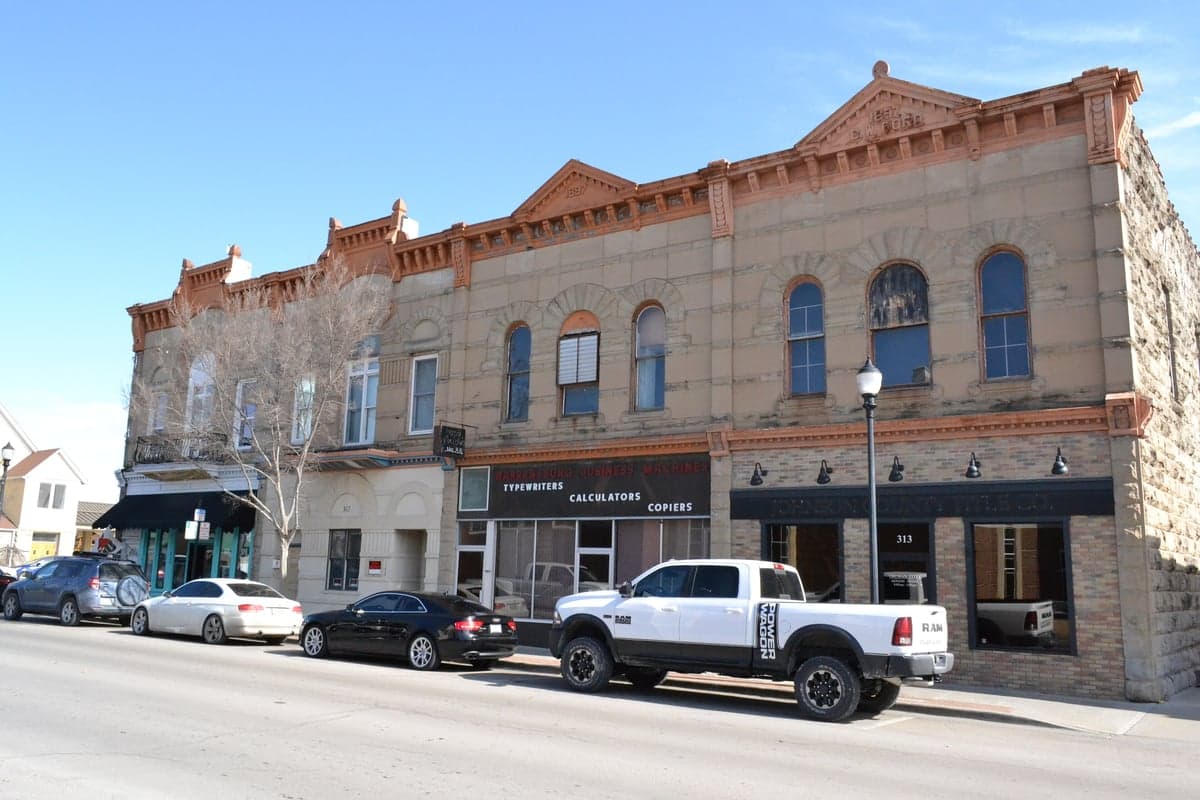
Photo: Wikipedia
Political ClimatePolitical Climate in Warrensburg, MO
District shown is the primary district for this city’s centroid. Cities may span multiple districts.
Local Political AnalysisPolitical Analysis of Warrensburg, MO
Warrensburg is about as solidly conservative as they come in Missouri, and that’s not changing anytime soon. The Cook PVI of R+21 tells you the story: this town and Johnson County vote Republican by a margin that’s nearly double the national average for a red district. In the 2024 presidential race, the county went +22 for Trump, and local races rarely see a competitive Democrat. The political lean here isn’t just a habit—it’s a deeply held belief in limited government, personal responsibility, and keeping the feds out of your business. That said, like a lot of smaller college towns, you can feel a subtle shift as the University of Central Missouri brings in younger faculty and students from bluer areas. It’s not a blue wave, but it’s a slow trickle that makes you keep an eye on local school board and city council races.
How it compares
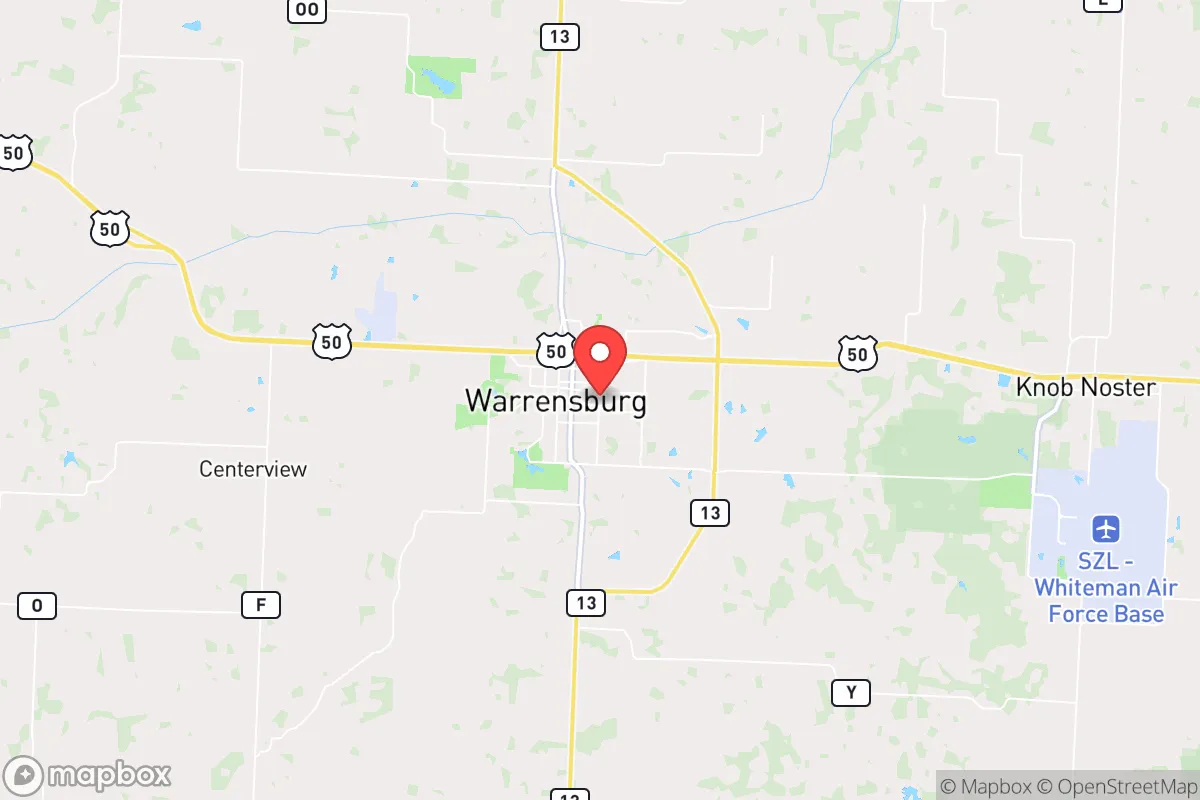
Drive 15 minutes south to Whiteman Air Force Base, and you’ll find a more transient, federally dependent population that leans slightly less conservative—though still solidly red. Head east 30 miles to Sedalia, and you’re in Pettis County, which is R+18—similar but with a stronger populist streak. The real contrast is 50 miles north to Columbia, home of Mizzou and Boone County, which is D+15. That’s a 36-point swing in less than an hour’s drive. Columbia’s progressive policies on zoning, taxes, and public spending are a cautionary tale for Warrensburg locals. You see the same kind of overreach creeping into some city council discussions here—talk of “affordable housing mandates” and “equity initiatives” that sound like code for more government control. So far, the voters have pushed back, but you can’t get complacent.
What this means for residents
For the average Warrensburg family, the conservative tilt means lower taxes, fewer regulations, and a general hands-off approach from local government. Property taxes here are about 0.8% of assessed value, well below the state average of 0.95%, and there’s no city income tax. The county commission has resisted the kind of zoning overhauls that drive up housing costs in places like Columbia. You can still run a home-based business without a stack of permits, and the Second Amendment is respected—no local red flag laws or magazine bans. The downside? If you’re hoping for more public transit or bike lanes, don’t hold your breath. The majority view is that those are luxuries, not rights, and they’d rather keep the tax money in your pocket. The real concern is the long-term: as UCM grows, there’s pressure to adopt “sustainability” policies and diversity mandates that sound good on paper but often mean more bureaucracy and less freedom for longtime residents.
Culturally, Warrensburg still feels like a place where your word matters and neighbors help without being asked. The biggest policy distinction is the strong support for school choice—the local district has a robust open enrollment policy, and there’s a growing number of private and charter options nearby. That’s a direct reflection of the community’s belief that parents, not the state, should decide how kids are educated. The county also has a constitutional sheriff who publicly refuses to enforce federal gun laws he sees as overreach. That kind of local pushback is what keeps Warrensburg from sliding into the progressive groupthink you see in bigger Missouri cities. If the trend holds, the next decade will be a fight to keep that independence intact—but for now, it’s still a place where common sense and personal liberty come first.

State Political ClimatePolitical Climate in Missouri
State Political AnalysisPolitical Environment in the State
Missouri has long been considered a bellwether state, but over the past two decades it has shifted decisively from a classic swing state to a solidly Republican stronghold. The Show-Me State voted for the GOP presidential candidate by double digits in 2020 and 2024, a stark contrast to the close margins of the 1990s and early 2000s. This realignment is driven by a powerful coalition of rural conservatives, suburban families fleeing urban dysfunction, and a growing population of veterans and retirees drawn to the state’s low taxes and gun-friendly culture. However, the political landscape is not monolithic — the state’s two major metro areas, St. Louis and Kansas City, remain deep-blue islands, creating a sharp urban-rural divide that defines nearly every statewide election.
Urban vs. rural divide
The political map of Missouri is a study in contrasts. The rural and exurban counties that make up the vast majority of the state’s landmass vote overwhelmingly Republican. Places like Springfield, Joplin, and Cape Girardeau are reliably red, with GOP margins often exceeding 70%. The Ozarks region is particularly conservative, with a strong libertarian streak that shows up in local opposition to zoning and property taxes. Meanwhile, the two major metro areas — St. Louis and Kansas City — are Democratic strongholds, driven by union households, minority communities, and a growing progressive activist class. The suburbs around these cities are the real battlegrounds. St. Charles County, once a swing area, has moved sharply right in the last decade, while Clay County (north of Kansas City) remains more competitive. The political geography is simple: if you live outside I-270 or I-435, you’re likely in a red district. This divide means that statewide races are decided by turnout in the rural and exurban counties, which now reliably outvote the urban cores.
Policy environment
Missouri’s policy environment is among the most conservative in the Midwest, with a strong emphasis on limited government and low taxation. The state has a flat income tax of 4.95% (down from 5.4% in 2022) and a sales tax cap that keeps local rates manageable. Property taxes are among the lowest in the nation, a major draw for families and retirees. The state is a right-to-work state (though the law was repealed by ballot initiative in 2018, the legislature has since passed a new version), and it has some of the weakest labor union protections in the country. On education, Missouri has a robust charter school system in St. Louis and Kansas City, and a growing school choice movement that has led to the creation of education savings accounts for special-needs students. The state’s healthcare landscape is mixed: Medicaid expansion was passed by ballot initiative in 2020, but the legislature has resisted further expansion of government-run programs. Election laws have tightened in recent years, with voter ID requirements now in place and early voting limited to two weeks. The state also has a constitutional amendment protecting the right to keep and bear arms, which has been a key factor in attracting gun owners from states like Illinois and California.
Trajectory & freedom
Missouri is on a clear trajectory toward greater personal freedom, particularly in the areas of gun rights, parental rights, and tax relief. In 2021, the legislature passed the Second Amendment Preservation Act (SAPA), which nullifies federal gun laws that the state deems unconstitutional — a bold move that has drawn legal challenges but signals the state’s commitment to firearm liberty. In 2023, the Parental Bill of Rights was signed into law, giving parents explicit authority over their children’s education, medical decisions, and school curriculum. The state has also moved to protect medical freedom, with a 2022 law prohibiting vaccine mandates by private employers and a 2024 law banning the use of mRNA vaccines for children under 18. On taxation, the legislature has passed multiple income tax cuts, with a goal of reaching a flat rate of 4.0% by 2027. Property rights have been strengthened by a 2023 law limiting the use of eminent domain for private development. However, there are concerns about government overreach in the form of St. Louis County’s ongoing mask mandates and business closure orders during the pandemic, which were not replicated in most of the state. The trend is clearly toward more liberty, but the urban counties remain a battleground for local control.
Civil unrest & political movements
Missouri has seen its share of political flashpoints, most notably the Ferguson protests of 2014, which exposed deep racial and political divisions in the St. Louis region. Since then, the state has become a focal point for both progressive activism and conservative backlash. The Black Lives Matter movement remains active in St. Louis and Kansas City, with periodic protests over police shootings and racial justice issues. On the right, the Missouri Freedom Caucus has become a powerful force in the state legislature, pushing for stricter immigration enforcement, election integrity measures, and the nullification of federal laws. The state has seen a surge in Second Amendment sanctuary resolutions, with over 60 counties passing measures declaring they will not enforce federal gun laws. Immigration politics are relatively quiet compared to border states, but there is growing tension in Springfield and Joplin over the influx of refugees and asylum seekers, which has led to local debates over sanctuary policies. Election integrity remains a hot-button issue, with the 2020 and 2022 cycles seeing lawsuits over mail-in voting and ballot drop boxes. A new resident in a rural county will notice a strong sense of local control and distrust of federal authority, while in St. Louis or Kansas City, the political climate is more polarized and activist-driven.
Projection
Over the next 5-10 years, Missouri is likely to become even more conservative, driven by two major demographic trends. First, the continued exodus of residents from deep-blue states like Illinois, California, and New York is funneling new arrivals into the state’s red-leaning suburbs and exurbs, particularly in St. Charles County, Boone County (Columbia), and the Lake of the Ozarks region. These newcomers tend to be fiscally conservative and culturally moderate, but they are not progressive activists — they are fleeing high taxes and crime. Second, the urban cores of St. Louis and Kansas City are losing population, which reduces the Democratic base. The state legislature is expected to continue cutting taxes, expanding school choice, and strengthening gun rights. The biggest wild card is the potential for a federal crackdown on state-level nullification laws like SAPA, which could trigger a constitutional crisis. But for now, the trajectory is clear: Missouri is becoming a redder, freer state, with a growing emphasis on local control and individual liberty. A family moving here today should expect to find a state that is increasingly aligned with conservative values, but with persistent urban pockets that will continue to resist that trend.
For a new resident, the bottom line is this: Missouri offers a high degree of personal freedom, low taxes, and a political environment that respects gun rights, parental authority, and local control. The urban-rural divide means you can choose your level of political engagement — live in a red county and enjoy a community that shares your values, or live in a blue metro area and engage in the fight. The state is not perfect, but it is moving in the right direction for those who value liberty over government overreach. If you’re looking for a place where your vote counts and your rights are protected, Missouri is a solid bet.
* Values derived from national, state, county, city and local statistics and may differ in a specific area. Last updated: 2026-04-29T21:00:24.000Z
Narrative content on this page is AI-generated and may contain mistakes. Verify any details that matter before acting on them.
ReloMaps may earn a commission from affiliate links at no extra cost to you.

