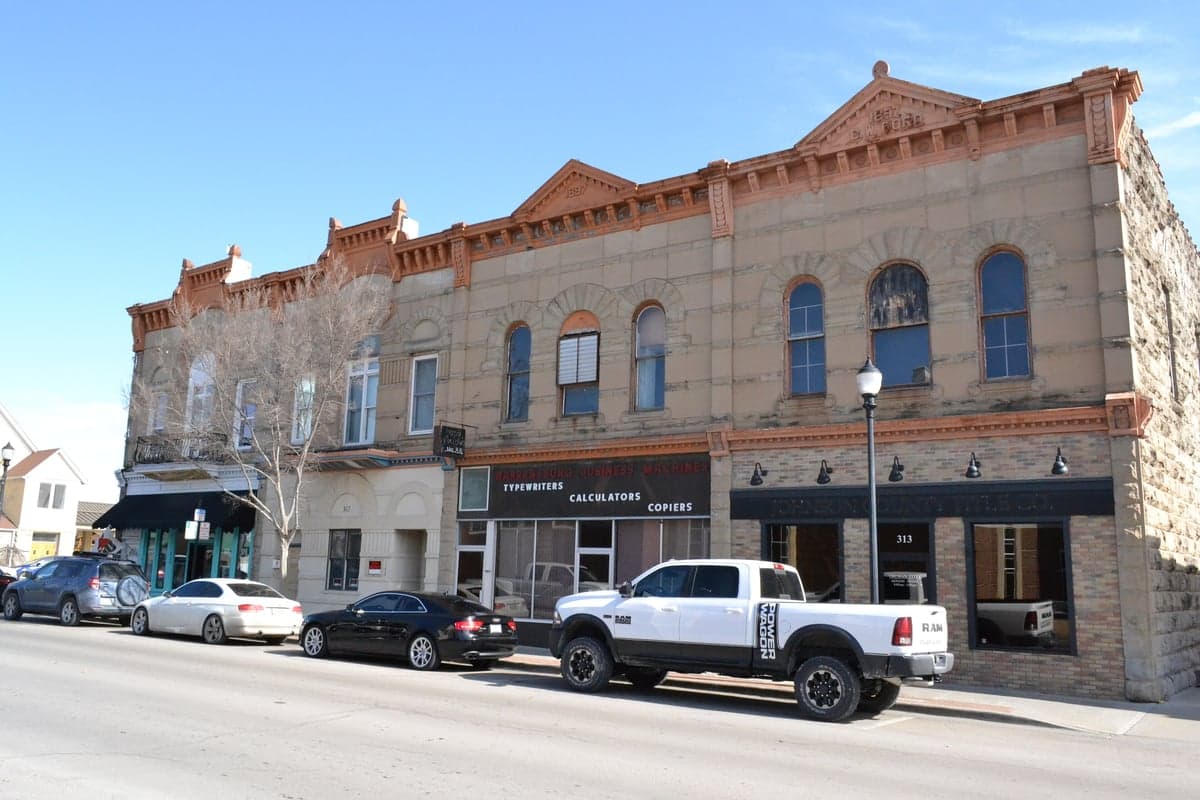
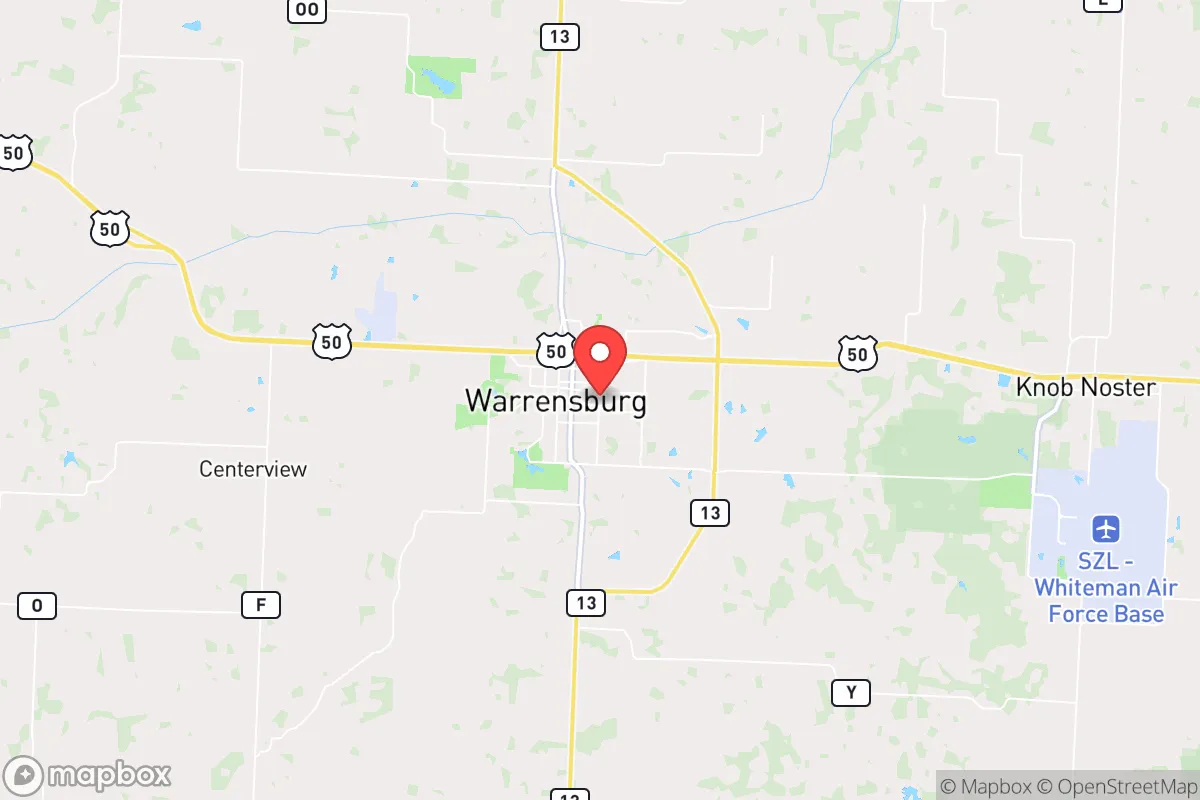
Photo: Wikipedia
Demographics of Warrensburg, MO
Affluence Level in Warrensburg, MO
A middle-class area roughly in line with national averages across income, home values, education, and employment.
People of Warrensburg, MO
Warrensburg, Missouri, is home to 19,437 residents, a population that is 80.8% White and notably more college-educated (35.9%) than the national average, a direct result of the University of Central Missouri’s presence. The city’s character is shaped by a blend of long-standing rural roots and a steady influx of students and faculty, creating a community that is politically moderate-to-conservative and family-oriented. Its distinctive identity is one of a small college town with a working-class backbone, where the university serves as both an economic engine and a cultural anchor, drawing a modest but growing share of Hispanic (5.2%), Black (5.4%), and East/Southeast Asian (1.6%) residents.
How the city was settled and grew
Warrensburg was founded in 1836 by Martin Warren and other settlers from Kentucky and Tennessee, drawn by the promise of fertile prairie land and the potential of a county seat location. The arrival of the Missouri Pacific Railroad in the 1860s transformed the town into a regional trade hub, attracting German and Irish immigrants who built homes in the Old Town district, centered around the historic courthouse square. These early waves of European settlers—predominantly farmers, merchants, and railroad workers—established the city’s conservative, Protestant foundation. By the early 20th century, the founding of what is now the University of Central Missouri in 1871 began drawing a new class of residents: educators and their families, who settled in the University Heights neighborhood, a tree-lined area just north of campus that remains a stable, middle-class enclave today.
Modern era (post-1965)
Following the 1965 Immigration and Nationality Act, Warrensburg saw only modest demographic change, as its inland, non-metropolitan location limited the draw for new immigrant communities. The foreign-born population remains low at 1.8%, with the largest non-White groups being Black (5.4%) and Hispanic (5.2%) residents, many of whom arrived in the 1990s and 2000s for work in manufacturing and service industries tied to the university and local healthcare. These households concentrated in the Southwest Warrensburg area, near the U.S. 50 corridor, where affordable housing and proximity to industrial employers like the Whiteman Air Force Base (10 miles east) provided entry points. The East/Southeast Asian community (1.6%) is largely composed of university faculty and graduate students, many of whom live in rental properties near campus in the Pine Street district, while the Indian-subcontinent population (1.1%) is similarly tied to academic and tech roles, with families settling in the newer Hidden Valley subdivision, a suburban-style development built in the 2000s. Domestic in-migration from the Kansas City metro (50 miles north) has been the largest driver of growth since 1990, with retirees and remote workers choosing Warrensburg for its lower cost of living and slower pace, often buying homes in the Country Club Hills neighborhood, a quiet, established area near the municipal golf course.
The future
Warrensburg’s population is projected to grow slowly, likely reaching 21,000–22,000 by 2040, driven primarily by university enrollment and domestic migration from higher-cost areas. The city is not tribalizing into distinct ethnic enclaves; instead, it is slowly homogenizing as newer subdivisions like Hidden Valley attract a mix of White, Black, and Hispanic families, blurring older neighborhood boundaries. The Hispanic and Black communities are growing at a steady but modest pace, while the East/Southeast Asian and Indian populations are plateauing, as they remain heavily tied to the university’s academic hiring cycles. The foreign-born share is unlikely to rise above 3% in the next decade, as Warrensburg lacks the industrial or tech job base to attract sustained immigration. The biggest demographic shift will be aging: the 65+ cohort is expanding as retirees from Kansas City and rural Missouri move in, reinforcing the city’s conservative lean and demand for healthcare services.
For someone moving in now, Warrensburg is becoming a more diverse but still overwhelmingly White, family-oriented college town where the university and military base anchor a stable, low-crime economy. The population is not fragmenting into distinct cultural zones but is instead slowly blending, with new residents of all backgrounds gravitating toward the same newer subdivisions and school zones. The city’s future is one of gradual, managed growth—not a boomtown, but a reliable, affordable place for families and professionals seeking a quieter, conservative-leaning community within commuting distance of Kansas City.

* Values derived from national, state, county, city and local statistics and may differ in a specific area. Last updated: 2026-04-29T21:00:24.000Z
Narrative content on this page is AI-generated and may contain mistakes. Verify any details that matter before acting on them.
ReloMaps may earn a commission from affiliate links at no extra cost to you.

