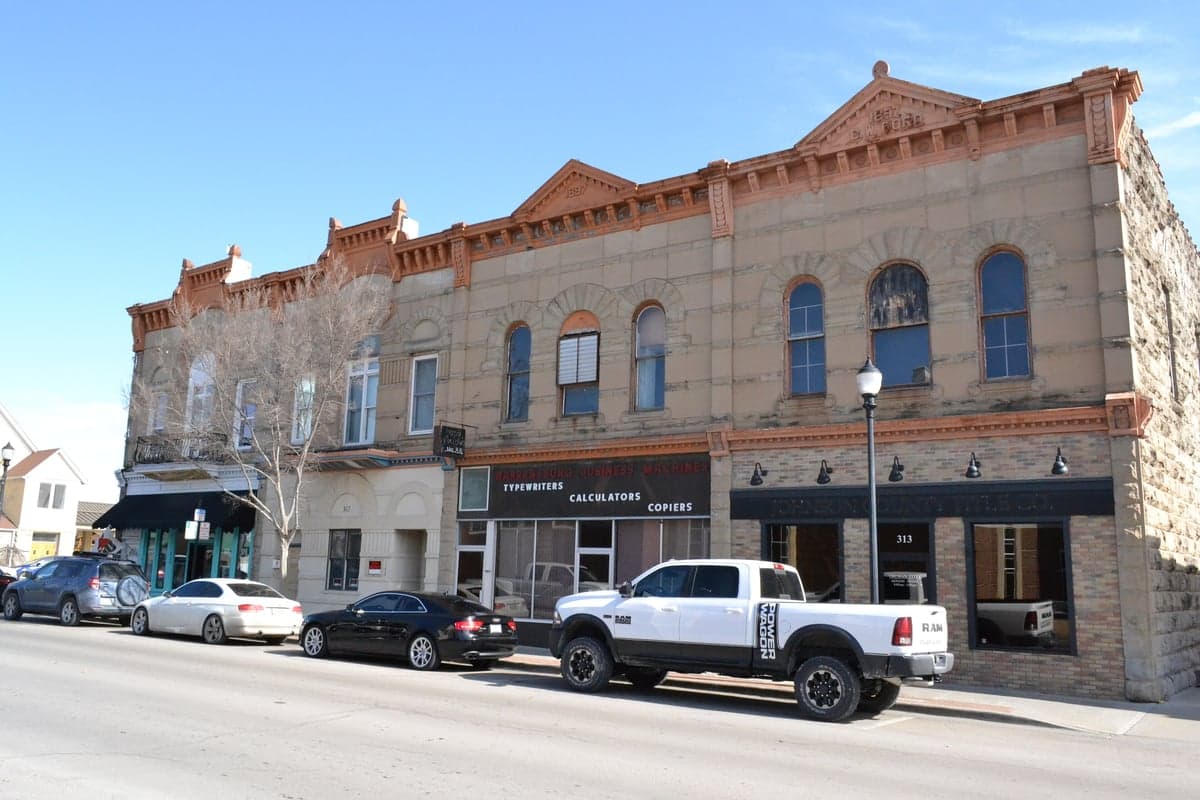
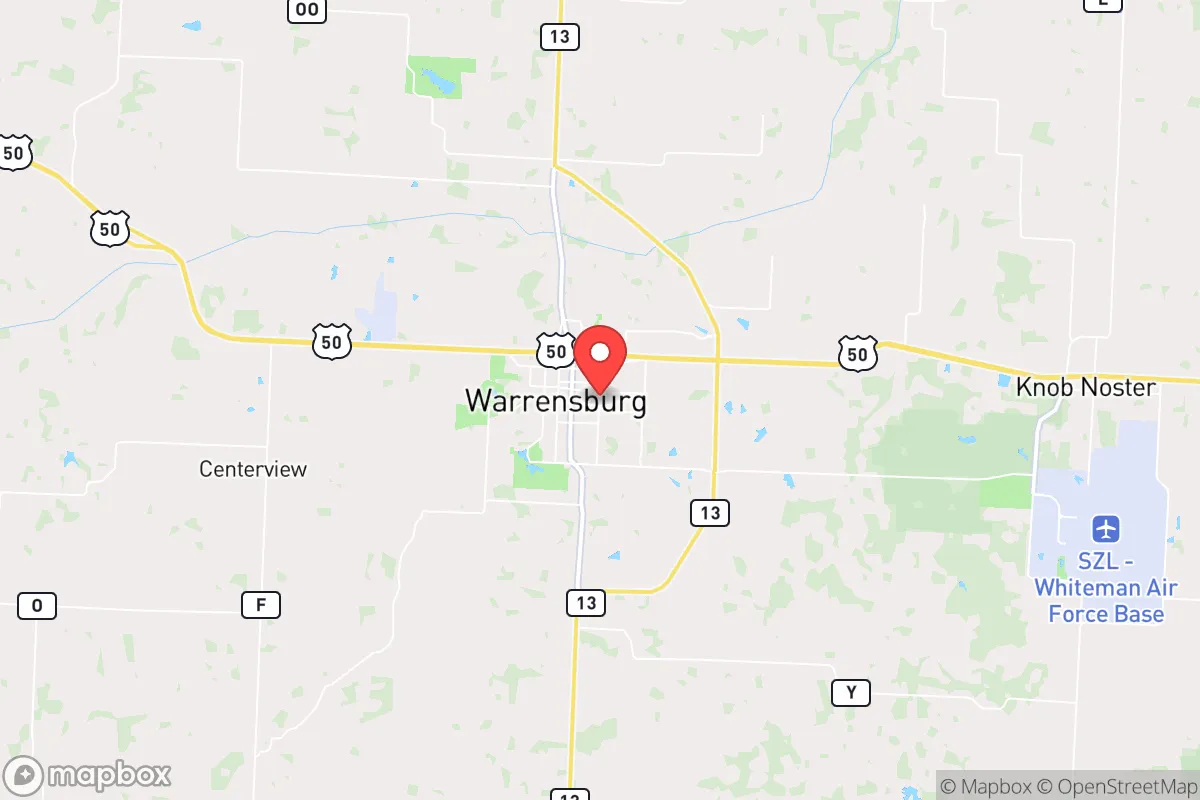
Photo: Wikipedia
Personal Sovereignty in Warrensburg, MO
Strong independent fundamentals that actively favor personal liberty and low regulation.
What does Personal Sovereignty tell us?
Personal Sovereignty measures your capacity for self-reliance and independence with minimal government friction. Higher scores mean fewer barriers between you and the way you want to live... but it assumes you have the space you need and good neighbors.
What does this tell us?
Personal Sovereignty measures your capacity for self-reliance and independence with minimal government friction. Higher scores mean fewer barriers between you and the way you want to live... but it assumes you have the space you need and good neighbors.
State Policy
Energy independence: Importer (15% of energy produced in-state)
Personal Liberty
Homesteading

Personal Liberty Analysis
Warrensburg, Missouri, offers a notably high degree of personal sovereignty compared to many other parts of the country, particularly for those who prioritize minimal government interference in daily life. Nestled in Johnson County, this college town (home to the University of Central Missouri) maintains a distinctly rural-Missouri character where self-reliance isn't just a value—it's a practical necessity. For the strategic relocator with a survivalist or prepper mindset, Warrensburg represents a middle ground: close enough to Kansas City (about an hour east) for supply runs and medical access, yet far enough to avoid the regulatory creep and cultural pressures that increasingly define metropolitan life. The local ethos leans heavily toward "live and let live," with a government footprint that remains small in both scope and ambition.
Tax burden and regulatory posture: How Missouri's low-tax framework protects your earnings
Missouri's overall tax climate is a significant draw for those seeking to keep more of what they earn. The state levies a flat income tax rate of 4.95% as of 2026, with no local income tax in Warrensburg—meaning your paycheck isn't nibbled away by city or county deductions. Property taxes in Johnson County are among the lowest in the state, typically hovering around 0.8% to 1.0% of assessed value, which translates to roughly $800 to $1,000 annually on a $100,000 home. This is a fraction of what you'd pay in neighboring Kansas or many coastal states. Sales tax in Warrensburg sits at 8.225% (state plus local), but essential items like groceries and prescription drugs are exempt. More importantly, Missouri's regulatory posture is decidedly hands-off. There are no state-level rent control laws, no burdensome business licensing requirements for small-scale home operations, and no state-level energy mandates forcing homeowners into specific utility arrangements. For the prepper, this means you can install solar panels, build a root cellar, or keep livestock on your property without navigating a maze of permits—provided you're within zoning limits, which we'll cover next.
Self-defense and gun law specifics: Constitutional carry and castle doctrine in Warrensburg
Missouri is a constitutional carry state, meaning law-abiding adults 19 and older (18 with a military ID) can carry a concealed firearm without a permit. Warrensburg, like the rest of Johnson County, fully respects this right. There are no local ordinances that restrict open carry, and the county sheriff's office is known for a pro-Second Amendment stance. The state's castle doctrine is robust: you have no duty to retreat in your home, vehicle, or occupied structure if you reasonably believe deadly force is necessary to prevent imminent harm. Stand-your-ground laws extend to any place you have a lawful right to be. For the survivalist, this legal framework is critical—it means your defensive preparations aren't undermined by local politicians. The only notable restriction is that concealed carry is prohibited in federal buildings, schools (with exceptions for concealed carry permit holders in vehicles), and private property where the owner posts signage. Warrensburg's gun culture is mainstream, not fringe; you'll see "Guns & Ammo" signs alongside "Coffee & Donuts" at local shops. The local gun range, Johnson County Shooting Complex, offers a 200-yard rifle range and pistol bays, and there are no waiting periods or firearm registration requirements in Missouri.
Self-reliance and homesteading viability: Lot sizes, zoning, and off-grid feasibility
Warrensburg's zoning code is surprisingly permissive for a town of its size (roughly 20,000 residents). Within city limits, standard residential lots range from one-quarter acre to one-half acre, but you'll find plenty of parcels in the unincorporated areas of Johnson County that offer 2 to 10 acres at reasonable prices—often under $10,000 per acre. The city's zoning ordinance explicitly allows for "urban agriculture," including beekeeping, chickens (hens only, no roosters), and small livestock on lots of one acre or more. For those looking to go further off-grid, the county has no building codes that mandate grid connection. You can install solar panels, rainwater catchment systems, and composting toilets without special permits, though you'll need to comply with basic septic system regulations if you're not on municipal sewer. The biggest practical limitation is water: Warrensburg sits atop the Ozark Aquifer, and well drilling is common on rural parcels, but you'll need to budget $5,000 to $10,000 for a drilled well. The local climate supports a 180-day growing season, and the soil in Johnson County is primarily clay-loam, suitable for vegetable gardens and fruit trees. For the prepper, the key takeaway is that you can achieve meaningful self-sufficiency here without fighting the county—but you'll need to buy outside city limits to avoid HOA restrictions, which are common in newer subdivisions.
Personal liberties: Parental rights, medical autonomy, speech, and property protections
Missouri has been a battleground for parental rights, and the current legal landscape is favorable. The state's Parental Bill of Rights (enacted in 2023) affirms that parents have the fundamental right to direct their children's education, healthcare, and moral upbringing. This means no mandatory vaccine requirements for school attendance (religious and medical exemptions are honored), and parents can opt their children out of any curriculum they find objectionable. Medical autonomy is similarly strong: Missouri has no state-level vaccine passport system, and the state's Health Care Freedom Act prohibits any law that compels individuals to participate in any healthcare system. For the survivalist, this means you can stockpile antibiotics, maintain a medical kit, and treat minor injuries at home without fear of legal repercussions—though you'll still need a prescription for controlled substances. Free speech protections are robust; Warrensburg has no local hate speech ordinances or "misinformation" laws that chill political expression. Property rights are protected by Missouri's Right to Farm Act, which limits nuisance lawsuits against agricultural operations, and the state's Eminent Domain Reform Act restricts the use of eminent domain for private economic development. The one area where Warrensburg falls short is in its local noise ordinances, which are enforced more strictly than in truly rural areas—so if you plan to run a generator or shoot on your property, you'll want to be outside city limits.
Overall, Warrensburg offers a sovereignty profile that ranks well above the national average, particularly for those coming from high-tax, high-regulation states like California, New York, or Illinois. The combination of constitutional carry, low property taxes, permissive zoning for homesteading, and strong parental rights creates an environment where a self-reliant individual or family can operate with minimal government friction. The trade-off is that you're still in a college town with a Democratic-leaning city council (though the county is reliably Republican), meaning you'll need to stay engaged on local issues to prevent regulatory creep. Compared to rural Montana or Idaho, Warrensburg is less isolated and has more infrastructure, but it also has more neighbors and slightly more rules. For the strategic relocator who wants a balance of freedom, affordability, and access to resources, this is a solid pick—just make sure you buy the right parcel and stay outside the city's noise ordinance jurisdiction.

* Values derived from national, state, county, city and local statistics and may differ in a specific area. Last updated: 2026-04-29T21:00:24.000Z
Narrative content on this page is AI-generated and may contain mistakes. Verify any details that matter before acting on them.
ReloMaps may earn a commission from affiliate links at no extra cost to you.

