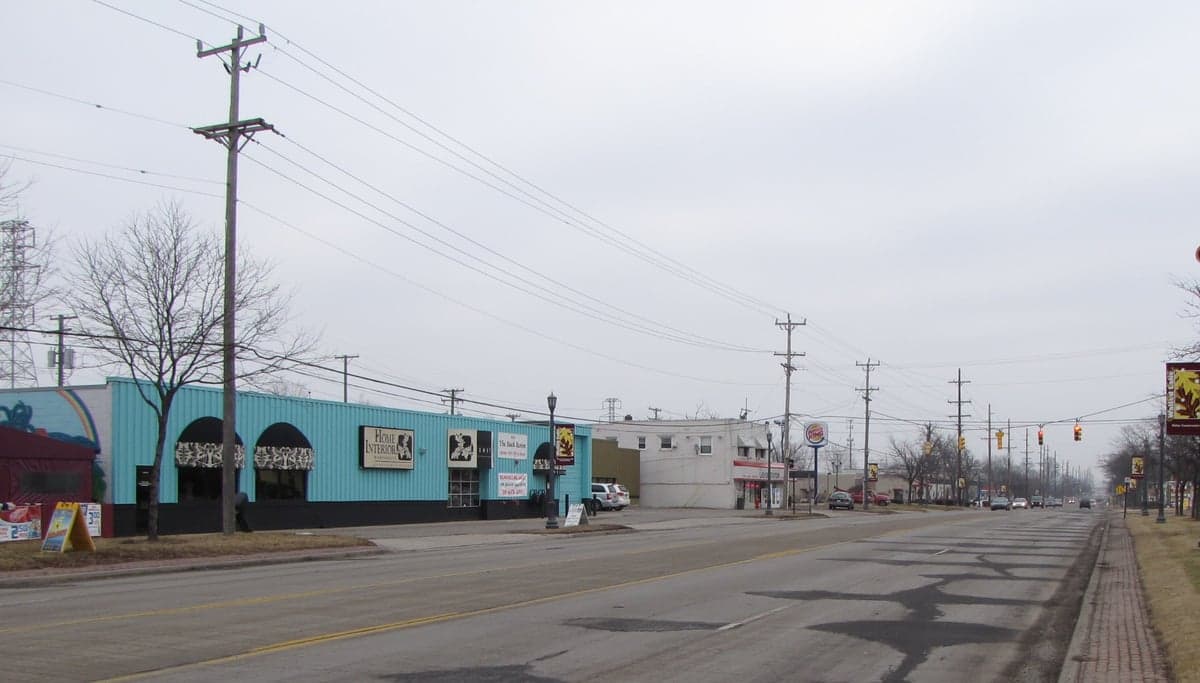
Photo: Wikipedia
Strategic Assessment of Walled Lake, MI
Multiple tactical vulnerabilities. Population density, target proximity, or disaster risk are likely compounding. A retreat property and exit planning is required.
What does the Strategic Assessment tell us?
Our Strategic Assessment grades tactical survivability of an area. Major population centers, military targets, fallout zones, natural disasters, and border exposure all drive risk — lower exposure means a more defensible position in a crisis.
This is heavily inspired by Joel Skousen's Strategic Relocation book. Highly recommended you checkout the book ($)What does this tell us?
Our Strategic Assessment grades tactical survivability of an area. Major population centers, military targets, fallout zones, natural disasters, and border exposure all drive risk — lower exposure means a more defensible position in a crisis.
This is heavily inspired by Joel Skousen's Strategic Relocation book. Highly recommended you checkout the book ($)Strategic Pillars

Key Distances
Regional Safe Places
Below is our recommended "safe zones" in Michigan and the surrounding area based on our strategic heuristics. For most people, it's unrealistic to live in a “safe zone” full-time due to work, family or other personal reasons. They tend to be more rural. However, many of these areas are perfect for second homes and retreat properties that double as a vacation home or even a short-term rental.


Important Note: For informational purposes only. This does not mean nothing bad ever happens in the green zones. Please use common sense. This is based on public data and modeled with AI. We tried to take a conservative approach but mistakes happen. We update this regularly as new information becomes available.
Solar Generator Recommendations
Backup power matters more here than in safer locations. We've picked three solar generators across budgets and capacity tiers — start with the budget unit if you only need a few essentials, or step up if you want to run a fridge and HVAC for days at a time.

Jackery Portable Power Station Explorer 300
Budget OptionPower on the Go: Weighing only 11 lbs, it's convenient to set up and store with book-sized foldable solar panels

BLUETTI Portable Power Station AC180
Designed for both indoor and outdoor scenarios, AC180 is highly capable as it has a robost capacity and continuous output power.

EF ECOFLOW DELTA Pro Ultra Power Station
Upgraded PickEcoFlow DELTA Pro Ultra is a whole-home energy system designed to grow with your family. Integrated with the Smart Home Panel 2, it scales to meet your evolving energy needs — keeping your home powered, intelligent, and secure through every stage of life.
We earn a commission, at no additional cost to you.
Strategic Assessment Analysis
Walled Lake, Michigan, presents a mixed strategic picture for the relocation-minded reader focused on resilience and self-sufficiency. Its primary advantage is a location that balances proximity to the economic engine of Metro Detroit with a degree of geographic separation, but this same proximity introduces significant vulnerabilities that a serious preparedness-minded individual must weigh. The area’s resilience is not inherent; it is a function of deliberate preparation and a clear-eyed understanding of the risks posed by its position within a major metropolitan corridor.
Geographic position and natural advantages for self-sufficiency
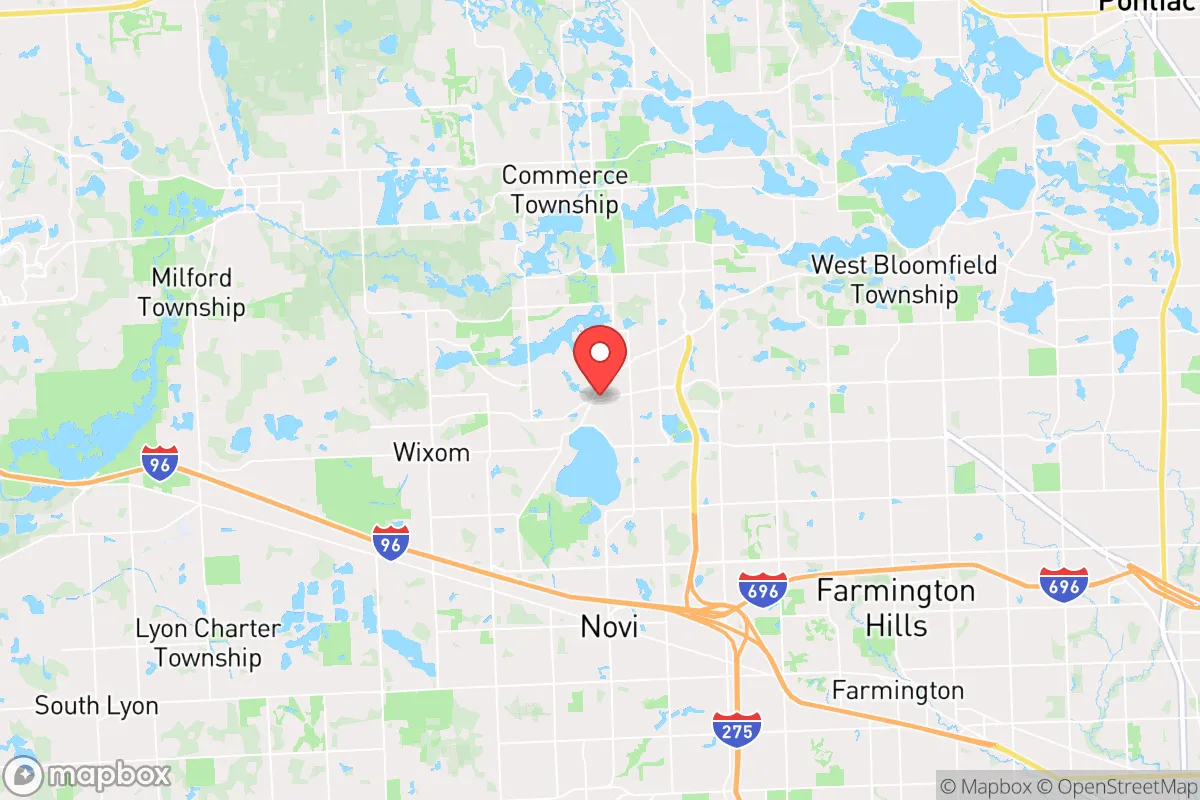
Walled Lake sits in Oakland County, roughly 30 miles northwest of downtown Detroit, placing it in the outer ring of the Detroit metropolitan area. This position offers a meaningful buffer from the immediate density and potential chaos of a major urban center, while still providing access to its resources. The area’s defining natural feature is the lake itself, part of the Huron River watershed, which provides a reliable surface water source—a critical asset for any long-term resilience plan. The surrounding landscape is a mix of suburban development, small lakes, and patches of second-growth forest, offering some natural cover and potential for small-scale food production. The region’s topography is flat to gently rolling, which is not ideal for defensible terrain but does simplify water collection and gardening. The local climate, with cold winters and moderate summers, presents a challenge for year-round food production but is manageable with season extension techniques like hoop houses or cold frames. The area’s position in the Great Lakes region also means it is far from major seismic zones, hurricane tracks, or wildfire-prone landscapes, reducing exposure to several common natural disaster risks.
Risks, exposures, and proximity to fallout-relevant landmarks
The most significant strategic liability for Walled Lake is its proximity to a dense web of man-made risks. The area lies within the fallout shadow of several potential targets. Detroit’s urban core, with its concentration of automotive headquarters, financial institutions, and infrastructure, is a plausible target for a range of man-made or geopolitical disruptions. More specifically, the region is home to the Detroit Metropolitan Wayne County Airport (DTW), a major international hub and a clear strategic asset. The I-96 and I-275 corridors, which run near Walled Lake, are critical transportation arteries that could become chokepoints or targets. Additionally, the area is within roughly 40 miles of the Fermi 2 nuclear power plant in Monroe County, Michigan. While the plant has a solid safety record, any incident—whether accidental or deliberate—would place Walled Lake within the potential plume zone, depending on wind direction. The presence of multiple chemical and industrial facilities along the Detroit River and in the Downriver area adds another layer of risk. For a reader focused on fallout and societal disruption, Walled Lake’s location is not a retreat; it is a suburban buffer zone that would likely experience significant secondary effects from any major event in Detroit. The area’s population density, while lower than the inner suburbs, is still substantial, meaning competition for resources during a crisis would be fierce.
Practical resilience for a relocator: food, water, energy, and defensibility
For a relocator serious about self-sufficiency, Walled Lake requires significant investment to become a resilient property. Water is the area’s strongest natural asset. The lake itself is a year-round surface water source, and the water table is generally high, making well water a viable option for most properties. Rainwater collection is also straightforward given the region’s average annual precipitation of around 30 inches. However, water treatment—filtration, boiling, or chemical purification—is non-negotiable for any surface or well water. Food production is possible but limited by the growing season, which runs roughly from May to September. The soil in Oakland County is a mix of sandy loam and clay, which can be improved with composting. A serious gardener could produce a significant portion of a family’s vegetables, but grains and protein sources would require more space or a network of local producers. The area has several farmers’ markets and a strong local food culture, which is a plus for building supply chains in normal times. Energy resilience is a challenge. The grid in this part of Michigan is aging and prone to outages during winter storms and summer heat waves. Solar power is viable but requires battery storage to handle the region’s frequent cloud cover, especially in winter. A backup generator running on propane or natural gas is a more reliable short-term solution. Defensibility is the weakest point. Walled Lake is a suburban community with open road networks, multiple access points, and a relatively dense population. There is no natural chokepoint or defensible terrain. A single-family home on a large lot with good visibility and a perimeter fence offers some security, but the area is not conducive to a stand-alone retreat. Building a resilient community—neighbors who share preparedness goals—would be more effective than trying to go it alone.
The overall strategic picture for Walled Lake is one of calculated trade-offs. It offers a genuine water advantage and a location that is close enough to Detroit to access its economic and medical resources, yet far enough to avoid the worst of a potential urban collapse. However, the area’s exposure to multiple man-made risks, its lack of natural defensibility, and its suburban density mean it is not a safe haven in the classic sense. For a relocator who is willing to invest in water treatment, energy backup, and food production, and who is prepared to build a resilient local network, Walled Lake can be a viable base. It is a location for those who want to be near the action but not in it, and who understand that true resilience in this area comes from preparation, not geography. The key is to treat it as a forward operating base, not a final redoubt, and to have a clear plan for both staying and leaving if the situation demands it.

* Values derived from national, state, county, city and local statistics and may differ in a specific area. Last updated: 2026-10-05T03:24:16.000Z
Narrative content on this page is AI-generated and may contain mistakes. Verify any details that matter before acting on them.
ReloMaps may earn a commission from affiliate links at no extra cost to you.

