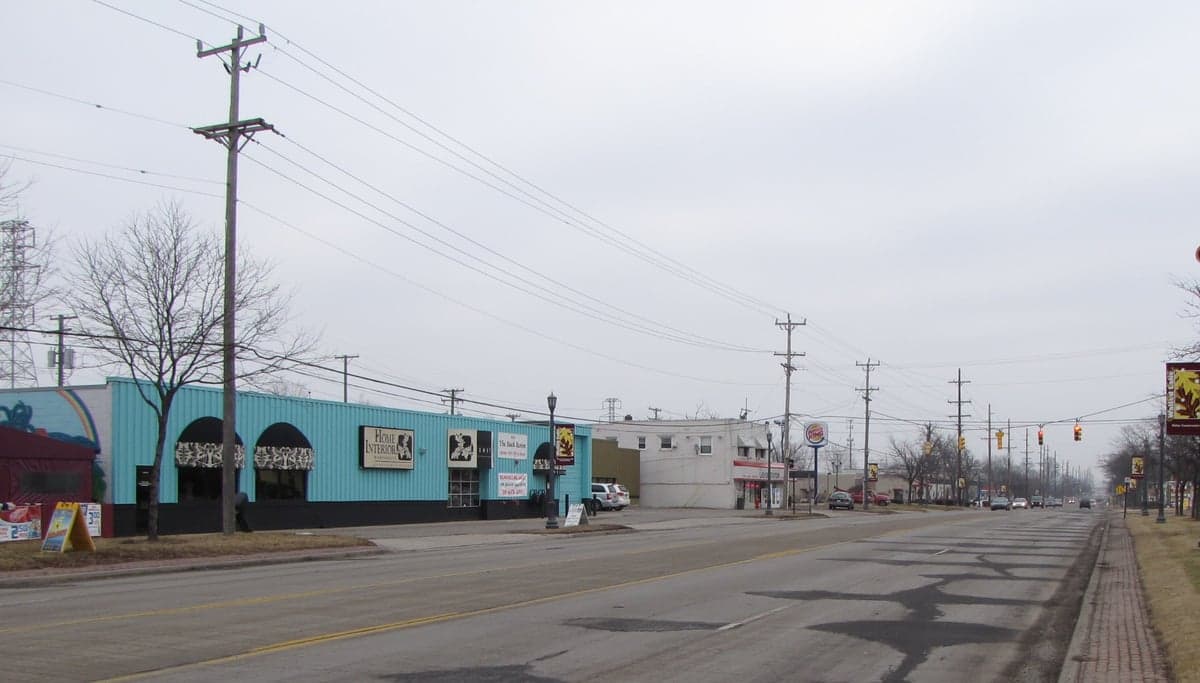
Photo: Wikipedia
Political ClimatePolitical Climate in Walled Lake, MI
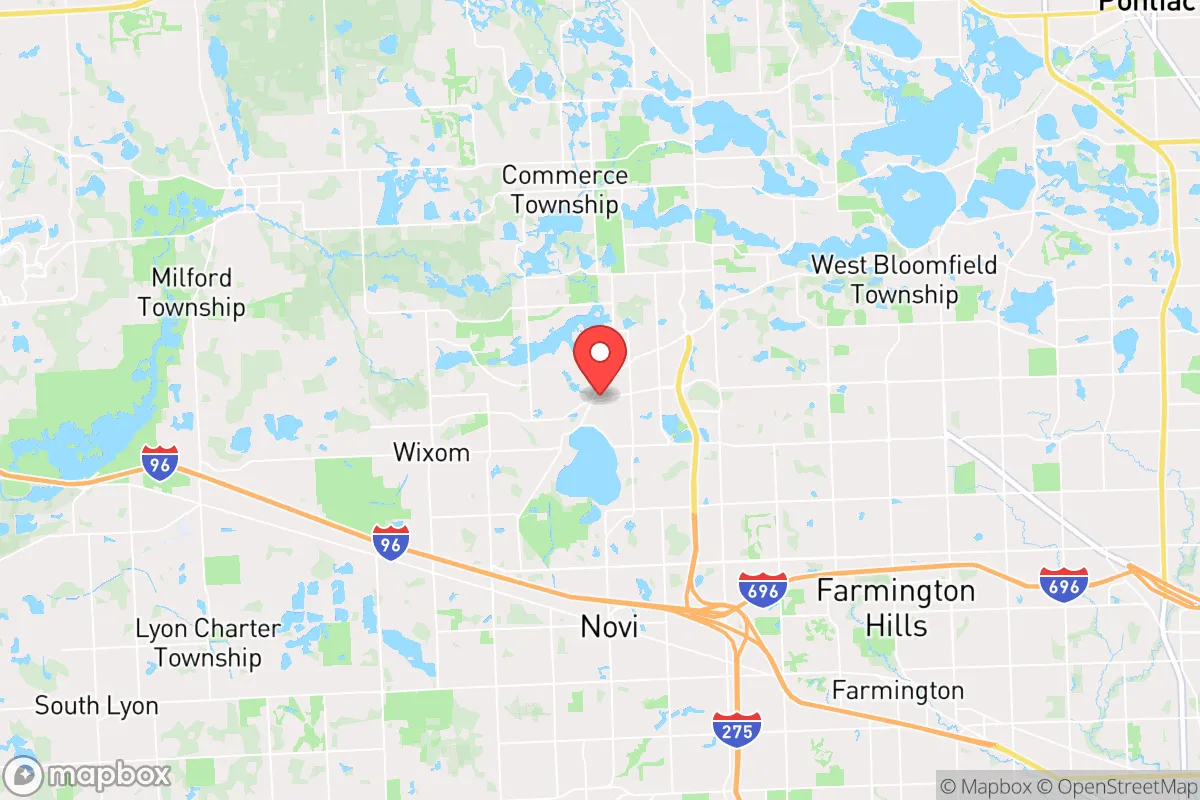
District shown is the primary district for this city’s centroid. Cities may span multiple districts.
Local Political AnalysisPolitical Analysis of Walled Lake, MI
Walled Lake leans decisively Democratic, with a Cook PVI of D+9, making it one of the more reliably blue communities in Oakland County. That’s a significant shift from even a decade ago, when the area was more of a swing district—you’d see a fair mix of yard signs for both parties. Now, the trajectory is clearly leftward, driven by an influx of younger families and professionals from metro Detroit who bring more progressive voting habits. The surrounding state of Michigan, by contrast, sits at a Cook PVI of EVEN, meaning it’s a true battleground where statewide races are often decided by razor-thin margins. So while Walled Lake is a Democratic stronghold, it’s surrounded by a state that can flip either way.
How it compares
Walled Lake’s D+9 lean puts it in a different political universe from many nearby communities. Head west a few miles to Commerce Township or White Lake, and you’ll find areas that are more purple-to-red, with Cook PVIs closer to R+2 or R+4. Even within Oakland County, places like Rochester Hills and Novi are more competitive, often splitting tickets in local elections. Walled Lake’s Democratic edge is more comparable to Ferndale or Royal Oak, though it’s less intensely progressive than those inner-ring suburbs. The contrast with the state’s EVEN rating is stark: in a presidential year, Walled Lake might deliver 58-60% for the Democratic candidate, while the statewide margin could be under 1%. That means local residents often feel like they’re in a blue bubble, even as Michigan as a whole remains a toss-up.
What this means for residents
For liberal residents, Walled Lake’s lean means local elections—city council, school board, county commission—tend to favor candidates who align with Democratic priorities. You’ll see more support for public transit expansions, environmental initiatives, and inclusive zoning policies. Conservative residents aren’t shut out, but they’ll find themselves in the minority on most local issues. That said, the area’s political culture is still relatively moderate; it’s not a hotbed of activism like Ann Arbor. The practical effect is that property taxes and local spending tend to be higher than in surrounding redder towns, but so are investments in schools and parks. For families, this often means a trade-off: more services and amenities, but a higher cost of living that reflects those priorities.
Culturally, Walled Lake’s politics show up in subtle ways. The downtown area has a more diverse mix of small businesses and community events than you’d find in a conservative suburb, and there’s a noticeable emphasis on sustainability—recycling programs, farmers markets, and bike lanes are common. The Walled Lake Consolidated Schools district has also leaned into progressive curriculum updates, which has been a point of contention for some conservative parents. Over the long term, the trend seems clear: as the Detroit metro area continues to grow outward, Walled Lake will likely become even more Democratic, mirroring the shift seen in other inner-ring suburbs. But don’t expect it to become a progressive enclave overnight—the area still has a strong contingent of longtime residents who remember when it was a quieter, more conservative lake town, and that legacy keeps the politics grounded.

State Political ClimatePolitical Climate in Michigan
State Political AnalysisPolitical Environment in the State
Michigan is the ultimate swing state in 2026, with a Cook PVI of EVEN that perfectly captures its knife-edge balance. Over the past 20 years, the state has lurched from reliably blue (voting for Gore, Kerry, Obama twice) to a Trump pickup in 2016, then back to Biden in 2020, and now sits as a permanent battleground. The dominant coalition is a three-way tug-of-war: the heavily unionized, diverse, and urbanized southeast (Detroit, Ann Arbor, Flint) pulls left; the exurban and rural northern Lower Peninsula and Upper Peninsula pull hard right; and the critical swing suburbs of Grand Rapids, Traverse City, and Macomb County decide every election. The trajectory is toward a more polarized, suburban-driven politics where the old "blue wall" has cracked, and neither party can take the state for granted.
Urban vs. rural divide
The political map of Michigan is a study in contrasts. Wayne County (Detroit) and Washtenaw County (Ann Arbor) are Democratic fortresses, delivering margins of 60-70% for statewide Democrats. In 2020, Detroit alone gave Biden a net 300,000+ vote advantage. Meanwhile, the rural Upper Peninsula, once a Democratic stronghold due to mining unions, has flipped hard red — Gogebic and Houghton counties now vote +20-30 points Republican. The critical battleground is the "Blue Wall" suburbs: Macomb County (north of Detroit) is the most famous swing county in America, voting Obama-Trump-Biden-Trump in successive cycles. Kent County (Grand Rapids) was historically Republican but has shifted left as the city grows and diversifies; it went for Biden in 2020 by a slim margin. Traverse City and its surrounding Grand Traverse County are a microcosm — the city itself is liberal and artsy, but the rural townships vote overwhelmingly Republican. The Flint area (Genesee County) remains Democratic but with shrinking margins as the auto industry declines. The takeaway: if you're moving to metro Detroit, you're in a blue bubble; if you're heading to the Thumb or the UP, you're in deep red territory; and if you're in the I-96 corridor or the lakeshore, you're in the true swing zone.
Policy environment
Michigan's policy environment is a mixed bag that reflects its swing-state status. Taxes: The state has a flat 4.25% income tax (down from 4.35% in 2023 via automatic rollback), and a 6% sales tax. Property taxes are moderate but vary wildly — Detroit's are high (around 2.5% effective rate) due to blight and under-assessment, while rural areas are lower. Regulatory posture: Michigan is a "right-to-work" state for private-sector workers (law passed in 2012, repealed in 2023 by the Democratic trifecta), meaning unions are strong in the auto and public sectors but not mandatory. Education: The state funds K-12 through a foundation allowance system, with Detroit schools chronically underfunded and under state oversight. School choice is robust — charter schools and inter-district transfers are common. Healthcare: Michigan expanded Medicaid under the Affordable Care Act in 2014, and the state runs its own health insurance marketplace. Election laws: Michigan has no-excuse absentee voting (passed via 2018 ballot initiative), same-day voter registration, and automatic voter registration at the DMV. Voter ID is required but can be satisfied by signing an affidavit. The state is a perennial target for election integrity debates, with both sides claiming irregularities in 2020 and 2022.
Recent policy direction
The 2023-2024 Democratic trifecta (Governor Gretchen Whitmer, Senate, House) passed a flurry of legislation that shifted the state leftward. Gun and self-defense law: Michigan passed universal background checks and a "red flag" law (extreme risk protection orders) in 2023, and repealed the state's preemption law, allowing local governments to enact their own gun ordinances. Open carry is still legal, but concealed carry requires a permit. Parental and education rights: The state repealed its 1931 abortion ban (pre-Roe) and codified abortion rights via the 2022 Proposal 3 constitutional amendment. Parental notification for abortion for minors was also repealed. School curriculum remains locally controlled, but the state banned "conversion therapy" for minors. Speech and privacy: Michigan has no state-level shield law for journalists, but the state constitution's free speech clause is robust. Surveillance law is average — no warrant requirement for cell phone location data at the state level. Medical and bodily autonomy: Recreational marijuana is legal (since 2018), and the state has a thriving cannabis industry. Psychedelics remain illegal. Property rights: Michigan has strong eminent domain protections (post-Kelo reform in 2006), but property taxes can rise with assessments. Taxation: The 2023 budget cut the corporate income tax from 6% to 4.25% and expanded the Earned Income Tax Credit. Voting/ballot access: The 2022 Proposal 2 enshrined nine days of early voting, drop boxes, and automatic voter registration into the state constitution. The net effect: Michigan has moved left on guns, abortion, and voting access, but remains centrist on taxes and property rights.
Civil unrest & political movements
Michigan has been a flashpoint for political movements on both sides. 2020 protests: The "Operation Gridlock" protest at the state capitol in April 2020 saw armed demonstrators opposing COVID-19 lockdowns, which became a national symbol of right-wing resistance. The Whitmer kidnapping plot (2020) involved a militia group planning to kidnap the governor, leading to federal convictions. Left-wing movements: The 2020 George Floyd protests in Detroit, Grand Rapids, and Lansing were large but mostly peaceful; the city of Detroit saw some property damage. Immigration politics: Michigan is not a sanctuary state, but several cities (Detroit, Ann Arbor, Kalamazoo) have "welcoming city" ordinances limiting cooperation with ICE. The state has seen a surge in refugee resettlement, particularly in the Arab-American community in Dearborn. Election integrity: The 2020 election in Michigan was the subject of numerous lawsuits and audits, with Trump allies claiming irregularities in Wayne County. The GOP-led Senate investigation found no evidence of widespread fraud, but the controversy persists. Secession/nullification rhetoric: The Upper Peninsula has a small but vocal secession movement (the "Superior State" proposal), and some rural counties have passed "Second Amendment sanctuary" resolutions. A new resident will notice the stark political signage — Trump flags in rural areas, "In This House We Believe" signs in liberal suburbs — and the palpable tension in swing counties like Macomb.
Projection
Over the next 5-10 years, Michigan is likely to remain a swing state, but the demographics are shifting slowly toward the left. In-migration: The state is seeing a net inflow from Illinois and Ohio, particularly to the Grand Rapids and Traverse City areas, which tend to be more moderate. The Detroit metro is losing population, but the city itself is stabilizing. Demographic shifts: The Arab-American population in Dearborn is growing and becoming more politically active (they voted heavily for Biden in 2020 but are now more skeptical due to Gaza policy). The Black population in Detroit is aging, while younger, whiter professionals are moving into the city's core. Suburban drift: The Oakland County suburbs (Bloomfield, Troy, Novi) are trending left as college-educated voters move in, while Macomb County remains the ultimate bellwether. Rural depopulation: The UP and northern Lower Peninsula are losing population, which will reduce their electoral weight. The realistic projection: Michigan will likely vote for the Democratic presidential candidate in 2028 and 2032, but by narrow margins (1-3 points). The state legislature will remain competitive, with the possibility of split control. A new resident moving in now should expect a state where every election is a nail-biter, where policy swings with the party in power, and where the political culture is defined by the urban-rural divide. The practical takeaway: if you're conservative, you'll feel at home in the exurbs and rural areas, but you'll be on the losing end of statewide policy on guns and abortion. If you're liberal, you'll dominate the cities and suburbs, but you'll face constant electoral uncertainty.
Bottom line for a new resident: Michigan is not a place where you can ignore politics — it's in your face every election cycle. The state offers a high quality of life (Great Lakes, low cost of living outside metro Detroit, four seasons) but with a political environment that is perpetually contested. If you're moving here, pick your location carefully: the political reality of Ann Arbor is completely different from that of Midland or Traverse City. The state's trajectory is toward a more polarized, suburban-driven politics, but the fundamentals — a diverse economy, strong unions, and a tradition of civic engagement — mean that neither side will dominate for long. Expect to vote in every election, and expect your vote to matter.
* Values derived from national, state, county, city and local statistics and may differ in a specific area. Last updated: 2026-10-05T03:24:16.000Z
Narrative content on this page is AI-generated and may contain mistakes. Verify any details that matter before acting on them.
ReloMaps may earn a commission from affiliate links at no extra cost to you.

