Political ClimatePolitical Climate in Salem City County
Showing state-level results — no local-only data available.
Local Political AnalysisPolitical Analysis of Salem City County
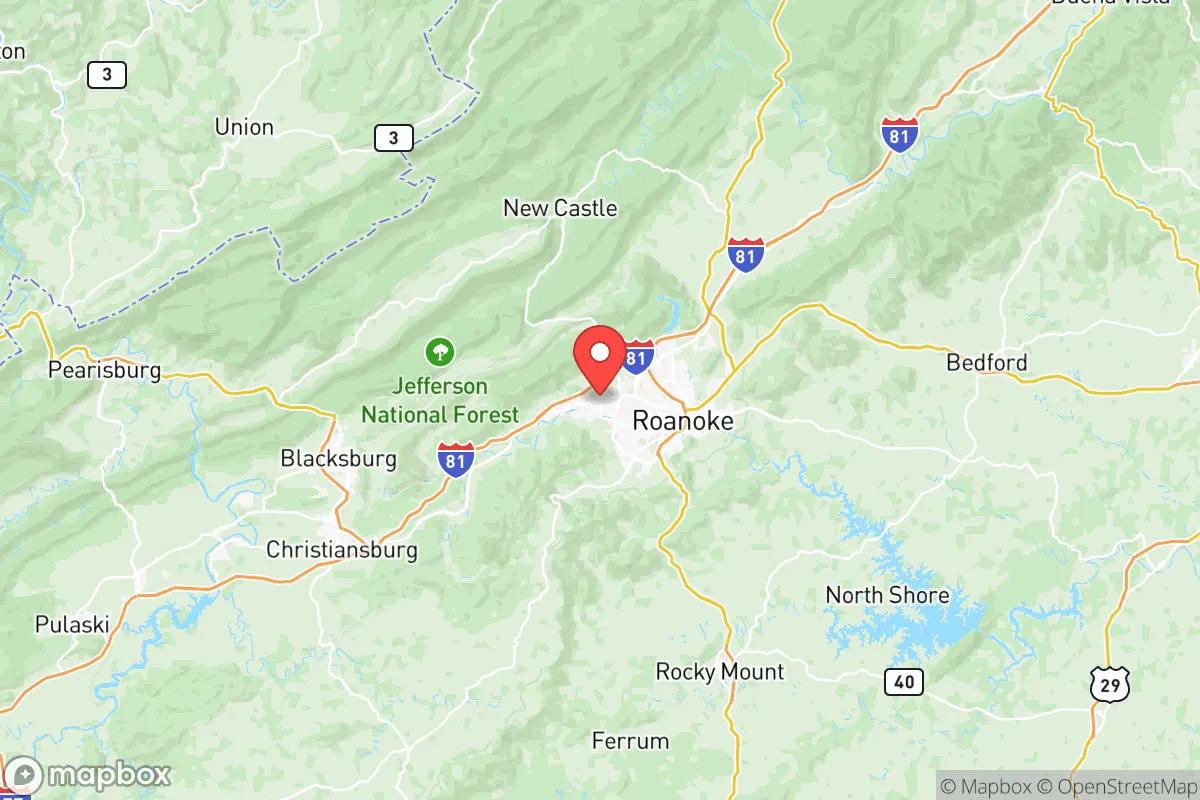
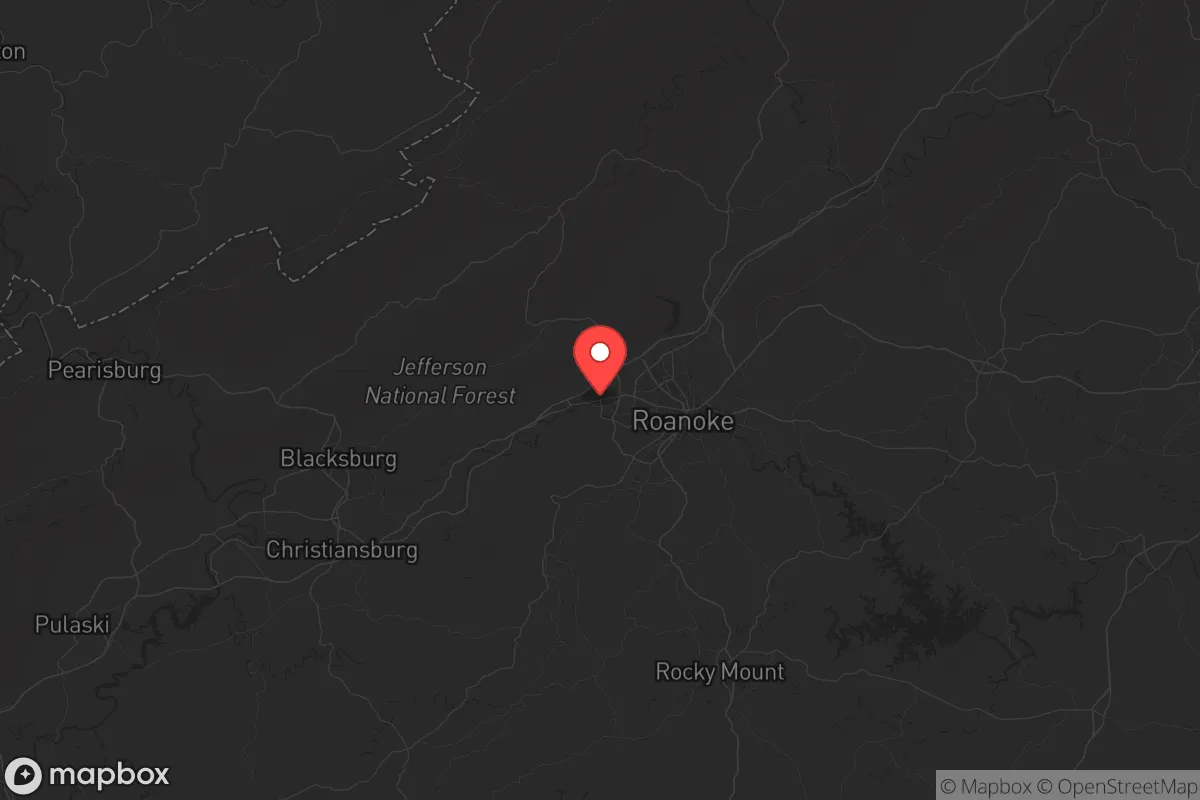
Salem City County, Virginia, is a reliably conservative enclave in the Blue Ridge foothills, with a Cook Partisan Voting Index (PVI) of R+12. That means the area votes about 12 percentage points more Republican than the national average, a stark contrast to the state of Virginia as a whole, which has shifted to a D+4 PVI. While Salem itself is a small, independent city surrounded by Roanoke County, its political identity is deeply rooted in a mix of military, manufacturing, and agricultural traditions, and it has not followed the broader state's leftward drift in recent cycles.
How it compares
The gap between Salem City County's R+12 and Virginia's D+4 is one of the widest in the state. To put it in perspective, while Virginia has become a reliably blue state in presidential elections—winning for Democrats in 2008, 2012, 2016, 2020, and 2024—Salem has remained a Republican stronghold. In the 2024 presidential race, Salem City County voted for Donald Trump by a margin of roughly 18 points, even as the state went for Kamala Harris by about 5 points. This divergence is not new; it has been widening since the 2010s, as suburban and exurban areas around Richmond and Northern Virginia have turned blue, while smaller cities like Salem have held firm. Within the county, the political geography is fairly uniform. The city of Salem itself—the only incorporated municipality—leans heavily red, with precincts like the Salem Civic Center and Andrew Lewis Middle School routinely delivering 60-65% Republican votes. There are no notable blue-leaning towns or swing precincts; the entire county is a solid conservative block, with the only slight variation being in the more rural, western edges near the Roanoke County line, where the vote can be even more lopsided (70%+ Republican).
What this means for residents
For conservative residents, Salem City County offers a political environment where their views are the norm. Local elections are dominated by Republicans, and the city council and school board have been consistently conservative for decades. This means lower taxes relative to the state average—property tax rates in Salem are about $0.95 per $100 of assessed value, compared to the state median of $1.10—and a general resistance to progressive social policies. For liberal residents, the reality is more isolating. While they are not actively suppressed, they are a clear minority, and progressive candidates rarely win even local races. There is no organized Democratic Party presence in the county; the nearest active Democratic committee is in Roanoke City, about 10 miles east. This can make liberal residents feel like political outsiders, especially during heated national cycles. However, the small size of the city (about 25,000 people) means that political differences rarely lead to open conflict; most interactions are neighborly, and the community is tight-knit enough that partisan labels often take a back seat to personal relationships.
Culturally, Salem City County is distinct from the rest of Virginia in its emphasis on tradition and local control. The city is home to the Salem Red Sox minor league baseball team and the annual Salem Fair, events that draw heavily from the surrounding rural areas and reinforce a sense of community rooted in conservative values. Policy-wise, Salem has been a leader in the state's push for Second Amendment sanctuary resolutions, passing one in 2019, and it has resisted state-level mandates on housing density and renewable energy. This creates a tangible difference from the more progressive policies in cities like Richmond or Arlington. For anyone moving here, the political climate is straightforward: it's a place where conservative values are the default, and while liberals can live comfortably, they should expect to be in the minority on most issues. The trajectory suggests this will continue, as Salem's population is aging and not attracting the young, diverse influx that is driving Virginia's blue shift elsewhere.

State Political ClimatePolitical Climate in Virginia
State Political AnalysisPolitical Environment in the State
Virginia has shifted from a reliably purple swing state to a solidly Democratic-leaning one over the past two decades, with a Cook Partisan Voting Index of D+4. The transformation is driven by explosive growth in the Washington, D.C. suburbs, particularly in Northern Virginia, which now dominates state elections and policy. While the state still elects Republican governors in off-years (Glenn Youngkin won in 2021), the legislature has been under Democratic control for most of the last decade, and the state has not voted for a Republican presidential candidate since 2004. For a conservative relocator, this means living in a state where your vote may not carry the day statewide, but where local control and regional political identity remain very strong.
Urban vs. rural divide
The political map of Virginia is a textbook case of the urban-rural split. The Democratic stronghold is Northern Virginia—specifically the counties of Fairfax, Loudoun, Prince William, and Arlington, plus the cities of Alexandria and Falls Church. These areas alone account for roughly one-third of the state’s population and vote Democratic by margins of 30 to 50 points. The other major Democratic engine is the Richmond metro area (Henrico and Chesterfield counties have trended blue, while the city of Richmond itself is deeply Democratic) and the Hampton Roads region, anchored by Norfolk, Virginia Beach, and Newport News. On the Republican side, the rural Southside and Southwest Virginia—places like Roanoke, Lynchburg, and the coal country around Bristol—vote heavily Republican, often by 40-point margins. The Shenandoah Valley (Harrisonburg, Staunton, Winchester) is a mixed bag, with growing college towns trending blue while the surrounding farmland stays red. The key battleground has been the exurban crescent from Fredericksburg down to Charlottesville and then to Richmond; these areas have been steadily trending Democratic as D.C. commuters push further out.
Policy environment
Virginia’s policy environment is a patchwork. The state has a relatively low income tax rate (a flat 5.75% on most income) and a moderate sales tax (5.3% state rate, plus local add-ons). Property taxes are set locally and vary widely—from about 0.8% in rural counties to over 1.2% in Northern Virginia. The state’s regulatory posture is generally business-friendly, with a right-to-work law and a strong economic development apparatus. Education policy has been a flashpoint: Governor Youngkin pushed for expanded school choice and parental rights, including a model policy on transgender student accommodations that sparked legal battles. The state’s public schools are among the best in the South, but funding and outcomes vary dramatically between wealthy Northern Virginia suburbs and poorer rural districts. Healthcare policy is mixed—Virginia expanded Medicaid under the Affordable Care Act in 2018, but the state also has some of the most restrictive abortion laws in the South after a 15-week ban was passed in 2023 with bipartisan support. Election laws are moderately restrictive: Virginia has no-excuse absentee voting and early voting, but requires a photo ID and does not allow same-day voter registration.
Recent policy direction
The last five years have seen Virginia lurch left on social issues and then partially pull back. In 2020, the Democratic-controlled legislature passed a sweeping package of gun control measures, including universal background checks, a red-flag law, and a one-handgun-per-month limit. In 2021, they abolished the death penalty and legalized recreational marijuana (though retail sales have been slow to launch). The 2023 election gave Republicans control of the House of Delegates, and the resulting divided government has produced a stalemate on many fronts. On gun rights, the 2020 laws remain in place, but no further restrictions have passed. On parental rights, Youngkin’s executive orders on transgender policies in schools have been partially blocked by courts. On abortion, the 15-week ban (with exceptions for rape, incest, and life of the mother) passed with some Democratic support, and a 2024 ballot measure to enshrine abortion rights in the state constitution failed. On voting, the state has not gone as far as some blue states—no automatic voter registration, no felon voting rights restoration without a governor’s action. On property rights, Virginia has strong eminent domain protections after the 2005 Kelo backlash, but local zoning battles in growing areas are intense. On privacy and surveillance, the state passed a consumer data protection law in 2021, but police body camera footage is generally public record.
Civil unrest & political movements
Virginia has been a flashpoint for political movements on both sides. The 2017 Unite the Right rally in Charlottesville remains a defining moment, leading to the removal of Confederate statues and a statewide debate over historical memory. The 2020 racial justice protests in Richmond were among the largest in the country, with the Robert E. Lee statue becoming a national symbol. On the right, the 2021 “Parents Matter” movement in Loudoun County—triggered by a sexual assault case and transgender policy disputes—galvanized suburban conservatives and helped elect Youngkin. Immigration politics are less heated than in border states, but Northern Virginia has a large immigrant population, and some localities have declared themselves “sanctuary cities” (though the state has no formal sanctuary law). Election integrity controversies have been muted compared to other swing states; Virginia’s 2020 election was certified without major incident, though some rural counties passed resolutions questioning the results. A new resident would notice the stark cultural divide: drive 30 minutes west of D.C. and you’re in Trump country, with Confederate flags and “Don’t Tread on Me” plates; drive 30 minutes east and you’re in a diverse, progressive suburb with Pride flags and Black Lives Matter signs.
Projection
Over the next 5-10 years, Virginia will likely continue its slow drift leftward, driven by demographic trends. Northern Virginia is adding population faster than any other region, and the new arrivals are overwhelmingly young, diverse, and Democratic-leaning. The Richmond and Hampton Roads areas are also trending blue as their urban cores grow. Rural Virginia is shrinking and aging, which will reduce its political clout. However, the state’s off-year election cycle (governor races in non-presidential years) will continue to give Republicans a fighting chance, as turnout is lower and more rural. The wild card is the Fredericksburg and Charlottesville exurbs: if they continue to fill with D.C. commuters, the state could become D+6 or D+7 by 2030. For a conservative moving in now, expect to live in a state where Democrats control the legislature most of the time, but where a Republican governor can still win by focusing on kitchen-table issues like education and taxes. The state will not become Texas or Florida anytime soon, but it also won’t become California—the rural and exurban resistance is too strong.
For a new resident, the bottom line is this: Virginia offers a high quality of life with strong schools, a diverse economy, and beautiful geography, but you will be living in a politically divided state where your vote may not decide the outcome. If you’re a conservative, you’ll find like-minded communities in the Shenandoah Valley, Southside, and Southwest Virginia, but you’ll be outvoted on most statewide issues. If you’re a liberal, you’ll feel at home in Northern Virginia and Richmond, but you’ll have to contend with a Republican governor every four years who can veto your priorities. The practical takeaway: choose your locality carefully, because your day-to-day experience—taxes, schools, gun laws, and cultural vibe—will be determined more by your county or city than by the state as a whole.
* Values derived from national, state, county, city and local statistics and may differ in a specific area. Last updated: 2026-06-16T03:42:31.000Z
Narrative content on this page is AI-generated and may contain mistakes. Verify any details that matter before acting on them.
ReloMaps may earn a commission from affiliate links at no extra cost to you.

