Personal Sovereignty in Radford City County
Viable for self-reliance. Generally workable, though some barriers may limit total independence.
What does Personal Sovereignty tell us?
Personal Sovereignty measures your capacity for self-reliance and independence with minimal government friction. Higher scores mean fewer barriers between you and the way you want to live... but it assumes you have the space you need and good neighbors.
What does this tell us?
Personal Sovereignty measures your capacity for self-reliance and independence with minimal government friction. Higher scores mean fewer barriers between you and the way you want to live... but it assumes you have the space you need and good neighbors.
State Policy
Energy independence: Importer (20% of energy produced in-state)
Personal Liberty
Homesteading

Personal Liberty Analysis
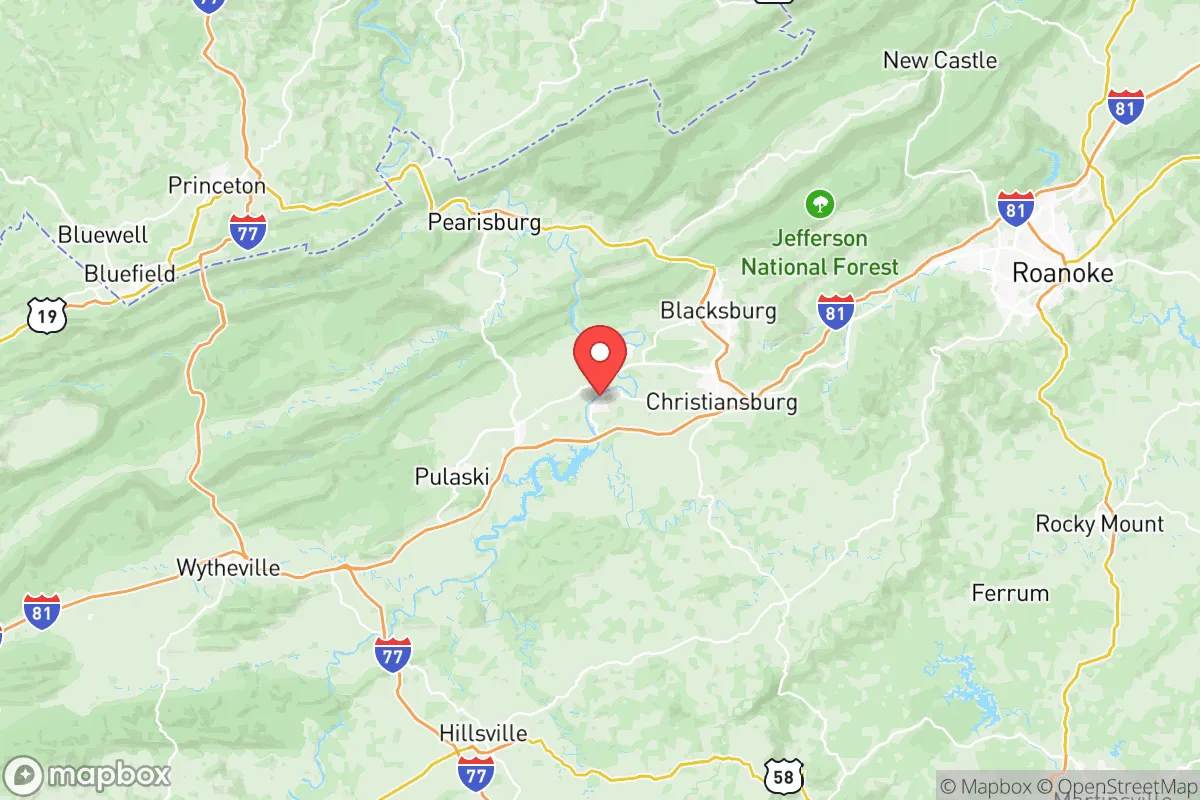
Radford City, Virginia, offers a distinctive personal sovereignty environment that blends small-city convenience with a notably light-touch regulatory posture, making it a compelling option for those prioritizing autonomy. As an independent city surrounded by Montgomery and Pulaski counties, Radford operates under Virginia’s Dillon Rule, which limits local government authority to what the state explicitly grants, but the city’s leadership has historically interpreted this conservatively, keeping zoning and permitting processes streamlined. For a conservative-leaning individual or family, the trade-off is clear: you get a manageable, walkable urban core with lower regulatory friction than larger Virginia cities like Roanoke or Richmond, while still having access to the broader New River Valley’s rural and semi-rural options. The city’s population of roughly 16,000 keeps bureaucracy lean, and the local government’s focus on economic development—anchored by Radford University and a growing manufacturing base—means fewer layers of red tape for residents seeking to start a business, modify their property, or live with minimal interference.
Tax burden and regulatory posture in Radford City compared to surrounding counties
Radford City’s tax burden is moderate but competitive, especially when stacked against neighboring jurisdictions. The city’s real property tax rate is $1.19 per $100 of assessed value (2025), slightly higher than Pulaski County’s $0.68 but lower than Montgomery County’s $1.22. Personal property tax on vehicles is assessed at 100% of value, with a rate of $4.50 per $100, which is typical for the region. Virginia’s state income tax is a flat 5.75%, and sales tax in Radford is 5.3% (4.3% state + 1% local), among the lowest in the state. The regulatory posture is business-friendly: the city’s zoning code is straightforward, with no overlay districts or historic preservation boards that complicate renovations. Permits for home additions or accessory structures are processed within 30 days on average, and the city does not impose a business license tax on most small home-based operations. For context, Fairlawn and the unincorporated areas of Pulaski County just south of Radford offer even lower property taxes and fewer zoning restrictions, making them attractive for those who want to maximize land use flexibility. However, Radford’s city services—including police, fire, and public utilities—are more responsive than in rural pockets, which some residents value as a trade-off for slightly higher taxes.
Self-defense and gun law specifics in Radford City and the New River Valley
Virginia is a “shall-issue” state for concealed handgun permits, and Radford City fully aligns with state law, meaning no local ordinances restrict firearm ownership, open carry, or concealed carry beyond state mandates. The city’s police department does not maintain a separate gun registry or impose waiting periods beyond the state’s background check requirement for all purchases from licensed dealers. Private sales between individuals remain legal without a background check, though the state’s 2020 “universal background check” law—which applies to all transfers except between immediate family—is in effect. Radford’s gun culture is practical and low-key: there are no local “sensitive places” restrictions beyond state-defined ones (schools, courthouses, airports), and the city’s proximity to national forest land means shooting ranges and hunting areas are within a 20-minute drive. Dublin and New River in Pulaski County are particularly gun-friendly, with multiple gun shops and a strong hunting tradition. For self-defense, Radford’s crime rate is low—violent crime is roughly half the national average—so the need for a firearm is less acute than in larger cities, but the legal environment fully supports responsible ownership. Stand-your-ground laws apply statewide, and there is no duty to retreat in any place where a person has a legal right to be.
Self-reliance and homesteading viability in Radford City and the surrounding area
Homesteading within Radford City limits is feasible but constrained by lot sizes and zoning. The city’s minimum lot size for single-family homes is 6,000 square feet, which allows for modest gardens, small livestock like chickens (up to 6 hens, no roosters, with a permit), and rainwater collection for non-potable uses. However, larger livestock, beekeeping, and off-grid systems like solar panels with battery storage are subject to building code and HOA restrictions in some neighborhoods. For serious self-reliance, the rural areas just outside the city offer far more freedom. Belspring and the unincorporated parts of Montgomery County near the Radford border have no zoning at all, allowing unlimited livestock, detached workshops, and alternative energy systems without permits. Off-grid living is viable in these areas: well water and septic systems are standard, and solar installations are common, though Virginia’s net metering laws require grid connection for any system over 10 kW. The city’s public utilities are reliable and affordable, but for those who want to disconnect, the regulatory path is clear—just ensure compliance with state health department standards for septic and well. Prices Fork, a small community west of Radford, is a hotspot for homesteaders, with 1- to 5-acre parcels available for under $10,000 per acre, and no local ordinances restricting farming or off-grid infrastructure.
Personal liberties in Radford City: parental rights, medical autonomy, speech, and property
Parental rights in Radford are strong, reflecting Virginia’s broader legal framework. The city’s school board does not have a “critical race theory” or “social-emotional learning” mandate beyond state standards, and parents can opt their children out of any sex education or health curriculum without penalty. Homeschooling is straightforward: parents file a notice of intent with the superintendent, provide a curriculum description, and submit annual assessments or test scores. Medical autonomy is similarly permissive: Virginia does not have a vaccine mandate for adults, and Radford’s local health department does not enforce any additional restrictions. The state’s 2023 law protecting medical freedom of conscience allows healthcare providers to refuse participation in procedures they object to, and patients can access alternative treatments without state interference. Free speech is protected under the First Amendment, and Radford has no local ordinances restricting public assembly or protest beyond standard time, place, and manner rules. Property rights are robust: the city does not have a rent control ordinance, and short-term rentals (like Airbnb) are allowed with a simple business license. McCoy, a tiny unincorporated area east of Radford, exemplifies the property-rights ethos—no zoning, no building permits, and no HOA, making it a haven for those who want absolute control over their land.
Overall, Radford City offers a balanced personal sovereignty environment that is more permissive than Virginia’s urban centers but less libertarian than the state’s most rural counties. For a conservative-leaning individual or family, the city provides a solid baseline of autonomy—low taxes, gun-friendly laws, and strong parental rights—without the isolation of deep rural living. The real freedom lies in the surrounding areas: Fairlawn, Belspring, Prices Fork, and McCoy each offer progressively lighter regulatory touch, from no zoning to no permits, allowing residents to dial in their desired level of self-reliance. Compared to Northern Virginia or Richmond, Radford City and its environs are a clear win for personal sovereignty; compared to West Virginia or Tennessee, they are moderate but still competitive, especially given the access to jobs, healthcare, and education in the New River Valley. The key takeaway: Radford City itself is a good starting point, but the true autonomy seekers will look to the unincorporated pockets just beyond the city limits.

* Values derived from national, state, county, city and local statistics and may differ in a specific area. Last updated: 2026-07-27T01:02:05.000Z
Narrative content on this page is AI-generated and may contain mistakes. Verify any details that matter before acting on them.
ReloMaps may earn a commission from affiliate links at no extra cost to you.

