Quality of Life in Hampton City County
A livable area that tracks near national norms for affordability, walkability, and neighborhood health.
What does Quality of Life tell us?
Quality of Life measures an area by evaluating factors like cost of living, nearby amenities, country club access, airport proximity, socioeconomic signals and neighborhood character. For large states, this is a general average — quality of life can vary dramatically between metro areas, suburbs, and rural communities within the same state.
What does this tell us?
Quality of Life measures an area by evaluating factors like cost of living, nearby amenities, country club access, airport proximity, socioeconomic signals and neighborhood character. For large states, this is a general average — quality of life can vary dramatically between metro areas, suburbs, and rural communities within the same state.
Cost of Living
3% above national average
101%
The Real Cost of Living in Hampton City County for 2026
| Tier | Individual | Family (4) |
|---|---|---|
| Survival | $21k | $40k |
| Comfortable | $45k | $67k |
| Luxury | $111k+ | $172k+ |
| Elite (Top 5%) | $131k+ | $203k+ |
Quality-of-Life Analysis
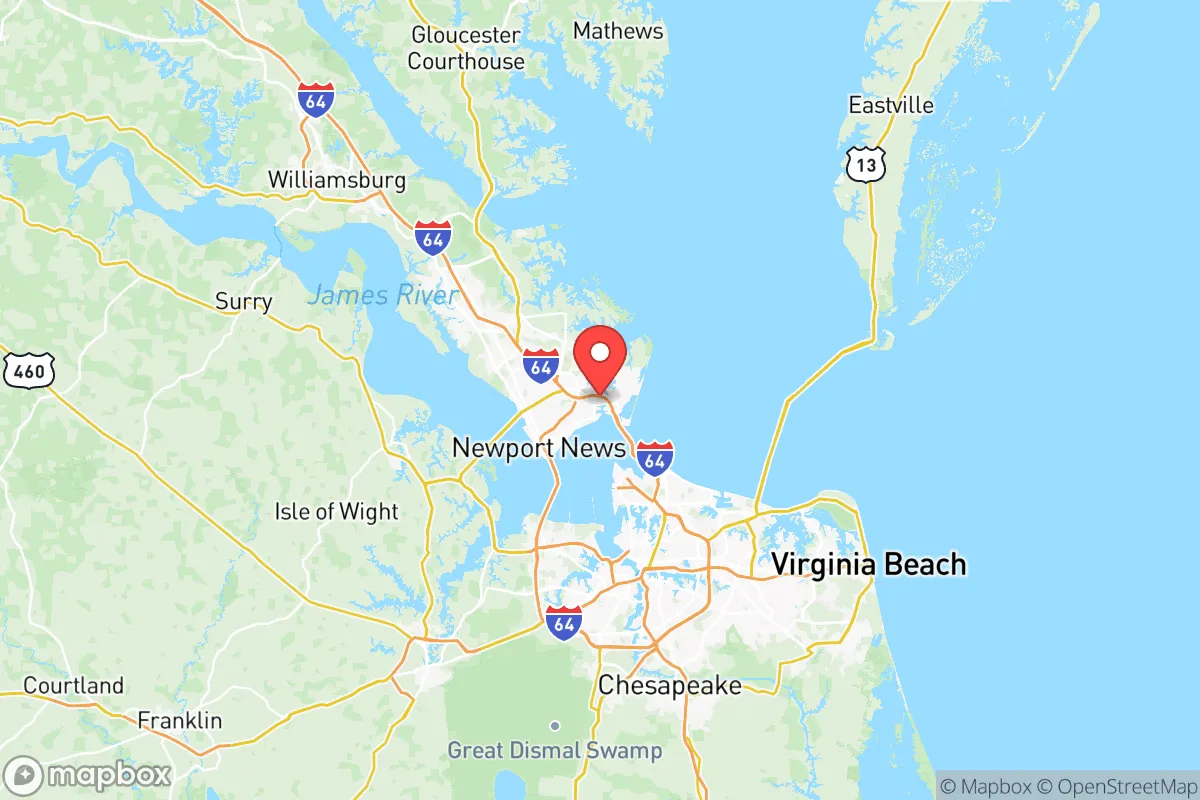
Hampton City County, Virginia, presents a spectrum of quality-of-life options that range from the dense, walkable urban core of Hampton itself to quiet, semi-rural pockets along the Back River and near the Langley Air Force Base perimeter. The county draws a diverse mix of military families, commuters to Norfolk and Newport News, retirees seeking waterfront living, and young professionals attracted to the revitalized downtown. With a cost of living index of 103—just above the national average—and a median home value of $234,100, Hampton offers more affordability than many coastal Virginia markets while still providing access to the Chesapeake Bay and the Hampton Roads metropolitan area.
Largest town(s) & population centers
The city of Hampton is the county's sole incorporated city and its overwhelming population center, home to roughly 135,000 residents. Daily life here is shaped by a mix of historic neighborhoods, military presence, and a slowly revitalizing downtown. The Buckroe Beach area offers a laid-back, family-oriented beach lifestyle with modest mid-century homes and direct bay access, while the Phoebus district provides a walkable historic village feel with local restaurants and shops. Downtown Hampton has seen significant investment in the Hampton Convention Center and the Hampton History Museum, though retail foot traffic remains moderate compared to larger neighbors like Norfolk. The Coliseum Central district, anchored by the Hampton Coliseum and Peninsula Town Center, is the primary commercial and entertainment hub, featuring big-box retail, chain dining, and the Hampton Roads Bridge-Tunnel access. Commuters benefit from an average commute time of just 22.4 minutes, well below the national average, making Hampton a practical choice for workers at Langley Air Force Base, NASA Langley Research Center, and the Newport News shipyard.
Smaller towns & rural pockets
While Hampton is a single incorporated city, its unincorporated communities and neighborhoods create distinct micro-environments. The Fox Hill area, located on the eastern edge near the Back River, retains a small-town, almost rural character with older homes on larger lots, a volunteer fire department, and a strong sense of local identity. The Grandview Nature Preserve area offers a quiet, semi-rural enclave with marsh views and limited commercial development, appealing to those who want proximity to the bay without the density of Buckroe Beach. Further inland, the Northampton area near the Newport News border is a mix of older subdivisions and light industrial zones, offering more affordable housing stock. These pockets are not separate towns but are recognized by locals as distinct communities with their own civic associations and character, providing a quieter alternative to the city's more developed corridors.
Cost & lifestyle range
The cost of living and lifestyle options vary noticeably across Hampton's geography. At the higher end, waterfront neighborhoods along Chesapeake Avenue and the Salt Ponds area feature homes valued well above the county median of $234,100, often exceeding $400,000, with direct bay access and private docks. These areas attract professionals and retirees willing to pay a premium for views and water recreation. At the more affordable end, neighborhoods in the Aberdeen and Briarfield sections offer median home values closer to $180,000, with smaller lots and older housing stock, appealing to first-time buyers and military families. Median rent across the county is $1,346, which is reasonable for the Hampton Roads region but higher than inland Virginia markets. The lifestyle range is equally broad: Buckroe Beach and downtown offer walkable, amenity-rich living with events and nightlife, while Fox Hill and Grandview provide quiet, car-dependent rural living with minimal commercial services. The county's overall COL index of 103 means that most essentials—groceries, utilities, healthcare—are close to national averages, though property taxes in Hampton are slightly higher than in neighboring York County.
Hampton City County is best suited for those who want the amenities of a mid-sized coastal city—beaches, military employment, and a short commute—without the premium price tag of Virginia Beach or Norfolk. Military families, NASA and shipyard employees, and retirees seeking a quieter bay lifestyle will find the most value here, particularly in the Fox Hill and Buckroe areas. Those seeking a vibrant urban core with dense nightlife and walkability may find Hampton too subdued, but for buyers and renters who prioritize affordability, commute time, and access to the Chesapeake Bay, the county offers a compelling balance of cost and quality of life.

Crime in Hampton City County
Generally safer than 60% of comparable U.S. locations.
Violent CrimeViolent Crime Analysis
Property CrimeProperty Crime Analysis
Crime Analysis
Hampton City County, Virginia, reports a violent crime rate of 209 incidents per 100,000 residents and a property crime rate of 1,389.4 per 100,000, placing it in a moderate risk category relative to other cities in the Hampton Roads region. While these figures are lower than those seen in nearby Norfolk and Portsmouth, they remain above the national averages for both violent and property crime, indicating that residents and newcomers should take standard urban precautions. The city’s safety profile is shaped by its dense urban core, proximity to military installations like Langley Air Force Base, and the policies of the local judicial system, which has faced scrutiny for progressive approaches to prosecution and sentencing.
Crime in context
Hampton’s violent crime rate of 209 per 100,000 is roughly 40% lower than Norfolk’s rate of 348 per 100,000 and significantly below Portsmouth’s 410 per 100,000, but it still exceeds the national average of approximately 200 per 100,000. Property crime in Hampton, at 1,389.4 per 100,000, is about 15% higher than the U.S. average of 1,200 per 100,000 and notably higher than in neighboring York County (which reports around 900 per 100,000) and Poquoson (under 700 per 100,000). The Hampton Police Division has attributed much of the property crime to vehicle break-ins and package thefts in areas with high rental turnover, such as the Coliseum Central district and the Buckroe Beach neighborhood. The city’s location along the I-64 corridor also makes it a transit point for regional criminal activity, with stolen goods frequently moving between Hampton, Newport News, and Williamsburg.
What residents experience
Residents in Hampton’s more affluent western neighborhoods, such as Fox Hill and Farmington, report lower crime incidence and faster police response times, while the downtown area and the Pembroke Avenue corridor see higher concentrations of theft and assault. The Hampton Commonwealth’s Attorney’s Office has adopted a progressive bail reform policy that critics argue releases repeat property offenders back onto the street within hours of arrest, a pattern that frustrates homeowners in neighborhoods like Wythe and Olde Hampton. In contrast, the city’s partnership with the U.S. Attorney’s Office for the Eastern District of Virginia has led to federal prosecution of gun crimes in the Langley Air Force Base buffer zone, which has helped suppress violent incidents near the base. Hampton’s police department operates a Real-Time Crime Center that uses license plate readers and surveillance cameras in high-traffic areas, a measure that has reduced auto theft by 12% year-over-year in the Mercury Boulevard commercial strip.
Neighborhood-level variation is pronounced. The Phoebus area, a historic district near Fort Monroe, has seen a 20% drop in burglaries since 2023 due to increased neighborhood watch participation, while the Northampton area continues to struggle with gang-related disputes that spill over from adjacent Newport News. For families considering relocation, the Langley View and Briarfield neighborhoods offer the lowest crime rates in the city, with violent crime below 100 per 100,000. However, the progressive judicial philosophy in Hampton’s circuit courts — which emphasizes diversion programs over incarceration for nonviolent offenders — means that property crime recidivism remains a persistent concern, particularly in areas with high concentrations of rental properties and transient populations. Prospective residents should research block-level crime maps and consider visiting neighborhoods at different times of day to assess safety conditions firsthand.
* Values derived from national, state, county, city and local statistics and may differ in a specific area. Last updated: 2026-07-04T01:41:37.000Z
Narrative content on this page is AI-generated and may contain mistakes. Verify any details that matter before acting on them.
ReloMaps may earn a commission from affiliate links at no extra cost to you.

