Strategic Assessment of Bristol City County
Workable tactical position. Some exposure to population density or targets, but generally defensible in a crisis.
What does the Strategic Assessment tell us?
Our Strategic Assessment grades tactical survivability of an area. Major population centers, military targets, fallout zones, natural disasters, and border exposure all drive risk — lower exposure means a more defensible position in a crisis.
This is heavily inspired by Joel Skousen's Strategic Relocation book. Highly recommended you checkout the book ($)What does this tell us?
Our Strategic Assessment grades tactical survivability of an area. Major population centers, military targets, fallout zones, natural disasters, and border exposure all drive risk — lower exposure means a more defensible position in a crisis.
This is heavily inspired by Joel Skousen's Strategic Relocation book. Highly recommended you checkout the book ($)Strategic Pillars

Key Distances
Strategic Assessment Analysis
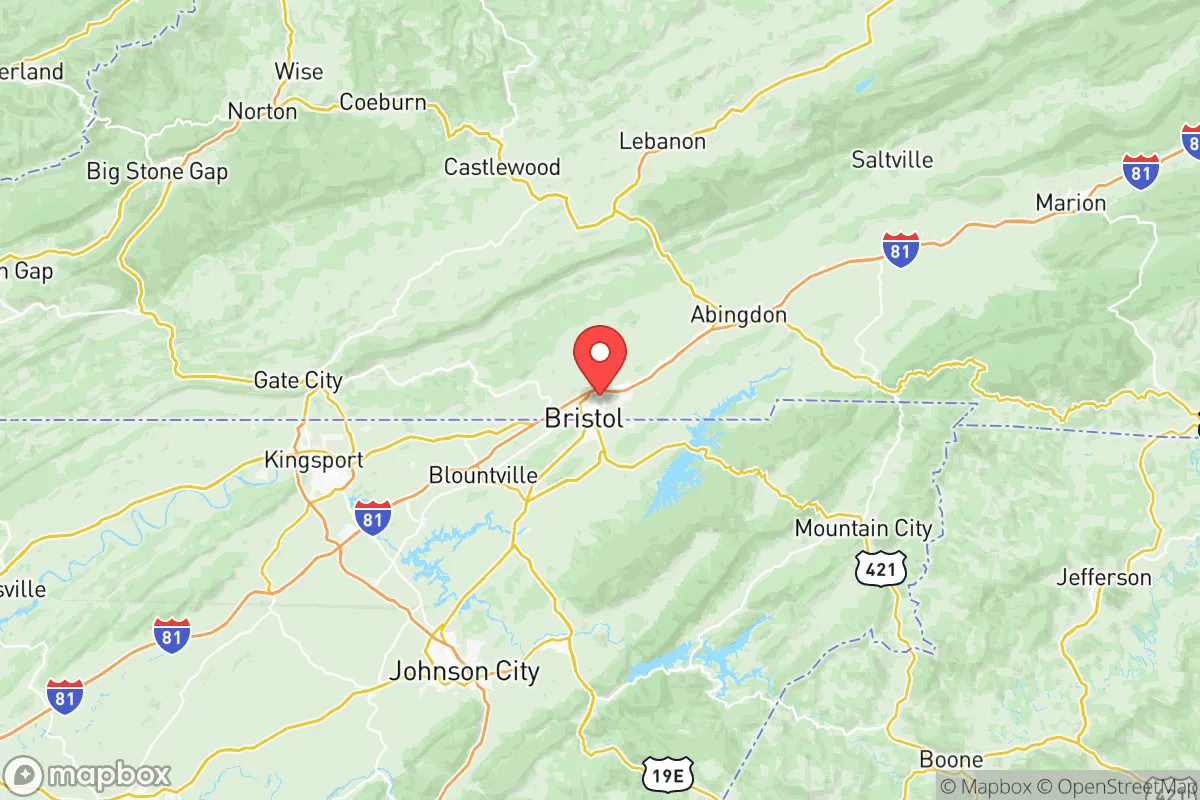
Bristol City County, Virginia, offers a compelling strategic position for relocation-minded readers who prioritize resilience and self-sufficiency. Nestled in the southwestern corner of the state, this independent city and its surrounding county sit at the intersection of Virginia, Tennessee, and North Carolina, providing a natural buffer from the major metropolitan corridors that dominate the Eastern Seaboard. The area’s location along the historic Great Valley of Virginia, combined with its distance from high-risk coastal zones and major industrial targets, makes it a noteworthy option for those evaluating disaster readiness and long-term security.
Geographic position and natural advantages for long-term security
Bristol’s geography is its primary strategic asset. The city lies within the Appalachian Ridge-and-Valley region, a landscape of parallel ridges and fertile valleys that offers both natural defensibility and resource access. The area is roughly 120 miles northeast of Knoxville, Tennessee, and 150 miles west of Roanoke, Virginia, placing it well outside the immediate fallout zones of larger urban centers. The nearby Mount Rogers National Recreation Area and Jefferson National Forest provide vast, sparsely populated wilderness to the east and north, offering potential retreat space and natural resources. The Holston River runs through the region, providing a reliable freshwater source, while the surrounding mountains create microclimates that moderate temperature extremes and reduce the risk of the severe weather events common to the Plains or Gulf Coast. For a relocator, this means a lower probability of hurricane storm surge, tornado alley activity, or catastrophic flooding compared to many other parts of the Southeast.
Risks, exposures, and proximity to fallout-relevant landmarks
While Bristol’s position is generally favorable, it is not without strategic vulnerabilities. The most significant risk comes from its proximity to the Oak Ridge National Laboratory in Tennessee, roughly 130 miles southwest. Oak Ridge is a major nuclear research and production facility, and while a direct incident is unlikely, it remains a fallout-relevant landmark that a serious preparedness-minded reader should note. Closer to home, the Bristol Regional Medical Center is a major healthcare hub, but its presence does not constitute a high-risk industrial target. The area is also within a few hours’ drive of the Kingsport-Bristol industrial corridor, which includes chemical manufacturing and energy infrastructure along the Tennessee side of the border. Natural risks are moderate: the region sits in a seismic zone with occasional minor earthquakes, but major events are rare. Flooding along the Holston River and its tributaries can occur during heavy rain events, but the mountainous terrain generally limits the scale of inundation. Wildfire risk is present in the forested areas, particularly during dry summers, but is not as acute as in the Western U.S. Overall, the area’s exposure to man-made and natural threats is lower than in coastal or heavily industrialized regions, but the Oak Ridge factor is the one a relocator should monitor.
Practical resilience for a relocator: food, water, energy, and defensibility
For someone serious about self-sufficiency, Bristol County offers a strong practical foundation. The region’s agricultural heritage is still active, with local farms producing hay, cattle, and produce within a 30-mile radius. The Bristol Farmers Market operates year-round, and the surrounding Washington County, Virginia, and Sullivan County, Tennessee, have robust networks of small-scale growers. Water availability is excellent: the Holston River and South Holston Lake provide surface water, while groundwater is generally accessible via wells in the valley areas. The region’s topography also supports micro-hydro and small-scale solar energy generation, with ample southern-facing slopes for solar panels. The local power grid is served by Appalachian Power, a subsidiary of American Electric Power, which draws from a mix of coal, natural gas, and hydroelectric sources. The area’s mountainous terrain offers natural defensibility—many properties in the surrounding hills have limited access points and good line-of-sight, making them easier to secure than flat, open land. However, the city of Bristol itself is a small urban center (population roughly 17,000) with typical suburban vulnerabilities, so a relocator seeking maximum resilience would likely target the rural outskirts in Washington County or into the Jefferson National Forest boundary.
The overall strategic picture for Bristol City County is one of moderate-to-strong resilience with a few specific caveats. Its distance from major metropolitan targets like Washington D.C., Richmond, or Charlotte is a clear advantage, and the natural resources of the Appalachian region provide a solid foundation for self-reliant living. The primary concern for a disaster-preparedness reader is the proximity to Oak Ridge, but this is a risk that can be mitigated with proper planning and situational awareness. For a family or individual looking to relocate to a region that balances access to essential services (healthcare, schools, supply chains) with a lower likelihood of being directly affected by large-scale events, Bristol County represents a defensible, resource-rich option in the mid-Atlantic highlands. The area’s conservative cultural leanings and strong community networks further support a lifestyle of preparedness, making it a practical choice for those who value both security and quality of life.

* Values derived from national, state, county, city and local statistics and may differ in a specific area. Last updated: 2026-07-16T01:25:42.000Z
Narrative content on this page is AI-generated and may contain mistakes. Verify any details that matter before acting on them.
ReloMaps may earn a commission from affiliate links at no extra cost to you.

