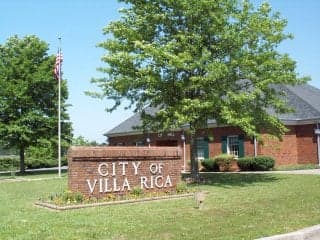
Photo: Wikipedia
Demographics of Villa Rica, GA
Affluence Level in Villa Rica, GA
A middle-class area roughly in line with national averages across income, home values, education, and employment.
People of Villa Rica, GA
The people of Villa Rica, Georgia, today form a community of roughly 17,800 residents defined by its racial and ethnic diversity, a blend of historic Black and white populations with growing Hispanic and Indian communities. The city’s identity is rooted in its Gold Rush origins and small-town Southern character, now layered with suburban expansion from metro Atlanta. With a foreign-born share of 4.4% and a college-educated rate of 26.8%, Villa Rica is a working-to-middle-class city where family-oriented values and community ties remain strong, even as newcomers reshape its demographic landscape.
How the city was settled and grew
Villa Rica’s human history began with the Georgia Gold Rush of the 1830s, when white settlers and enslaved African Americans arrived to mine gold in the area. The city was officially incorporated in 1881, and its early economy centered on gold mining, agriculture, and later the railroad. The original white settlers clustered around the historic downtown district, while the Black population—many descended from enslaved laborers—established roots in neighborhoods like Mirror Lake and the area around Old Douglas Road. By the early 20th century, Villa Rica remained a small, predominantly white and Black farming and mining town, with little immigration from outside the South. The city’s population grew slowly through the mid-20th century, reaching just over 3,000 by 1960, as families stayed tied to local industries like the cotton mill and lumber yards.
Modern era (post-1965)
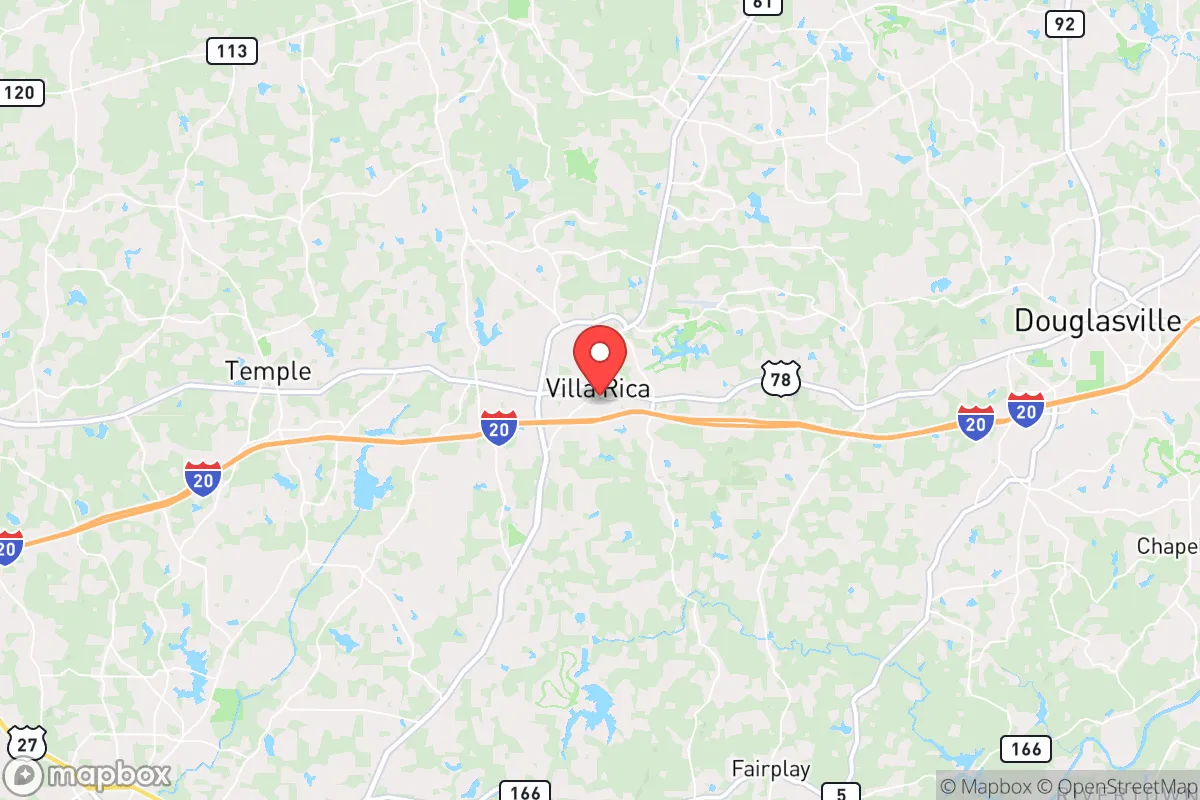
After the 1965 Immigration and Nationality Act, Villa Rica saw limited direct immigration compared to larger metro Atlanta suburbs, but domestic migration accelerated dramatically from the 1990s onward. The expansion of Interstate 20 and the growth of nearby Douglasville and Carrollton turned Villa Rica into a commuter suburb for Atlanta, drawing new residents seeking affordable housing and land. This wave brought a significant influx of Black families from metro Atlanta and other parts of Georgia, settling in newer subdivisions like Fairfield Plantation and The Reserve at Mirror Lake, which expanded the city’s Black population to 42.3% today. White residents, now 38.6% of the population, remain concentrated in older neighborhoods like Historic Downtown and West Villa Rica, while the Hispanic community (8.5%) has grown steadily, with families settling in areas around Hwy 61 and the Villa Rica Station development. The Indian subcontinent population (4.1%) is a newer addition, largely professionals and small business owners drawn by the city’s affordability and proximity to Atlanta’s tech and healthcare sectors, clustering in subdivisions like Chapel Hill and newer developments near the I-20 corridor. East and Southeast Asian residents (1.1%) are a smaller but present group, often living in the same newer subdivisions. This post-1965 period transformed Villa Rica from a biracial Southern town into a multi-ethnic community, though the city remains less diverse than core Atlanta suburbs.
The future
Villa Rica’s population is projected to continue growing, driven by ongoing residential development along the I-20 corridor and the expansion of the Villa Rica Station mixed-use district. The city is becoming slightly more diverse: the Hispanic share is expected to rise as families move from larger metro areas, and the Indian community is likely to grow as professionals seek affordable housing within commuting distance of Atlanta’s job centers. The Black and white populations are stabilizing, with white residents declining as a share due to out-migration to more rural areas and Black residents remaining the largest single group. Newer developments like The Enclave at Mirror Lake and Villa Rica Farms are attracting a mix of young families and retirees, dispersing diversity across the city rather than concentrating it in specific neighborhoods. The city’s cultural identity is evolving from its Gold Rush and small-town roots toward a more suburban, family-oriented character, with a growing emphasis on schools, parks, and community events like the annual Gold Rush Festival. Over the next 10-20 years, Villa Rica will likely become more diverse and more connected to metro Atlanta, while retaining its independent identity as a place where newcomers and long-time residents share a focus on safety, affordability, and community.
For someone moving in now, Villa Rica offers a stable, family-friendly environment with a genuine mix of racial and ethnic groups, a low cost of living, and easy access to Atlanta. The city is becoming more diverse and suburban, but its historic neighborhoods and community traditions provide a sense of place that many newer suburbs lack. It is a place where a family can find a good school district, a reasonable commute, and neighbors from many backgrounds—all within a city that still feels like a small town.

* Values derived from national, state, county, city and local statistics and may differ in a specific area. Last updated: 2026-10-17T00:01:56.000Z
Narrative content on this page is AI-generated and may contain mistakes. Verify any details that matter before acting on them.
ReloMaps may earn a commission from affiliate links at no extra cost to you.

