Photo: Wikipedia
Political ClimatePolitical Climate in Iron County
Showing district-level results — no local-only data available.
Local Political AnalysisPolitical Analysis of Iron County
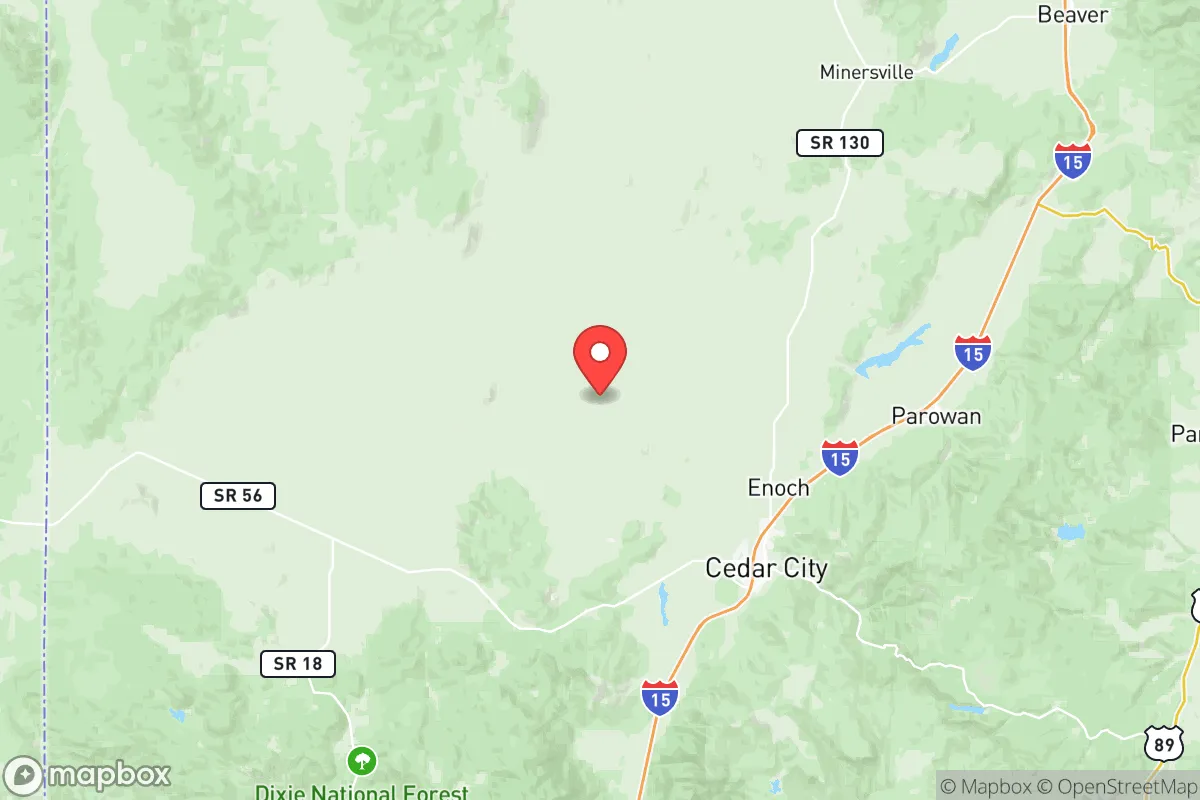
Iron County, Utah, is a reliably conservative area with a Cook Partisan Voting Index (PVI) of R+10, making it slightly less Republican than the state of Utah as a whole, which sits at R+11. This means the county is solidly red, but not quite as deep red as the state average, and that small gap hints at some interesting internal dynamics. The county's political center of gravity is Cedar City, home to Southern Utah University, which introduces a noticeable liberal-leaning influence that you don't find in the more rural, deeply conservative towns like Parowan or Enoch. Over the past decade, the county has held steady in its Republican lean, but the precincts around the university have become more competitive, creating a subtle but real political divide within the county.
How it compares
The R+10 rating for Iron County versus Utah's R+11 means the county is essentially in the same conservative ballpark as the rest of the state, but with a slightly more moderate flavor. The biggest difference is the presence of Cedar City, which acts as a blue dot in a red county. In the 2020 presidential election, the precinct covering the SUU campus and surrounding student housing voted for Joe Biden, while the rest of the county went heavily for Donald Trump. Towns like Parowan and Enoch are reliably deep red, often voting 75-80% Republican, while the more suburban areas of Cedar City, particularly the newer developments on the west side, are more competitive but still lean Republican. This creates a situation where the county's overall vote is never in doubt, but the local dynamics are more nuanced than the simple R+10 number suggests. Compared to the state, Iron County is less influenced by the Wasatch Front's urban-rural split and more defined by the town-versus-gown tension between the university and the surrounding agricultural and ranching communities.
What this means for residents
For conservative residents, Iron County is a comfortable place where their values are the norm. Local government, school boards, and law enforcement are all reliably conservative, and you won't find much pushback on issues like gun rights, property rights, or religious freedom. For liberal residents, the reality is more mixed. In Cedar City, especially near the university, you can find like-minded people and a more tolerant atmosphere, but you'll still be a clear minority. The county's politics mean that progressive policies on things like zoning, environmental regulations, or social issues are unlikely to gain traction at the county level. However, the presence of SUU does create a buffer—Cedar City itself is more moderate than the surrounding towns, and the city council has occasionally shown a willingness to consider more progressive ideas, like expanding public transit or supporting arts funding, that would be dead on arrival in Parowan. For both sides, the practical effect is that local elections matter a lot more than national ones, because the county's national vote is a foregone conclusion.
A key cultural distinction in Iron County is the strong influence of The Church of Jesus Christ of Latter-day Saints, which shapes the political and social landscape more than in many other parts of Utah. This means that policy debates often have a moral or community-wellbeing framing, rather than a purely economic one. For example, the county has been a battleground over alcohol sales and Sunday business hours, with more conservative towns pushing for restrictions while Cedar City has gradually loosened them. Looking ahead, the trajectory is toward a slow, generational shift: as SUU continues to grow and attract students from outside the region, the Cedar City precincts will likely become more competitive, but the rural towns will remain deeply conservative, keeping the county's overall R+10 lean intact for the foreseeable future.

State Political ClimatePolitical Climate in Utah
State Political AnalysisPolitical Environment in the State
Utah is one of the most reliably Republican states in the country, with a Cook Partisan Voting Index of R+11, meaning it votes about 11 points more Republican than the national average. The state hasn't voted for a Democratic presidential candidate since 1964, and Republicans hold every statewide office and supermajorities in both legislative chambers. But that monolithic label hides a more complicated reality: the political climate has shifted noticeably over the last 10-20 years, with the Wasatch Front becoming more competitive, the rural areas digging in deeper, and a growing independent streak emerging, especially among younger voters and the influential Latter-day Saint population.
Urban vs. rural divide
The political map of Utah is essentially a story of two corridors. The Wasatch Front — Salt Lake City, Provo, Ogden, and their suburbs — contains roughly 80% of the state's population and is where the real political action happens. Salt Lake County itself has trended purple over the last decade; it voted for Hillary Clinton in 2016 and Joe Biden in 2020, making it the only county to go Democratic in a presidential race since 1964. Summit County (Park City) and Grand County (Moab) are reliably blue, driven by tourism economies and second-home owners. Meanwhile, Utah County, home to Provo and Brigham Young University, remains deeply conservative but has seen a small but real shift toward Democratic candidates among younger LDS voters, particularly on environmental and immigration issues. Outside the Wasatch Front, the rural counties — San Juan, Carbon, Emery, Beaver — vote Republican by margins of 70-80% or more. The divide isn't just about party; it's about lifestyle. Urban voters tend to prioritize public transit, air quality, and tech economy growth, while rural voters focus on land use, water rights, and federal land management.
Policy environment
Utah's policy environment is shaped by a unique blend of conservative governance and pragmatic Mormon communitarianism. There is no state income tax on Social Security benefits, and the state has a flat income tax rate of 4.65% (down from 5% in 2022). Sales tax is around 6.1% at the state level, with local options pushing it higher. The state has a right-to-work law and is generally pro-business, with low regulatory burdens. Education policy is a hot topic: Utah spends less per pupil than almost any other state, but it also has the youngest population in the country, so the demand is high. School choice is robust, with charter schools and open enrollment widely available. On healthcare, Utah did expand Medicaid under the Affordable Care Act via a 2018 ballot initiative, though the legislature has added work requirements and other restrictions. Election laws are moderately restrictive: voter ID is required, same-day registration is not available, and mail-in voting is universal but requires an active registration. The state has a unique system of caucuses and conventions that can sometimes elevate more conservative candidates over establishment picks.
Recent policy direction
Over the last five years, Utah has moved in a distinctly conservative direction on several fronts, but with some notable exceptions. On gun rights, Utah is a shall-issue state for concealed carry, permits are not required for open carry, and the legislature passed a permitless carry law in 2021. On parental rights and education, the state passed a "Parents' Bill of Rights" in 2023 (HB 363) that gives parents more control over curriculum and library materials, and it banned transgender athletes from competing in girls' sports (HB 11, 2022). On abortion, Utah has a trigger law that bans most abortions after 18 weeks, with exceptions for rape, incest, and maternal health, though it's currently tied up in court challenges. On privacy and surveillance, Utah passed a comprehensive data privacy law (the Utah Consumer Privacy Act) in 2022, giving residents some control over how companies use their data. On property rights, the state has strong protections against eminent domain abuse, but water rights remain a contentious issue as the state grows. On voting access, Utah has universal mail-in voting but also passed a law in 2023 requiring signature verification and limiting ballot drop boxes. The overall direction is toward more individual liberty on economic and gun issues, but with increasing government involvement in social and cultural matters, particularly around education and LGBTQ+ rights.
Civil unrest & political movements
Utah is not known for large-scale civil unrest, but there have been notable flashpoints. The 2020 Black Lives Matter protests in Salt Lake City were large and sustained, drawing thousands of participants and leading to some property damage and clashes with police. The state also saw significant protests around the 2018 Bears Ears National Monument controversy, with both Native American tribes and environmental activists clashing with rural residents and federal land managers. Immigration politics are less heated than in border states, but Salt Lake City and Ogden have sanctuary city policies that limit local cooperation with federal immigration enforcement, which has drawn legislative pushback. There is a small but vocal secessionist movement in rural areas, particularly around the "Greater Idaho" proposal, which would move parts of eastern Utah into Idaho. Election integrity controversies are minimal compared to other states, but there was a brief controversy in 2020 when the state's Republican Party chair claimed fraud without evidence. Overall, the political climate is less confrontational than in many states, partly due to the influence of the LDS Church, which encourages civic engagement but also discourages extreme partisanship.
Projection
Over the next 5-10 years, Utah's political climate will likely become more competitive, but not necessarily more Democratic. The state is growing fast — it added over 500,000 people between 2010 and 2020 — and many new arrivals are from California and other blue states, bringing more moderate or libertarian-leaning views. The Wasatch Front will continue to trend purple, especially in Salt Lake County and Summit County, while rural areas will remain deeply red. The LDS Church's influence may moderate some of the more extreme cultural policies, as younger members are less conservative on issues like immigration and environmental protection. However, the state's Republican supermajority is unlikely to be seriously threatened in the near term, given the structural advantages of the caucus-convention system and the fact that many new residents are still conservative, just not as conservative as the current leadership. Expect continued fights over water, growth, and education funding, with the state likely to become more libertarian on economic issues and more divided on social ones.
For a new resident, the bottom line is this: Utah is a safe, well-governed state with low taxes and a strong economy, but the political climate is shifting. If you're a conservative, you'll find a welcoming environment with plenty of room for your views, but you'll also encounter a growing independent streak and a younger generation that doesn't always toe the party line. If you're a liberal, you'll find blue enclaves in Salt Lake City, Park City, and Moab, but you'll be living in a state where your vote has limited impact on statewide races. The practical takeaway: Utah is a place where politics matters less in daily life than in many other states, but the direction of travel is toward more competition and more complexity, not less.
* Values derived from national, state, county, city and local statistics and may differ in a specific area. Last updated: 2026-07-24T22:25:59.000Z
Narrative content on this page is AI-generated and may contain mistakes. Verify any details that matter before acting on them.
ReloMaps may earn a commission from affiliate links at no extra cost to you.

