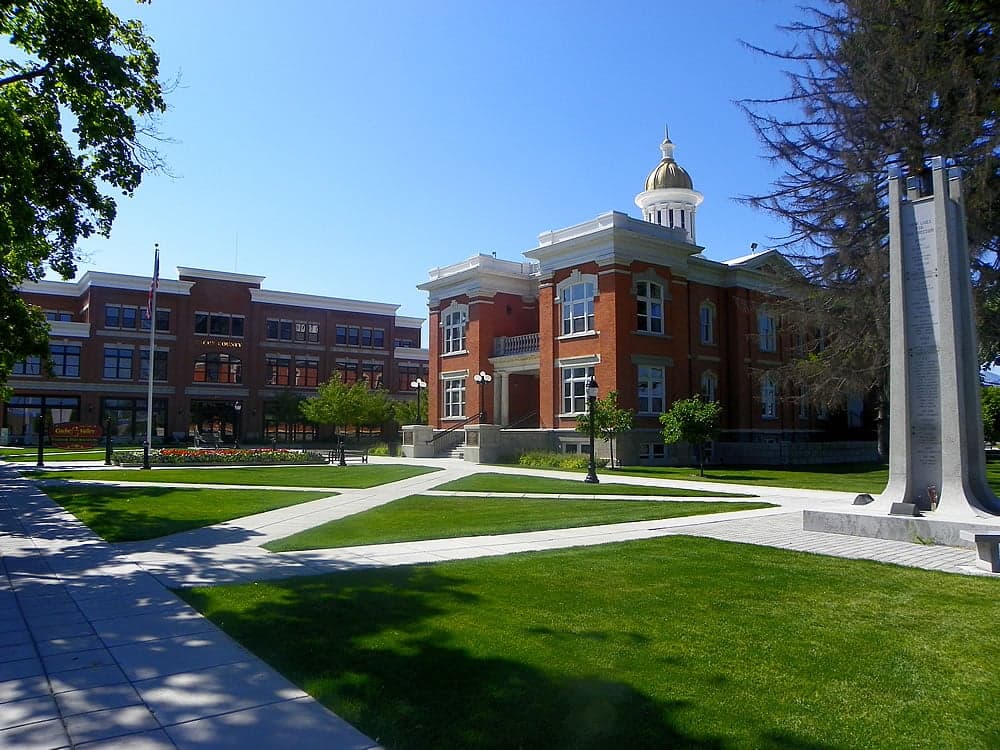
Photo: Wikipedia
Personal Sovereignty in Cache County
Viable for self-reliance. Generally workable, though some barriers may limit total independence.
What does Personal Sovereignty tell us?
Personal Sovereignty measures your capacity for self-reliance and independence with minimal government friction. Higher scores mean fewer barriers between you and the way you want to live... but it assumes you have the space you need and good neighbors.
What does this tell us?
Personal Sovereignty measures your capacity for self-reliance and independence with minimal government friction. Higher scores mean fewer barriers between you and the way you want to live... but it assumes you have the space you need and good neighbors.
State Policy
Energy independence: Self-sufficient (80% of energy produced in-state)
Personal Liberty
Homesteading

Personal Liberty Analysis
Cache County, Utah, offers a notably high degree of personal sovereignty, grounded in a state-level political culture that prioritizes limited government, local control, and individual responsibility. While the county is not a regulatory free-for-all, its tax burden is low, its gun laws are among the most permissive in the nation, and its zoning in unincorporated areas and smaller towns allows for significant self-reliance. For single individuals and families who value autonomy over convenience, Cache County presents a compelling balance of freedom and community structure, though the degree of sovereignty varies noticeably between the urbanized Logan Valley and the more rural outlying communities like Hyde Park, Smithfield, Richmond, and Paradise.
Tax burden and regulatory posture in Cache County
Utah's state-level tax structure is a major draw for sovereignty-minded relocators. There is no state property tax; instead, property taxes are levied at the county and municipal level, with Cache County's combined rate averaging around 0.6% of assessed value — well below the national average. The state income tax is a flat 4.65%, and sales tax in Cache County is approximately 6.85% (combining state, county, and local rates). Regulatory posture is generally light-touch, particularly in unincorporated areas and smaller towns like Richmond and Trenton, where business licensing is minimal and home-based enterprises face fewer hurdles than in the county seat, Logan. Logan itself has more zoning and permitting requirements, especially around new construction and short-term rentals, but still operates within a state framework that preempts many local ordinances on land use and business regulation. The overall environment is one of low friction for those who want to work, build, or trade without excessive bureaucratic overhead.
Self-defense and gun law specifics in Cache County
Utah is a constitutional carry state, meaning no permit is required to carry a concealed firearm for anyone 21 or older who is legally allowed to possess a gun. Cache County fully reflects this permissive environment. There are no county-level gun registration or waiting period laws, and the state preempts local governments from enacting stricter ordinances than state law. Open carry is legal without a permit. The county sheriff's office in Logan processes concealed firearm permits (still useful for reciprocity in other states) with a typical turnaround of under 60 days. Gun culture is strong across the county, with multiple shooting ranges and gun shops in Logan, North Logan, and Providence. Stand-your-ground laws apply statewide, and there is no duty to retreat in any place where a person is lawfully present. For families and individuals who view firearm ownership as a core personal liberty, Cache County offers one of the most straightforward legal environments in the Intermountain West.
Self-reliance and homesteading viability in Cache County
Homesteading and off-grid living are viable in Cache County, but feasibility depends heavily on location. In the unincorporated areas and smaller towns like Paradise, Cove, and Clarkston, minimum lot sizes of 1 to 5 acres are common, and agricultural zoning allows for livestock, gardens, and outbuildings with minimal permitting. Off-grid utilities are legally permissible in unincorporated areas, though most residents connect to the grid for convenience. The county does not require a building permit for structures under 200 square feet, making small sheds, workshops, or tiny homes feasible on rural parcels. In contrast, Logan and its immediate suburbs like Hyde Park and Smithfield have stricter zoning, with minimum lot sizes often under 0.25 acres and more restrictive rules on accessory dwelling units and livestock. Water rights are a practical consideration — new wells require a permit from the Utah Division of Water Rights, and some areas near the Bear River Range have limited groundwater availability. Overall, the rural fringe of Cache County offers genuine self-reliance potential, while the urban core is more suited to those who want freedom within a conventional suburban framework.
Personal liberties in Cache County
Parental rights are strongly protected under Utah state law, which includes a statutory presumption that parents act in their child's best interest and a requirement that schools obtain parental consent before administering surveys or providing medical services. Medical autonomy is similarly robust: Utah has no state-level vaccine mandate for adults, and while school immunization requirements exist, philosophical exemptions are available. Free speech and property rights are well-guarded; the state has a right-to-farm law that protects agricultural operations from nuisance lawsuits, and property owners in unincorporated areas face few restrictions on land use. The county's political culture leans heavily conservative, which aligns with the priorities of most sovereignty-focused relocators. However, those with non-mainstream views on medical choices or education should note that social conformity in smaller communities like Richmond and Lewiston can be strong, even if the legal framework is permissive.
Compared to other regions in the United States, Cache County ranks among the top tier for personal sovereignty, particularly for those who value low taxes, strong gun rights, and the ability to live self-sufficiently on rural land. The county's regulatory environment is lighter than most of the Wasatch Front (Salt Lake City, Provo) and far more permissive than coastal states like California or Oregon. For families and individuals who prioritize autonomy and are willing to accept the trade-offs of rural living — fewer services, longer commutes, and social homogeneity — Cache County offers a coherent and legally supportive framework for a self-directed life.

* Values derived from national, state, county, city and local statistics and may differ in a specific area. Last updated: 2026-07-02T19:42:15.000Z
Narrative content on this page is AI-generated and may contain mistakes. Verify any details that matter before acting on them.
ReloMaps may earn a commission from affiliate links at no extra cost to you.

