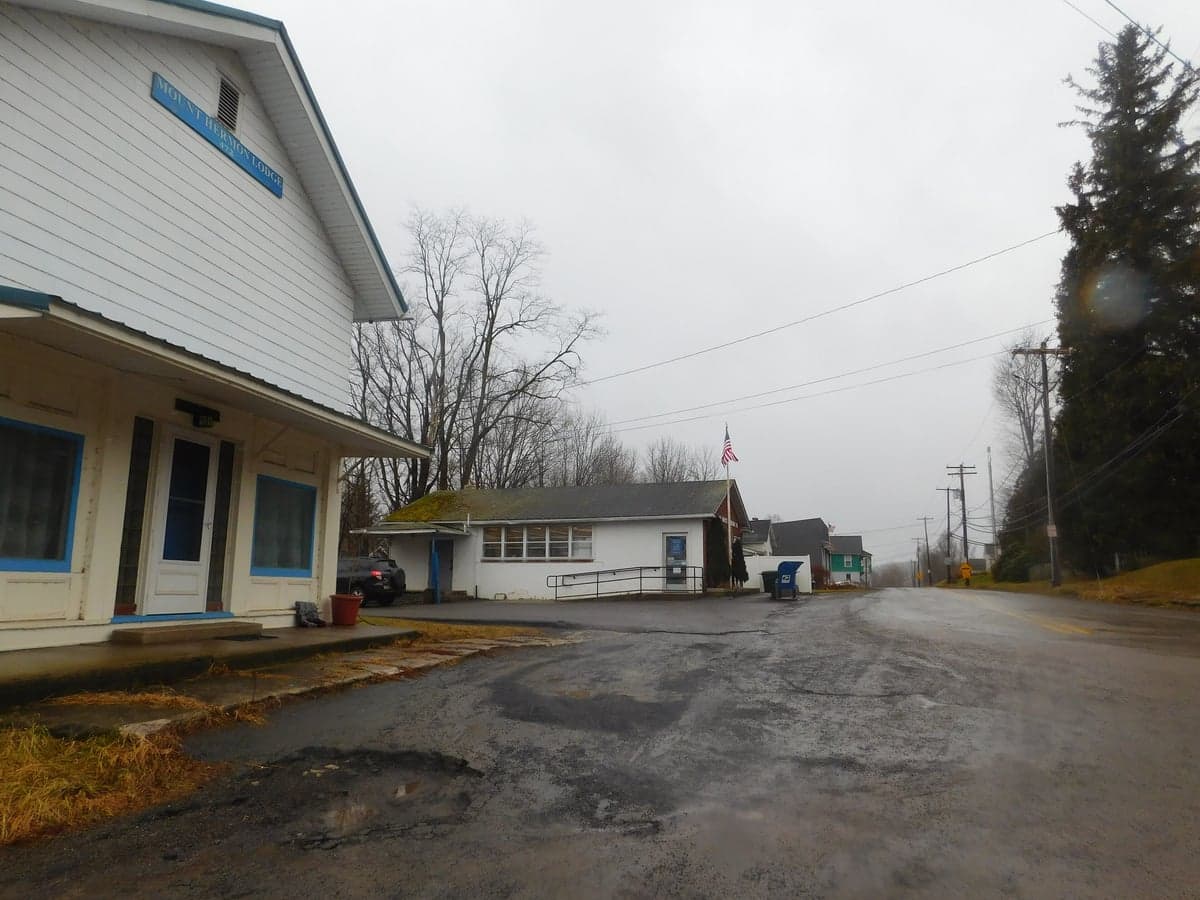
Photo: Wikipedia
Quality of Life in Union Dale, PA
A high quality of life with strong walkability, manageable living costs, healthy neighborhood signals, and solid amenity access.
What does Quality of Life tell us?
Quality of Life blends cost of living, nearby amenities, socioeconomic signals, and neighborhood character. City-level scores represent the whole municipality; individual neighborhoods can differ.
What does this tell us?
Quality of Life blends cost of living, nearby amenities, socioeconomic signals, and neighborhood character. City-level scores represent the whole municipality; individual neighborhoods can differ.
Cost of Living
16% below national average
The Real Cost of Living in Union Dale, PA for 2026
| Tier | Individual | Family (4) |
|---|---|---|
| Survival | $19k | $35k |
| Comfortable | $33k | $48k |
| Luxury | $78k+ | $121k+ |
| Elite (Top 5%) | $92k+ | $142k+ |
111%
* median rent substituted from state-level data — local Census figures unavailable for small populations
The Area Signal
A metric tracking the socioeconomic signals of the area.
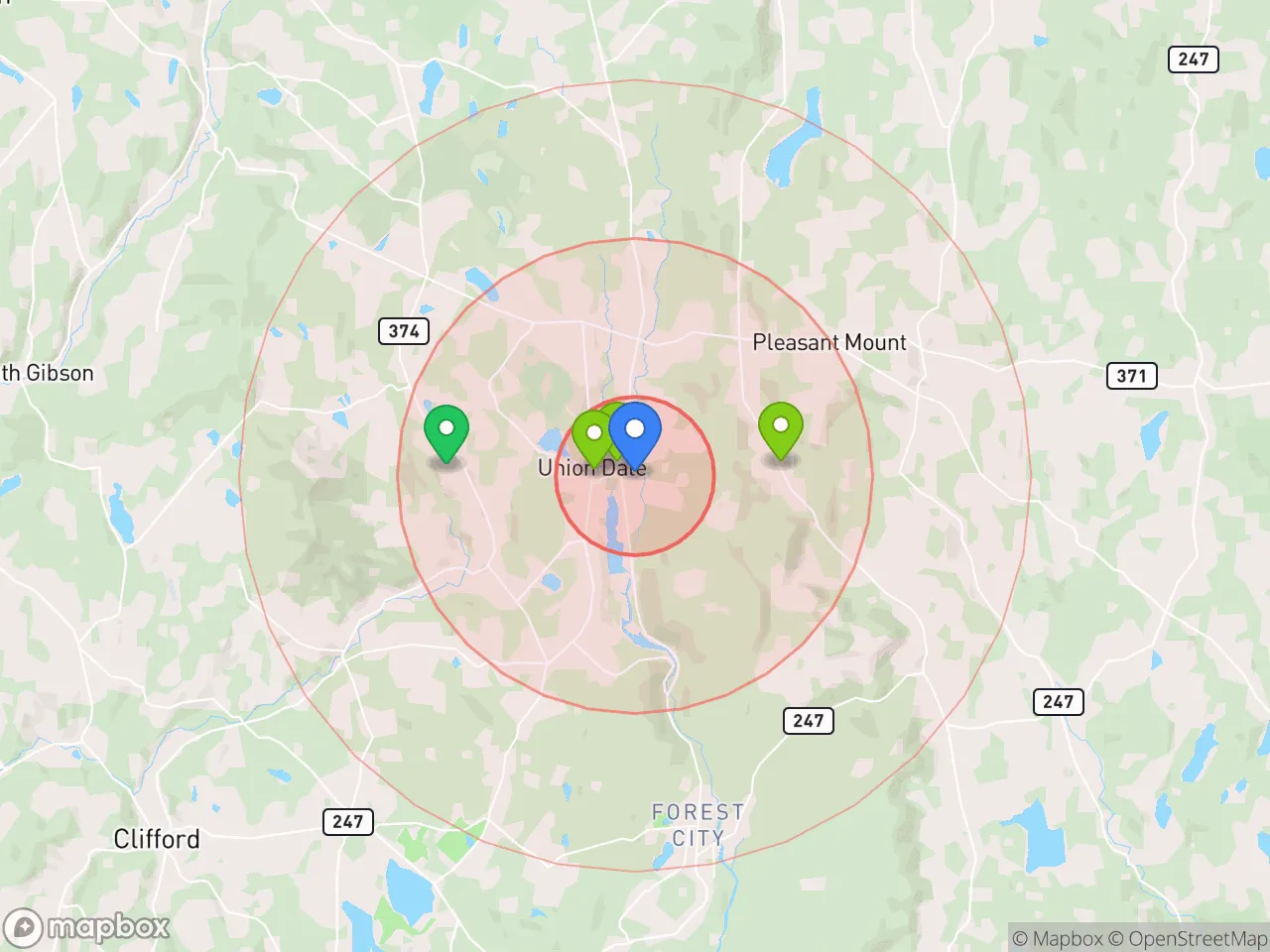
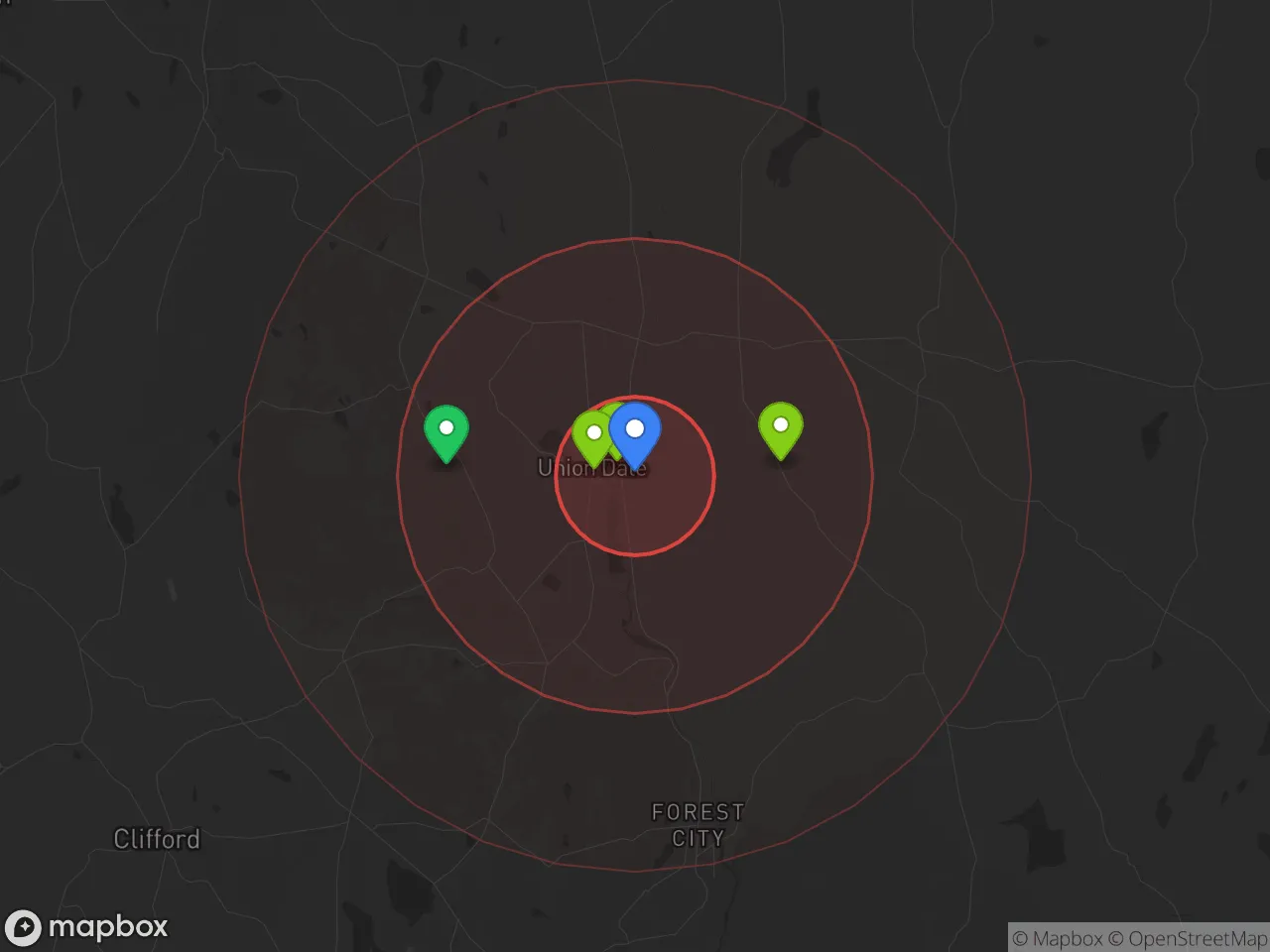
Hobbies
Explore the areaGroceries
0 within 10 miles
Gas
0 within 10 miles
Hospital
0 within 20 miles
Airport
EWR — Newark Liberty International
Post Office
Critical Amenities
Quality-of-Life Analysis
Union Dale, Pennsylvania, offers a notably affordable quality of life in the heart of Susquehanna County, with a cost of living index of 84 — a full 16 points below the national average of 100. The area attracts a mix of long-established farming families, remote workers seeking rural space, and retirees drawn to the Endless Mountains region. With a median home value of $168,800 and median rent of $1,162, Union Dale sits in a sweet spot for buyers and renters priced out of Scranton's closer suburbs or the higher-tax counties to the east.
How housing costs and everyday expenses compare to nearby towns
Union Dale's housing market is substantially more accessible than the broader Northeast Pennsylvania corridor. The median home value of $168,800 runs roughly 30% below the national median, and it undercuts nearby Forest City (around $145,000) while remaining cheaper than Carbondale's typical listings near $190,000. Renters fare equally well: the $1,162 median rent is about 15% under the U.S. average, and it beats comparable two-bedroom units in Scranton by $200–$300 per month. Property taxes in Susquehanna County hover near 1.4% of assessed value, which is moderate for Pennsylvania but slightly higher than neighboring Wyoming County — a factor worth weighing when comparing long-term ownership costs.
Daily expenses follow the same pattern. Groceries and utilities in Union Dale run roughly 10–12% below national averages, largely because the region lacks the metropolitan markup seen in Wilkes-Barre or Allentown. The trade-off is transportation: the average commute of 26.6 minutes reflects the rural geography, with most workers driving to jobs in Carbondale, Scranton, or the I-81 corridor. Gas and vehicle maintenance eat into some of the savings, so households should budget accordingly.
What daily life is like for families, schools, and local amenities
Union Dale is a small borough — roughly 300 residents — so daily life revolves around the surrounding communities. The Forest City Regional School District serves the area, with an elementary-to-high-school enrollment near 1,100 and a student-teacher ratio of about 13:1, which is better than the state average. For shopping and services, residents drive 10 minutes to Forest City for groceries and hardware, or 25 minutes to Carbondale for big-box retail and medical offices. The nearest full-service hospital, Wayne Memorial in Honesdale, is a 35-minute drive.
Outdoor life defines the rhythm here. The nearby Lackawanna State Forest and Elk Mountain Ski Area (about 20 minutes away) anchor recreation, while the D&H Rail-Trail offers flat, car-free biking and walking routes through the valley. Community anchors are modest but functional: a borough park, a volunteer fire company, and seasonal events like the Forest City Fall Festival. Internet access is improving — fiber service from local provider Pioneer Broadband now reaches parts of the borough — which has quietly made Union Dale viable for remote workers who don't need a daily commute.
Who will thrive in Union Dale
Union Dale suits buyers and renters who prioritize space, low overhead, and outdoor access over urban convenience. Remote workers with flexible schedules will find the 26-minute average commute irrelevant, while commuters to Scranton or Wilkes-Barre should accept the drive as part of the bargain. Families will appreciate the small school district and safe streets, though they should plan for longer trips to pediatric specialists and entertainment venues. Retirees on fixed incomes will find the cost of living especially forgiving — the 84 COL index means a $50,000 annual budget here stretches like $60,000 in a typical American metro. The trade-offs are real: limited dining, sparse nightlife, and a 45-minute minimum drive to a major airport. But for those who see those as features rather than flaws, Union Dale delivers a quiet, financially sustainable base in the Endless Mountains.

Crime in Union Dale, PA
Generally safer than 57% of comparable U.S. locations.
Violent CrimeViolent Crime Analysis
Property CrimeProperty Crime Analysis
Crime Analysis
Union Dale, a small borough in Susquehanna County, Pennsylvania, presents a mixed safety picture: its violent crime rate of 223.2 incidents per 100,000 residents is notably lower than the national average, but its property crime rate of 1,332 per 100,000 sits above both state and national benchmarks. The community of roughly 250 residents faces a dynamic where serious violent offenses are rare, yet theft and property-related incidents occur at a frequency that warrants attention. Because Union Dale is a rural borough rather than a dense urban center, its crime profile is shaped more by regional economic pressures and proximity to larger corridors than by the concentrated urban crime patterns seen in major cities.
Crime in context
Union Dale’s violent crime rate of 223.2 per 100,000 is approximately 36% lower than the national average of roughly 380 per 100,000, and it also trails the Pennsylvania statewide average of about 300 per 100,000. This means that for a typical year, a borough this size would expect fewer than one violent crime—assault, robbery, or rape—making random violent victimization statistically unlikely. However, the property crime rate of 1,332 per 100,000 is roughly 15% higher than the national average and about 20% higher than the Pennsylvania average. In practical terms, that translates to roughly three to four property crimes per year in Union Dale itself, with burglary and motor vehicle theft being the most commonly reported categories. The borough’s location along U.S. Route 6, a regional thoroughfare connecting Scranton to Binghamton, New York, contributes to transient traffic that can drive opportunistic property crime.
What residents experience
Residents of Union Dale describe a community where violent crime is essentially a non-factor in daily life, but where property crime—particularly theft from unlocked vehicles, sheds, and outbuildings—is a recurring annoyance. The borough’s low population density means that most incidents are isolated and often tied to known individuals rather than organized criminal activity. Policing is handled by the Pennsylvania State Police from the Gibson Barracks, a coverage model common across rural Susquehanna County that can mean slower response times than in municipal departments. For context, the broader Susquehanna County violent crime rate is approximately 180 per 100,000, reinforcing that Union Dale’s violent crime is slightly above its rural peers but still far below urban centers. Residents typically mitigate risk through basic precautions: locking vehicles, installing motion-sensor lighting, and maintaining visibility from the road, as the borough has no formal neighborhood watch program.
Neighborhood-level variation
Neighborhood-level variation in Union Dale is minimal given the borough’s small geographic footprint—roughly one square mile. The most notable difference is between the commercial corridor along Main Street (U.S. Route 6), where transient-related property incidents are slightly more common, and the residential side streets off the highway, which see almost no reported crime. The surrounding townships of Clifford and Scott, which ring the borough, have even lower crime rates, with property crime around 900 per 100,000, making the immediate countryside safer than the borough core. Prospective residents should note that while Union Dale itself is not a high-crime area, its property crime rate is elevated relative to its rural setting, and the absence of a local police department means self-reliance and neighborly communication are the primary safety tools available.
* Values derived from national, state, county, city and local statistics and may differ in a specific area. Last updated: 2026-11-01T22:27:26.000Z
Narrative content on this page is AI-generated and may contain mistakes. Verify any details that matter before acting on them.
ReloMaps may earn a commission from affiliate links at no extra cost to you.

