Photo: Wikipedia
Political ClimatePolitical Climate in Tumwater, WA
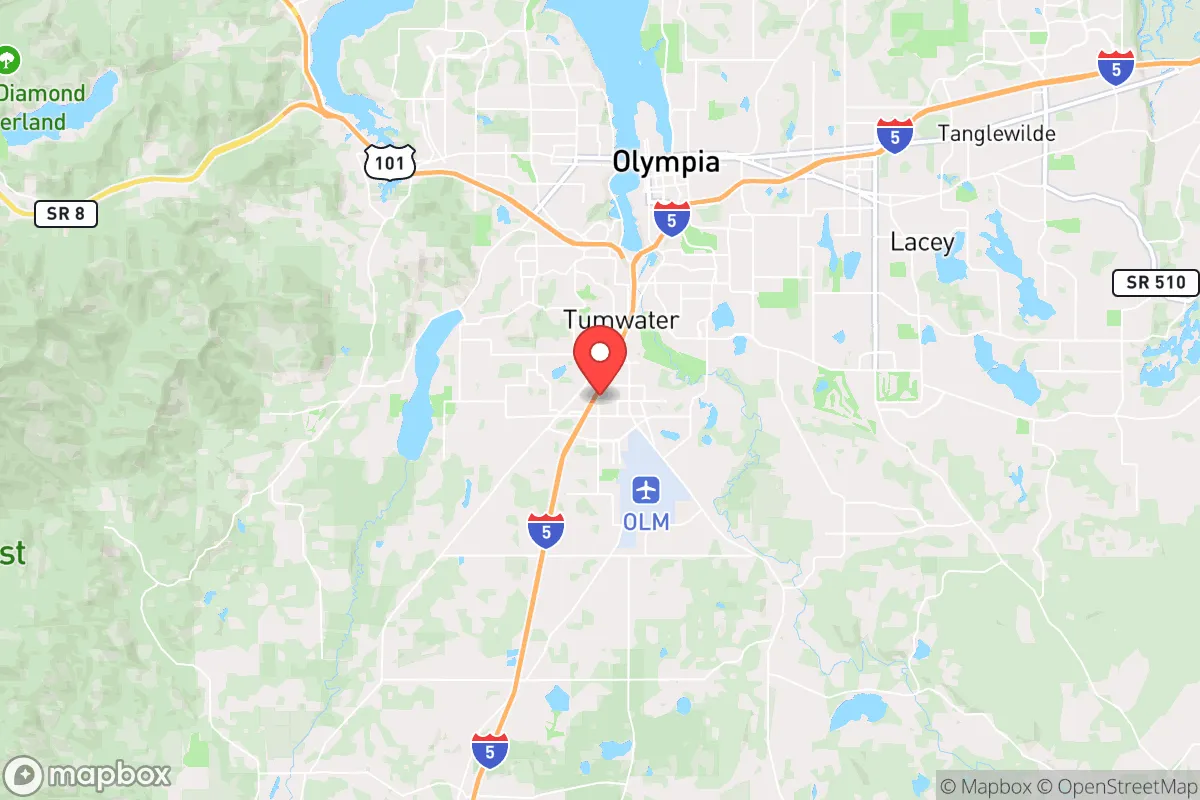
District shown is the primary district for this city’s centroid. Cities may span multiple districts.
Local Political AnalysisPolitical Analysis of Tumwater, WA
Tumwater, Washington, leans solidly Democratic, with a Cook Partisan Voting Index of D+9, meaning the area votes about nine points more Democratic than the national average. That’s a pretty reliable blue lean, but it’s not the whole story. The city sits in Thurston County, which has been trending left for years, but the political reality here is more nuanced than a single number suggests—especially when you compare it to the rest of Washington state, which is also reliably Democratic but with a much wider range of local flavors.
How it compares
Washington state as a whole is a blue state, but its political geography is starkly divided. The western side, especially the I-5 corridor from Seattle down to Olympia, is heavily Democratic, while eastern Washington—places like Spokane, Yakima, and the Tri-Cities—votes just as reliably Republican. Tumwater’s D+9 puts it squarely in the moderate-to-liberal camp of the Puget Sound region, but it’s noticeably less progressive than its neighbor Olympia, which is the state capital and home to a more activist, government-worker-heavy electorate. Drive 15 minutes south to Tenino or Bucoda, and you’ll hit small towns that lean conservative, with Trump signs still common in yards. That contrast is sharp and real. Tumwater itself feels like a middle ground: a working-class suburb with a mix of state employees, tradespeople, and retirees, where you’re as likely to see a Biden sticker on a Prius as a “Don’t Tread on Me” flag on a pickup. The D+9 rating reflects that balance—it’s blue, but not deep blue.
What this means for residents
For liberal residents, Tumwater is a comfortable place to live politically. Local elections are reliably won by Democrats, and the city council and school board tend to reflect progressive priorities on issues like affordable housing, environmental protections, and public transit. You’ll find community support for climate action and social services, and the nearby state government in Olympia amplifies that culture. For conservative residents, the picture is more mixed. You won’t feel isolated—there are plenty of like-minded neighbors, especially if you head south or east—but you’ll likely be in the minority in local politics. That can mean frustration with tax policies or land-use regulations that feel tilted toward urban priorities. That said, the political climate here is generally civil. People tend to keep things neighborly, and the local economy—heavily tied to state government, healthcare, and logistics—means most folks are focused on practical concerns like jobs and schools rather than ideological battles. The trajectory is toward a slow, steady leftward shift, driven by in-migration from more expensive parts of the West Coast, but it’s not a rapid transformation.
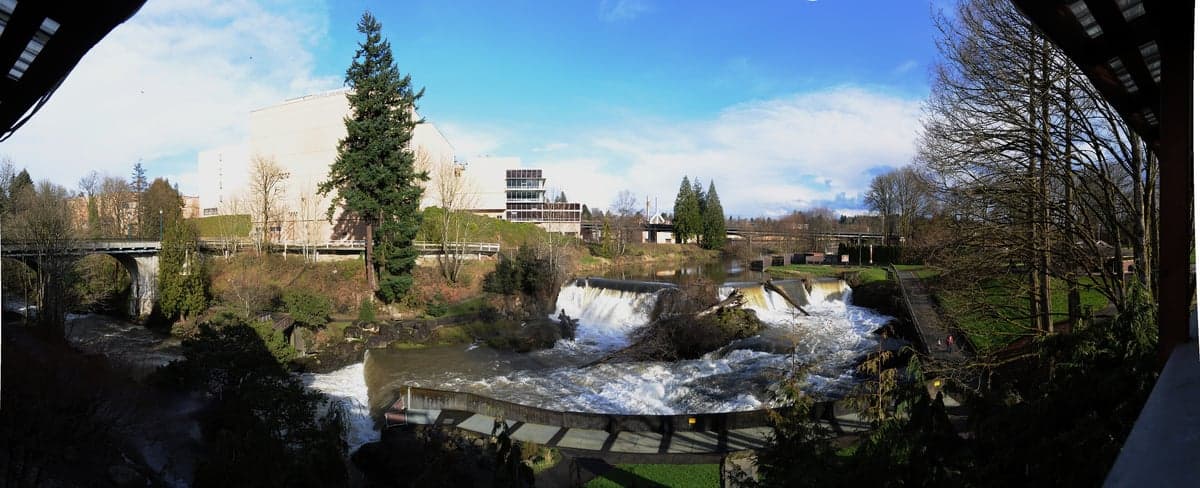
Culturally, Tumwater stands out for its strong sense of local identity tied to the Deschutes River and the historic brewery district. Policy-wise, the city has been proactive on growth management, which is a big deal here—there’s a real tension between preserving the small-town feel and accommodating new development. That’s a debate that cuts across party lines, with both conservatives and liberals wary of overdevelopment, though for different reasons. If you’re moving here, expect a community that votes blue but values its independence, where the state capital’s politics loom large but don’t completely define daily life. It’s a place where you can have a reasonable conversation about taxes or growth with your neighbor, even if you disagree on the national stuff.

State Political ClimatePolitical Climate in Washington
State Political AnalysisPolitical Environment in the State
Washington state has been a reliably Democratic stronghold for over a decade, but its politics are far more complex than the "deep blue" label suggests. The state has not voted for a Republican presidential candidate since 1984, and Democrats currently hold all statewide executive offices and both U.S. Senate seats. However, the political trajectory over the last 20 years shows a state that is splitting along geographic and cultural lines — the Seattle metro area and its suburbs have pulled the state sharply left, while vast rural and exurban regions have become increasingly conservative, creating one of the most polarized political landscapes in the country.
Urban vs. rural divide
The political map of Washington is essentially a tale of two states. King County (Seattle) alone accounts for roughly 30% of the state's total vote, and it consistently delivers margins of 70-80% for Democratic candidates. Add in the neighboring counties of Snohomish (Everett), Pierce (Tacoma), and Thurston (Olympia), and the I-5 corridor from Seattle south to the capital forms an unbroken blue wall. Meanwhile, the eastern half of the state — places like Spokane, Yakima, and the Tri-Cities (Kennewick, Pasco, Richland) — votes reliably Republican, often by 20-30 point margins. The real battlegrounds are the suburban "collar counties" like Clark County (Vancouver) and Kitsap County (Bremerton), which have trended blue in recent cycles as Portland and Seattle exurbs fill with remote workers. A relocator considering Spokane Valley or Wenatchee will find a very different political culture than someone looking at Bellevue or Redmond.
Policy environment
Washington's policy environment is defined by a few distinctive features that directly affect daily life. The state has no personal income tax, which is a major draw for high earners, but it compensates with some of the highest sales taxes in the nation (state rate 6.5%, but local add-ons push it to 10%+ in many cities) and high property taxes in growing areas. The regulatory posture is generally business-friendly in name but heavily environmental in practice — the State Environmental Policy Act (SEPA) can delay or kill development projects, and the Growth Management Act forces cities to plan for density. On education, Washington funds its public schools through a state-level levy system that has been repeatedly litigated (the McCleary decision), and while per-pupil spending is above average, outcomes vary wildly between wealthy Seattle suburbs and rural districts. Healthcare is dominated by the state's own exchange (Washington Healthplanfinder), and the state has expanded Medicaid. Election laws are among the most accessible in the country: all elections are conducted by mail, same-day voter registration is available, and ballots are automatically sent to all registered voters.
Recent policy direction
The last five years have seen Washington move decisively left on a range of issues that matter to relocators. On gun and self-defense law, the state passed a ban on certain semi-automatic firearms (HB 1240) in 2023, a high-capacity magazine ban, and a requirement for a 10-day waiting period and safety training for purchases — making it one of the strictest states in the West. Parental and education rights have been a flashpoint: the state requires schools to adopt policies supporting transgender students' chosen names and pronouns without parental notification, and a 2024 law (SB 5462) limits school districts' ability to notify parents about a child's gender identity. On medical and bodily autonomy, Washington has codified abortion access into state law, protects providers from out-of-state lawsuits, and allows minors to consent to certain reproductive care without parental involvement. Property rights are constrained by the Growth Management Act and recent climate legislation that restricts natural gas in new construction. Taxation remains income-tax-free, but a 2023 capital gains tax (7% on gains over $250,000) was upheld by the state Supreme Court and is being used to fund education. Voting and ballot access has been expanded with automatic voter registration and universal mail-in ballots, though Republicans have raised concerns about ballot security in rural counties.
Civil unrest & political movements
Washington has a visible and active protest culture, particularly in Seattle and Portland's satellite cities like Vancouver. The 2020 CHOP/CHAZ protests in Seattle's Capitol Hill neighborhood drew national attention, and the city has since seen ongoing debates over police funding and public safety. On the right, the state has a well-organized network of gun rights activists and property rights advocates, particularly east of the Cascades. Immigration politics are defined by the state's sanctuary law (2019's Keep Washington Working Act), which limits local law enforcement cooperation with federal immigration authorities — a policy that has caused friction between King County and more conservative jurisdictions like Yakima County. There have been periodic secessionist murmurs from eastern Washington (the "Liberty State" movement), but they remain fringe. Election integrity controversies flared after 2020, with some rural counties calling for hand-count audits, but the state's mail-in system has generally been accepted as secure by both parties in practice.
Projection
Over the next 5-10 years, Washington's political trajectory points toward continued Democratic dominance at the state level, but with growing internal friction. In-migration from California and other high-cost states is accelerating the blue shift in the Seattle suburbs and in Clark County, while eastern Washington's population growth (especially in Spokane and the Tri-Cities) is more moderate and leans conservative. The state's tax structure is likely to see further evolution — a wealth tax or expanded capital gains tax is a real possibility as the legislature seeks revenue for housing and climate programs. The rural-urban cultural divide will probably widen, with more counties passing symbolic "Second Amendment sanctuary" resolutions and school board battles intensifying over parental rights and curriculum. A relocator moving to Washington now should expect that statewide politics will remain firmly Democratic, but that local political culture will vary enormously depending on whether they settle in a King County suburb, a Columbia River exurb, or an eastern Washington farming community.
For a new resident, the practical takeaway is that Washington offers a high degree of personal autonomy on some fronts (no income tax, mail-in voting, strong privacy laws) but significant government regulation on others (gun ownership, property development, energy choices). Conservatives will find welcoming communities east of the Cascades and in some exurban pockets, but will be living under a state government that is actively moving in the opposite direction on most cultural and economic issues. Liberals will find the state's policy environment broadly aligned with their values, but should be prepared for high housing costs and a political landscape that is far from monolithic. The best advice is to choose your specific city or town carefully — the political experience of living in Bellingham versus Walla Walla is as different as living in two different states.
* Values derived from national, state, county, city and local statistics and may differ in a specific area. Last updated: 2026-10-11T16:28:51.000Z
Narrative content on this page is AI-generated and may contain mistakes. Verify any details that matter before acting on them.
ReloMaps may earn a commission from affiliate links at no extra cost to you.

