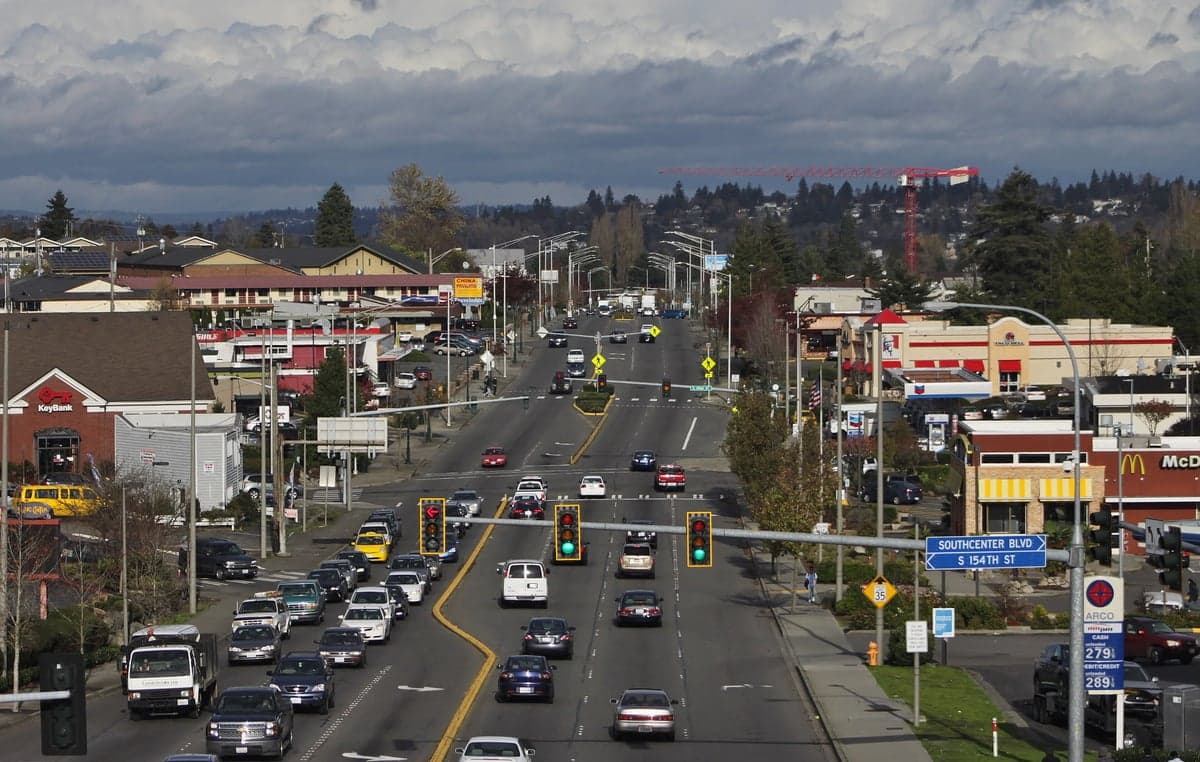
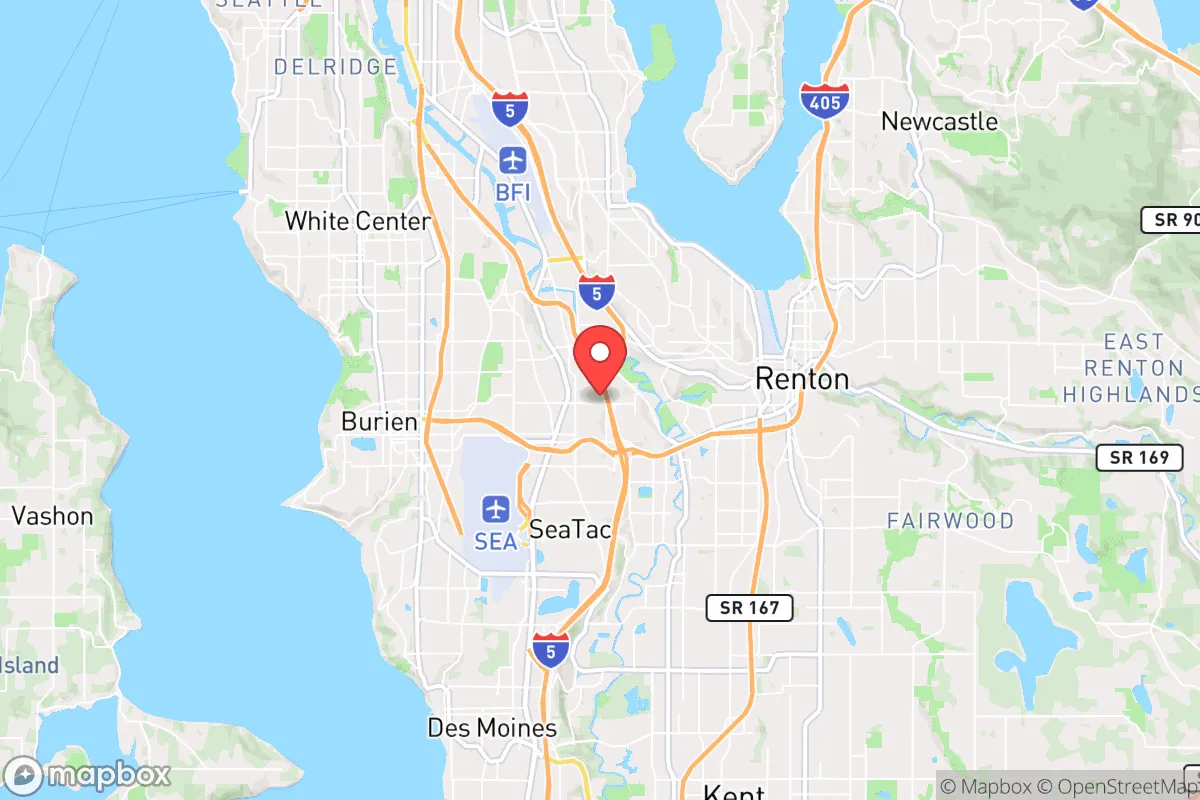
Photo: Wikipedia
Quality of Life in Tukwila, WA
Above-average quality of iife. The area offers a reasonable cost of living, decent mobility, and a mix of neighborhood amenities.
What does Quality of Life tell us?
Quality of Life blends cost of living, nearby amenities, socioeconomic signals, and neighborhood character. City-level scores represent the whole municipality; individual neighborhoods can differ.
What does this tell us?
Quality of Life blends cost of living, nearby amenities, socioeconomic signals, and neighborhood character. City-level scores represent the whole municipality; individual neighborhoods can differ.
Cost of Living
58% above national average
The Real Cost of Living in Tukwila, WA for 2026
| Tier | Individual | Family (4) |
|---|---|---|
| Survival | $29k | $54k |
| Comfortable | $84k | $123k |
| Luxury | $123k+ | $190k+ |
| Elite (Top 5%) | $145k+ | $224k+ |
65%
The Area Signal
A metric tracking the socioeconomic signals of the area.
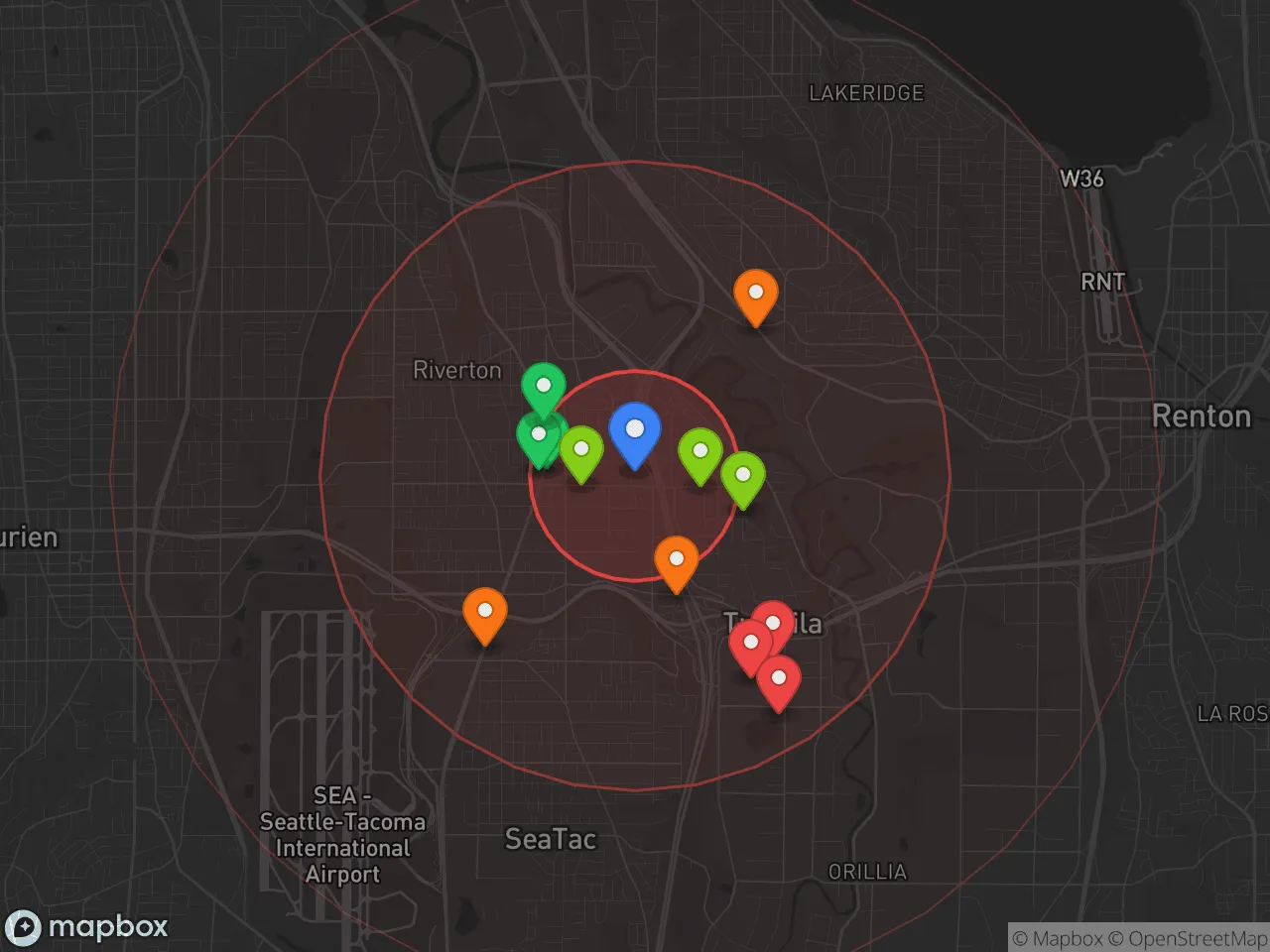
Hobbies
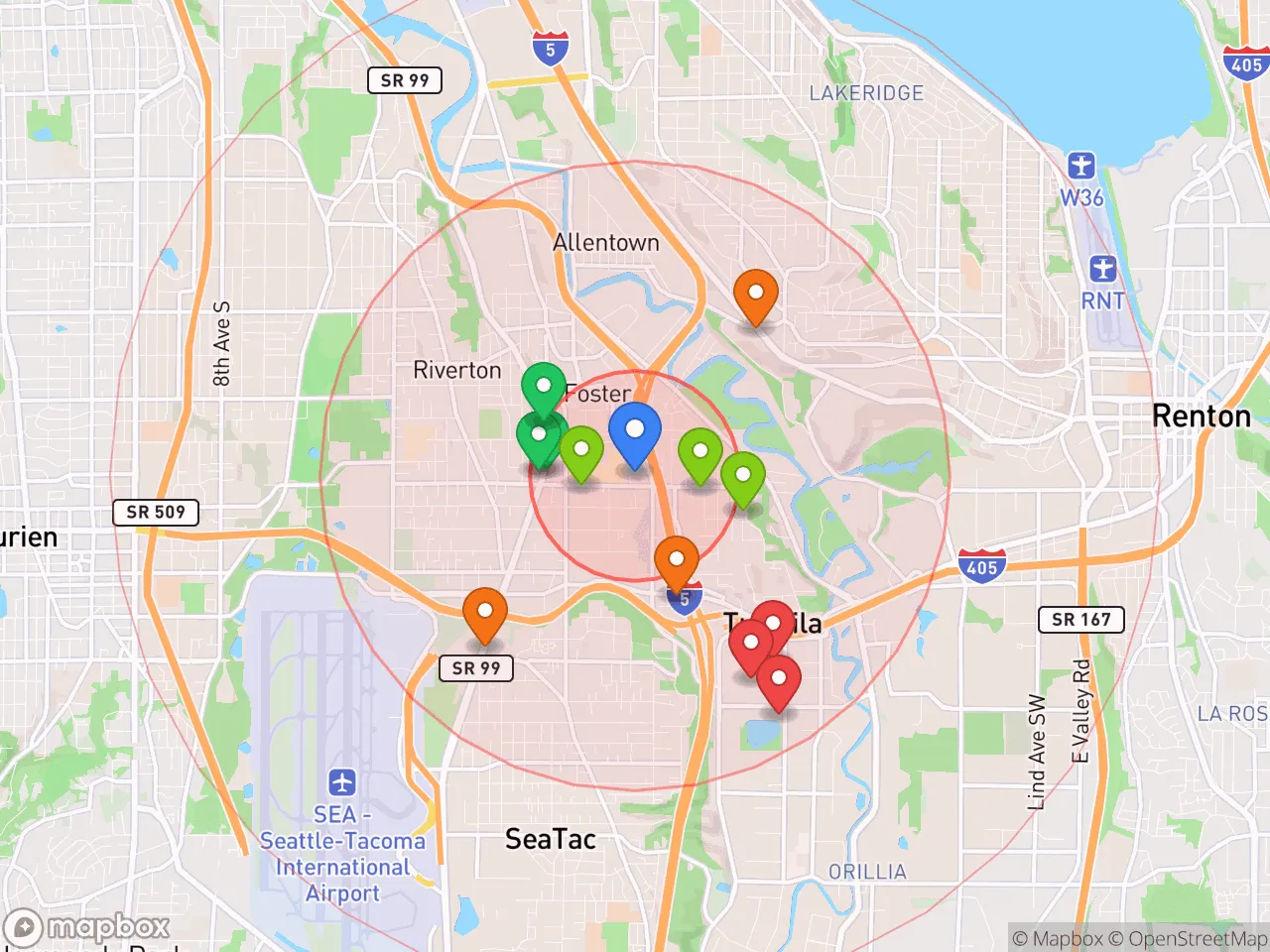
Explore the areaGroceries
7 within 10 miles
Gas
20 within 10 miles
Hospital
20 within 20 miles
Airport
SEA — Seattle–Tacoma International
Post Office
USPS — Seatac, WA
Critical Amenities
Quality-of-Life Analysis
Tukwila, Washington, presents a distinctive quality-of-life profile within the Seattle metropolitan area, blending moderate affordability with the logistical advantages of a major transportation hub. The city's cost of living index of 158 (58% above the U.S. average) places it well below Seattle proper yet notably higher than many national averages, attracting a mix of airport employees, logistics workers, and families seeking relative value near the urban core. The population skews younger and more diverse than the surrounding region, with a significant number of residents working in aviation, warehousing, and retail sectors that anchor the local economy.
Cost of living and housing affordability compared to Seattle and Renton
Tukwila’s housing market offers a rare affordability foothold in King County. The median home value of $462,800 is roughly half the King County median and significantly undercuts nearby cities like Seattle ($850,000+) and Bellevue ($1.3M+). Median rent of $1,786 is also substantially lower than Seattle’s average of $2,100+, making Tukwila one of the more attainable rental markets within a 15-mile radius of downtown Seattle. However, the overall cost of living index of 158 reflects higher-than-average prices for groceries, utilities, and transportation, partly driven by the city’s proximity to Sea-Tac Airport and major freight corridors. The average commute of 26 minutes is notably shorter than the regional average of 32 minutes, a practical benefit for residents working at the airport or in nearby industrial zones. Property taxes remain moderate compared to Seattle, though recent assessments have edged upward as demand for affordable single-family homes grows.
Parks, schools, and daily life for families and commuters
Tukwila’s daily rhythm is shaped by its role as a transit and logistics nexus, but the city maintains several green assets that improve livability. Tukwila Park and Riverton Park offer sports fields, playgrounds, and walking trails, while the Duwamish River Greenbelt provides access to nature within city limits. The Tukwila School District serves approximately 3,500 students, with Foster High School offering an International Baccalaureate program and a notably diverse student body representing over 40 languages. For commuters, the Tukwila International Boulevard light rail station provides direct 25-minute access to downtown Seattle and 15-minute access to Sea-Tac Airport, reducing car dependency for many residents. Retail amenities cluster around Southcenter Mall, one of the Pacific Northwest’s largest shopping centers, which also draws significant sales tax revenue that helps keep local property taxes relatively stable. Dining options are heavily international, reflecting the city’s immigrant communities, with strong Vietnamese, Mexican, and East African restaurant concentrations along International Boulevard.
Families and professionals who prioritize commute convenience and housing affordability over urban nightlife or top-tier school ratings will find Tukwila a practical choice. The city works best for those employed at the airport, in logistics, or in retail management, as well as for remote workers who want quick access to Sea-Tac for travel. Residents should be comfortable with aircraft noise and the industrial character of parts of the city, but the trade-off is a cost-effective base within easy reach of Seattle’s job market and cultural amenities. For budget-conscious buyers or renters unwilling to accept a 45-minute commute from Pierce or Snohomish counties, Tukwila offers a rare combination of short travel times and attainable housing in one of the nation’s most expensive metro areas.

Crime in Tukwila, WA
Significantly higher crime rates than 82% of comparable U.S. locations.
Violent CrimeViolent Crime Analysis
Property CrimeProperty Crime Analysis
Crime Analysis
Tukwila, Washington, presents a challenging safety landscape for potential residents, with crime rates that significantly exceed both state and national averages. The city's violent crime rate stands at 541.4 incidents per 100,000 residents, while property crime reaches an exceptionally high 9,810.3 per 100,000. These figures place Tukwila among the more dangerous communities in King County, a situation exacerbated by the broader progressive criminal justice policies of the Seattle metropolitan area that prioritize offender rehabilitation over public safety and victim rights.
Crime in context
To understand Tukwila's crime problem, it must be compared to broader benchmarks. The national average for violent crime is roughly 380 per 100,000, meaning Tukwila's rate is about 42% higher. Property crime is even more stark: the national average is approximately 2,500 per 100,000, making Tukwila's rate nearly four times the national figure. Compared to Washington State averages (which themselves are elevated by Seattle-area crime), Tukwila's violent crime is roughly 30% higher, and its property crime is more than double the state rate. This disparity is a direct consequence of the region's liberal judicial philosophy, where progressive prosecutors and judges in King County frequently impose lenient sentences, reduce felony charges to misdemeanors, and utilize diversion programs that keep repeat offenders on the streets. For residents and victims, this means a justice system that often prioritizes the circumstances of the criminal over the safety of the community.
What residents experience
For those living in Tukwila, the high crime statistics translate into tangible daily concerns. Property crime is the most pervasive issue, with residents reporting frequent vehicle break-ins, mail theft, and package theft from porches. The city's proximity to Seattle-Tacoma International Airport and major highways (I-5 and I-405) makes it a convenient target for transient criminal groups who can quickly enter and exit the area. Violent crime, while less common than property crime, includes incidents of robbery, assault, and occasional shootings, often concentrated near commercial corridors like Southcenter Mall and along the International Boulevard corridor. The progressive policies of King County's elected officials, including District Attorney Leesa Manion and various Superior Court judges, have created a revolving-door justice system where offenders arrested in Tukwila are frequently released on personal recognizance or with minimal bail, only to reoffend. This erodes public trust and forces residents to invest heavily in private security measures—alarm systems, security cameras, and neighborhood watch programs—to compensate for the lack of deterrence.
Neighborhood-level variation in Tukwila is notable but does not offer a complete escape from the city's crime issues. Areas west of I-5, particularly near the Duwamish River and the industrial zones, tend to have lower residential crime rates but face higher risks of commercial burglary and vehicle theft. The residential neighborhoods east of I-5, including the area around Tukwila Elementary School and the Riverton Heights district, experience more property crime but slightly less violent crime than the commercial core. However, no neighborhood is immune to the spillover effects of the region's soft-on-crime policies. The most desirable blocks—those with single-family homes and active neighborhood associations—still report regular incidents of car prowls and mail theft. Prospective residents should view Tukwila as a high-risk environment where personal vigilance and robust insurance coverage are non-negotiable, and where the broader political climate of King County offers little hope for near-term improvement in public safety.
* Values derived from national, state, county, city and local statistics and may differ in a specific area. Last updated: 2026-09-03T05:16:51.000Z
Narrative content on this page is AI-generated and may contain mistakes. Verify any details that matter before acting on them.
ReloMaps may earn a commission from affiliate links at no extra cost to you.

