Photo: Wikipedia
Political ClimatePolitical Climate in Tukwila, WA
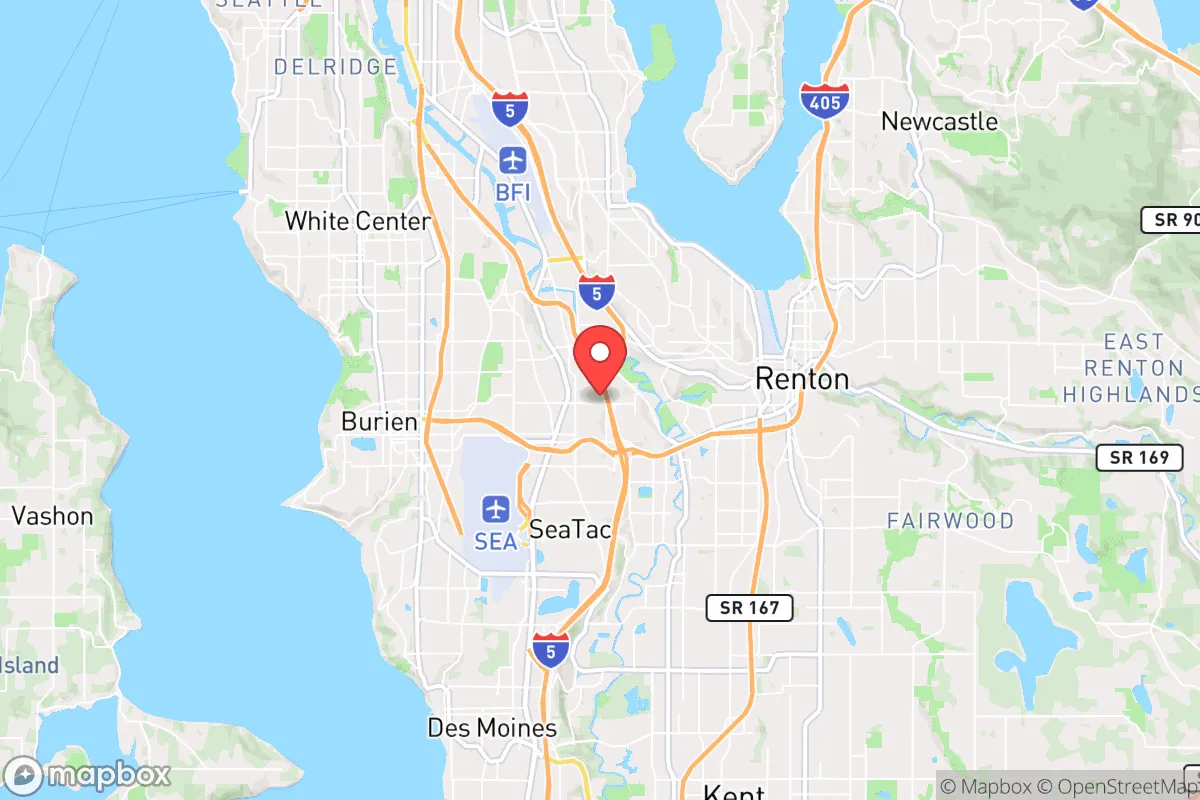
District shown is the primary district for this city’s centroid. Cities may span multiple districts.
Local Political AnalysisPolitical Analysis of Tukwila, WA
Tukwila is one of the most reliably Democratic cities in Washington state, with a Cook Partisan Voting Index of D+22—meaning it votes about 22 points more Democratic than the national average. That’s a deep blue anchor in a state that’s already solidly blue at the presidential level, though Washington’s overall lean is softer, more like D+8 to D+10 depending on the cycle. Tukwila’s trajectory has been consistently leftward for decades, driven by a diverse, working-class population and a strong union presence tied to the nearby Boeing and SeaTac airport industries. If you’re looking for a political bellwether for the Puget Sound region’s urban core, Tukwila is it—but it’s not a monolith.
How it compares
Compared to Washington state as a whole, Tukwila is significantly more Democratic. While the state’s blue lean comes largely from King County (where Tukwila sits) and a few other urban counties like Thurston and Snohomish, vast swaths of eastern and central Washington vote deep red. For example, just 30 miles east of Tukwila, the town of North Bend leans more moderate, and drive another hour east over the Cascades to Cle Elum or Ellensburg, and you’re in reliably Republican territory. Within Tukwila itself, the political reality is shaped by its demographics: roughly 40% of residents are foreign-born, and the city has large communities of Somali, Vietnamese, and Hispanic residents—groups that tend to vote Democratic. But that doesn’t mean there’s no conservative presence. The city’s older, longer-term homeowners, especially those in the quieter residential pockets near the Duwamish River, often lean more moderate or even Republican on local issues like property taxes and development. Still, in a D+22 district, Republican candidates rarely break 35% in local races.
What this means for residents
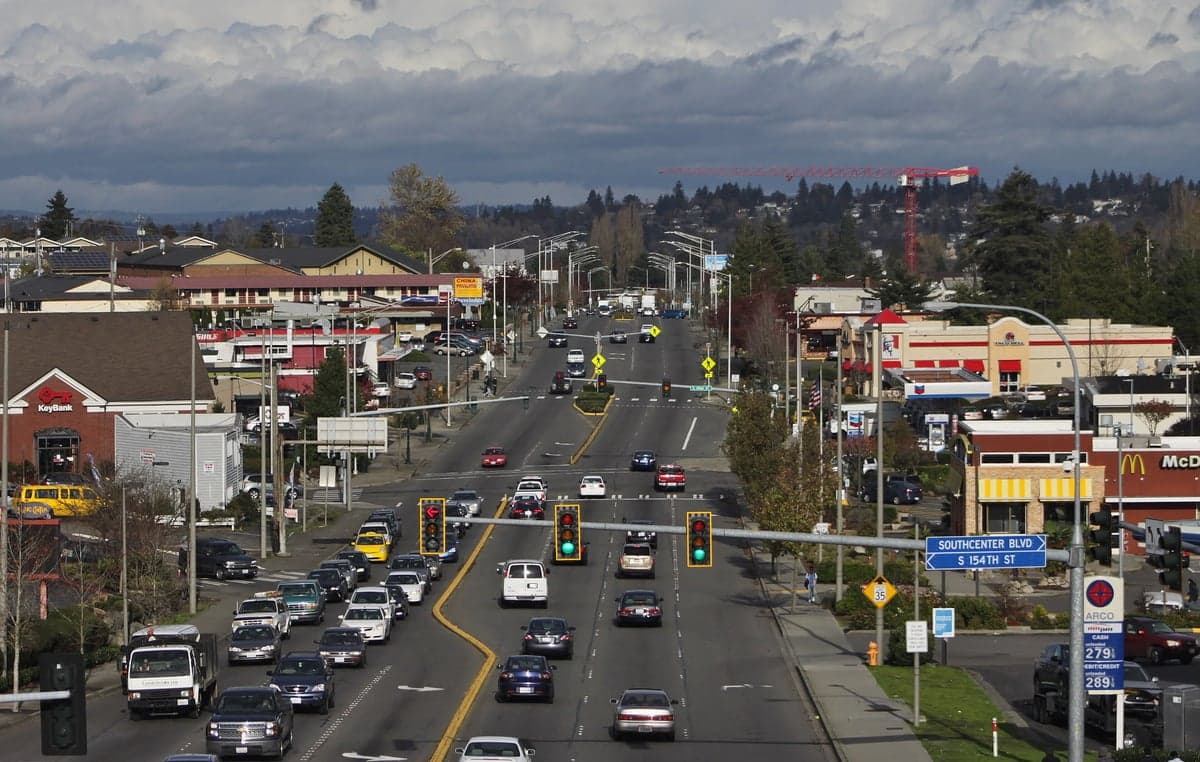
For liberal residents, Tukwila is a comfortable place politically. City council meetings and school board elections are dominated by progressive voices, and policies like rent stabilization, immigrant sanctuary ordinances, and expanded public transit funding are the norm. Conservative residents, however, aren’t silenced—they just have to work harder to be heard. Local Republican clubs exist but are small, and most political energy goes into state-level races where a single vote can matter more. In practice, this means a conservative Tukwila resident might feel out of step on social media or at neighborhood gatherings, but they won’t face hostility in daily life. The city’s politics are pragmatic: the mayor and council focus heavily on economic development, public safety, and infrastructure—issues that transcend party lines. For example, the recent push to redevelop the Tukwila International Boulevard corridor has bipartisan support because it promises jobs and better housing, even if the funding mechanisms are debated.
Culturally, Tukwila stands apart from the rest of Washington in a few key ways. It’s one of the most ethnically diverse cities in the state, which means its political conversations are less about coastal elite concerns and more about bread-and-butter issues: affordable housing, small business support, and school funding. Unlike Seattle’s more ideological debates, Tukwila’s politics feel grounded in daily survival. The city also has a strong labor history—the nearby Boeing plant in Renton and the SeaTac airport unions give local politics a working-class, pro-union flavor that you don’t always see in wealthier suburbs like Mercer Island or Bellevue. If you’re moving here, expect a place where politics is less about national headlines and more about whether the bus runs on time and the potholes get filled. That’s the real Tukwila: blue, yes, but blue with a practical, neighborly edge.

State Political ClimatePolitical Climate in Washington
State Political AnalysisPolitical Environment in the State
Washington State has been a reliably Democratic stronghold for over a decade, but its political reality is far more complex than a simple blue label. The state’s overall lean is driven by the massive, left-leaning population centers of King County (Seattle) and its immediate suburbs, which have powered Democratic presidential victories by margins of 10-20 points since 2008. However, the rest of the state—particularly the rural eastern half and the southwestern timber counties—votes just as reliably Republican, creating a deep urban-rural chasm that defines every election. Over the last 20 years, the state has shifted leftward on social and environmental issues, but the 2024 election saw a slight rightward correction in some exurban and suburban areas, hinting at a potential plateau in the Democratic trend.
Urban vs. rural divide
The political map of Washington is a tale of two states. The I-5 corridor from Vancouver through Seattle to Bellingham is the Democratic engine, with King County alone delivering over 70% of the statewide Democratic vote. Seattle’s tech-driven economy and progressive culture anchor this bloc, while the suburbs of Bellevue and Redmond have shifted left as their workforces have become younger and more diverse. In contrast, the eastern half of the state—cities like Spokane, Yakima, and the Tri-Cities (Kennewick, Pasco, Richland)—votes solidly Republican, often by 20-30 points. The rural counties of the Olympic Peninsula and the southwestern timber region (e.g., Grays Harbor and Pacific counties) are also conservative, though they have trended slightly more competitive as logging and fishing economies have declined. A notable exception is Clark County (Vancouver), which was once a Republican stronghold but has flipped to lean Democratic as Portland-area commuters and Californians have moved in. The divide isn’t just about geography—it’s about identity: urbanites see the state as a progressive leader, while rural residents feel increasingly alienated from Olympia’s one-party rule.
Policy environment
Washington’s policy environment is defined by a progressive tax structure and a heavy regulatory hand. The state has no personal income tax, relying instead on a high sales tax (state rate of 6.5%, with local add-ons pushing it to 10% in some cities) and high property taxes. This system is regressive, hitting lower-income residents hardest, but it’s politically untouchable because of a 1930s-era state constitutional ban on income taxes. On education, Washington spends above the national average per pupil, but outcomes vary wildly—Seattle’s top-tier schools contrast with struggling rural districts. Healthcare is dominated by the state’s expansion of Medicaid under the Affordable Care Act, and the state operates its own health insurance exchange. Election laws are among the most liberal in the country: all elections are conducted by mail-in ballot, same-day voter registration is available, and felons regain voting rights upon release from prison. This system has high turnout but has also drawn criticism from conservatives over ballot security, though no major fraud has been proven.
Recent policy direction
Over the past five years, Washington’s legislature has moved aggressively on a wide range of issues, often with little Republican input. On guns, the state passed a ban on assault weapons and high-capacity magazines in 2023, along with a requirement for a 10-day waiting period and a mandatory safety training course for purchases. Self-defense laws are restrictive—there is no “stand your ground” statute, and the state has a duty to retreat in public spaces. On parental and education rights, the state has expanded LGBTQ+ inclusive curriculum requirements and passed a law protecting access to gender-affirming care for minors, which has sparked intense backlash from conservative parents. Speech and privacy are generally protected, but the state has cracked down on “hate speech” in public schools and has a broad anti-discrimination law that covers sexual orientation and gender identity. Medical and bodily autonomy is strongly protected: Washington has codified abortion rights into state law and has a “shield law” protecting providers who serve out-of-state patients. Property rights are constrained by the state’s Growth Management Act, which limits development in rural areas and mandates urban growth boundaries. Voting and ballot access remain expansive, with automatic voter registration and no voter ID requirement at the polls (though a signature match is required for mail ballots). The overall direction is toward more regulation and more state-level protections for progressive priorities, with little appetite for rolling back any of these measures.
Civil unrest & political movements
Washington has a long history of political activism, from the WTO protests in Seattle in 1999 to the 2020 Black Lives Matter demonstrations that saw the city’s Capitol Hill Autonomous Zone (CHAZ) briefly established. The state is a hub for left-wing organizing, with groups like the Washington State Labor Council and environmental organizations like 350.org wielding significant influence. On the right, the state has a smaller but active conservative movement, centered around the Washington Policy Center think tank and grassroots groups like the Washington State Republican Party’s “Eastside” faction. Immigration politics are a flashpoint: Washington is a “sanctuary state” under a 2019 law that limits local law enforcement cooperation with federal immigration authorities, and the state has sued the Trump administration multiple times over immigration policies. Election integrity has been a persistent controversy, with conservative activists challenging the state’s mail-in ballot system and alleging irregularities, though no court has found systemic fraud. A notable flashpoint is the “secession” movement in eastern Washington, where some rural counties have floated the idea of forming a new state called “Liberty” or “Eastern Washington,” though this remains a fringe idea with no real political traction. New residents will notice the political divide in everyday life—Seattle’s street protests and bumper stickers contrast sharply with the “Don’t Tread on Me” flags in Spokane Valley.
Projection
Over the next 5-10 years, Washington’s political trajectory points toward continued Democratic dominance, but with a narrowing margin. In-migration from California and other high-cost states is bringing more progressive voters to the Seattle metro area, but it’s also driving up housing costs and pushing some moderate Democrats and independents into the suburbs, where they may vote more conservatively on local issues. The rural-urban divide is likely to deepen as the state’s economy becomes more tech-driven and less reliant on natural resources. Expect more progressive legislation on climate change (the state already has a cap-and-trade program), housing density, and police reform, but also growing backlash from rural and suburban voters who feel ignored. The 2024 election showed that even in blue Washington, Republicans can win in competitive districts like the 3rd Congressional District (southwest Washington), which flipped back to the GOP. A new resident moving in now should expect a state where the political center of gravity is firmly left, but where local elections and ballot initiatives can still produce surprises—especially on tax and property rights issues. The next decade will likely see more fights over land use, education curriculum, and the balance of power between Olympia and local governments.
For a new resident, the bottom line is this: Washington is a state where your political experience will depend heavily on where you live. If you’re a conservative, you’ll find a welcoming community in Spokane, the Tri-Cities, or the rural foothills, but you’ll be swimming against the tide in state politics—expect higher taxes, more regulations, and a culture that often feels hostile to your values. If you’re a liberal, you’ll feel at home in Seattle, Bellevue, or Bellingham, but you’ll need to accept that the state’s progressive policies come with a high cost of living and a growing backlash from the other half of the state. The practical takeaway: choose your neighborhood carefully, because in Washington, your zip code determines your political reality more than your vote does.
* Values derived from national, state, county, city and local statistics and may differ in a specific area. Last updated: 2026-09-03T05:16:51.000Z
Narrative content on this page is AI-generated and may contain mistakes. Verify any details that matter before acting on them.
ReloMaps may earn a commission from affiliate links at no extra cost to you.

