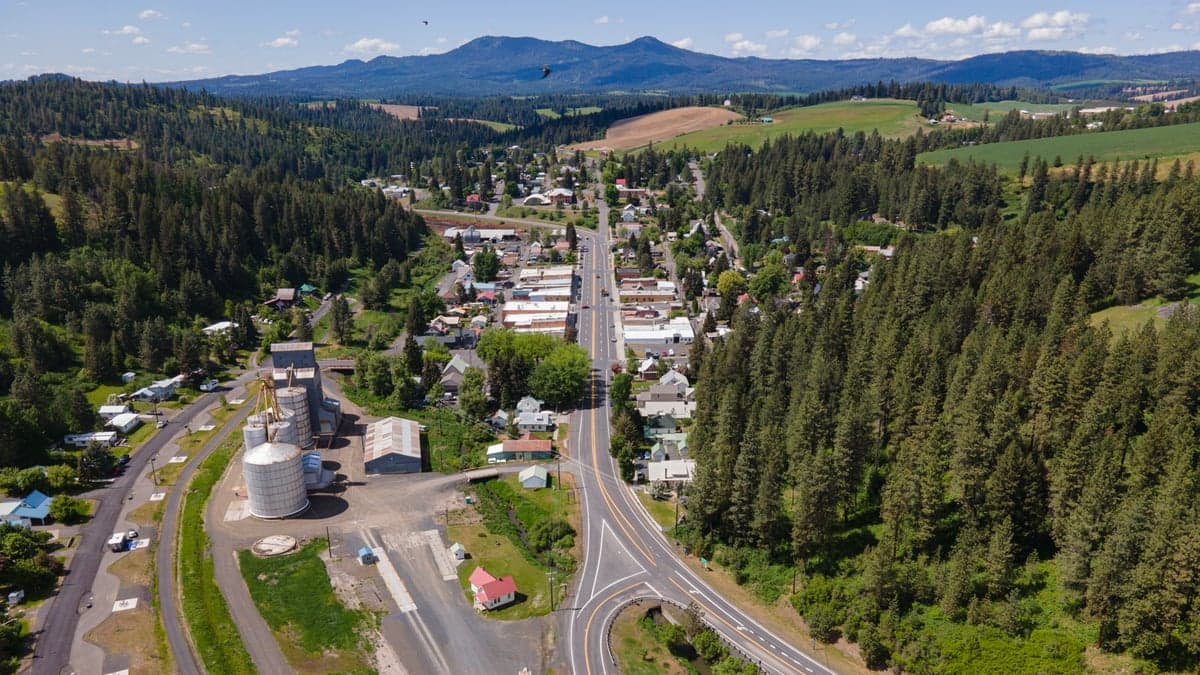
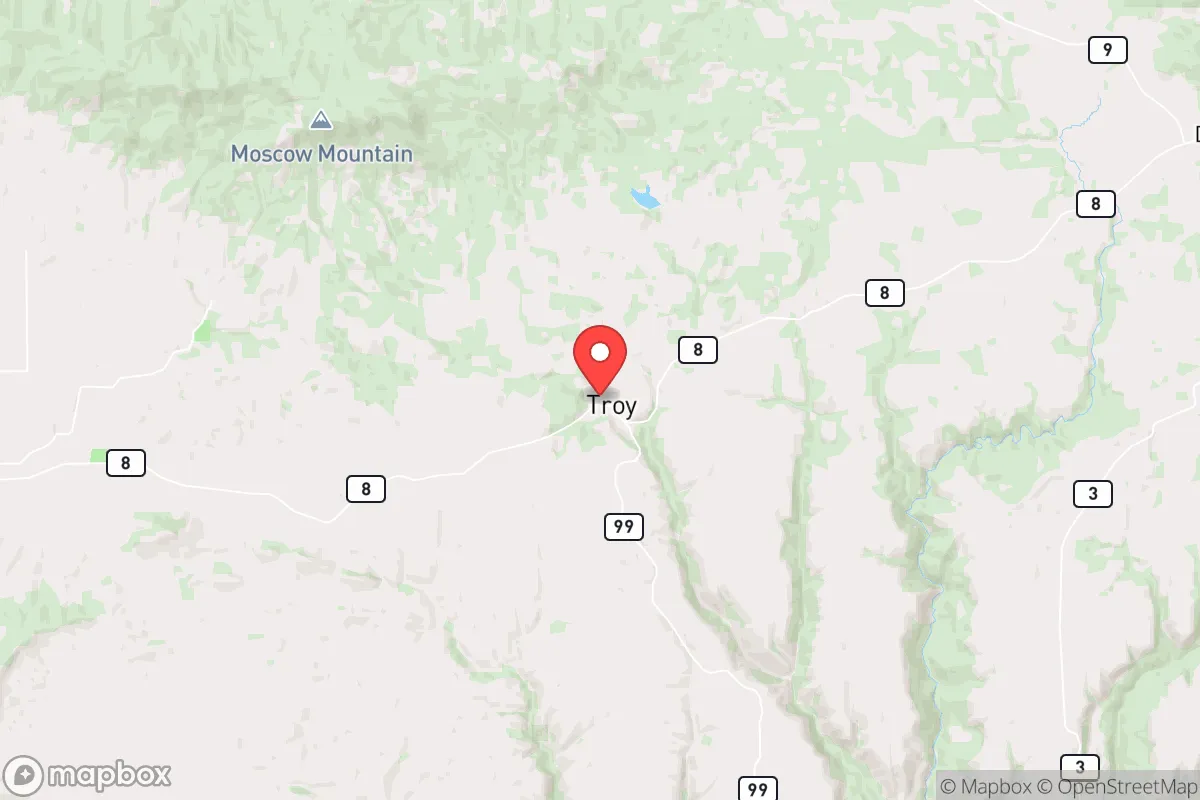
Photo: Wikipedia
Personal Sovereignty in Troy, ID
Viable for self-reliance. Generally workable, though some barriers may limit total independence.
What does Personal Sovereignty tell us?
Personal Sovereignty measures your capacity for self-reliance and independence with minimal government friction. Higher scores mean fewer barriers between you and the way you want to live... but it assumes you have the space you need and good neighbors.
What does this tell us?
Personal Sovereignty measures your capacity for self-reliance and independence with minimal government friction. Higher scores mean fewer barriers between you and the way you want to live... but it assumes you have the space you need and good neighbors.
State Policy
Energy independence: Importer (25% of energy produced in-state)
Personal Liberty
Homesteading

Personal Liberty Analysis
Troy, Idaho, offers a personal sovereignty environment shaped by a state-level commitment to limited government, local self-determination, and a cultural ethos of self-reliance. Nestled in Latah County, this small town of roughly 900 residents provides a setting where individual autonomy is less a political abstraction and more a practical daily reality, supported by Idaho’s constitutional protections and a regulatory framework that generally defers to personal choice. For those prioritizing freedom from overreach—whether in taxation, self-defense, or lifestyle decisions—Troy represents a deliberate, low-friction alternative to more densely regulated urban centers, though its rural character demands a corresponding level of personal responsibility.
Tax burden and regulatory posture in Latah County
Idaho’s tax structure is among the most favorable in the nation for those seeking to retain more of their earnings and property. The state levies a flat income tax rate of 5.8% (as of 2025), with no progressive brackets, and property taxes in Latah County average roughly 0.7% of assessed home value—well below the national median. Troy itself benefits from a relatively lean local government; the city’s budget is modest, and there is no local sales tax beyond the state’s 6% rate. Regulatory posture at the county level is light-touch: building permits are required for new construction but are processed quickly, and there are no county-level zoning overlays that restrict land use beyond basic health and safety codes. The Idaho Freedom Foundation consistently ranks the state among the top ten for economic freedom, and Latah County’s approach mirrors that—permitting processes are straightforward, and business licensing for home-based enterprises (common in Troy) involves minimal paperwork and fees. For a relocation-minded individual or family, the key takeaway is that the tax and regulatory environment here is designed to minimize friction, not to manage outcomes.
Self-defense and gun law specifics in Idaho
Idaho is a constitutional carry state, meaning no permit is required to carry a concealed firearm for any law-abiding adult 18 or older. Troy residents enjoy this right without local infringement: Latah County does not impose any additional restrictions beyond state law, and there are no city-level ordinances limiting magazine capacity, firearm types, or storage requirements. The state’s Stand Your Ground law, codified in Idaho Code § 19-202A, eliminates any duty to retreat before using deadly force in self-defense, provided the individual is lawfully present. Castle Doctrine protections extend to vehicles and occupied structures. For those concerned about legal exposure, Idaho also offers a robust preemption statute (Idaho Code § 18-3302J) that prohibits any local government from enacting firearm regulations stricter than state law—meaning Troy’s city council cannot unilaterally restrict gun rights. The practical effect is that self-defense decisions are left to the individual, with a legal framework that strongly favors the defender in ambiguous situations. Background checks are required only for commercial sales; private transfers between individuals require no paperwork.
Self-reliance and homesteading viability in Troy
Troy’s rural character makes it a strong candidate for those pursuing self-reliance through homesteading, small-scale agriculture, or off-grid living. Residential lots within city limits typically range from 0.25 to 1 acre, while unincorporated Latah County parcels commonly start at 5 acres and go up to 40 acres or more. Zoning is permissive: agricultural uses, including livestock (chickens, goats, cattle), are allowed on parcels of 1 acre or more within city limits, and no special permits are required for gardens, greenhouses, or beekeeping. Off-grid feasibility is high—Idaho has no state-level prohibition on solar panels, rainwater collection, or composting toilets, though Troy’s city code requires connection to municipal water and sewer for properties within the urban growth boundary. Outside that boundary, well water and septic systems are standard, and many residents use propane or wood for heating. The county’s building department does not require permits for agricultural outbuildings under 200 square feet, and there are no restrictions on fencing types or heights for livestock enclosures. For those seeking to reduce dependence on external systems, Troy offers a legal environment that supports rather than hinders that goal, with the main constraint being the upfront cost of infrastructure (well drilling, solar installation) rather than regulatory hurdles.
Personal liberties in Troy: parental rights, medical autonomy, speech, and property
Idaho’s legal framework provides strong protections for personal liberties across several domains. Parental rights are explicitly protected under Idaho Code § 32-1001, which affirms that parents have the fundamental right to direct their children’s upbringing, education, and healthcare. Troy’s school district (Troy School District #287) is small and responsive—parents report high levels of engagement with teachers and administrators, and the district does not enforce mask or vaccine mandates beyond state law. Medical autonomy is similarly robust: Idaho has no state-level vaccine passport requirement, and the Idaho Medical Freedom Act (2021) prohibits discrimination based on vaccination status. Speech protections are strong under both the Idaho Constitution (Article I, § 9) and state preemption laws that prevent local governments from restricting expressive activities on public property. Property rights are reinforced by Idaho’s Private Property Protection Act, which requires government entities to compensate landowners for any regulatory taking that reduces property value by more than 20%. In practice, this means Troy residents face minimal risk of zoning changes or eminent domain actions that would infringe on their use of land. The cumulative effect is a legal environment where personal choices—whether about healthcare, education, or expression—are presumed to belong to the individual unless a compelling state interest is demonstrated.
Relative to other areas of the Pacific Northwest, Troy, Idaho, stands out as a jurisdiction where personal sovereignty is not merely tolerated but structurally supported. The combination of low taxes, constitutional carry, permissive land-use regulations, and strong protections for parental and medical autonomy creates an environment where individuals and families can exercise a high degree of control over their own lives. For those coming from states with more prescriptive governance—such as California, Oregon, or Washington—the adjustment is less about learning new rules and more about shedding the expectation that the government will manage risk. In Troy, the trade-off is clear: greater freedom comes with greater personal responsibility, and the regulatory framework is designed to enable, not direct, that independence.

* Values derived from national, state, county, city and local statistics and may differ in a specific area. Last updated: 2026-07-30T14:47:14.000Z
Narrative content on this page is AI-generated and may contain mistakes. Verify any details that matter before acting on them.
ReloMaps may earn a commission from affiliate links at no extra cost to you.

