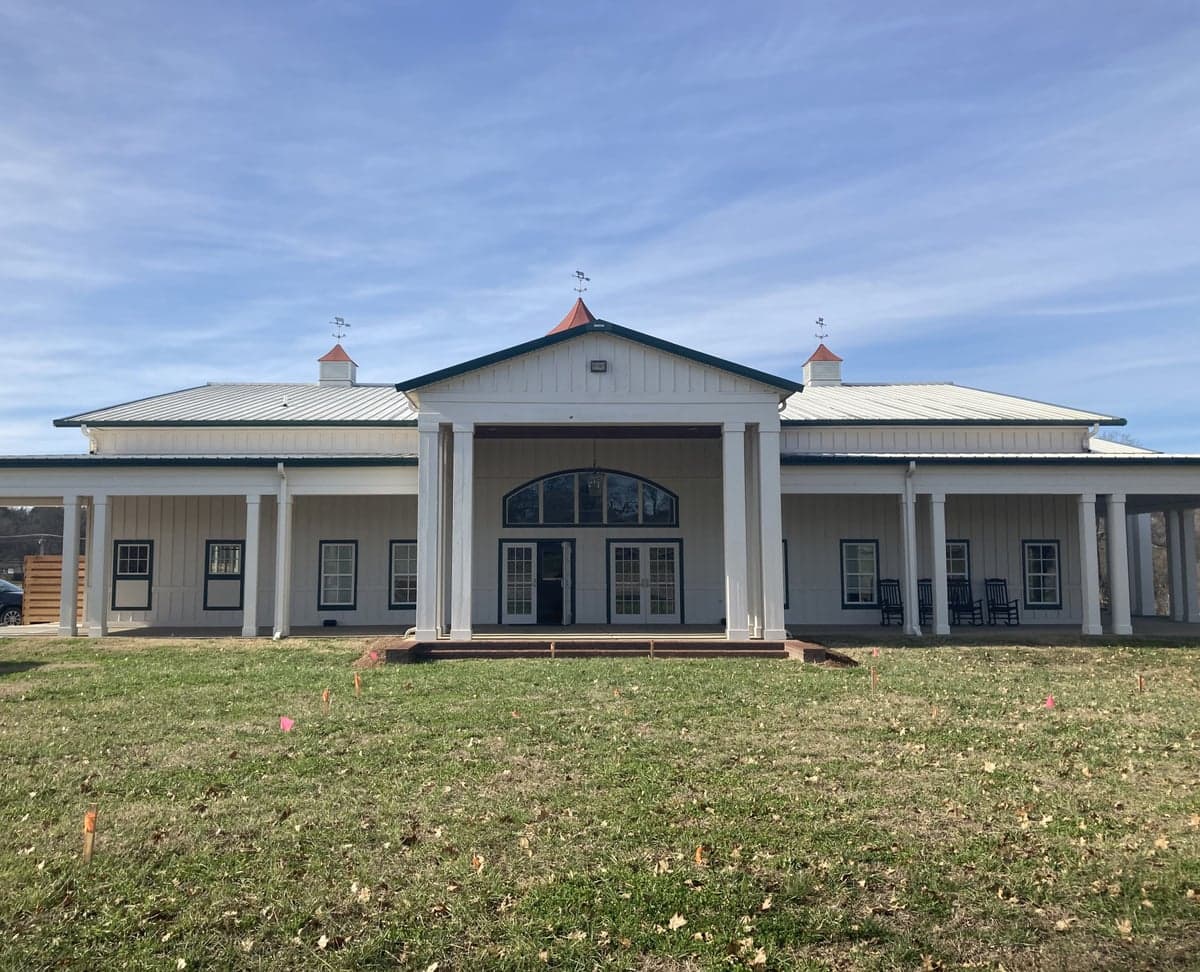
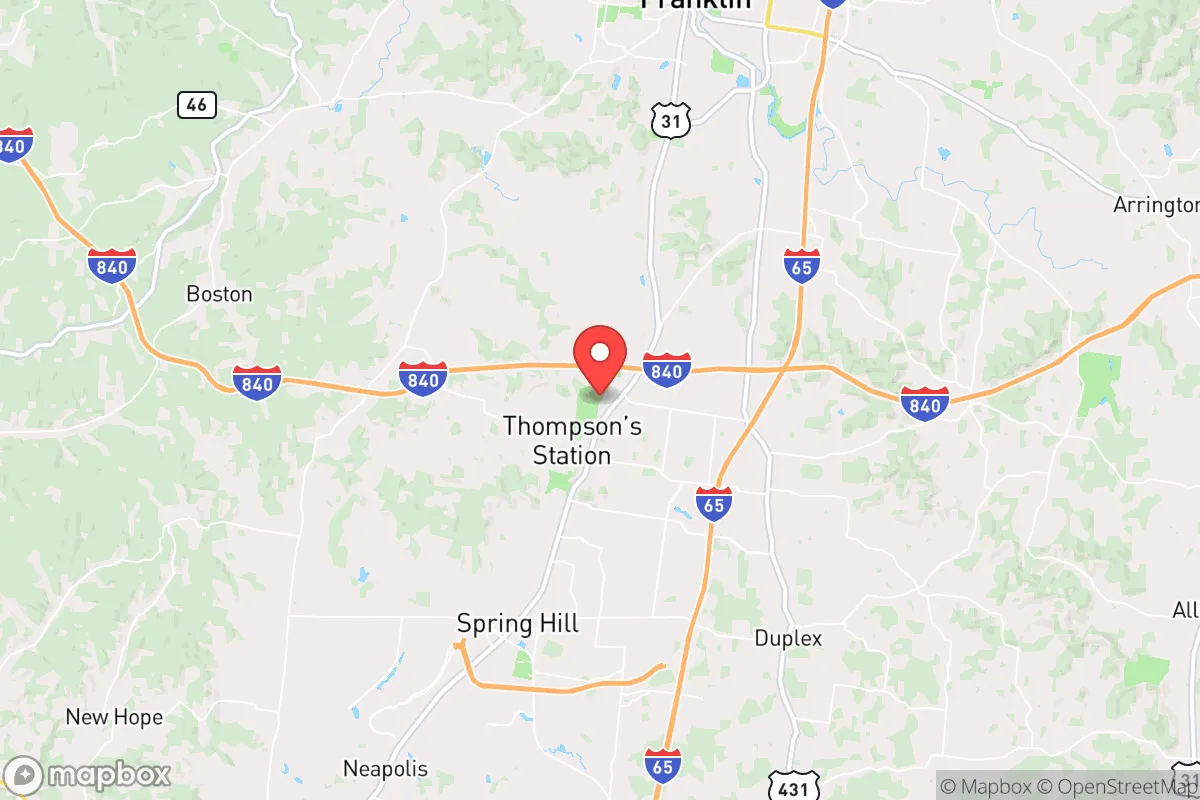
Photo: Wikipedia
Personal Sovereignty in Thompson's Station, TN
Moderate friction. Expect trade-offs in some aspect of personal liberty and independence.
What does Personal Sovereignty tell us?
Personal Sovereignty measures your capacity for self-reliance and independence with minimal government friction. Higher scores mean fewer barriers between you and the way you want to live... but it assumes you have the space you need and good neighbors.
What does this tell us?
Personal Sovereignty measures your capacity for self-reliance and independence with minimal government friction. Higher scores mean fewer barriers between you and the way you want to live... but it assumes you have the space you need and good neighbors.
State Policy
Energy independence: Importer (21% of energy produced in-state)
Personal Liberty
Homesteading

Personal Liberty Analysis
Thompson’s Station, Tennessee, offers a personal sovereignty environment shaped by Tennessee’s strong state-level protections for individual rights, combined with a local governance structure that generally favors light-touch regulation. For residents prioritizing autonomy—whether in financial decisions, self-defense, or lifestyle choices—the town sits within a state ranked among the most tax-friendly and liberty-oriented in the Southeast. The key trade-off is that while state law provides a broad baseline of freedom, local zoning and subdivision rules impose practical constraints on how that freedom can be exercised, particularly regarding land use and off-grid living.
Tax burden and regulatory posture: how Tennessee’s policies affect Thompson’s Station
Tennessee’s tax structure is a major draw for those seeking financial sovereignty. The state has no personal income tax on wages, no tax on interest or dividends, and a state sales tax rate of 7% (with local rates in Williamson County adding roughly 2.75%, for a combined rate around 9.75%). Property taxes in Thompson’s Station are relatively low: the Williamson County rate is approximately $2.35 per $100 of assessed value, which for a median-priced home (around $650,000 in 2025) translates to roughly $5,100 annually—moderate by national standards but higher than rural Tennessee counties. The regulatory posture at the local level is business-friendly but not laissez-faire. Thompson’s Station operates under a zoning code that emphasizes planned developments and subdivision design standards, meaning new construction must adhere to architectural guidelines and density limits. There is no county-level business license requirement for most home-based enterprises, but the town does enforce sign ordinances and noise regulations. For a resident running a small online business or freelance operation, the tax burden is light, but the regulatory framework for physical alterations to property is more structured than in unincorporated areas of Williamson County.
Self-defense and gun law specifics: what Tennessee’s permitless carry means locally
Tennessee is a strong Second Amendment state, and Thompson’s Station residents benefit from some of the most permissive firearm laws in the country. Since 2021, Tennessee has had permitless carry (constitutional carry) for anyone 21 or older who can legally possess a firearm—no permit, training, or background check required for open or concealed carry. The state also has a “stand your ground” law with no duty to retreat in any place where a person is lawfully present. Local ordinances in Thompson’s Station do not restrict firearm possession beyond state law; there are no additional waiting periods, magazine capacity limits, or firearm-specific zoning rules. However, firearms are prohibited in town-owned buildings and parks (per state law for public buildings), and private businesses may post signage to restrict carry. For self-defense in the home, Tennessee law provides a strong Castle Doctrine presumption that force is justified against unlawful intruders. The sheriff’s office in Williamson County is known for issuing enhanced handgun carry permits (which allow reciprocity in more states) without unusual delays. For a resident prioritizing self-defense autonomy, Thompson’s Station offers a legal environment where the state sets a high floor for rights, and local government does not add extra restrictions.
Self-reliance and homesteading viability: lot sizes, zoning, and off-grid feasibility
The practical ability to live self-reliantly in Thompson’s Station depends heavily on where within the town you buy. The town’s zoning code divides land into several districts, with minimum lot sizes ranging from 0.5 acres in higher-density planned neighborhoods to 3 acres in the Agricultural/Residential (AR) district. Most newer subdivisions (like those around the Thompson’s Station Town Center) have lots of 0.25–0.5 acres with homeowners’ association (HOA) covenants that restrict livestock, outbuildings, and exterior modifications. In the AR district, which covers much of the town’s periphery, lots of 3+ acres are common, and these areas typically lack HOA restrictions. Raising chickens, keeping bees, and maintaining a substantial vegetable garden are feasible on AR-zoned land, though the town does require permits for accessory structures over 200 square feet. Off-grid living is legally challenging: the town requires connection to public water and sewer in most subdivisions, and building codes mandate compliance with the International Residential Code (IRC), which effectively prohibits composting toilets or non-permitted solar systems as primary utilities. Rainwater collection is allowed for non-potable uses, but a well requires a permit from the state. For a homesteader seeking true independence, the AR district offers the most flexibility, but even there, the town’s building code and utility requirements create a regulatory floor that limits full off-grid autonomy. Comparatively, unincorporated Williamson County (just outside town limits) has looser rules on accessory structures and no mandatory sewer hookup, making it a better fit for serious self-reliance.
Personal liberties: parental rights, medical autonomy, speech, and property
Tennessee has enacted several laws in recent years that expand personal liberties in areas of family and medical decision-making. Parental rights are explicitly protected under state law (Tennessee Code § 49-6-7001), which affirms that parents have the fundamental right to direct their children’s education, healthcare, and religious upbringing. The state does not mandate COVID-19 vaccines for school attendance, and parents can opt children out of sex education or any curriculum they find objectionable. Medical autonomy is mixed: Tennessee has no state-level vaccine mandate for adults, but the state does require certain immunizations for school entry (with medical and religious exemptions available). The state’s abortion law is among the most restrictive in the country, banning the procedure at conception with narrow exceptions. For speech and assembly, Tennessee has no unusual restrictions beyond standard First Amendment protections; Thompson’s Station has not enacted any local ordinances limiting public protest or expressive conduct. Property rights are strongly protected under Tennessee’s “right to farm” law, which shields agricultural operations from nuisance lawsuits, and the state’s eminent domain laws require just compensation and a demonstrated public use. For a resident valuing personal autonomy, the state’s legal framework provides a broad zone of individual discretion, though local HOA covenants in many Thompson’s Station neighborhoods can override state-level freedoms on property use and appearance.
Overall, Thompson’s Station offers a personal sovereignty profile that is strong on state-level protections—low taxes, permissive gun laws, and robust parental rights—but tempered by local zoning and HOA restrictions that limit how those freedoms translate into daily life. For a single individual or family who values financial independence and self-defense rights, the town is an excellent choice within the Nashville metro area. For those seeking maximum autonomy in land use, off-grid living, or complete freedom from subdivision rules, the unincorporated areas of Williamson County or more rural counties like Hickman or Lewis may offer a lighter regulatory touch. Thompson’s Station strikes a balance: it provides the legal baseline of Tennessee liberty while maintaining a planned, suburban character that appeals to those who want freedom within a structured community.

* Values derived from national, state, county, city and local statistics and may differ in a specific area. Last updated: 2026-11-14T05:58:22.000Z
Narrative content on this page is AI-generated and may contain mistakes. Verify any details that matter before acting on them.
ReloMaps may earn a commission from affiliate links at no extra cost to you.

