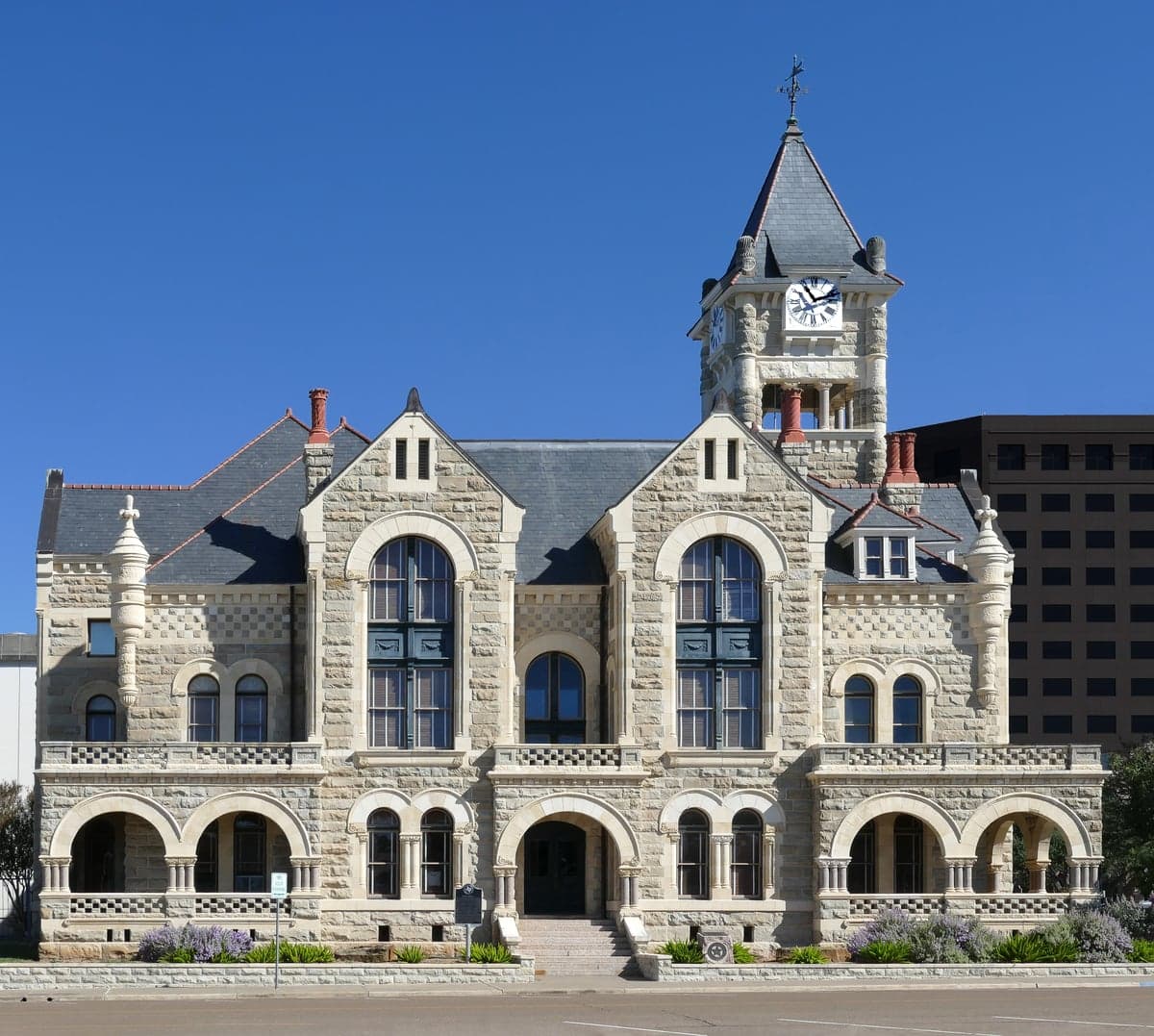
Photo: Wikipedia
Personal Sovereignty in Victoria County
Strong independent fundamentals that actively favor personal liberty and low regulation.
What does Personal Sovereignty tell us?
Personal Sovereignty measures your capacity for self-reliance and independence with minimal government friction. Higher scores mean fewer barriers between you and the way you want to live... but it assumes you have the space you need and good neighbors.
What does this tell us?
Personal Sovereignty measures your capacity for self-reliance and independence with minimal government friction. Higher scores mean fewer barriers between you and the way you want to live... but it assumes you have the space you need and good neighbors.
State Policy
Energy independence: Net exporter (220% of energy produced in-state)
Personal Liberty
Homesteading

Personal Liberty Analysis
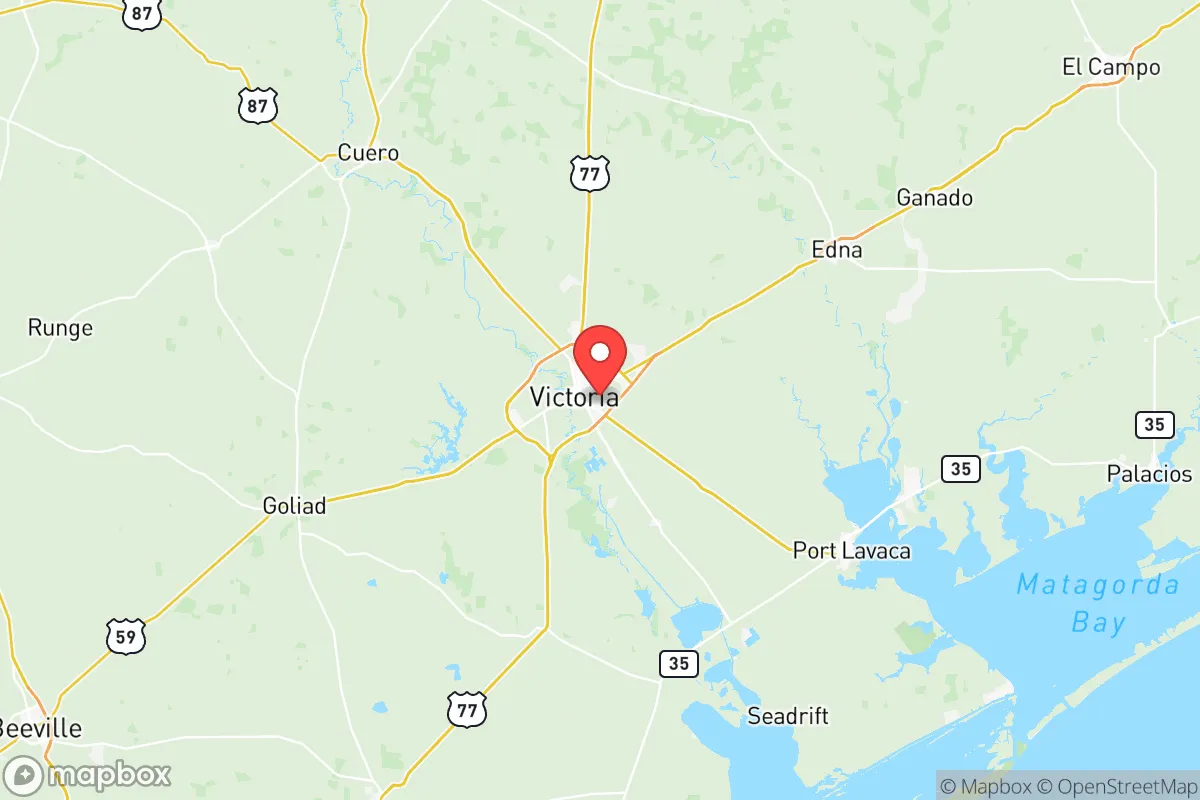
Victoria County offers a notably high degree of personal sovereignty compared to urban Texas counties, with a regulatory environment that leans light-touch and a culture that prizes self-reliance. The county seat, Victoria, anchors a region where residents generally face fewer zoning restrictions, lower tax burdens, and stronger protections for gun rights and parental authority than in cities like Austin or Houston. For individuals and families seeking to maximize personal autonomy—whether through homesteading, homeschooling, or carrying a firearm—Victoria County presents a practical, freedom-oriented environment that aligns with conservative values.
Tax burden and regulatory posture: How Victoria County compares to Texas norms
Victoria County operates under Texas’s state-level framework of no personal income tax and a relatively low property tax environment, but local levies add nuance. The county’s effective property tax rate hovers around 2.1% of assessed value, slightly above the Texas median of roughly 1.8%, driven by school district and hospital district taxes. However, the county’s regulatory posture is markedly lighter than in major metros. There is no county-wide zoning code outside of the city of Victoria’s municipal limits, meaning unincorporated areas like Placedo, Telferner, and Nursery allow a wide range of land uses—from small-scale livestock operations to home-based businesses—without the permitting hurdles common in Harris or Travis Counties. The city of Victoria itself enforces modest zoning for residential and commercial separation, but its code is far less restrictive than in comparable Gulf Coast cities. Building permits are straightforward, and the county does not impose impact fees on new construction, a significant advantage for those building a home or workshop.
Self-defense and gun law specifics: What Victoria County residents can expect
Texas’s permitless carry law, effective since 2021, applies fully in Victoria County, allowing any legal resident 21 or older to carry a handgun openly or concealed without a license. The county sheriff’s office is known for a pro-Second Amendment stance, and local gun shops in Victoria report high demand for training courses, though none are legally required. The county does not impose any additional firearm restrictions beyond state law, and there are no local ordinances banning carry in parks or public buildings beyond what state law permits. For those seeking deeper self-reliance, the rural areas around Inez and Bloomington offer ample space for private shooting ranges on personal property, subject only to noise ordinances and general safety laws. The county’s crime rate is moderate—violent crime in Victoria city is about 30% above the national average—but property crime is lower than in larger Texas cities, reinforcing the practical value of personal firearm ownership for many residents.
Self-reliance and homesteading viability: Lot sizes, zoning, and off-grid feasibility
Victoria County is one of the more homestead-friendly areas in the Texas Coastal Bend, particularly outside the city limits. Unincorporated areas have no minimum lot size requirements for agricultural use, and parcels as small as one acre can support a garden, chickens, or a few goats. In communities like Nursery and Telferner, many residents already practice semi-self-sufficient living, with rainwater catchment systems and solar panels common. The county does not prohibit off-grid utilities, though connecting to the grid remains the norm. The city of Victoria requires standard utility hookups for new construction within its jurisdiction, but rural parcels are free to use septic systems, well water, and alternative energy without special permits. Zoning is minimal: the county’s land-use regulations focus on health and safety (e.g., septic setbacks) rather than aesthetic or density controls. For those seeking a full homestead, the area around Placedo offers affordable land—typically $3,000–$6,000 per acre—with easy access to Victoria’s grocery stores and medical services, balancing self-reliance with practical convenience.
Personal liberties: Parental rights, medical autonomy, speech, and property
Victoria County reflects Texas’s strong protections for parental rights, including the right to homeschool without state oversight or curriculum approval. The county has a robust homeschooling community, with several co-ops and support groups in Victoria and the surrounding area. Medical autonomy is similarly broad: Texas law allows parents to refuse vaccines for school attendance via conscientious exemption, and the county does not impose any local mandates. Free speech protections are standard under the First Amendment, and the county’s public meetings and school board sessions are generally open, with minimal restrictions on public comment. Property rights are well-guarded; eminent domain is rare and typically limited to utility easements. The county’s relatively low population density—about 90,000 residents across 883 square miles—means fewer conflicts over land use and noise, reinforcing a live-and-let-live atmosphere. For those concerned about government overreach, Victoria County’s local officials are generally responsive to citizen input, with a county commissioner’s court that holds regular public hearings on zoning and tax matters.
Overall, Victoria County ranks among the more sovereignty-friendly areas in Texas, especially when compared to the regulatory density of the state’s major cities. The combination of no income tax, light zoning, strong gun rights, and a culture of self-reliance makes it a strong candidate for individuals and families who prioritize personal freedom. While the property tax rate is slightly above the state average, the trade-off is a regulatory environment that allows residents in places like Inez, Bloomington, and Nursery to live largely as they see fit—whether that means running a home business, raising livestock, or carrying a firearm without a license. For those seeking a balance between rural autonomy and access to urban amenities, Victoria County delivers a practical, freedom-oriented lifestyle that is increasingly rare in modern Texas.

* Values derived from national, state, county, city and local statistics and may differ in a specific area. Last updated: 2026-06-20T15:31:35.000Z
Narrative content on this page is AI-generated and may contain mistakes. Verify any details that matter before acting on them.
ReloMaps may earn a commission from affiliate links at no extra cost to you.

