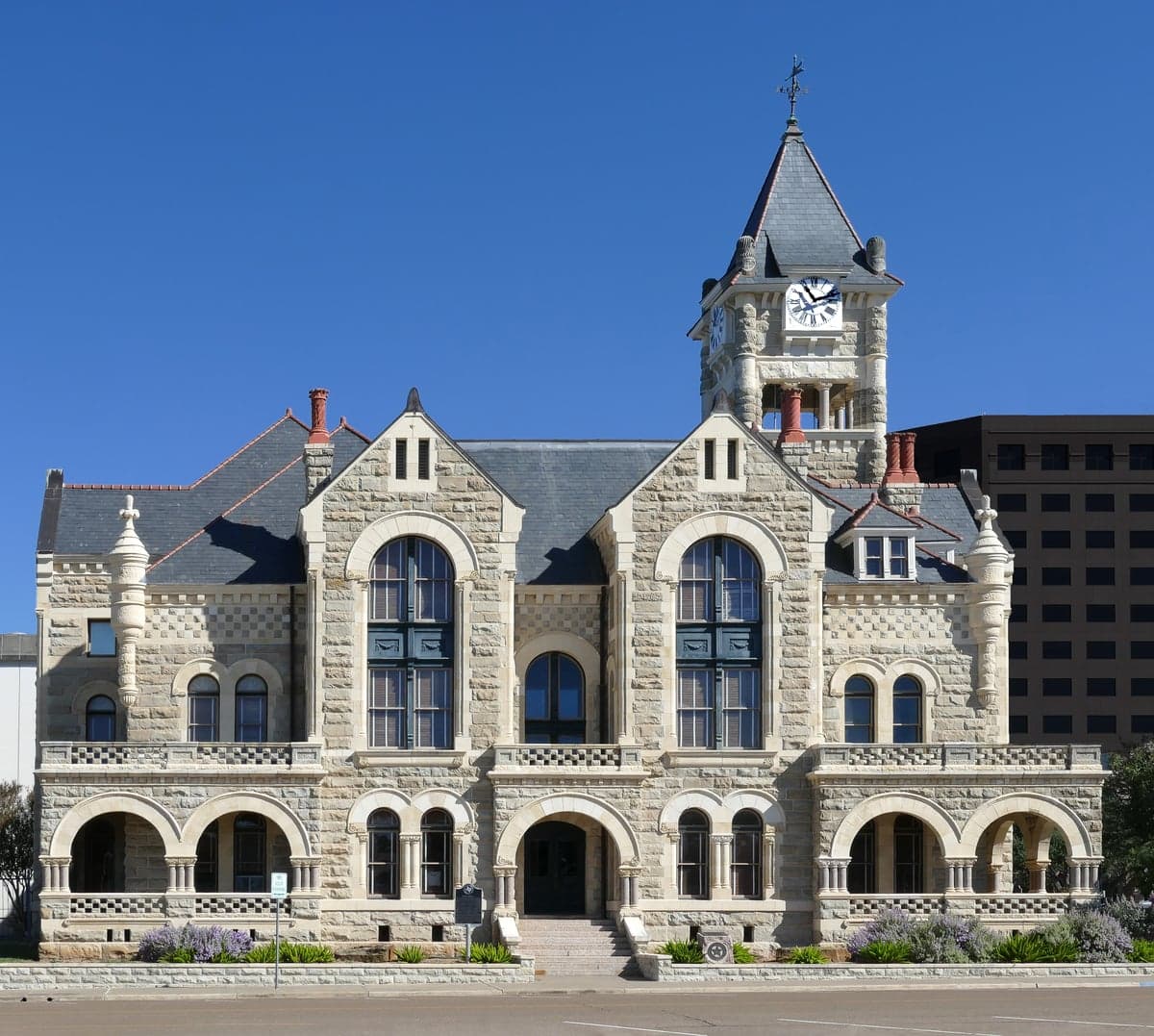
Photo: Wikipedia
Demographics of Victoria County
Affluence Level in Victoria County
A middle-class area roughly in line with national averages across income, home values, education, and employment.
People of Victoria County
Victoria County’s 91,281 residents today are nearly evenly split between Hispanic (47.6%) and White (43.0%) populations, with a small but stable Black community (5.5%) and minimal foreign-born presence at just 3.9%. The county is culturally grounded in ranching, petrochemicals, and a deep sense of local history, shaped by a rare founding as a Mexican colony and successive waves of German, Anglo, and Tejano settlement. Family-oriented, politically conservative, and low in educational attainment (19.7% college educated), Victoria County remains a place where generations stay put rather than a magnet for newcomers.
Settlement & growth (pre-1960)
Long before European contact, the area was home to the Karankawa and Tonkawa peoples, who lived along the Guadalupe River and the Gulf Coast. Spanish missionaries arrived in the early 18th century, establishing Mission Nuestra Señora del Espíritu Santo de Zúñiga near present-day Victoria in 1726. After Mexican independence, empresario Martín De León founded the town of Victoria in 1824, naming it after Guadalupe Victoria, Mexico’s first president. This made Victoria one of the few Texas towns settled originally by Mexican colonists rather than Anglo-Americans, a distinction that still shapes its identity.
Following Texas annexation in 1845, Anglo-American settlers arrived rapidly, drawn by rich soil for cotton and cattle. By the 1850s, German immigrants—many from the Adelsverein colonization societies—established farms in the northern part of the county, notably around Inez and Nursery. Enslaved African Americans were brought to work cotton plantations; after the Civil War, many freedmen concentrated in small communities such as Bloomington and Telferner, where they formed independent churches and schools. The arrival of the railroad in the 1870s connected Victoria to Galveston and San Antonio, spurring growth in the county seat and turning Placedo into a shipping point for livestock.
The discovery of oil in the 1930s—particularly the West Ranch field near Bloomington—transformed the local economy. Roughnecks and refinery workers moved in from East Texas and Oklahoma, diversifying a previously agrarian population. World War II brought the establishment of Naval Air Station Chase Field south of Victoria, which later became a civilian airport and industrial park. These mid-century developments cemented a blue-collar, conservative character that persists today.
Modern era (post-1965)
The 1965 Hart-Cellar Act had a muted impact on Victoria County compared to Houston or Dallas. Foreign-born residents account for only 3.9% of the population, well below the national average. The vast majority of the Hispanic growth since 1965 has come from natural increase and internal migration from South Texas and the Rio Grande Valley, not from new international immigration. East and Southeast Asian communities are tiny (1.0%), concentrated mainly among professionals in Victoria’s healthcare and education sectors. The Indian subcontinent population (0.2%) is similarly negligible, representing a handful of engineering families.
Domestic migration patterns have been modest. The county has not seen the Sun Belt boom that transformed suburban Dallas or Austin. Instead, Victoria city has absorbed steady suburban-like growth into its outer edges—areas like Inez, Nursery, and Telferner have become bedroom communities for workers at the county’s petrochemical plants and the Formosa Plastics complex in nearby Point Comfort. African American communities like Bloomington have seen population decline as younger adults moved to larger cities for opportunities. The overall demographic shift has been a gradual increase in the Hispanic share—from roughly 30% in 1970 to 47.6% today—while the White share has fallen accordingly, though not due to any dramatic influx but rather differing birth rates and aging Anglo population.
The future
Victoria County’s population is projected to grow slowly, likely reaching 95,000–100,000 by 2040. The Hispanic share will continue to rise as younger cohorts—who are disproportionately Hispanic—enter childbearing age. The county will become slightly more diverse, but the foreign-born percentage is expected to remain below 6% as the area does not attract significant international migration. New residential development is concentrating in the northwestern edge of Victoria city and along the U.S. 59 corridor toward Inez, where new subdivisions appeal to families seeking affordable homes within commuting distance of the city’s hospitals and manufacturing plants.
Culturally, the county is likely to stay conservative and family-centered, with growing bilingualism and a blending of Tejano and Anglo traditions in food, church life, and festivals. The low college-attainment rate (19.7%) suggests the economy will remain rooted in industry, agriculture, and trades rather than tech or professional services. For someone moving in now, Victoria County offers a stable, slow-changing environment where roots run deep and the cost of living remains well below Texas averages.

* Values derived from national, state, county, city and local statistics and may differ in a specific area. Last updated: 2026-06-20T15:31:35.000Z
Narrative content on this page is AI-generated and may contain mistakes. Verify any details that matter before acting on them.
ReloMaps may earn a commission from affiliate links at no extra cost to you.

