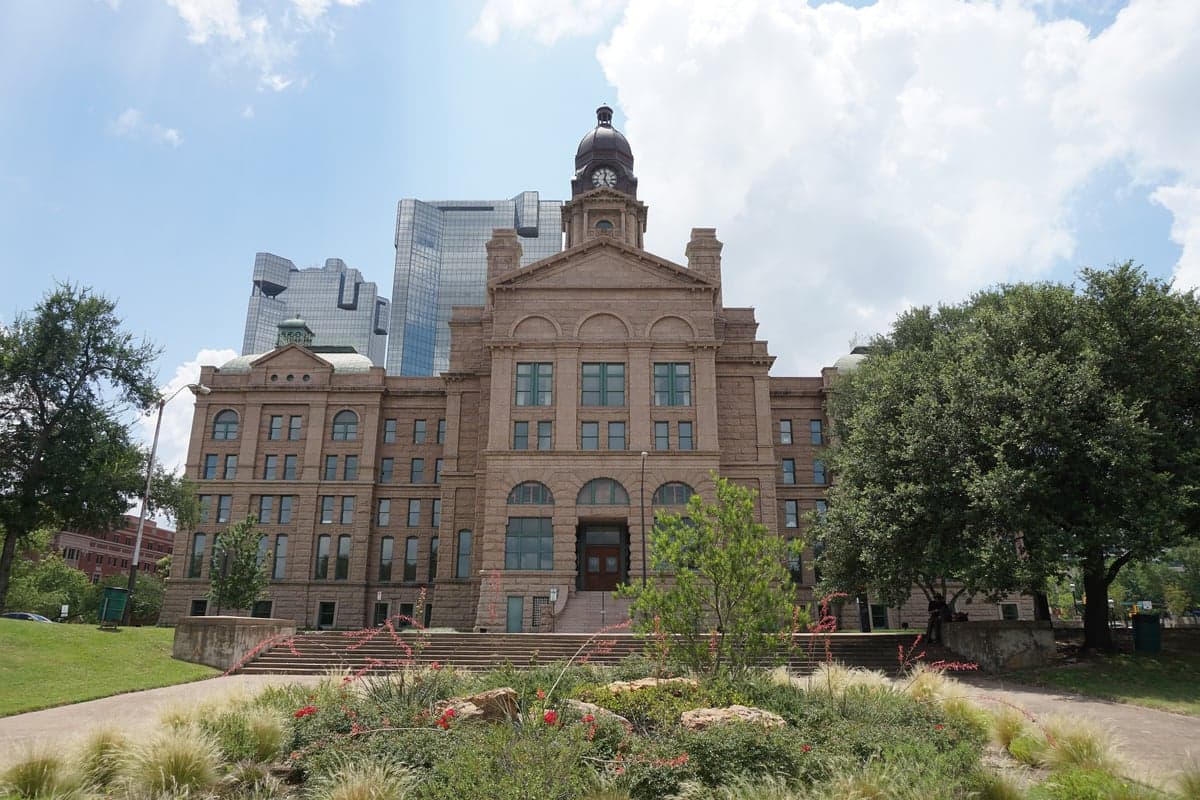
Photo: Wikipedia
Political ClimatePolitical Climate in Tarrant County
Showing state-level results — no local-only data available.
Local Political AnalysisPolitical Analysis of Tarrant County
Tarrant County, Texas, has historically been a conservative stronghold, but recent demographic shifts and urban growth have turned it into a political battleground. The Cook Partisan Voting Index (PVI) now rates the county as D+19, meaning it leans Democratic by 19 points compared to the national average—a stark contrast to its reliably red past. This shift is most visible in the county's urban core, particularly in Fort Worth's central and near-southside neighborhoods, where progressive candidates have gained ground. However, the county's political landscape is far from uniform, with deep red pockets in the suburbs and exurbs that still hold firm to traditional values.
How it compares
When you look at Tarrant County's political geography, it's a tale of two worlds. The city of Fort Worth itself is a microcosm: precincts in the 76104 and 76107 ZIP codes (near downtown and the Cultural District) have swung hard left, while areas like Benbrook and far west Fort Worth (around 76126) remain reliably conservative. The suburbs tell a similar story. Arlington, home to the University of Texas at Arlington, has seen its precincts trend blue, especially around the university and along the I-30 corridor. In contrast, towns like Southlake, Keller, and Colleyville are still solidly red, with precincts regularly voting Republican by 20-30 points. The swing precincts are often found in the mid-cities like Bedford and Euless, where moderate voters can tip the scales. Compared to neighboring Dallas County (D+26) and Denton County (R+12), Tarrant sits right in the middle—a purple county that could go either way in a close election.
What this means for residents
For those of us who've lived here a while, the political shift feels like a slow erosion of the values that made this area great. The growing progressive influence in Fort Worth's city council and county commissioners' court has led to policies that feel like government overreach—think mask mandates that lasted longer than necessary, zoning changes that favor high-density development over single-family homes, and a push for "equity" initiatives that often come with more bureaucracy than results. If you're in Southlake or Keller, you might not feel it as much, but watch out: the county-wide tax base is increasingly funding programs that don't align with conservative priorities. The long-term trend is concerning—if the progressive wave continues, we could see more restrictions on property rights, higher taxes to fund social programs, and a loss of local control as the county aligns with state-level battles over issues like school choice and Second Amendment protections.
Culturally, Tarrant County still has a strong independent streak—the Stockyards and the annual Fort Worth Stock Show & Rodeo are reminders of our cowboy heritage. But the influx of out-of-state transplants, especially from California and the Northeast, is diluting that identity. You'll notice more "Keep Fort Worth Weird" bumper stickers and fewer "Don't Tread on Me" flags. The policy distinctions are real: while the state legislature has passed laws to protect gun rights and limit abortion access, Tarrant County's local leadership sometimes drags its feet on enforcement. For now, the best advice is to get involved in your local precinct—school board and city council races matter more than ever. If you're considering a move here, know that your vote will count, but the county's direction depends on which side shows up.

State Political ClimatePolitical Climate in Texas
State Political AnalysisPolitical Environment in the State
Texas remains a solidly Republican state, but the political landscape has shifted noticeably over the past 10-20 years. The dominant coalition is still conservative, anchored by rural and suburban voters, but the margins have tightened as fast-growing metros like Austin, Dallas, and Houston have become more competitive. In 2024, Donald Trump won Texas by about 9 points, down from 11 points in 2020 and 16 points in 2016, reflecting a slow but steady erosion of the GOP’s advantage. The state’s political identity is still defined by limited government, low taxes, and individual liberty, but the influx of out-of-state transplants—especially from California and the Northeast—is reshaping the battleground.
Urban vs. rural divide
The political map of Texas is a tale of two worlds. The vast rural expanse—places like Lubbock, Abilene, and the Panhandle—votes overwhelmingly Republican, often by 70-80% margins. These areas are the backbone of the state’s conservative identity. Meanwhile, the major urban centers are the Democratic strongholds. Austin is the most liberal city in Texas, with Travis County voting +50 points for Biden in 2020. El Paso and Houston (Harris County) are also deep blue, driven by large Hispanic and African American populations. The real action is in the suburbs. Collin County (north of Dallas) and Denton County were once reliably red but have become competitive as professionals and families move in. In 2024, Collin County voted for Trump by only 8 points, down from 15 points in 2016. Fort Bend County (southwest of Houston) flipped to Biden in 2020 and stayed blue in 2024, a warning sign for conservatives. The divide isn’t just geographic—it’s cultural. Rural Texans see the state as a bastion of freedom, while urbanites increasingly push for progressive policies on taxes, housing, and social issues.
Policy environment
Texas’s policy environment is a mixed bag for conservatives. On the plus side, the state has no income tax, a low regulatory burden, and a right-to-work law that keeps unions weak. Property taxes are high—averaging about 1.7% of home value—but the state caps appraisal increases and offers exemptions for homeowners and seniors. Education policy is a flashpoint. The state has a school choice voucher program (the Texas Education Savings Account) passed in 2023, but it’s limited to low-income and special-needs students. Public schools are funded by local property taxes, leading to wide disparities between wealthy and poor districts. Healthcare is a mess: Texas has the highest uninsured rate in the nation (about 18%), and the state refused to expand Medicaid under Obamacare. Election laws have tightened since 2021’s SB 1, which banned drive-through voting and 24-hour polling places, and added ID requirements for mail ballots. Critics call it voter suppression; supporters say it’s election integrity. The state also passed a permitless carry law (HB 1927) in 2021, allowing most adults to carry handguns without a license. On abortion, Texas has a near-total ban (SB 8 and the trigger law) with no exceptions for rape or incest, which has made it a battleground for pro-life and pro-choice activists.
Trajectory & freedom
Texas is becoming more free in some areas and less free in others. On the freedom front, the state expanded gun rights with permitless carry in 2021 and passed a law (HB 25) in 2023 that prohibits local governments from enforcing federal gun laws. Parental rights got a boost with the 2023 law (HB 900) that restricts sexually explicit content in school libraries and requires parental consent for student health surveys. Property rights are strong—Texas has no state-level rent control, and the 2021 law (SB 147) banned foreign ownership of land near military bases. But there are worrying trends. The state’s medical autonomy took a hit with the 2023 ban on gender-affirming care for minors (SB 14), which some see as government overreach into private medical decisions. Taxation is creeping up: property taxes have risen faster than inflation, and the state’s reliance on sales tax (8.25% in most areas) hits low-income families hardest. The biggest threat to freedom is the growth of government at the local level. Cities like Austin and Houston have imposed strict zoning, rent control measures, and vaccine mandates, while the state legislature has pushed back with preemption laws (e.g., banning local mask mandates in 2021). The tension between state and local control is a defining feature of Texas politics.
Civil unrest & political movements
Texas has seen its share of political flashpoints. The 2020 Black Lives Matter protests in Austin and Dallas were large and sometimes violent, leading to property damage and a backlash that helped fuel the 2021 permitless carry law. Immigration politics are a constant source of tension. The state launched Operation Lone Star in 2021, deploying state troopers and National Guard to the border, and passed SB 4 in 2023, which makes illegal entry a state crime. El Paso and the Rio Grande Valley are ground zero for this, with local officials often clashing with the state over sanctuary policies. Secession rhetoric is alive but fringe—the Texas Nationalist Movement has some support, but polling shows only about 20% of Texans favor independence. Election integrity remains a hot-button issue. The 2020 election saw lawsuits over ballot drop boxes in Harris County, and the 2024 cycle was marked by allegations of non-citizen voting (though no widespread fraud was proven). A new resident would notice the political polarization in everyday life: bumper stickers, yard signs, and heated conversations at the grocery store. The state is a battleground for both left-wing and right-wing activism, from Moms for Liberty to the Texas Democratic Party’s “Turn Texas Blue” campaign.
Projection
Over the next 5-10 years, Texas will likely become more competitive but remain Republican-leaning. The key driver is in-migration: about 1,000 people move to Texas every day, mostly from blue states like California and New York. These transplants tend to be younger, more educated, and more liberal, but they also bring conservative values on taxes and property rights. The suburbs of Dallas, Houston, and Austin will continue to shift left, while rural areas and the Panhandle stay deep red. The Hispanic vote is the wild card: Texas Hispanics voted about 40% for Trump in 2024, up from 35% in 2020, suggesting a realignment that could keep the state red. The state legislature will likely stay in GOP hands, but the governor’s race in 2026 could be competitive if Democrats run a moderate candidate. Expect more fights over school choice, property tax reform, and immigration. The biggest risk for conservatives is that the state’s growing population will demand more government services—roads, schools, water—which could lead to higher taxes and more regulation. A new resident moving in now should expect a state that is still fundamentally conservative but increasingly divided, with a political climate that rewards engagement and vigilance.
For a new resident, the bottom line is this: Texas offers a low-tax, high-freedom environment compared to most states, but it’s not a libertarian paradise. You’ll find strong protections for gun rights, parental rights, and property rights, but you’ll also face high property taxes, a strained healthcare system, and a growing government bureaucracy. The political climate is vibrant and often contentious, but it’s still a place where your vote matters and your voice can be heard. If you’re moving for freedom, you’ll find plenty of it—but you’ll also need to stay engaged to keep it that way.
* Values derived from national, state, county, city and local statistics and may differ in a specific area. Last updated: 2026-04-13T02:41:30.000Z
Narrative content on this page is AI-generated and may contain mistakes. Verify any details that matter before acting on them.
ReloMaps may earn a commission from affiliate links at no extra cost to you.

