Photo: Wikipedia
Political ClimatePolitical Climate in Palo Pinto County
Showing district-level results — no local-only data available.
Local Political AnalysisPolitical Analysis of Palo Pinto County
Palo Pinto County is a solidly Republican stronghold with a Cook PVI of R+18, making it significantly more conservative than Texas as a whole, which sits at R+4. The county has voted Republican in every presidential election since at least 2000, and the margin has only widened over time—Donald Trump carried it by roughly 35 points in 2020, up from about 30 points in 2016. This isn't a place that's trending purple; it's a place where the red is deepening, driven by rural values, energy-sector employment, and a growing population of retirees and second-home owners from the Dallas-Fort Worth metroplex who are often drawn here precisely because of the conservative culture.
How it compares
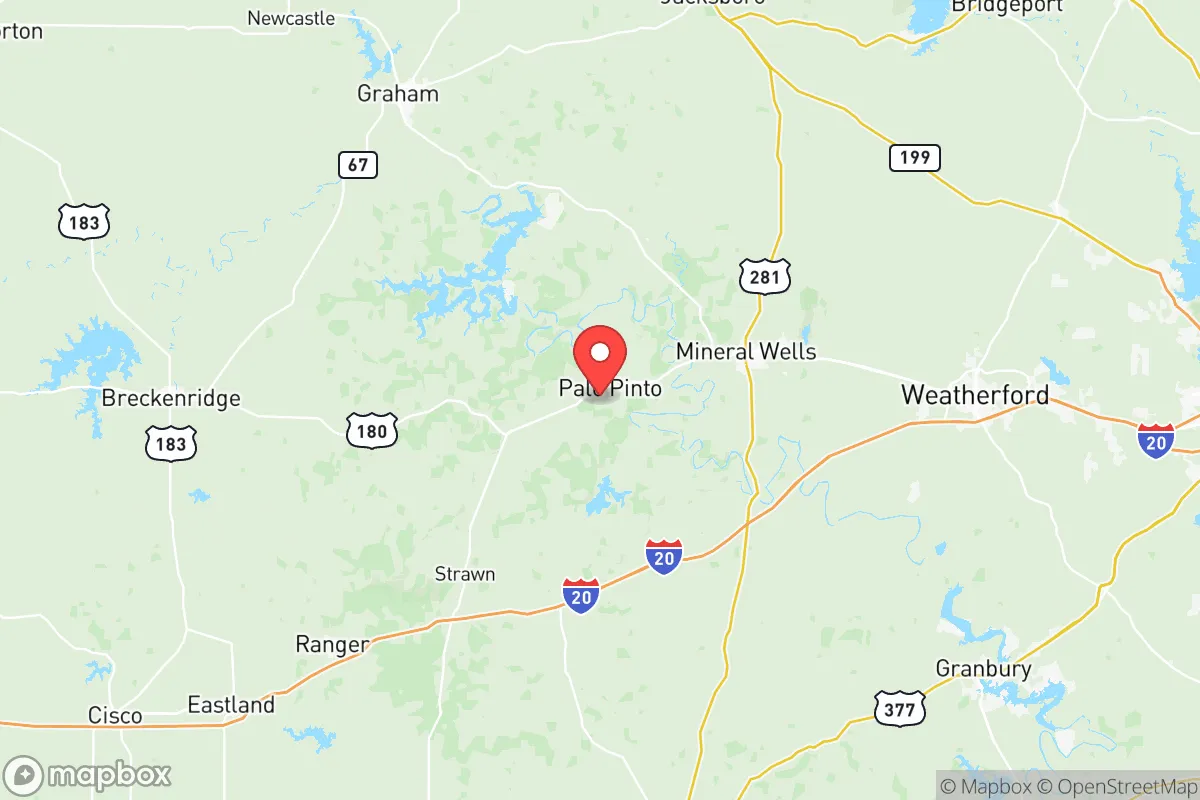
Compared to Texas at large, Palo Pinto County is about 14 points more Republican on the PVI scale, which is a substantial gap. The state's R+4 rating reflects a competitive lean that still allows Democrats to win statewide office occasionally (e.g., Beto O'Rourke's 2018 Senate race came within 2.6 points), but Palo Pinto County is in a different universe. In the 2022 gubernatorial election, Greg Abbott won the county with 78% of the vote, while he took 55% statewide. The county's rural character—its largest town, Mineral Wells, has about 15,000 people—means it lacks the urban and suburban swing precincts that make Texas competitive. Even within the county, there's variation: Mineral Wells itself has a few precincts near the downtown and the old Craig Field area that lean slightly more moderate (around 55-60% Republican), while the smaller towns like Palo Pinto, Gordon, and Strawn routinely hit 80-85% Republican. The only precinct that ever flirts with blue is the one around the Possum Kingdom Lake community, where a mix of DFW transplants and weekenders sometimes vote 45-50% Democratic, but it's never enough to flip a countywide race.
What this means for residents
For conservative residents, the political climate means their values are reflected in local governance—the county commissioners court is all-Republican, school boards are conservative, and there's little pushback on issues like gun rights, property tax caps, or energy development. For liberal residents, it means they are a distinct minority, but not an invisible one; there are active Democratic clubs in Mineral Wells and Palo Pinto, and the county's small size means personal relationships often trump partisan divides. The practical effect is that local policy tends to be low-tax, low-regulation, and pro-business, with a strong emphasis on Second Amendment rights and rural landowner protections. The county has also been a battleground over wind energy development, with some residents welcoming the tax revenue and others opposing the visual impact—a debate that splits more along property lines than party lines.
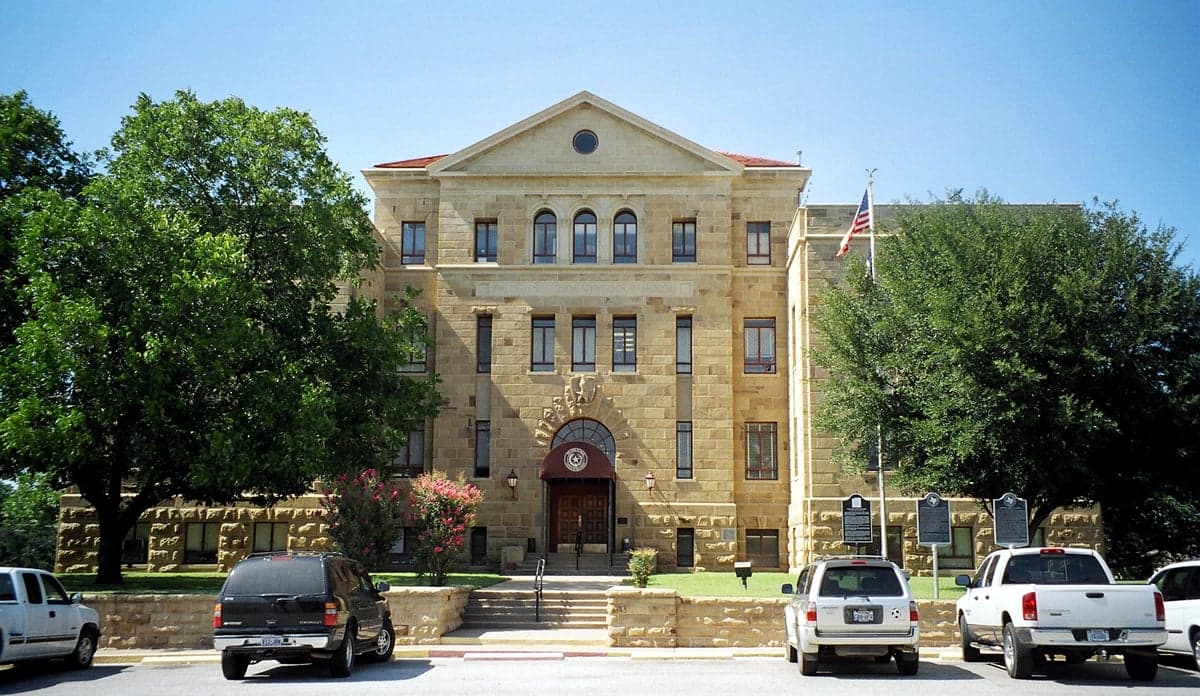
Culturally, Palo Pinto County is more "Old West" than "New Texas." The county seat, Palo Pinto, still has a courthouse square that feels like a 1950s movie set, and the annual Palo Pinto County Livestock Show is a bigger deal than any political rally. The biggest policy distinction from the state is the county's aggressive opposition to any form of public transit or regional planning that might bring "urban" influence—a stance that keeps things quiet but also limits economic development outside of tourism and energy. For anyone moving here, the political reality is straightforward: if you're conservative, you'll feel at home; if you're liberal, you'll find your people, but you'll also learn to pick your battles.

State Political ClimatePolitical Climate in Texas
State Political AnalysisPolitical Environment in the State
Texas is a solidly Republican state with a Cook PVI of R+4, meaning it leans about four points more Republican than the national average in presidential elections. Over the past 10-20 years, the state has shifted from a deep-red stronghold to a more competitive battleground, driven by explosive growth in the urban crescent from Dallas-Fort Worth down through Austin to San Antonio and Houston. The dominant coalition remains conservative, anchored by rural and suburban voters, but the margin has tightened as Democratic-leaning transplants and younger voters pour into the major metros. In 2020, Donald Trump won Texas by 5.6 points, down from 9 points in 2016 and 16 points in 2012, signaling a real but gradual realignment.
Urban vs. rural divide
The political map of Texas is a study in contrasts. The big four metros — Houston, Dallas-Fort Worth, San Antonio, and Austin — are the Democratic engine, with Harris County (Houston) and Dallas County flipping blue in the 2010s and staying there. Austin's Travis County is the bluest in the state, routinely delivering 70%+ Democratic margins. Meanwhile, the vast rural and exurban expanse — from the Panhandle down through West Texas and into East Texas — votes overwhelmingly Republican. The suburbs are the real battleground: Tarrant County (Fort Worth) flipped from red to blue in 2020, while Collin County (north of Dallas) and Williamson County (north of Austin) have shifted from deep red to purple. In 2024, Trump improved his margins in many border counties like Starr County and Zapata County, which had been trending Democratic, showing that the rural-urban divide is not absolute — Hispanic working-class voters in the Rio Grande Valley are moving right.
Policy environment
Texas has no state income tax, funded instead by high property taxes and a 6.25% state sales tax (local add-ons can push it over 8%). The regulatory posture is famously business-friendly: no state-level minimum wage above the federal $7.25, weak union protections, and a "right-to-work" law. Education policy is a flashpoint: the state funds public schools through a complex Robin Hood system that redistributes property tax revenue from wealthy districts to poor ones, and the school choice debate is perennial — in 2023, Governor Greg Abbott pushed for education savings accounts but failed to pass them through the House. Healthcare is a gap: Texas has the highest uninsured rate in the nation (about 18% as of 2024), having refused Medicaid expansion under the ACA. Election laws have tightened: Senate Bill 1 (2021) restricted mail-in voting, added ID requirements, and banned drive-through and 24-hour voting. The state also has a "constitutional carry" law (permitless carry of handguns) since 2021, and abortion is effectively banned under the Human Life Protection Act of 2021, with no exceptions for rape or incest.
Recent policy direction
The last five years have seen a sharp conservative turn on several fronts. On gun and self-defense law, Texas passed permitless carry in 2021, allowing any law-abiding adult to carry a handgun without a license or training. On parental and education rights, the state enacted a "Parental Bill of Rights" in 2023 and banned "critical race theory" and certain library books in public schools. On speech, a 2021 law (HB 20) restricts social media platforms from moderating content based on viewpoint, though it's been tied up in court. On privacy and surveillance, Texas passed a data privacy law (HB 4390) in 2023 giving residents the right to opt out of data collection, but it's weaker than California's. On medical and bodily autonomy, the near-total abortion ban is the headline, but the state also restricted gender-affirming care for minors in 2023. On property rights, Texas has strong eminent domain protections for landowners, but no statewide rent control (preempted by law). On taxation, the state has no income tax but relies on high property taxes; a 2023 law (SB 2) did provide some property tax relief by increasing the homestead exemption. On voting and ballot access, SB 1 (2021) tightened rules, but Texas still has no-excuse early voting and same-day registration is not allowed.
Civil unrest & political movements
Texas has seen its share of political flashpoints. The 2020 Black Lives Matter protests in Austin and Houston were large and occasionally violent, leading to a backlash that helped fuel the 2021 "defund the police" debates. On the right, the "Texas Nationalist Movement" (Texit) has been a persistent but fringe force, polling around 10-15% support. Immigration politics are front and center: Governor Abbott's Operation Lone Star (2021) deployed state troopers and National Guard to the border, bused migrants to Democratic cities, and installed razor wire and buoys in the Rio Grande — all challenged in court. Sanctuary city policies are banned statewide (SB 4, 2017), but some cities like Austin and Dallas have resisted cooperation with federal immigration enforcement. Election integrity remains a hot-button issue: after 2020, Texas conducted a forensic audit of four counties (including Harris County), finding no widespread fraud but fueling ongoing distrust. A new resident would notice the "Don't Mess with Texas" attitude on bumper stickers and the omnipresent political yard signs — especially in the suburbs, where local school board races have become proxy wars over curriculum and library books.
Projection
Over the next 5-10 years, Texas is likely to continue its slow drift toward competitiveness, but not flip. The state is adding about 1,000 new residents per day, many from California and the Northeast, and they tend to be younger and more diverse. The urban cores will stay blue, the rural areas will stay red, and the suburbs — especially in the I-35 corridor from San Antonio to Dallas — will be the decisive battlegrounds. The Hispanic vote is the wild card: if the trend seen in the Rio Grande Valley continues, Texas could become more Republican, not less. The state's political leadership will likely remain conservative, but the margin of control may narrow. A new resident moving in now should expect a state where the culture wars are fought at the local level — school boards, city councils, and county commissions — and where the state government is aggressive in preempting local ordinances on everything from fracking bans to plastic bag bans to sanctuary policies. The practical reality is that Texas is a big, diverse state where your political experience depends heavily on where you live: Austin feels like a blue island, Lubbock feels like a red fortress, and the suburbs are the front lines.
For a new resident, the bottom line is that Texas offers a low-tax, low-regulation environment with a strong conservative tilt at the state level, but with significant local variation. If you're conservative, you'll find a state government that largely aligns with your values on guns, taxes, and education. If you're liberal, you'll find vibrant blue cities and a growing political movement, but you'll also face state-level policies that may feel restrictive on abortion, voting, and immigration. The key is to choose your community wisely — the political climate in Fort Worth is very different from Austin, and both are different from El Paso. Texas is not a monolith, and that's its greatest strength and its greatest challenge for anyone moving here.
* Values derived from national, state, county, city and local statistics and may differ in a specific area. Last updated: 2026-07-03T01:27:09.000Z
Narrative content on this page is AI-generated and may contain mistakes. Verify any details that matter before acting on them.
ReloMaps may earn a commission from affiliate links at no extra cost to you.

