Photo: Wikipedia
Demographics of Palo Pinto County
Affluence Level in Palo Pinto County
A below-average socioeconomic profile. Incomes, home values, and educational attainment trail the U.S., with higher poverty and unemployment.
People of Palo Pinto County
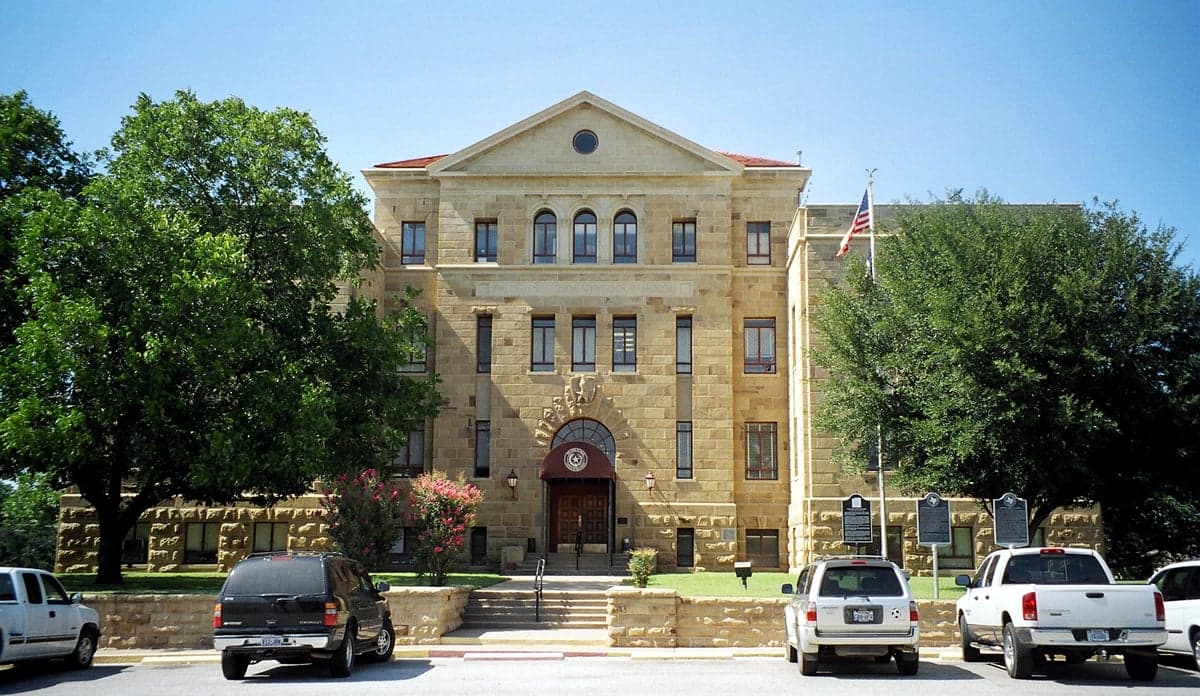
Today, Palo Pinto County, Texas, is home to roughly 28,920 residents, a population that remains predominantly White (73.3%) with a significant and growing Hispanic community (20.2%). The county’s character is defined by its small-town, rural identity, anchored by the county seat of Palo Pinto and the larger towns of Mineral Wells and Gordon. Unlike the booming suburban counties to the east, Palo Pinto County retains a slower pace, with a lower college attainment rate (18.7%) and a very small foreign-born population (3.7%), reflecting its deep roots in native-born Texan families.
Settlement & growth (pre-1960)
Before Anglo-American settlement, the area now known as Palo Pinto County was part of the traditional territory of several Native American nations, most notably the Comanche, who used the region’s rugged hills and river valleys for hunting and seasonal camps. The name “Palo Pinto” itself is Spanish for “painted stick,” likely referencing a distinctive creek or tree, but Spanish and Mexican colonization efforts did not establish permanent settlements here. The first permanent Anglo settlers arrived in the 1850s, primarily from the Upper South (Tennessee, Kentucky, and Missouri), drawn by the promise of cheap land for ranching and farming. These early settlers were largely of Scots-Irish and English descent, and they established the first communities along the Brazos River and its tributaries.
The county was officially organized in 1856, with the town of Palo Pinto serving as the initial hub. The arrival of the railroad in the 1880s was a transformative event, spurring the founding of new towns like Mineral Wells, which quickly became a destination for its mineral water springs. The discovery of oil in the Ranger Field in the 1910s and 1920s brought a brief but intense boom, drawing workers from across Texas and the South, though the population remained overwhelmingly White and native-born. The Dust Bowl and Great Depression of the 1930s saw an influx of displaced farmers from the Oklahoma and Texas Panhandle regions, many of whom settled in the county’s rural areas and small towns like Gordon and Graford. By 1960, the county’s population was nearly entirely White, with a small Black population (around 5-6%) concentrated in Mineral Wells, and virtually no Hispanic or Asian residents.
Modern era (post-1965)
The post-1965 era, shaped by the Hart-Cellar Act, brought only modest demographic change to Palo Pinto County compared to urban Texas. The county’s foreign-born population remains low at 3.7%, and the Hispanic share has grown steadily but not explosively, rising from a negligible base in 1970 to 20.2% today. This growth is driven primarily by domestic migration from other parts of Texas and the Southwest, rather than direct immigration from Mexico or Central America. Many Hispanic families have moved to Mineral Wells and the unincorporated areas around Lake Palo Pinto, drawn by work in construction, services, and the local energy sector.
The county’s Black population has declined from its historical peak, now standing at just 2.5%, as younger generations have moved to larger cities like Fort Worth and Dallas for greater economic opportunity. The East/Southeast Asian population is minuscule at 0.2%, and the Indian subcontinent population is similarly small at 0.7%, with no significant enclaves forming. Domestic migration from the Rust Belt and coastal states has been limited, as the county lacks the high-growth job markets of the Dallas-Fort Worth metroplex. However, a small but steady stream of retirees and second-home buyers from the Dallas area has settled around Possum Kingdom Lake, particularly in the communities of Graford and the unincorporated lake area, seeking a quieter, more affordable lifestyle.
The future
Palo Pinto County is projected to remain a predominantly White, rural county with a slowly growing Hispanic minority. The population is aging, with a median age above the state average, and the county is not expected to see the rapid diversification seen in nearby urban centers. The Hispanic share is likely to continue its gradual increase, potentially reaching 25-28% by 2040, driven by natural increase and continued domestic migration from within Texas. The White population will likely decline slightly in absolute terms as older residents pass away and younger adults move to cities for education and employment.
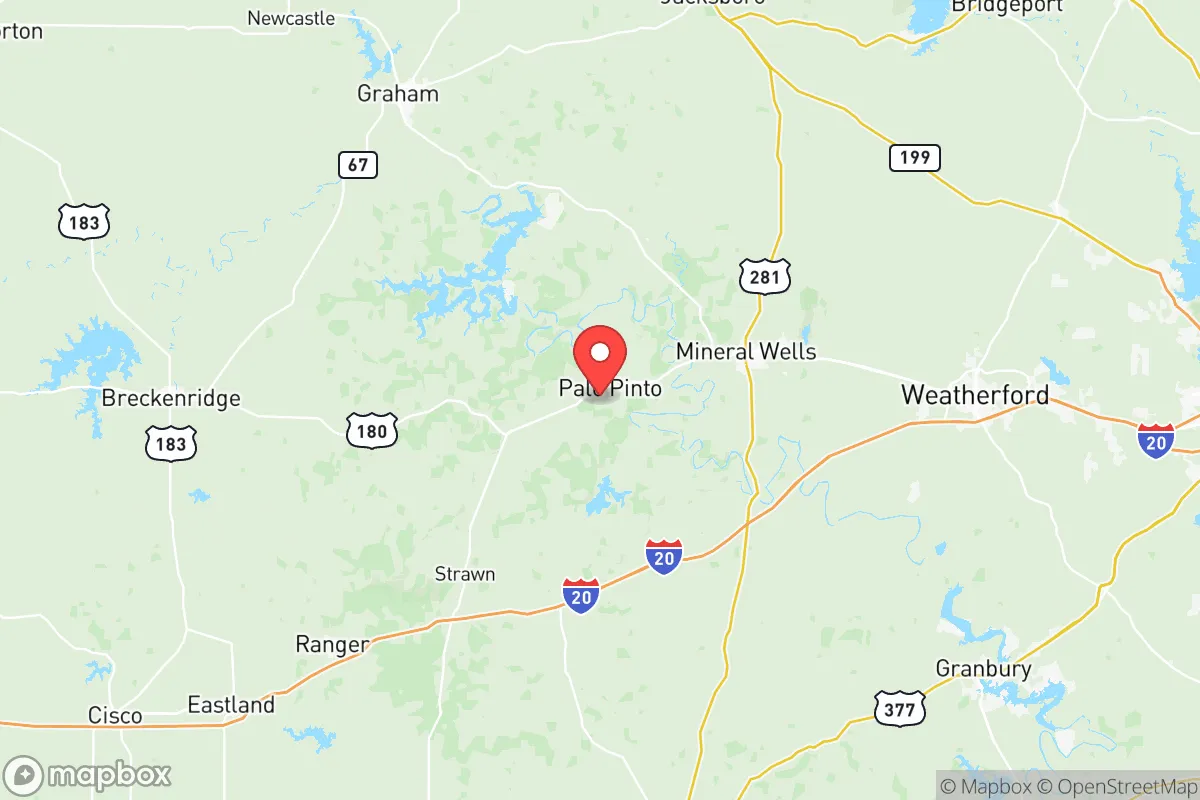
New residential development will concentrate around Possum Kingdom Lake and the southern edge of the county near Interstate 20, where commuters to Fort Worth and Weatherford are beginning to look for cheaper land. The towns of Mineral Wells and Palo Pinto will likely see modest infill growth but not explosive expansion. The county’s cultural identity will remain rooted in its ranching and small-town heritage, with the Hispanic community becoming more integrated into local civic life. The very low foreign-born share means that the county will not experience the kind of ethnic enclave formation seen in larger Texas cities.
For someone moving in now, Palo Pinto County offers a stable, slow-changing environment where the population is overwhelmingly native-born, English-speaking, and rooted in Texas traditions. The county is becoming slightly more diverse, but at a pace that will not fundamentally alter its character for decades. New residents will find a place where community ties are strong, the cost of living is low, and the demographic shifts of urban America feel distant.

* Values derived from national, state, county, city and local statistics and may differ in a specific area. Last updated: 2026-07-03T01:27:09.000Z
Narrative content on this page is AI-generated and may contain mistakes. Verify any details that matter before acting on them.
ReloMaps may earn a commission from affiliate links at no extra cost to you.

