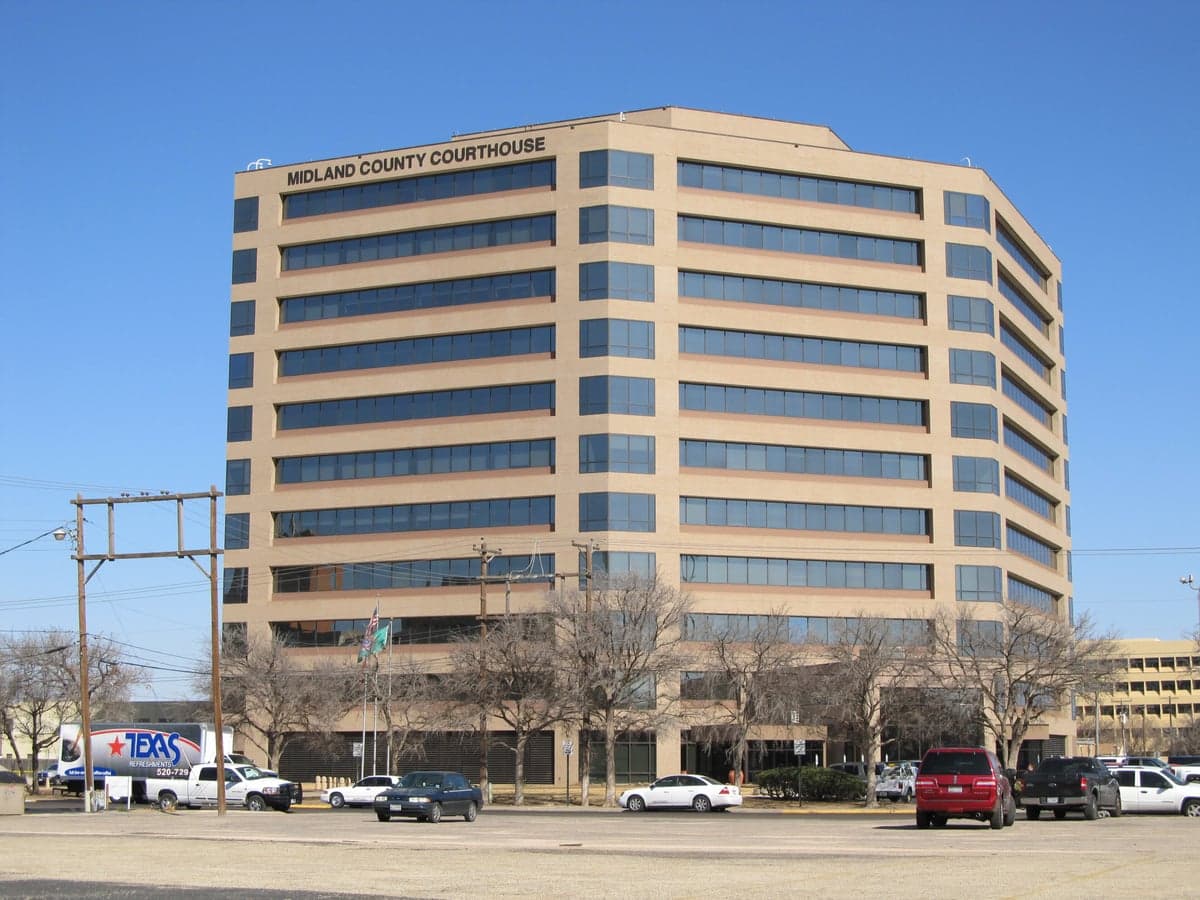
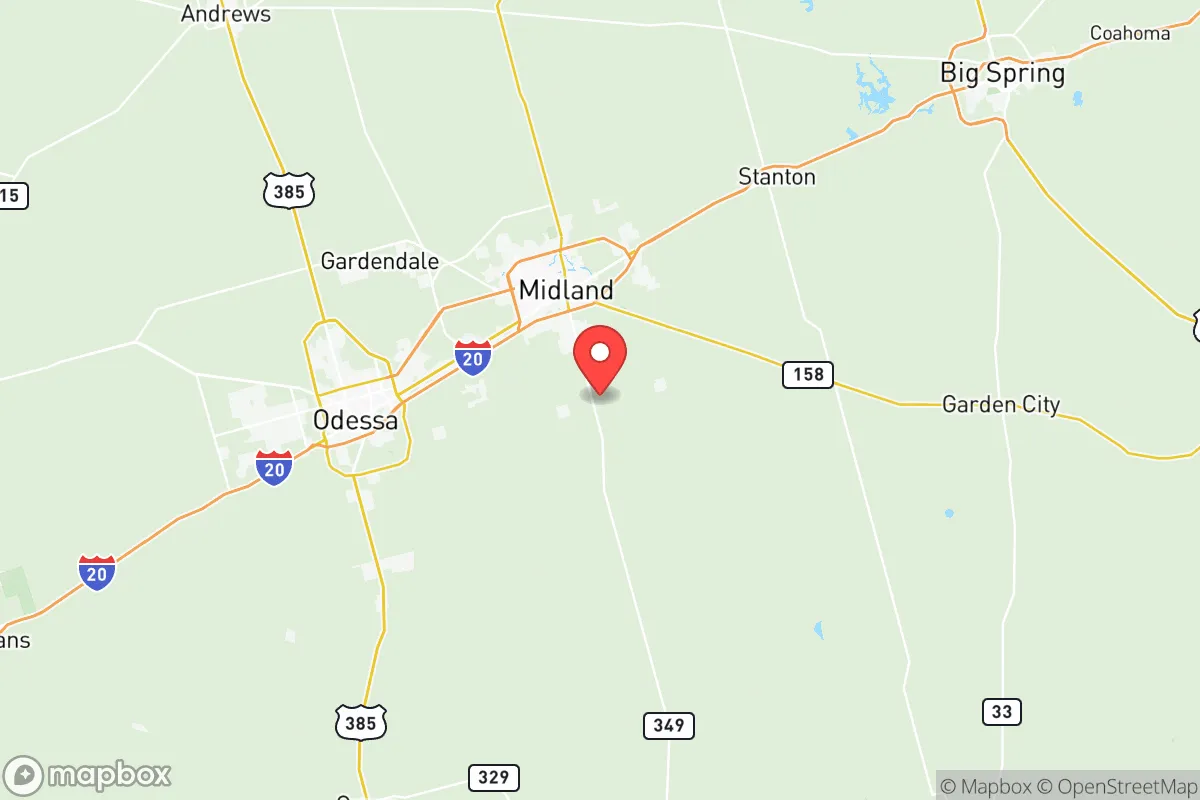
Photo: Wikipedia
Quality of Life in Midland County
A livable area that tracks near national norms for affordability, walkability, and neighborhood health.
What does Quality of Life tell us?
Quality of Life measures an area by evaluating factors like cost of living, nearby amenities, country club access, airport proximity, socioeconomic signals and neighborhood character. For large states, this is a general average — quality of life can vary dramatically between metro areas, suburbs, and rural communities within the same state.
What does this tell us?
Quality of Life measures an area by evaluating factors like cost of living, nearby amenities, country club access, airport proximity, socioeconomic signals and neighborhood character. For large states, this is a general average — quality of life can vary dramatically between metro areas, suburbs, and rural communities within the same state.
Cost of Living
13% above national average
112%
The Real Cost of Living in Midland County for 2026
| Tier | Individual | Family (4) |
|---|---|---|
| Survival | $22k | $41k |
| Comfortable | $57k | $84k |
| Luxury | $170k+ | $263k+ |
| Elite (Top 5%) | $205k+ | $318k+ |
Quality-of-Life Analysis
Midland County, Texas, offers a quality-of-life spectrum that ranges from the energy-industry bustle of its namesake city to the quiet, wide-open spaces of unincorporated communities like Greenwood and Spraberry. The county is dominated by the Permian Basin economy, which draws professionals, roughnecks, and entrepreneurs to its urban core, while its rural fringes attract those seeking lower-density living, larger lots, and a slower pace within commuting distance of Midland’s jobs and services. With a cost-of-living index of 113 (100 being the U.S. average), the county is more expensive than the national norm, but the range of housing and lifestyle options means that both high-earning oil executives and budget-conscious families can find a niche.
Largest town(s) & population centers
Midland is the county’s undisputed hub and the only incorporated city of significant size, home to roughly 130,000 residents. Daily life here is shaped by the oil and gas industry: the downtown skyline is dotted with energy company headquarters, and the local economy supports a robust service sector, from high-end restaurants to specialized engineering firms. The city offers a full suite of amenities, including the Midland International Air & Space Port, the Wagner Noël Performing Arts Center, and multiple hospitals. Housing in Midland proper is the county’s priciest, with a median home value of $293,000 and median rent of $1,383, though prices vary sharply by neighborhood — newer subdivisions in the northwest near Highway 191 command premiums, while older homes closer to downtown offer more modest entry points. Commute times average just 21.5 minutes, a reflection of the city’s manageable size and concentrated job base.
Smaller towns & rural pockets
Outside Midland’s city limits, the county’s character shifts dramatically. Greenwood, an unincorporated community about 15 miles southeast of Midland, is a classic West Texas crossroads with a small school district, a few churches, and a scattering of ranch-style homes on acreage. It is a popular choice for families who want a rural upbringing for their children but still need a 20-minute drive to Midland’s grocery stores and medical facilities. Spraberry, farther south near the county line, is even more sparsely populated, consisting largely of oilfield infrastructure and a handful of residences; it is less a residential community than a place name on the map for those working the Spraberry Trend oil field. The unincorporated area of Midkiff, straddling the Reagan County line, offers similar wide-open living with virtually no commercial services — residents here are fully committed to a self-sufficient, rural lifestyle. These pockets lack municipal services like public water and sewer in many cases, but land prices are significantly lower than in Midland, making them attractive for those willing to trade convenience for space.
Cost & lifestyle range
The cost-of-living spread across Midland County is driven almost entirely by housing. In Midland’s most desirable neighborhoods — such as the area around the Green Tree Country Club or newer developments near the Midland College campus — home values can exceed $400,000, pushing the cost of living well above the county’s 113 index. At the other end, older homes in central Midland or mobile homes on leased land in rural areas like Greenwood can be found for under $150,000, bringing the effective cost of living closer to or even below the national average for those who buy carefully. Rent follows a similar pattern: a two-bedroom apartment in a new complex near the Loop 250 corridor might run $1,600, while a similar unit in an older building on the south side could be $1,100. The average commute of 21.5 minutes holds true for most residents, though those living in far-flung rural areas like Spraberry may face 30- to 40-minute drives to Midland’s employment centers. Amenities thin out rapidly beyond the city limits — there are no grocery stores or hospitals in Greenwood or Midkiff — so rural residents must plan shopping and errands around trips into town.
This county works best for people who are comfortable with the oil-and-gas cycle and its impact on local employment and housing volatility. Professionals and tradespeople who want immediate access to jobs, schools, and entertainment will find Midland city itself a convenient, if pricey, base. Families and retirees who prioritize land, privacy, and a slower rhythm — and who can tolerate a longer drive for basic services — will find Greenwood and the surrounding unincorporated areas a viable, lower-cost alternative. The key is understanding that in Midland County, the choice between urban convenience and rural space is a direct trade-off, with no middle-ground suburbs to blur the line.

Crime in Midland County
Crime rates similar to the national median for U.S. locations.
Violent CrimeViolent Crime Analysis
Property CrimeProperty Crime Analysis
Crime Analysis
Midland County, Texas, reports a violent crime rate of 345.1 per 100,000 residents and a property crime rate of 1,794.2 per 100,000, placing it above national averages for both categories. While the county benefits from a strong oil-and-gas economy that funds robust law enforcement budgets, residents face elevated risks compared to safer suburban enclaves in the state. The county's justice system, overseen by the Midland County District Attorney's office, operates under a conservative legal framework that prioritizes public safety and victim rights, a contrast to the progressive prosecutorial policies seen in larger Texas metros like Houston or Dallas.
Crime in context
Midland County's violent crime rate of 345.1 per 100,000 is roughly 40% higher than the national average of 247 per 100,000 and significantly exceeds the Texas state average of approximately 290 per 100,000. Property crime in the county, at 1,794.2 per 100,000, also outpaces both the national average (1,954 per 100,000) and the Texas average (1,650 per 100,000). These figures place Midland County in a middle tier among Texas counties — safer than high-crime urban centers like Dallas or Houston, where progressive district attorneys have implemented policies such as reduced bail requirements and declined prosecutions for certain offenses, but notably more dangerous than suburban counties such as Collin County (home to Frisco and McKinney), which consistently report some of the lowest crime rates in the state. The contrast is instructive: Collin County's conservative prosecutorial approach and affluent tax base support lower crime, while Midland County's boom-and-bust oil economy creates transient populations and property crime opportunities that drive its numbers upward.
What residents experience
Residents of Midland County most frequently encounter property crime — theft, burglary, and motor vehicle theft — which accounts for the bulk of reported incidents. The city of Midland, the county seat and largest municipality, concentrates the majority of these offenses, particularly in commercial corridors and neighborhoods near the downtown oil-field service districts. Smaller communities such as Greenwood and Odessa (in adjacent Ector County) experience lower incident densities but are not immune to spillover crime from the Midland-Odessa metropolitan area. Violent crime, while less common, includes aggravated assault as the predominant category, often linked to domestic disputes and alcohol-fueled altercations in the oil-field workforce. The Midland County Sheriff's Office and Midland Police Department maintain visible patrols, and the county's conservative judicial philosophy — reflected in the DA's consistent pursuit of maximum sentences for violent offenders — provides a deterrent absent in jurisdictions with progressive prosecutors who prioritize rehabilitation over incarceration. Residents in unincorporated areas of the county, such as those near the Martin County line, report feeling safer due to lower population density and stronger neighborhood watch networks.
Neighborhood-level variation
Crime in Midland County is not evenly distributed. The highest rates concentrate in central Midland, particularly around the downtown core and along the "Big Spring" corridor, where transient oil workers and lower-income housing intersect. Safer areas include the newer subdivisions in northwest Midland, near the Midland International Air & Space Port, and the rural stretches around the towns of Garden City and Stanton (in adjacent Martin County). These neighborhoods benefit from higher property values, active homeowners associations, and proximity to well-funded police substations. For prospective residents, the choice of neighborhood within Midland County can significantly alter personal safety risk — a pattern common across Texas, where the difference between a progressive DA's jurisdiction and a conservative one can mean the difference between a revolving-door justice system and one that keeps repeat offenders off the streets. Midland County's commitment to law-and-order prosecution, unlike the soft-on-crime policies adopted in Harris County (Houston) or Dallas County, provides a measurable safety advantage for those living in its better-patrolled areas.
* Values derived from national, state, county, city and local statistics and may differ in a specific area. Last updated: 2026-07-05T22:49:16.000Z
Narrative content on this page is AI-generated and may contain mistakes. Verify any details that matter before acting on them.
ReloMaps may earn a commission from affiliate links at no extra cost to you.

