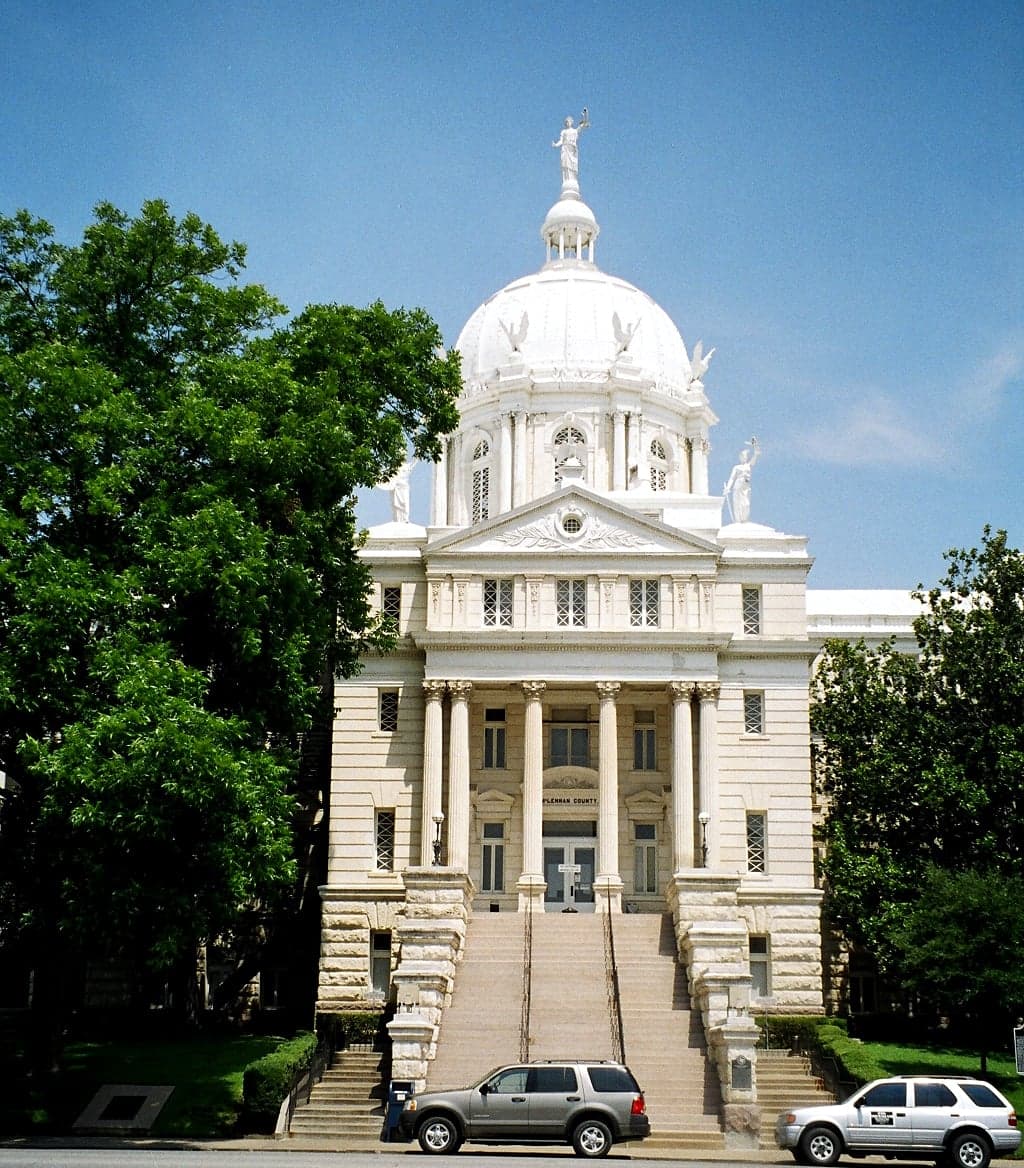
Photo: Wikipedia
Political ClimatePolitical Climate in Mclennan County
Showing district-level results — no local-only data available.
Local Political AnalysisPolitical Analysis of Mclennan County
McLennan County has long been a reliable Republican stronghold in Central Texas, carrying a Cook Partisan Voting Index (PVI) of R+14, which is significantly more conservative than the state of Texas as a whole (R+4). This isn't a recent shift; the county has voted for the GOP presidential candidate in every election since 2000, with margins often exceeding 20 points. However, the political reality on the ground is more nuanced than the countywide numbers suggest, with a clear urban-rural divide that creates distinct pockets of blue within a deep red sea.
How it compares
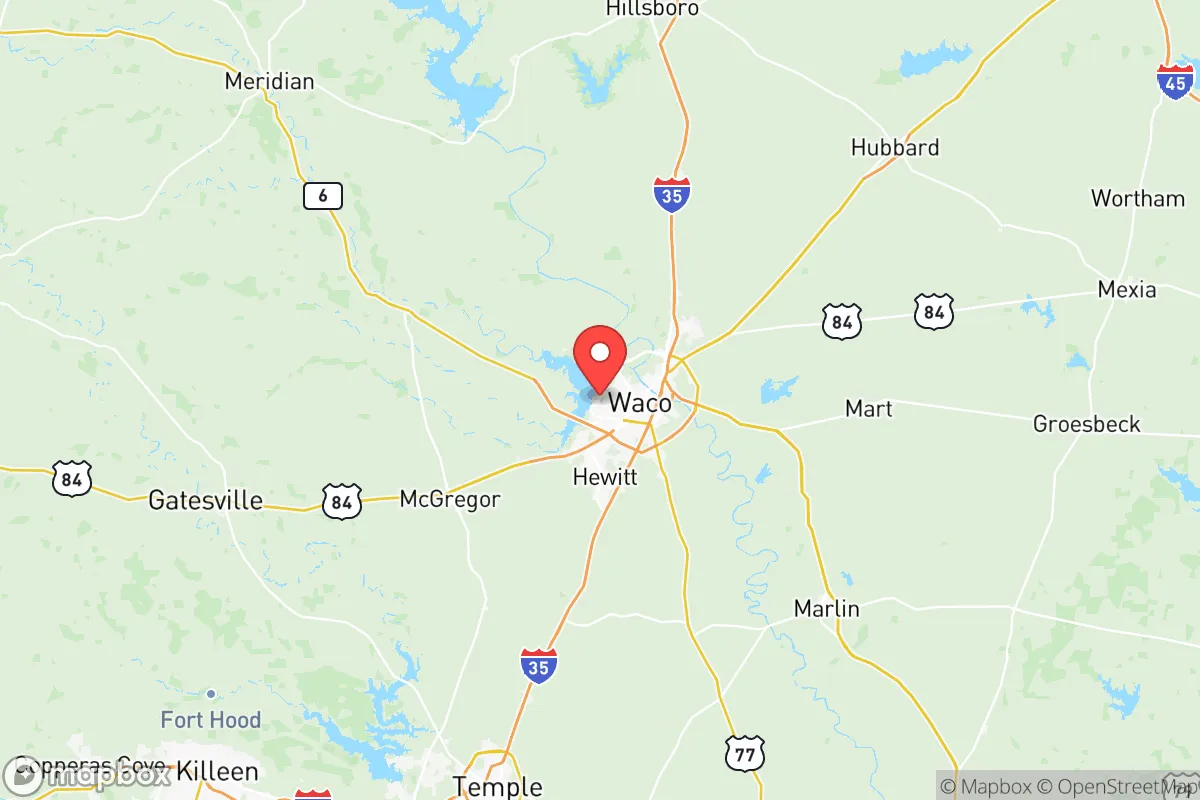
Compared to the rest of Texas, McLennan County is about 10 points more Republican on the Cook PVI scale. While Texas as a whole is a competitive red state with growing Democratic strongholds in Houston, Dallas, Austin, and San Antonio, McLennan County remains a bastion of traditional, rural conservatism. The county's politics are more akin to the deeply red regions of East Texas or the Panhandle than to the increasingly purple suburbs of the major metros. For example, the city of Waco, the county seat and largest city, is the only real source of Democratic votes. Precincts in central and east Waco, particularly around Baylor University and the historic neighborhoods, consistently vote blue. In contrast, the smaller towns like Hewitt, Woodway, Robinson, and McGregor are overwhelmingly Republican, often delivering 70-80% of their votes for GOP candidates. The unincorporated areas and rural precincts are even more conservative.
What this means for residents
For conservative residents, this political climate means their values are broadly reflected in local governance. County commissioners, the sheriff, and most city councils in the smaller towns are reliably Republican. Policies around taxes, gun rights, and social issues tend to align with conservative priorities. For liberal or moderate residents, the reality is that they are a clear minority. While they can find community in Waco's more progressive circles, particularly around Baylor and the local arts scene, they have little influence on county-level elections. Statewide, their vote is effectively canceled out by the surrounding red precincts. The practical impact is that local elections are often decided in the Republican primary, making that the de facto general election for most county offices. This can lead to lower voter turnout in the general election among Democrats, who may feel their vote is less impactful.
Culturally, this political divide manifests in distinct ways. Waco has a vibrant, if small, progressive community that supports local farmers' markets, independent bookstores, and a growing craft beer scene. The rest of the county is more traditional, with a strong emphasis on church attendance, hunting, and high school football. A notable policy distinction is the county's approach to alcohol sales: while Waco is "wet," many of the surrounding towns and unincorporated areas remain "dry" or "moist," reflecting the conservative social values of the broader population. Looking ahead, the county's trajectory is likely to remain red, though the continued growth of Waco—driven by the Magnolia Silos effect and Baylor's expansion—could slowly introduce more moderate or liberal voters, potentially making the county slightly less conservative over the next decade, but it will almost certainly remain a solid R+10 or higher district for the foreseeable future.

State Political ClimatePolitical Climate in Texas
State Political AnalysisPolitical Environment in the State
Texas has been a reliably Republican state for the past three decades, with a Cook Partisan Voting Index of R+4, but the story is far more complicated than a simple red-state label. The GOP has dominated every statewide office since 1994, and the state legislature has been under Republican control since 2003, yet the margin of victory has been shrinking in presidential races — from 16 points in 2012 to 9 points in 2016, and down to just under 6 points in 2020. The dominant coalition is a mix of rural and suburban conservatives, evangelical Christians, and business interests, but a rapidly growing urban and suburban population — particularly in the "Texas Triangle" of Dallas-Fort Worth, Houston, San Antonio, and Austin — is steadily pulling the state toward competitiveness.
Urban vs. rural divide
The political geography of Texas is a textbook case of the urban-rural split, with a few notable suburban exceptions. The major Democratic strongholds are the big cities: Harris County (Houston) alone cast more votes for Biden in 2020 than the entire Texas Panhandle, while Dallas County, Travis County (Austin), and Bexar County (San Antonio) all delivered double-digit margins for Democrats. The rural expanse — from the Piney Woods of East Texas to the oil fields of the Permian Basin — votes overwhelmingly Republican, often by 70-80 point margins. The real battleground is the suburbs: Collin County (north of Dallas) flipped from +17 R in 2016 to +2 R in 2020, while Fort Bend County (southwest of Houston) went from +6 R in 2012 to +7 D in 2020. Meanwhile, El Paso remains a Democratic stronghold on the border, and Lubbock and Midland-Odessa are among the most conservative metros in the country. The 2022 midterms showed some Republican recovery in the suburbs, but the long-term trend is toward a narrower statewide margin.
Policy environment
Texas operates under a conservative policy framework that has been remarkably stable for decades. There is no state income tax — funded instead by a combination of high property taxes (among the top 10 nationally) and an 8.25% max sales tax rate. The regulatory posture is famously business-friendly, with minimal zoning in many cities and a "right-to-work" law that prohibits union security agreements. Education policy is dominated by school choice debates: the state has not passed a universal voucher program, but in 2023 Governor Greg Abbott made it a legislative priority, and multiple bills have been introduced to create education savings accounts. Healthcare policy is defined by the state's refusal to expand Medicaid under the Affordable Care Act, leaving roughly 18% of the population uninsured — the highest rate in the nation. Election laws have been tightened: Senate Bill 1 (2021) restricted mail-in voting, added ID requirements, and limited drive-through and 24-hour voting options. The state also has a permitless carry law (2021) and a near-total abortion ban (trigger law effective 2022).
Recent policy direction
The last three legislative sessions have pushed Texas sharply to the right on multiple fronts, with concrete laws that relocators should weigh carefully. On gun rights, HB 1927 (2021) allows permitless carry of handguns for anyone 21 or older who can legally possess a firearm — no training or license required. On parental rights and education, HB 900 (2023) requires age-appropriate content ratings for library books and restricts "sexually explicit" material in schools, while SB 1479 (2023) prohibits diversity, equity, and inclusion offices at public universities. On speech and privacy, the state passed HB 20 (2023) to prevent social media platforms from moderating content based on viewpoint — though it's been blocked in court. On medical and bodily autonomy, SB 8 (2021) banned abortion after roughly six weeks via private enforcement lawsuits, and the trigger law (HB 1280) made abortion a felony in nearly all cases as of August 2022. Property rights remain strong, with no statewide zoning and limited eminent domain powers. On voting access, SB 1 (2021) banned 24-hour and drive-through voting, added new ID requirements for mail ballots, and gave partisan poll watchers more access. The overall direction is toward maximum individual liberty on guns and property, combined with heavy state intervention on social issues and voting procedures.
Civil unrest & political movements
Texas has seen significant political mobilization on both sides in recent years. The 2020 Black Lives Matter protests in Austin, Dallas, and Houston were among the largest in the country, with Austin alone seeing over 100 consecutive nights of demonstrations. On the right, the "Texas Nationalist Movement" continues to push for secession — though it remains a fringe effort with no serious legislative traction. Immigration politics are a constant flashpoint: Governor Abbott's Operation Lone Star (2021-present) has deployed thousands of National Guard troops to the border, bused migrants to Democratic-led cities, and installed razor wire along the Rio Grande, leading to ongoing legal battles with the Biden administration. The 2020 election integrity controversy was particularly intense in Texas, with Attorney General Ken Paxton filing a lawsuit (Texas v. Pennsylvania) at the Supreme Court seeking to overturn election results in four other states — a move that was rejected. More recently, the 2023 impeachment of Paxton by the Texas House (a Republican-controlled body) and his acquittal by the Senate exposed deep fractures within the state GOP between establishment and hardline factions. A new resident will notice the ubiquity of political signage, the intensity of local party activism, and the regular presence of border-security checkpoints within 100 miles of the Rio Grande.
Projection
Over the next 5-10 years, Texas is likely to become more competitive at the statewide level, but not necessarily more liberal. The key demographic driver is the continued growth of the urban-suburban "Texas Triangle," which is attracting both out-of-state conservatives and liberals — but the net effect is a slow erosion of the Republican margin. If current trends hold, Texas could be a true swing state by the 2030s, with presidential margins in the 1-3 point range. However, the state legislature is likely to remain Republican-controlled for longer due to gerrymandering and the concentration of Democratic votes in a few urban counties. The policy direction will probably moderate on some economic issues — property tax reform is a perennial issue, and Medicaid expansion may eventually become politically viable — while social issues could remain polarized. The wild card is the suburban shift: if fast-growing counties like Collin, Denton, and Fort Bend continue trending left, the GOP will need to either moderate or rely on even heavier rural turnout. Someone moving in now should expect a decade of intense political competition, with the possibility of major policy shifts if Democrats ever break the statewide losing streak.
For a new resident, the bottom line is that Texas offers a low-tax, low-regulation environment with strong property rights and gun protections, but also high property taxes, limited healthcare access, and a restrictive social policy landscape. Conservatives will find a state government that largely reflects their values, with the caveat that the urban areas are increasingly blue and culturally distinct. Liberals will find themselves in a minority at the state level but with significant local power in major cities — and a realistic chance of seeing the state become competitive within a decade. The practical takeaway: your experience of Texas politics will depend almost entirely on which of the 254 counties you choose to call home.
* Values derived from national, state, county, city and local statistics and may differ in a specific area. Last updated: 2026-07-08T22:34:47.000Z
Narrative content on this page is AI-generated and may contain mistakes. Verify any details that matter before acting on them.
ReloMaps may earn a commission from affiliate links at no extra cost to you.

