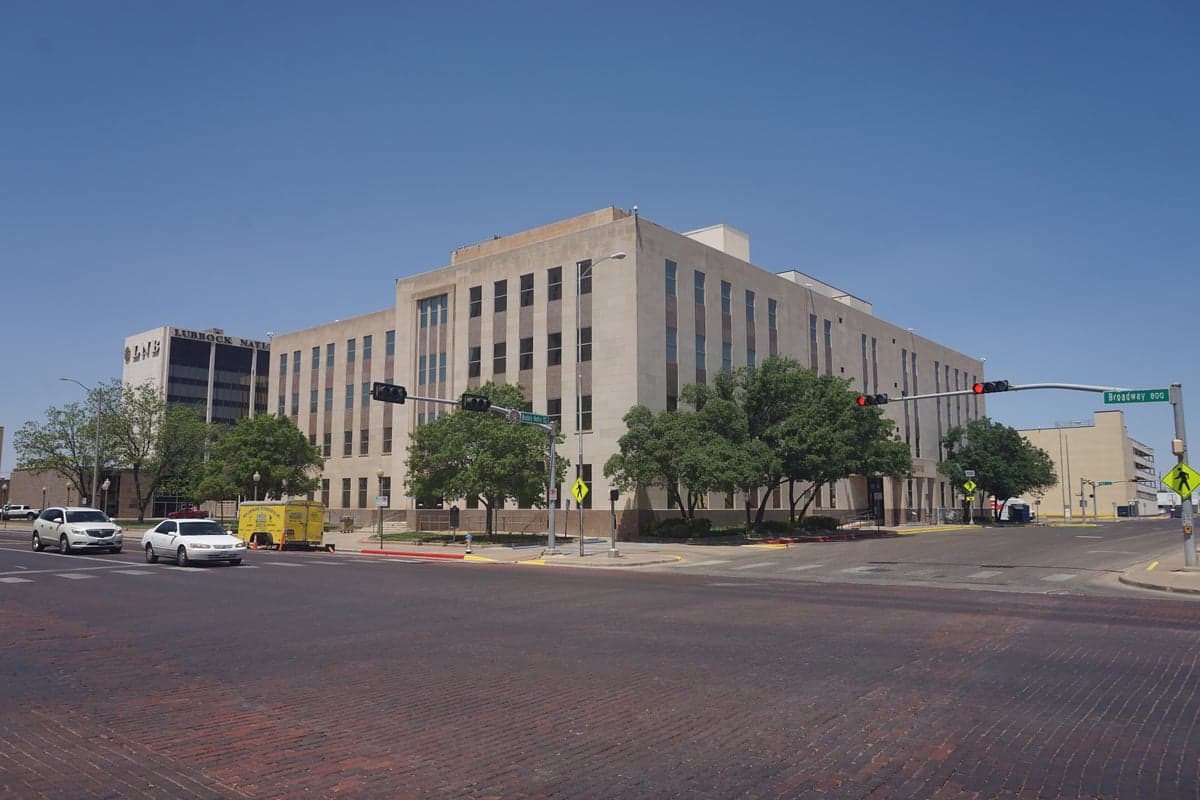
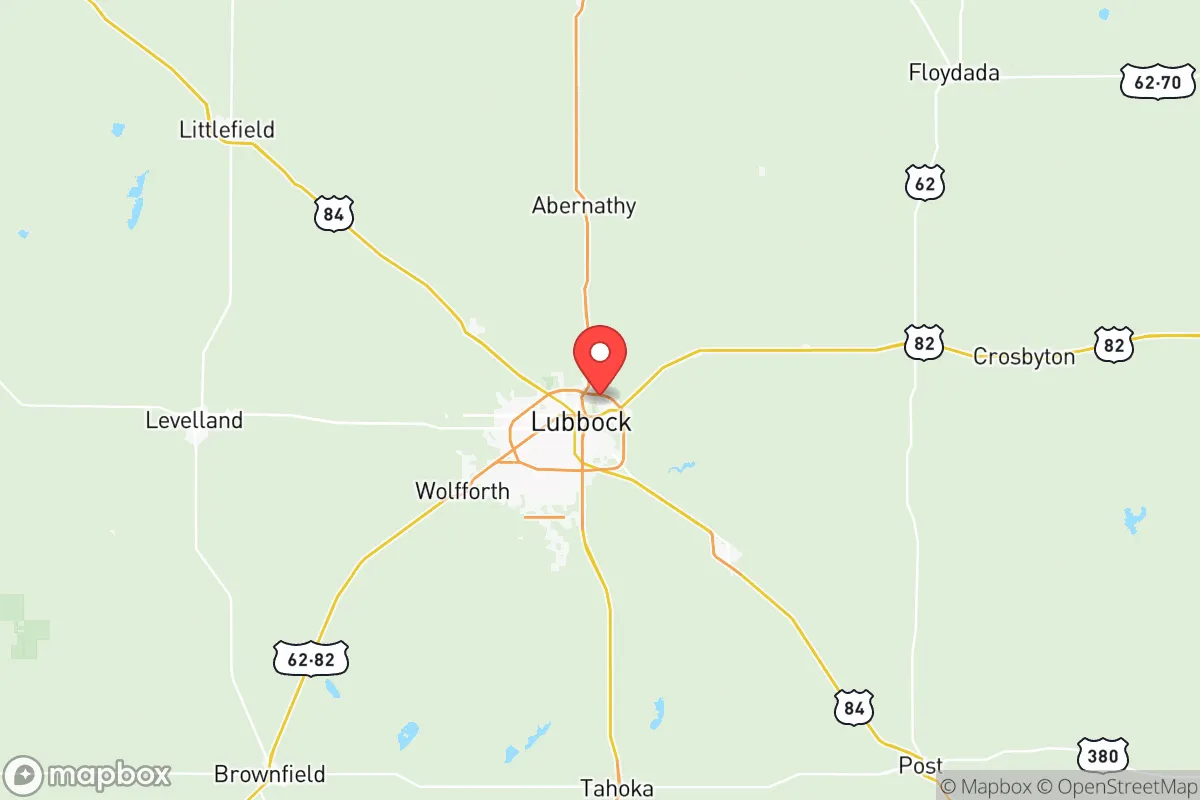
Photo: Wikipedia
Demographics of Lubbock County
Affluence Level in Lubbock County
A below-average socioeconomic profile. Incomes, home values, and educational attainment trail the U.S., with higher poverty and unemployment.
People of Lubbock County
Today, Lubbock County is home to 314,633 residents, a population that reflects its roots as a 20th-century agricultural hub and a modern regional center for healthcare, education, and commerce. The county is predominantly White (52.1%) with a substantial and growing Hispanic population (35.8%), a smaller Black community (6.7%), and emerging East/Southeast Asian (1.8%) and Indian (0.5%) populations. The county’s character is shaped by a blend of conservative, family-oriented values, a strong Texas Tech University presence, and a deep connection to the surrounding South Plains ranching and farming culture.
Settlement & growth (pre-1960)
Before Anglo-American settlement, the area now known as Lubbock County was part of the vast southern Plains territory roamed by the Comanche and Apache nations. These nomadic peoples followed the bison herds across the Llano Estacado, but no permanent Native American settlements existed within the county’s modern boundaries. Spanish explorers and later Mexican authorities claimed the region, but it remained largely uninhabited by Europeans until after the U.S.-Mexican War (1846–1848) and the subsequent Texas annexation.
Permanent Anglo settlement began in earnest in the late 1870s and 1880s, driven by the expansion of the cattle industry and the arrival of the railroad. The first settlers were primarily Anglo-American ranchers and farmers from the Deep South and Midwest, drawn by the promise of cheap land and open range. The town of Lubbock was founded in 1890 as a merger of two earlier settlements, Old Lubbock and Monterey, and quickly became the county’s commercial and political center. The arrival of the Santa Fe Railroad in 1909 transformed Lubbock from a dusty frontier outpost into a regional shipping point for cotton, cattle, and grain. Small farming communities like Idalou (founded 1901), Slaton (1910), and Ransom Canyon (1910) sprang up along rail lines, serving as supply points for surrounding cotton farms and ranches.
The Dust Bowl of the 1930s hit Lubbock County hard, but it also brought a new wave of settlers: displaced farmers from Oklahoma, Arkansas, and the Texas Panhandle, often called "Okies." These Dust Bowl refugees, many of whom were of Scots-Irish and English descent, settled in Lubbock and the surrounding communities, finding work in cotton fields, on ranches, and in the growing service economy. The establishment of Texas Technological College (now Texas Tech University) in 1923 brought a steady stream of students and faculty, adding a professional and academic layer to the county’s population. By 1960, Lubbock County’s population had reached 156,271, overwhelmingly White and native-born, with a small but established Hispanic community concentrated in the Guadalupe neighborhood of Lubbock, a historic Mexican-American enclave dating to the 1910s.
Modern era (post-1965)
The 1965 Hart-Cellar Act had a limited immediate impact on Lubbock County compared to coastal or border regions, but it set the stage for gradual diversification. The county’s foreign-born population today stands at just 3.6%, well below the national average, reflecting its continued reliance on domestic migration rather than international immigration. The most significant demographic shift since 1965 has been the rapid growth of the Hispanic population, driven by both immigration from Mexico and high birth rates among established Mexican-American families. The Hispanic share of the county’s population rose from roughly 15% in 1980 to 35.8% today, with the community now dispersed throughout Lubbock and the county’s smaller towns, though the Guadalupe and Arnett-Benson neighborhoods in Lubbock remain cultural anchors.
Domestic migration has also reshaped the county. From the 1970s onward, Lubbock attracted retirees, healthcare workers, and professionals from the Rust Belt and California, drawn by the lower cost of living, sunny climate, and the expanding Texas Tech University Health Sciences Center. This influx has been predominantly White and, to a lesser extent, Black. The Black population, which stood at 6.7% in 2024, has deep roots in Lubbock dating to the early 20th century, when African-American families moved from East Texas and the Deep South for agricultural work. The East Lubbock neighborhood has historically been the center of Black community life, though recent decades have seen some dispersal to newer subdivisions on the city’s south and west sides.
The East/Southeast Asian community (1.8%) is a more recent addition, growing primarily through the recruitment of professionals and students by Texas Tech University and the healthcare sector. Vietnamese, Chinese, and Korean families have settled mainly in Lubbock, with a small but visible presence in Wolfforth and Shallowater. The Indian population (0.5%) is similarly concentrated among tech and medical professionals, many of whom are affiliated with Texas Tech. Suburbanization has been a defining trend since the 1990s, with new master-planned communities like Lakeridge and Meadowbrook attracting middle-class families of all backgrounds, while the historic downtown and older neighborhoods have seen slower growth.
The future
Lubbock County is projected to become more diverse over the next 10–20 years, driven primarily by the continued growth of the Hispanic population, which is expected to approach or exceed 45% by 2040. The White population share will likely continue its gradual decline, though the county will remain majority White for the foreseeable future. The Black, East/Southeast Asian, and Indian populations are expected to grow modestly, largely through professional migration tied to Texas Tech University, the health sciences center, and the expanding logistics and manufacturing sectors. New communities are likely to concentrate in the southern and western edges of Lubbock and in the growing suburbs of Wolfforth and Ransom Canyon, while the historic core neighborhoods will see reinvestment as the city pushes for downtown revitalization. The county’s cultural identity is evolving from a predominantly Anglo ranching and farming society to a more pluralistic, bilingual region, though its conservative political leanings and family-oriented values are likely to persist.
For someone moving to Lubbock County today, the area offers a stable, growing economy anchored by Texas Tech and healthcare, a relatively low cost of living, and a population that is becoming more diverse while retaining its South Plains character. The county is not a melting pot in the coastal sense, but it is a place where distinct communities — Anglo, Hispanic, Black, and Asian — coexist with a shared emphasis on faith, family, and hard work. The next decade will likely see continued suburban expansion, a gradual diversification of the professional class, and a slow but steady shift toward a more multicultural identity, all within a framework that remains deeply rooted in the region’s agricultural and ranching heritage.

* Values derived from national, state, county, city and local statistics and may differ in a specific area. Last updated: 2026-07-13T23:10:45.000Z
Narrative content on this page is AI-generated and may contain mistakes. Verify any details that matter before acting on them.
ReloMaps may earn a commission from affiliate links at no extra cost to you.

