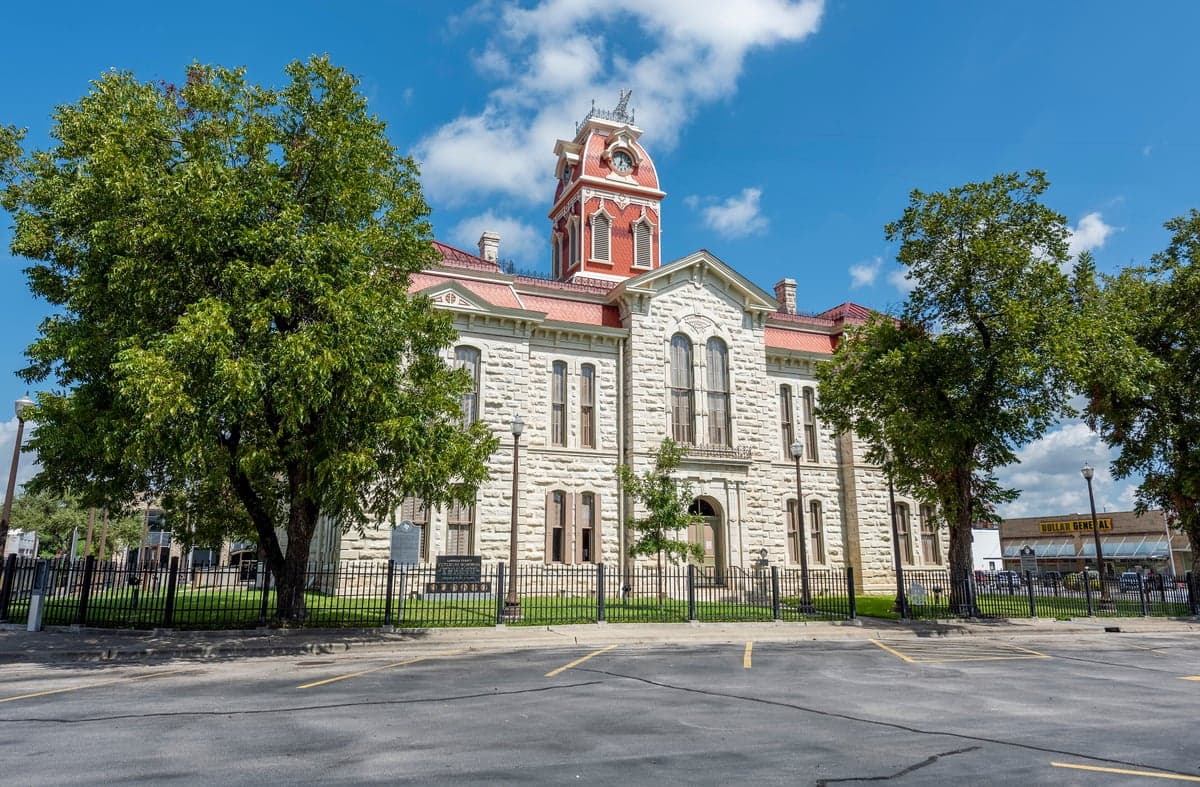
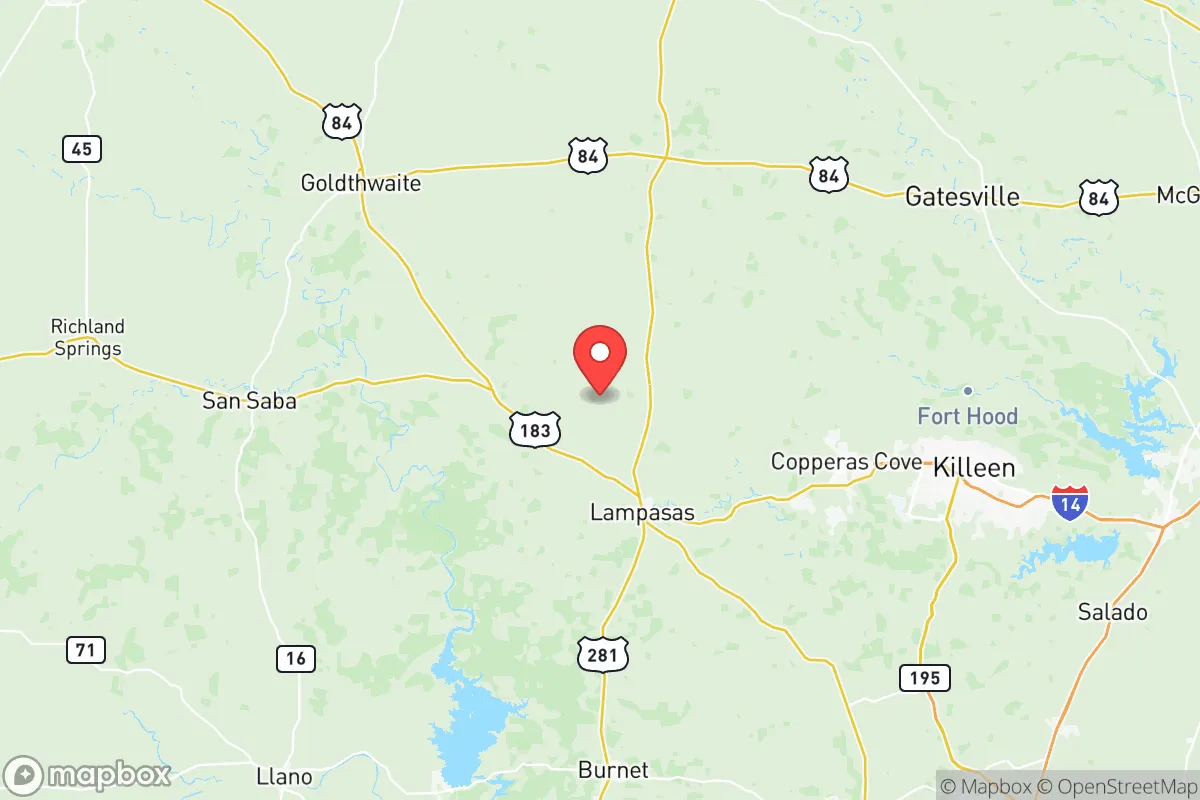
Photo: Wikipedia
Quality of Life in Lampasas County
A livable area that tracks near national norms for affordability, walkability, and neighborhood health.
What does Quality of Life tell us?
Quality of Life measures an area by evaluating factors like cost of living, nearby amenities, country club access, airport proximity, socioeconomic signals and neighborhood character. For large states, this is a general average — quality of life can vary dramatically between metro areas, suburbs, and rural communities within the same state.
What does this tell us?
Quality of Life measures an area by evaluating factors like cost of living, nearby amenities, country club access, airport proximity, socioeconomic signals and neighborhood character. For large states, this is a general average — quality of life can vary dramatically between metro areas, suburbs, and rural communities within the same state.
Cost of Living
17% below national average
114%
The Real Cost of Living in Lampasas County for 2026
| Tier | Individual | Family (4) |
|---|---|---|
| Survival | $15k | $29k |
| Comfortable | $46k | $67k |
| Luxury | $118k+ | $182k+ |
| Elite (Top 5%) | $138k+ | $214k+ |
Quality-of-Life Analysis
Lampasas County, Texas, offers a quality-of-life spectrum that ranges from the historic, walkable county seat of Lampasas to the quiet, unincorporated crossroads of Lometa and Adamsville, with wide-open ranchland in between. The county’s overall cost of living index sits at 83 (100 = U.S. average), making it significantly more affordable than the national norm, while the median home value of $236,000 and median rent of $961 attract a mix of retirees, remote workers, and families seeking space without sacrificing proximity to the Austin–San Antonio corridor. The average commute of 28.4 minutes reflects the reality that many residents drive to jobs in nearby cities like Killeen, Copperas Cove, or even Austin, while others find employment locally in healthcare, education, and agriculture.
Largest town(s) & population centers
The city of Lampasas (population roughly 8,000) is the county’s undisputed hub and the only incorporated town of significant size. Daily life here centers around the historic downtown square, which features the Lampasas County Courthouse, locally owned shops, and restaurants like Storm’s Drive-In and the popular Lometa Café outpost. The city is home to the Lampasas Independent School District, which includes Lampasas High School (around 900 students), and the Rollins Brook Community Hospital, a critical access facility that anchors local healthcare. Residents enjoy the Hancock Park and the Sulphur Creek Nature Trail, a 1.5-mile paved path along the creek that runs through town. Housing in Lampasas proper is a mix of historic homes near downtown (often $200,000–$300,000) and newer subdivisions on the outskirts, with some lots still available for custom builds. The city’s walkability is limited to the core, but most errands require a car.
Smaller towns & rural pockets
Outside Lampasas, the county’s smaller communities offer a markedly quieter, more rural lifestyle. Lometa (population about 800) sits 15 miles south of Lampasas along U.S. Highway 183 and is known for its annual Lometa Rodeo and a tight-knit community centered around the Lometa Independent School District (a single K–12 campus). Housing here is notably cheaper, with many homes under $150,000 and land parcels available for under $5,000 per acre. Adamsville (unincorporated, population roughly 200) lies 10 miles east of Lampasas and consists primarily of ranch homes and agricultural properties, with no commercial core beyond a gas station and a volunteer fire department. Kempner (population about 1,000) straddles the Lampasas–Coryell county line and offers a mix of exurban subdivisions and working ranches, with residents often commuting to Fort Hood (now Fort Cavazos) or Killeen. These areas lack municipal water and sewer in many spots, relying on private wells and septic systems, which appeals to those seeking self-sufficiency but requires due diligence.
Cost & lifestyle range
The cost and lifestyle spread across Lampasas County is wide but predictable. At the higher end, newer subdivisions on the north and east sides of Lampasas city limits—such as Oak Ridge Estates and Hickory Creek Ranch—feature homes from $300,000 to $450,000 on half-acre lots, with access to city utilities and short drives to downtown. At the lower end, rural properties in Lometa and Adamsville can be found for under $100,000, though these often require significant renovation or are raw land. The median rent of $961 is most common in Lampasas proper, where duplexes and older rental homes dominate; rural rentals are scarce. Property taxes in Lampasas County average around 1.6% of assessed value, slightly below the Texas state median, but vary by school district—Lometa ISD’s rate is marginally higher than Lampasas ISD’s. Amenities like grocery stores, medical clinics, and dining are concentrated in Lampasas, meaning residents of Lometa or Adamsville drive 15–25 minutes for most services. Internet access is another differentiator: fiber-optic service is available in most of Lampasas city limits, while rural areas often rely on fixed wireless or satellite, with speeds that can be inconsistent.
Who thrives in Lampasas County? The county suits people who value affordability, space, and a slower pace over urban convenience. Retirees on fixed incomes find the low cost of living and access to Rollins Brook Hospital appealing. Remote workers and commuters willing to drive 30–45 minutes to Killeen or Georgetown can trade a longer commute for a lower mortgage. Families seeking small-town schools and outdoor recreation—fishing at Stillhouse Hollow Lake (just east of the county line) or hunting on leased ranchland—also fit well. Those who need walkable nightlife, frequent cultural events, or high-density urban amenities will likely find the county too quiet. For the right buyer, Lampasas County offers a genuine slice of Central Texas hill country living at a fraction of the cost of its more famous neighbors.

Crime in Lampasas County
Crime rates similar to the national median for U.S. locations.
Violent CrimeViolent Crime Analysis
Property CrimeProperty Crime Analysis
Crime Analysis
Lampasas County, Texas, reports a violent crime rate of 344.4 per 100,000 residents and a property crime rate of 1,791.9 per 100,000, placing it in a middle tier for safety within the state. These figures suggest that while the county is not among the most dangerous in Texas, it also does not enjoy the exceptionally low crime rates found in some rural Hill Country communities. The county seat of Lampasas, along with smaller communities like Lometa and Kempner, each contribute to the overall statistical picture, with the city of Lampasas itself typically accounting for the majority of reported incidents.
Crime in context
When compared to Texas state averages, Lampasas County's violent crime rate of 344.4 per 100,000 is notably higher than the statewide figure of approximately 280 per 100,000. Property crime in the county, at 1,791.9 per 100,000, also exceeds the Texas average of roughly 1,600 per 100,000. These numbers place Lampasas County above the national median for both categories. The county's proximity to the Austin-Round Rock metropolitan area, particularly the more progressive judicial climate in Travis County, can influence regional crime patterns, as offenders may cross county lines. In contrast, neighboring counties like Burnet and San Saba often report lower crime rates, highlighting the variability even within the same region. The 27th Judicial District, which covers Lampasas County, operates with a conservative approach to prosecution, which can be a mitigating factor against rising crime trends seen in more urban, progressive jurisdictions.
What residents experience
Residents of Lampasas County most frequently encounter property crimes, including theft, burglary, and motor vehicle theft, which together form the bulk of the 1,791.9 per 100,000 rate. Violent crime, while less common, is a serious concern, with aggravated assault being the most reported offense. The city of Lampasas sees the highest concentration of incidents, particularly around the downtown area and along the US 281 corridor. In smaller towns like Lometa and Adamsville, crime is far less frequent, though underreporting can be an issue. The presence of the Lampasas County Sheriff's Office and municipal police departments provides a visible law enforcement presence, but response times in the more remote parts of the county can be longer. The county's conservative judicial philosophy, with a focus on accountability rather than progressive diversion programs, is a factor that many residents view as a positive deterrent compared to the more lenient approaches seen in larger Texas cities.
Neighborhood-level variation within Lampasas County is significant. The unincorporated areas around Lake Buchanan and the rural subdivisions near Kempner generally report the lowest crime rates, offering a quieter, safer environment. Conversely, the city of Lampasas itself, particularly rental-heavy areas near the downtown square and along Key Avenue, experiences higher rates of both property and violent crime. For those considering a move, the safest options are typically the newer subdivisions on the outskirts of Lampasas or the small, tight-knit communities of Lometa and Adamsville, where neighbors watch out for one another and the distance from larger, more progressive urban centers provides a natural buffer against the crime spillover seen in other parts of Central Texas.
* Values derived from national, state, county, city and local statistics and may differ in a specific area. Last updated: 2026-06-15T14:30:26.000Z
Narrative content on this page is AI-generated and may contain mistakes. Verify any details that matter before acting on them.
ReloMaps may earn a commission from affiliate links at no extra cost to you.

