Photo: Wikipedia
Demographics of Lampasas County
Affluence Level in Lampasas County
A middle-class area roughly in line with national averages across income, home values, education, and employment.
People of Lampasas County
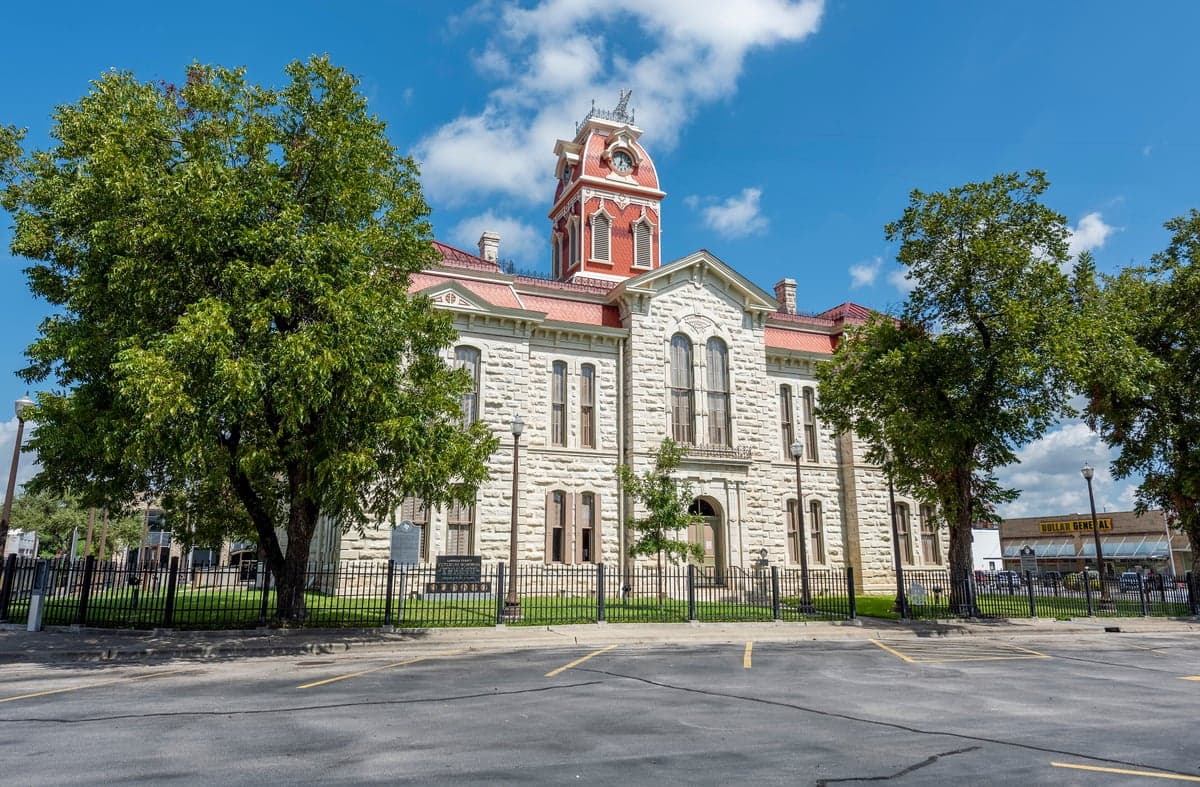
Lampasas County, Texas, today is home to roughly 22,267 residents, a population that remains predominantly white (70.2%) with a significant and growing Hispanic community (20.1%). The county’s identity is rooted in its ranching and agricultural heritage, with a small-town, conservative character centered on the county seat of Lampasas and the smaller communities of Lometa and Kempner. Unlike the booming suburban corridors of Central Texas, Lampasas County retains a slower pace, with a foreign-born population of just 3.1% and a college-educated share of 21.6%, reflecting its working-class and rural foundations.
Settlement & growth (pre-1960)
Before Anglo-American settlement, the Lampasas County area was part of the traditional territory of the Comanche and Lipan Apache nations. These nomadic peoples used the region’s springs and grasslands for hunting bison and seasonal camps, but no permanent Native settlements existed within the county’s modern boundaries. Spanish and Mexican expeditions passed through the area in the 18th and early 19th centuries, but they established no missions or presidios here, leaving the land largely uncolonized until Texas independence.
The first permanent Anglo settlers arrived in the 1850s, primarily from the southern United States—Tennessee, Alabama, and Mississippi. These were mostly Scots-Irish and English-descended families drawn by cheap land grants from the Republic of Texas and later the state. They established farms and ranches along the Lampasas River and its tributaries, founding the town of Lampasas in 1853 as the county seat. The town grew slowly as a trading center for cotton and cattle, with a population of just a few hundred by the Civil War.
After the Civil War, a small number of freed slaves settled in the county, primarily in and around Lampasas and the rural community of Lometa. By 1880, Black residents made up roughly 15% of the county’s population, working as sharecroppers and laborers. However, this share declined steadily through the early 20th century due to Jim Crow-era pressures and outmigration to urban areas. The arrival of the Gulf, Colorado and Santa Fe Railway in 1882 spurred growth in Kempner and Adamsville, attracting more Anglo settlers and a few German and Czech families who had originally settled in the Texas Hill Country. These European-origin groups never formed large enclaves in Lampasas County, unlike in nearby counties like Gillespie or Lavaca.
The early 20th century saw the county’s economy shift toward ranching and the emerging mineral water tourism industry in Lampasas, which boasted several springs. The Dust Bowl and Great Depression of the 1930s brought a small wave of Anglo migrants from Oklahoma and the Texas Panhandle, but the county’s population remained relatively stable, hovering around 12,000-13,000 through the 1950s. No major immigrant groups arrived during this period, and the population remained overwhelmingly native-born and white, with a small Black minority and virtually no Hispanic or Asian presence.
Modern era (post-1965)
The 1965 Hart-Cellar Act had little immediate effect on Lampasas County, as the region did not attract the large-scale immigration seen in Texas cities. The county’s foreign-born population today stands at just 3.1%, far below the state average. However, the post-1965 period brought significant domestic demographic change through suburbanization and the growth of nearby Fort Hood (now Fort Cavazos). The military base, established in 1942, began drawing a more diverse population to the broader Central Texas region, including some Black and Hispanic families who settled in Lampasas County for its lower housing costs and rural character.
The most notable modern shift has been the growth of the Hispanic population. In 1970, Hispanic residents likely made up less than 5% of the county; by 2024, they account for 20.1%. This growth stems from two sources: first, the expansion of agricultural and construction work in the 1980s and 1990s, which attracted Mexican-American families to Lampasas and Lometa; second, the broader trend of Hispanic families moving outward from San Antonio and Austin into smaller, more affordable communities. Today, Hispanic residents are dispersed across the county, with no single concentrated enclave, though they form a visible presence in the city of Lampasas’s service and retail sectors.
The Black population has declined from its post-Civil War peak to just 3.7% today, reflecting continued outmigration to larger cities. East/Southeast Asian residents (0.9%) and Indian subcontinent residents (0.2%) remain negligible, with most working in professional roles tied to the county’s small healthcare and education sectors. The white population, while still the majority at 70.2%, has seen its share decline from over 90% in 1970 as Hispanic growth has accelerated. Domestic migration from the Rust Belt and coastal states has been minimal compared to neighboring counties like Williamson or Bell, as Lampasas County lacks major employment centers or interstate highway access.
The future
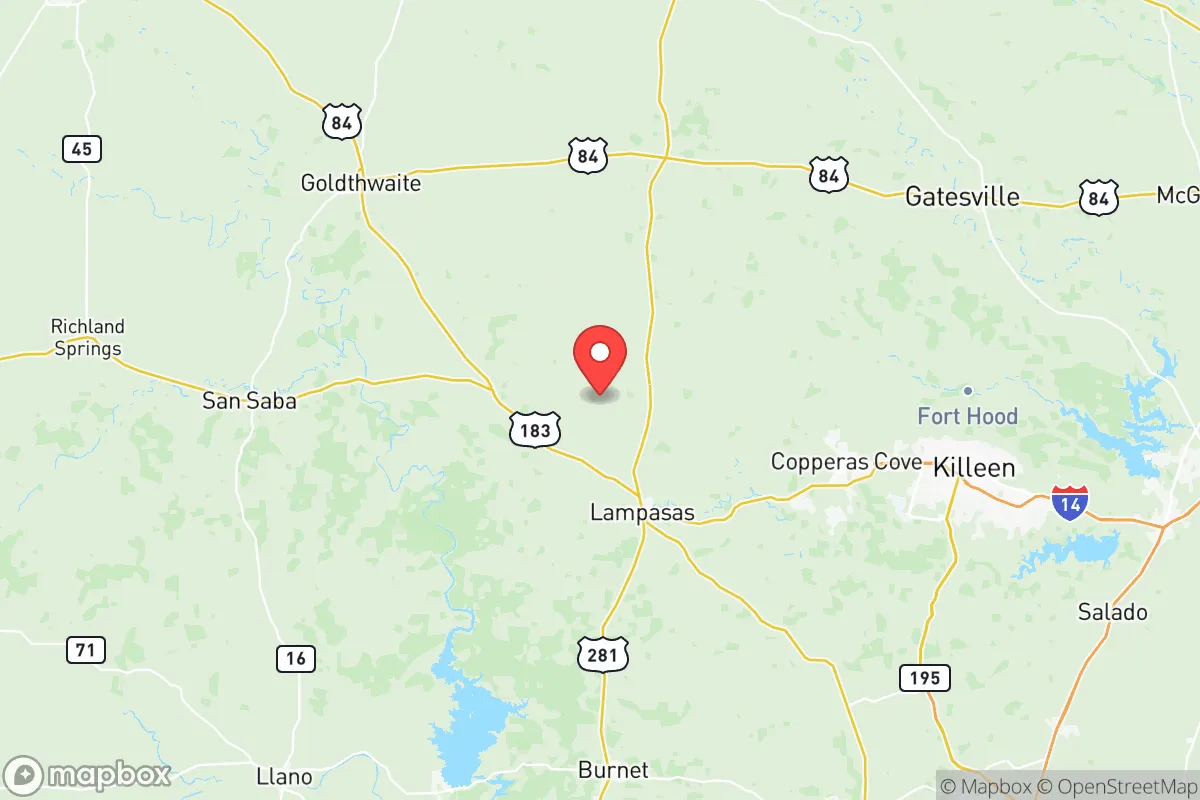
Lampasas County’s population is projected to grow modestly, driven primarily by spillover from the Austin-San Antonio corridor. The county’s location along U.S. Highway 281, about 60 miles northwest of Austin, positions it for gradual suburbanization as housing costs in the metro area push families outward. The Hispanic share is expected to continue rising, potentially reaching 25-30% by 2040, while the white share will decline further. The Black, Asian, and Indian populations are likely to remain small, as the county lacks the economic diversity and urban amenities that attract these groups.
The county’s cultural identity is evolving from a purely Anglo ranching heritage toward a more bicultural character, though this change is slower than in much of Texas. The city of Lampasas has seen some new housing developments and a small influx of retirees and remote workers, but the county remains overwhelmingly rural and conservative. The next 10-20 years will likely see continued Hispanic growth, a slight increase in diversity, and a population that becomes more connected to the Austin economy while retaining its small-town feel. No major new immigrant enclaves are expected, and the foreign-born share will likely remain below 5%.
For someone moving in now, Lampasas County offers a predominantly white, conservative, and rural community with a growing Hispanic presence and limited diversity beyond those two groups. The county is becoming slightly more diverse and more connected to the Austin region, but it remains a place where the ranching and agricultural traditions of the 19th century still shape daily life. New residents should expect a slow pace, strong community ties, and a population that is gradually but steadily changing in its ethnic composition.

* Values derived from national, state, county, city and local statistics and may differ in a specific area. Last updated: 2026-06-15T14:30:26.000Z
Narrative content on this page is AI-generated and may contain mistakes. Verify any details that matter before acting on them.
ReloMaps may earn a commission from affiliate links at no extra cost to you.

