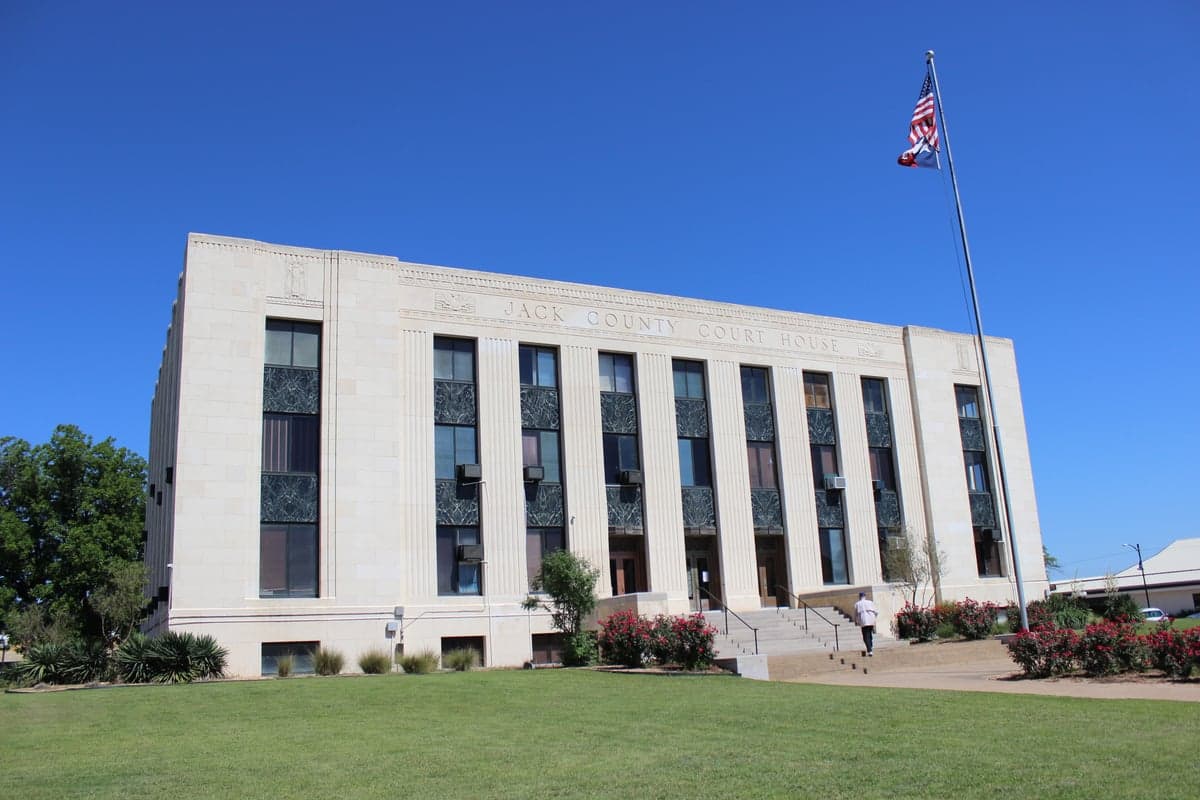
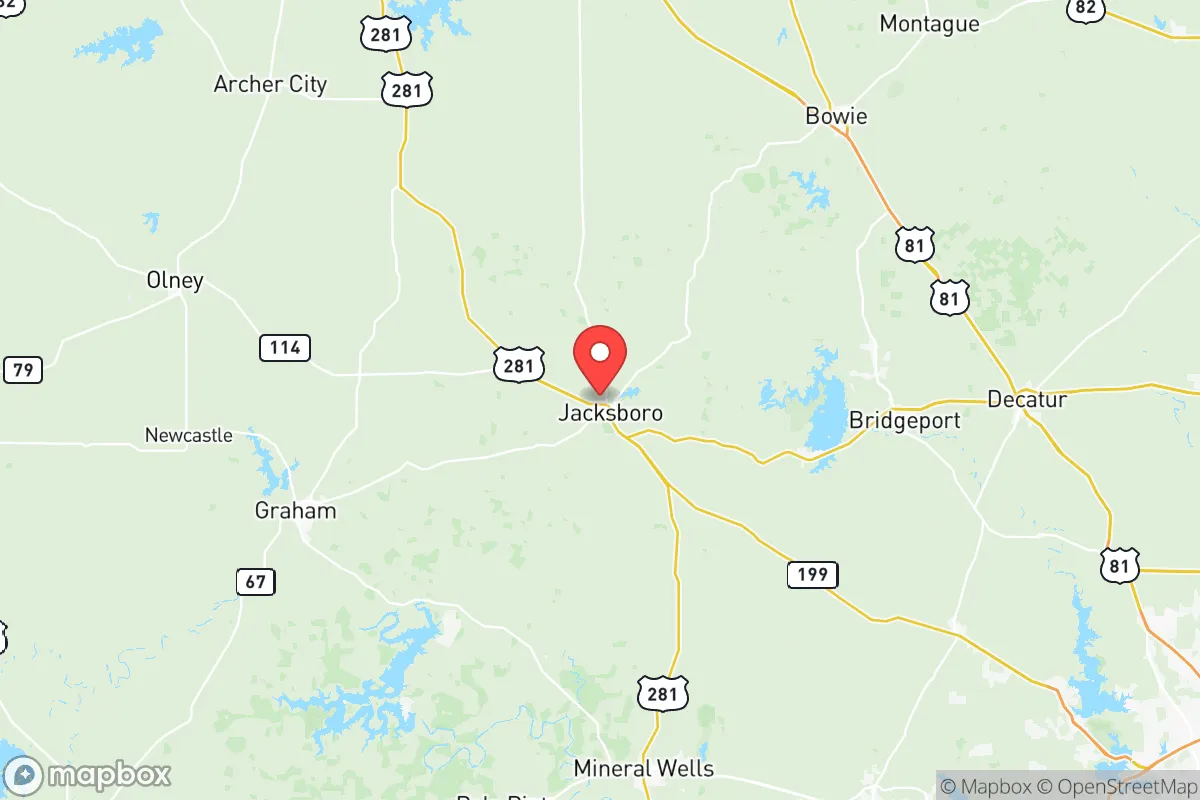
Photo: Wikipedia
Quality of Life in Jack County
A livable area that tracks near national norms for affordability, walkability, and neighborhood health.
What does Quality of Life tell us?
Quality of Life measures an area by evaluating factors like cost of living, nearby amenities, country club access, airport proximity, socioeconomic signals and neighborhood character. For large states, this is a general average — quality of life can vary dramatically between metro areas, suburbs, and rural communities within the same state.
What does this tell us?
Quality of Life measures an area by evaluating factors like cost of living, nearby amenities, country club access, airport proximity, socioeconomic signals and neighborhood character. For large states, this is a general average — quality of life can vary dramatically between metro areas, suburbs, and rural communities within the same state.
Cost of Living
25% below national average
132%
The Real Cost of Living in Jack County for 2026
| Tier | Individual | Family (4) |
|---|---|---|
| Survival | $15k | $29k |
| Comfortable | $34k | $50k |
| Luxury | $119k+ | $184k+ |
| Elite (Top 5%) | $145k+ | $224k+ |
Quality-of-Life Analysis
Jack County, Texas, offers a quality-of-life spectrum that ranges from the modest conveniences of its county seat, Jacksboro, to the quiet isolation of unincorporated crossroads communities and working ranches. The county’s overall cost of living index of 75 (well below the U.S. average of 100) and a median home value of $174,800 make it one of the more affordable areas in North Texas, attracting a mix of retirees, oil-and-gas workers, and families seeking land without suburban price tags. The character of daily life shifts noticeably depending on whether a resident lives within the town limits of Jacksboro, in a smaller community like Bryson, or on a rural parcel near the Montague County line.
Largest town(s) & population centers
Jacksboro, the county seat and home to roughly 4,500 residents, is the undisputed hub of Jack County. Daily life here centers on the historic downtown square, which houses the county courthouse, local diners, and a handful of retail shops. The town provides essential services that the rest of the county lacks: a full-service hospital (Faith Community Hospital), a Walmart Supercenter, and Jacksboro High School, which serves as the primary secondary school for the entire county. Commuting patterns reflect the town’s role as a bedroom community for the Fort Worth-Dallas metroplex; the average commute across the county is approximately 30.5 minutes, with many residents driving south on U.S. Highway 281 or east on U.S. Highway 380 toward jobs in Bridgeport, Decatur, or even the northern edge of Fort Worth. Jacksboro also hosts the Fort Richardson State Park and Historic Site, a major recreational draw that provides hiking, fishing, and camping within walking distance of town.
Smaller towns & rural pockets
Outside of Jacksboro, the county’s smaller communities offer a distinctly quieter pace. Bryson (population roughly 500) sits along U.S. 380 about 12 miles east of Jacksboro and functions as a low-key residential node with a single gas station, a post office, and a small school district that shares athletic programs with Jacksboro. Jermyn, an unincorporated community in the northern part of the county, consists of little more than a handful of homes and a grain elevator, serving the surrounding wheat and cattle operations. Perrin, straddling the Jack-Palo Pinto county line, is a census-designated place with a few hundred residents and a volunteer fire department; it is popular among horse owners and hobby farmers who want proximity to Possum Kingdom Lake (about 20 minutes west) without lakefront prices. These smaller pockets lack grocery stores and medical clinics, meaning residents drive 15 to 25 minutes into Jacksboro for most errands.
Cost & lifestyle range
The cost spread across Jack County is narrower than in a major metro area, but meaningful differences exist. At the lower end, older homes in Bryson or the rural fringes of Perrin can sell for under $130,000, and median rent countywide is just $968 — well below the Texas average. A household earning the county’s median income can typically afford a mortgage on a three-bedroom home in these areas with no financial strain. At the higher end, newer construction on acreage near Jacksboro’s southern edge or along the Lake Jacksboro corridor pushes above $250,000, and custom ranch properties near the Montague County line can exceed $400,000. Lifestyle trade-offs are clear: residents in Jacksboro pay slightly more for housing but gain walkable access to schools, healthcare, and the state park, while those in Jermyn or rural Bryson trade convenience for larger lots, lower property taxes, and near-total privacy. The county’s overall cost of living index of 75 means that even the priciest homes here are roughly 25 percent cheaper than the national median.
Jack County best suits people who value affordability and space over urban amenities. Retirees on fixed incomes, remote workers who can tolerate a 30-minute commute to the nearest major grocery store, and families who want their children in a small, rural school district all find viable options here. The county offers no nightlife, limited dining, and zero public transit, but for those who prioritize land, low taxes, and a quiet routine, the range of lifestyles — from Jacksboro’s small-town convenience to Jermyn’s off-grid solitude — provides a clear fit.

Crime in Jack County
Crime rates similar to the national median for U.S. locations.
Violent CrimeViolent Crime Analysis
Property CrimeProperty Crime Analysis
Crime Analysis
Jack County, Texas, reports a violent crime rate of 345.1 per 100,000 residents and a property crime rate of 1,794.2 per 100,000, placing it in a moderate-risk tier compared to both state and national averages. While not among the most dangerous counties in North Texas, these figures indicate that property crime—particularly theft and burglary—is a tangible concern for residents in communities like Jacksboro, the county seat, and the smaller towns of Bryson and Jermyn. The overall safety picture is mixed: violent incidents are less frequent than in major urban centers, but property crime rates warrant attention from anyone considering relocation to the area.
Crime in context
Jack County’s violent crime rate of 345.1 per 100,000 is slightly above the national average of roughly 380 per 100,000 but notably lower than Texas’s state average of approximately 445 per 100,000. Property crime, at 1,794.2 per 100,000, falls below both the Texas average (around 2,200 per 100,000) and the national average (approximately 1,950 per 100,000). These numbers place Jack County in a more favorable position than larger, more urbanized counties to the south and east, such as Tarrant or Dallas counties, where both violent and property crime rates are significantly higher. However, the county’s crime profile is not uniform; the unincorporated areas and smaller communities like Perrin tend to see fewer incidents, while the more populated Jacksboro area accounts for a disproportionate share of reported offenses.
What residents experience
For those living in Jack County, the most common crime concerns revolve around property offenses—burglaries, vehicle theft, and vandalism—rather than violent confrontations. Residents in Jacksboro report occasional break-ins and thefts from vehicles, particularly in areas near the U.S. 281 and U.S. 380 corridors, which see higher traffic and transient activity. Violent crime, while less frequent, does occur and is often linked to domestic disputes or alcohol-related incidents, especially in rural settings where law enforcement response times can be longer. The county is served by the Jack County Sheriff’s Office and the Jacksboro Police Department, both of which maintain a visible presence but operate with limited resources compared to larger jurisdictions. The 271st Judicial District, which covers Jack County, has historically taken a more traditional approach to sentencing, but residents should be aware that broader trends in Texas—particularly the influence of progressive prosecutors in nearby urban centers—can indirectly affect local crime dynamics through state-level policies and parole decisions.
Neighborhood-level variation in Jack County is largely a function of population density and proximity to major roads. The town of Jacksboro experiences the highest concentration of both property and violent crime, while the more sparsely populated areas around Bryson and Jermyn report far fewer incidents. Rural homesteads and ranches face a distinct risk: agricultural equipment theft and trespassing are recurring issues, and residents often rely on neighborhood watch networks and private security measures. For those considering a move to the county, choosing a home in a smaller, tight-knit community like Perrin or Jermyn can offer a lower-crime environment, though it comes with trade-offs in terms of access to services and longer emergency response times. Overall, Jack County presents a manageable safety profile for those who take standard precautions, but the property crime rate remains a legitimate concern that should factor into any relocation decision.
* Values derived from national, state, county, city and local statistics and may differ in a specific area. Last updated: 2026-07-03T21:30:21.000Z
Narrative content on this page is AI-generated and may contain mistakes. Verify any details that matter before acting on them.
ReloMaps may earn a commission from affiliate links at no extra cost to you.

